Chef Juliette
Suet Dumpling
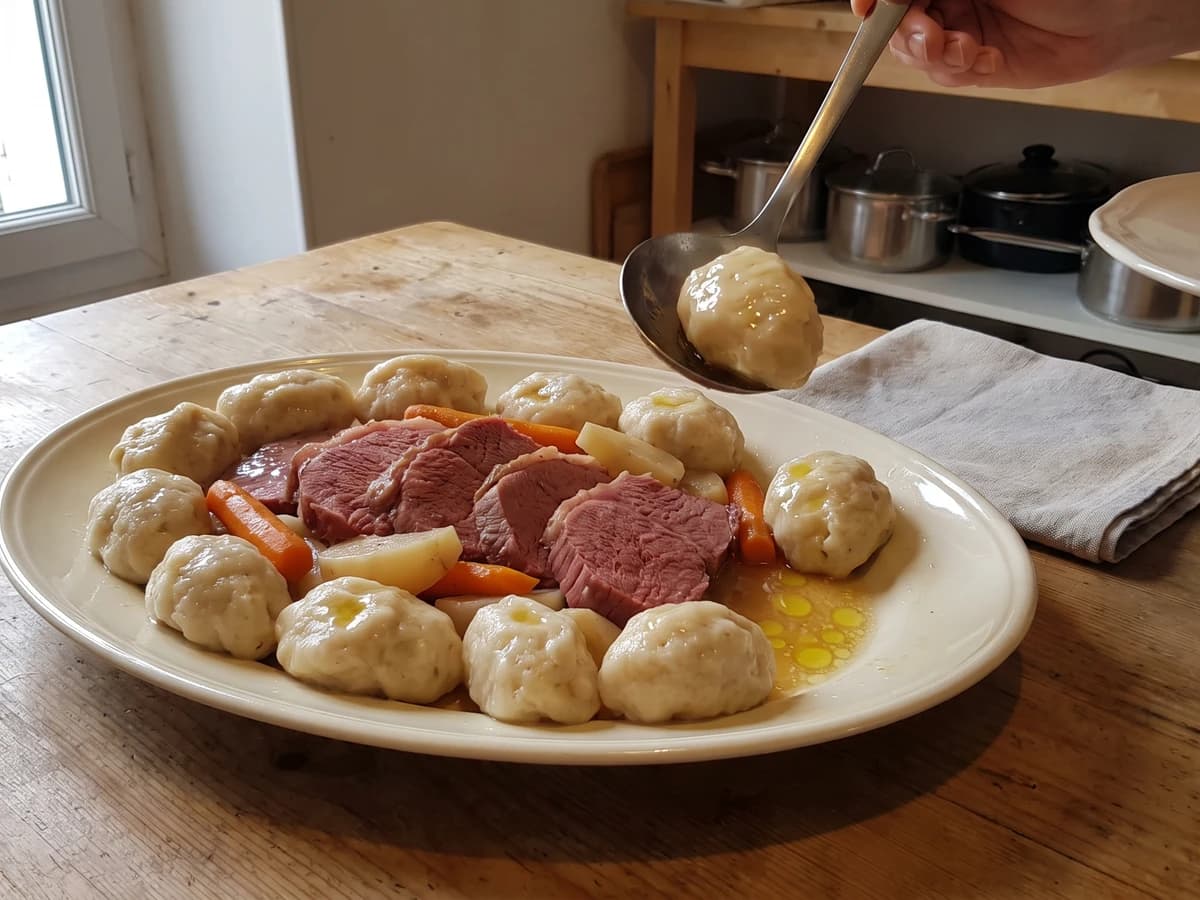
Boulettes au suif, poached beside salt beef, turn equal weights of flour and finely chopped suet into tender, rich dumplings. Keep the beef liquor at a bare tremble and the old garnish works beautifully at home.
A cooking platform built around craft, culture, and the stories behind what we eat.
Created by Chef Juliette
Based on No. 2071, Cèpes à la Rossini, from Le Guide Culinaire (1907) by Auguste Escoffier
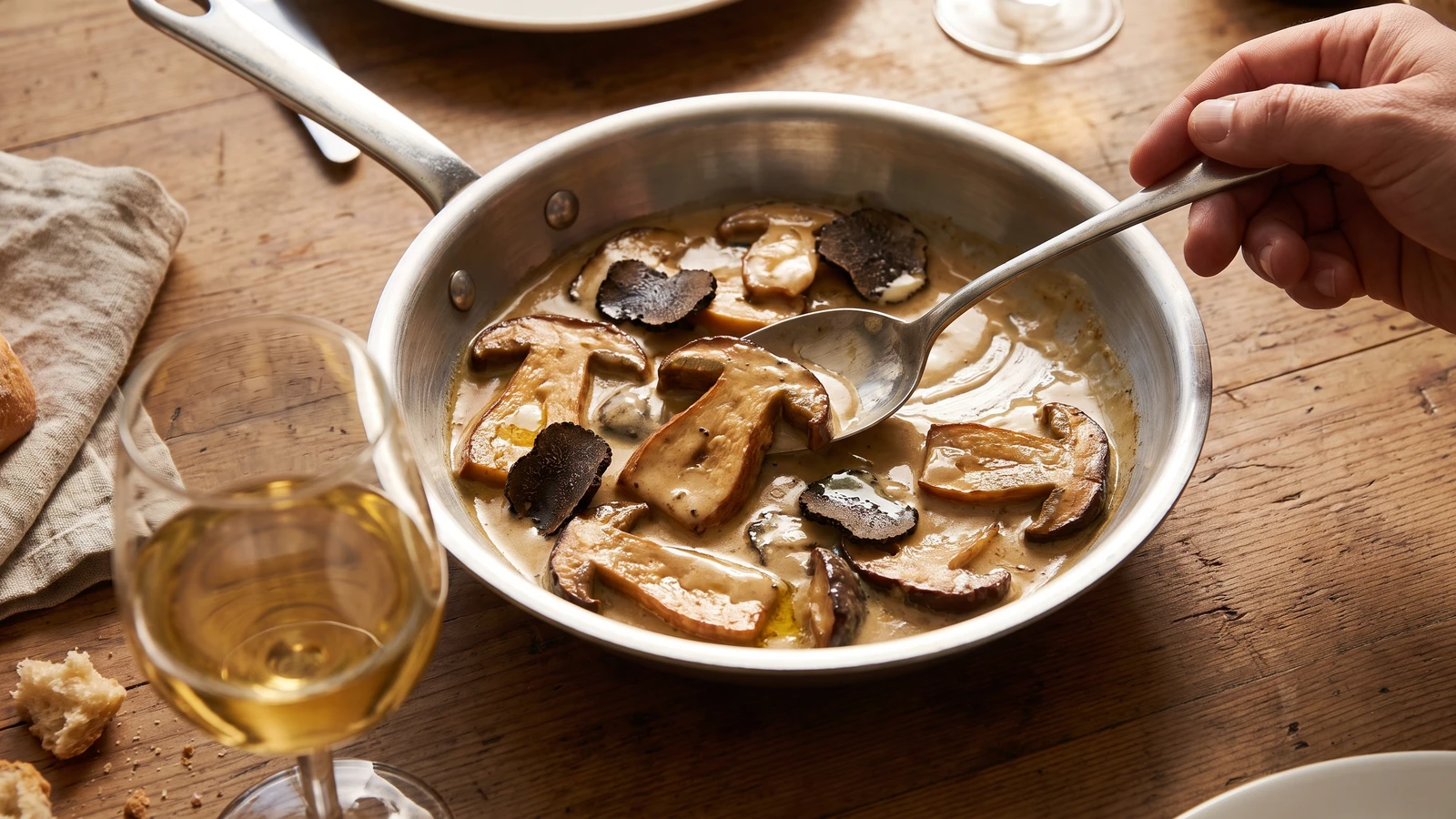
Cèpes and raw black truffle stew together in butter and cream, then pale meat glaze gives the sauce its final gleam. The truffle cooks from the beginning, because that shared perfume is the whole dish.
Cèpes à la Rossini (porcini mushrooms with truffle and cream) teaches one uncompromising thing: the truffle goes into the pan raw, beside the cèpes, and stews with them. It is not a shaving added for show at the end. Shared cooking makes the woodland depth of cèpes, the perfume of truffle, and the sweetness of reduced cream taste like one dish rather than three expensive ingredients standing apart.
The original assumes that Cèpes à la Crème (No. 2069) is already part of the cook's repertoire, with a saucier tending the reduction and pale meat glaze waiting beside a stockpot that never leaves the fire. At home, make one batch based on 1 pound of cèpes, add exactly one-third that weight in truffle, work in a broad sauté pan, and serve from a warmed deep bowl. The separate brigade hands are scaffolding and can go. The ratio, the simultaneous stewing, the complete cream reduction, and the final glaze are the dish and must stay. One cook, one stove, one evening.
Before touching the pan, slice the truffle thickly, about 1/8 inch. Thin shavings surrender their perfume too quickly and disappear into the cream. Watch the reduction most closely: the cream must cling to the mushrooms without leaving a milky puddle, and if it tightens too far, a reserved spoonful of thin cream brings it back. Ça se rattrape.
Cèpes à la Rossini belongs to the Parisian classical table, where the name Rossini signaled the generous use of truffle associated with the composer and celebrated gourmand Gioachino Rossini. This formula is unusually exact: its richness comes not from foie gras, as the name may suggest elsewhere, but from raw truffle at one-third the weight of the cèpes, cooked alongside them so their aromas mingle in the cream. It passed from the grand-kitchen repertoire to dinner-party tables by reducing the quantity while preserving the proportion and sequence.
Quantity
1 home-scale batch, based on 1 lb (450 g) fresh cèpes
begin as directed, adding the truffle when the cèpes start stewing
Quantity
5⅓ oz (150 g)
brushed clean and sliced 1/8 inch (3 mm) thick
Quantity
1 tablespoon (15 ml / 18 g)
melted
| Ingredient | Quantity |
|---|---|
| Cèpes à la Crème (No. 2069)begin as directed, adding the truffle when the cèpes start stewing | 1 home-scale batch, based on 1 lb (450 g) fresh cèpes |
| fresh raw black trufflebrushed clean and sliced 1/8 inch (3 mm) thick | 5⅓ oz (150 g) |
| pale meat glazemelted | 1 tablespoon (15 ml / 18 g) |
Brush the truffle carefully, trimming away only damaged or stubbornly gritty spots, then cut it into slices about 1/8 inch (3 mm) thick. Keep the slices broad and substantial. Their thickness lets them soften with the cèpes while retaining enough body to be found under the teeth.
Begin the Cèpes à la Crème (No. 2069). At the precise moment its cèpes are put to stew, add the raw truffle slices and keep the original one-third-weight proportion intact. Turn everything gently over moderate heat until the cèpes are tender and the truffle has softened slightly, then drain as the referenced preparation directs. If the pan fills with mushroom liquid, do not drain prematurely. Raise the heat one notch until the excess liquid cooks away and butter shows again around the edges, then return to moderate heat. Ça se rattrape.
Complete the Cèpes à la Crème (No. 2069), keeping the truffle with the cèpes through its boiling-cream reduction and final thin-cream finish. The reduced cream should cling thickly to every slice, with no pale liquid running across the pan when you draw a spoon through it. If the cream looks oily, catches at the edge, or becomes too tight, lift the pan from the heat and stir in a reserved spoonful of the thin finishing cream. Return it to low heat only long enough to restore a smooth coating.
Melt the pale meat glaze over the lowest heat in a small saucepan, without letting it boil. Fold it into the hot cèpes at the last moment, turning just enough to distribute it. The glaze should deepen the savory finish and give the cream a quiet gleam without making the sauce brown, salty, or sticky. If the mixture tightens after the glaze enters, loosen it with one teaspoon of the reserved thin cream.
Spoon the cèpes, truffle, and every trace of sauce into a warmed deep serving bowl or small timbale. Arrange the slices generously rather than decorating them, with several pieces of truffle visible among the cèpes. Serve immediately beside roast veal, poularde, or another simply cooked centerpiece. À table!
1 serving (about 165g)
Culinary guides, cultural storytelling, and the editorial depth that makes cooking meaningful.
Discover Culinary ExplorerChef Juliette
Boulettes au suif, poached beside salt beef, turn equal weights of flour and finely chopped suet into tender, rich dumplings. Keep the beef liquor at a bare tremble and the old garnish works beautifully at home.

Chef Juliette
Bread, flour, frangipane, and rice become four cool, supple panades for binding forcemeats, each changing body and flavor while preserving tenderness. The finest Mousselines need none, and knowing that distinction is the lesson.

Chef Juliette
Panade au pain is bread, milk, salt, heat, and attention: stir until the paste releases cleanly, butter it against a skin, and you have the quiet binder behind tender French farces.

Chef Juliette
Panade de farine teaches the drying stroke behind pâte à choux: flour meets boiling buttered water, then stays over the fire until the paste gathers, smooths, and quits the pan cleanly.