Chef Juliette
Suet Dumpling
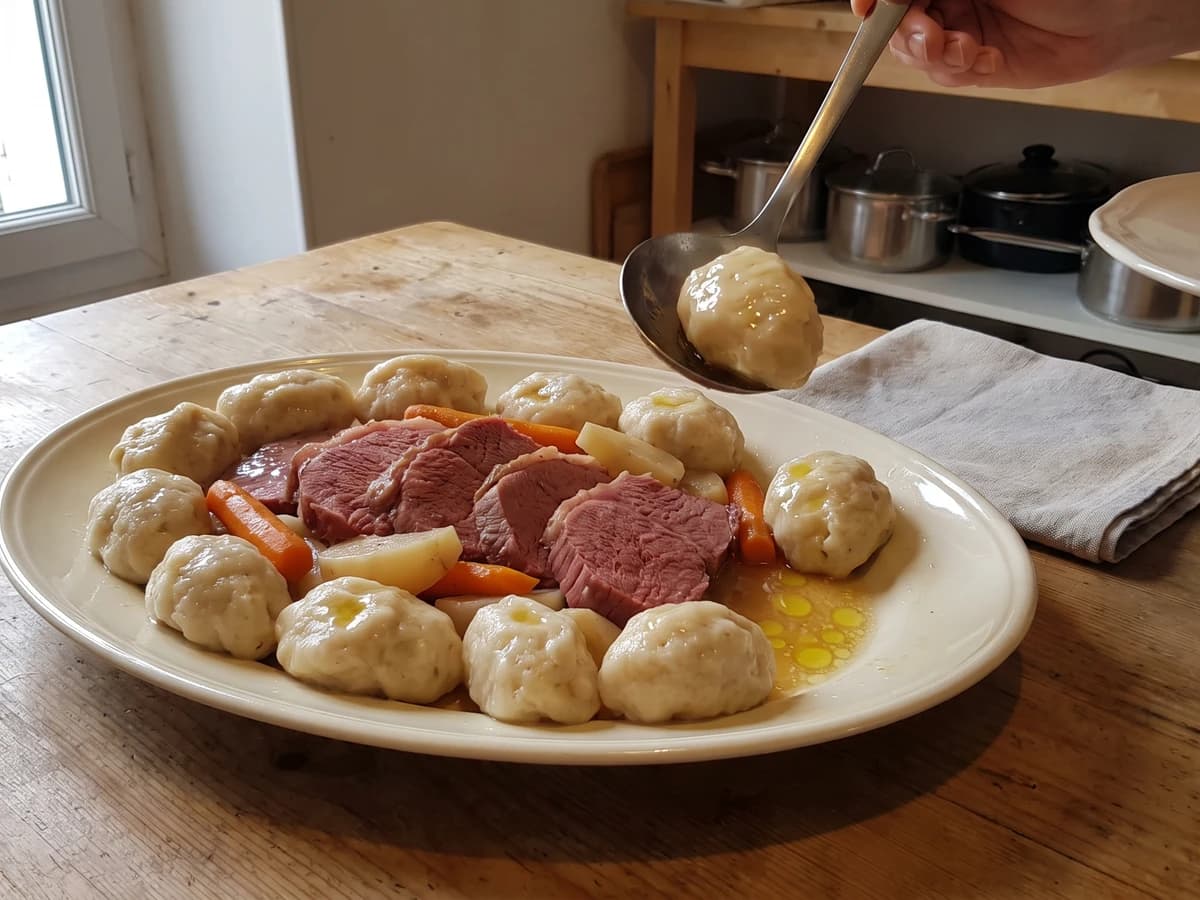
Boulettes au suif, poached beside salt beef, turn equal weights of flour and finely chopped suet into tender, rich dumplings. Keep the beef liquor at a bare tremble and the old garnish works beautifully at home.
A cooking platform built around craft, culture, and the stories behind what we eat.
Created by Chef Juliette
Based on No. 2068, Cèpes à la Bordelaise, from Le Guide Culinaire (1907) by Auguste Escoffier
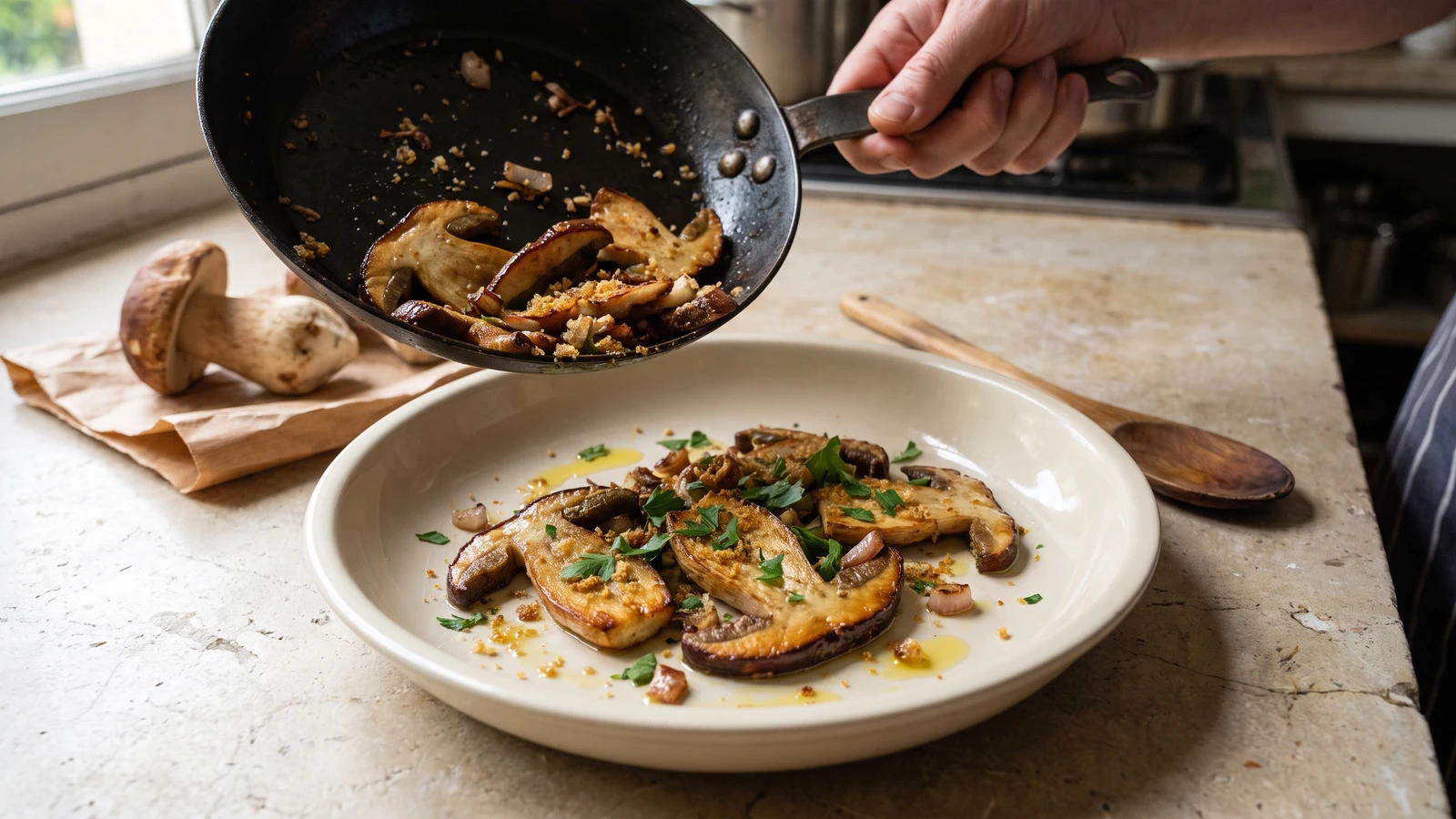
Cèpes à la Bordelaise turns fresh porcini bronze and frizzled in hot oil, then folds in chopped stalks, shallot, crumbs, lemon, and parsley, with every ounce of flavor protected by an uncrowded pan.
Cèpes à la Bordelaise (Bordeaux-style porcini mushrooms) teaches one hard truth: mushrooms brown only while the pan has enough strength to drive off their moisture. Crowd them and they stew. Give the broad slices fierce heat and room, and their edges turn bronze while the centers remain tender and deeply savory. The source calls this thoroughly frizzled, an excellent word for a surface dry enough to sizzle without turning the flesh leathery.
This is one of those classical entries that needs none of the brigade's stockpots, saucier work, or salamander. What it assumes is a broad sauté pan over powerful heat, a cook able to toss everything without cooling the oil, and a warmed timbale ready for service. For four side servings, the book's half-pound working ratio is doubled exactly: one pound of sliced caps, two ounces of chopped stalks, two teaspoons of shallot, and two tablespoons of crumbs. A 12-inch skillet used in two batches and a warmed shallow serving dish replace the professional pan capacity and timbale. Those are scaffolding. The hard frying and the late addition of stalks, shallot, and crumbs are the dish itself and do not move. One cook, one stove, one evening.
The finished cèpes should arrive glossy and bronze, their irregular edges lightly crisp beneath the teeth, with parsley fresh against the dark mushroom and only a few bright drops of lemon. The step that matters most is the frying: keep every batch in a single layer until the sharp sizzle returns after each toss.
Cèpes à la Bordelaise belongs to Bordeaux and the Gironde, where porcini gathered from the oak and pine country of southwestern France met the local habit of cooking generously with oil, shallot, parsley, and bread. The preparation traveled from household and market kitchens into the classical repertory without losing its plain logic: fry the mushroom hard, then use crumbs to catch the excess oil. Despite the name, this dish contains neither red wine nor sauce bordelaise; here à la Bordelaise identifies the regional treatment of the cèpes, not a marrow-enriched wine sauce.
Quantity
6 cups (1 lb / 454 g)
cut crosswise into 1/4-inch (6 mm) collops
Quantity
3/4 cup (2 oz / 57 g)
finely chopped
Quantity
1/4 cup (60 ml / 55 g)
divided
Quantity
2 teaspoons (10 ml / 8 g)
finely chopped
Quantity
2 tablespoons (30 ml / 14 g)
Quantity
3/4 teaspoon (4.5 g)
divided
Quantity
1/4 teaspoon (0.6 g)
divided
Quantity
1/2 teaspoon (2.5 ml / 2.5 g)
Quantity
2 tablespoons (30 ml / 8 g)
chopped
| Ingredient | Quantity |
|---|---|
| fresh cèpe capscut crosswise into 1/4-inch (6 mm) collops | 6 cups (1 lb / 454 g) |
| fresh cèpe stalksfinely chopped | 3/4 cup (2 oz / 57 g) |
| high-heat olive oildivided | 1/4 cup (60 ml / 55 g) |
| shallotfinely chopped | 2 teaspoons (10 ml / 8 g) |
| fine dry white breadcrumbs | 2 tablespoons (30 ml / 14 g) |
| fine sea saltdivided | 3/4 teaspoon (4.5 g) |
| freshly ground black pepperdivided | 1/4 teaspoon (0.6 g) |
| fresh lemon juice | 1/2 teaspoon (2.5 ml / 2.5 g) |
| flat-leaf parsleychopped | 2 tablespoons (30 ml / 8 g) |
Brush away loose earth and wipe the cèpes with a barely damp cloth. Trim only the dirty ends, separate the caps from the stalks, and pat everything thoroughly dry. Cut the caps crosswise into broad 1/4-inch collops and finely chop two ounces of sound stalk. Keep the pieces uncovered while you prepare the pan; trapped moisture is the enemy of the frizzled surface.
Place the chopped stalks, shallot, and breadcrumbs beside the stove in separate small bowls, because the final minutes move quickly. Measure the lemon juice, chop the parsley, and warm a shallow serving dish with hot water. Dry the dish before the cèpes arrive.
Set a dry 12-inch heavy skillet over high heat for 2 minutes. Add 2 tablespoons of the olive oil and swirl it across the surface. It is ready when it shimmers, runs freely, and gives off the first faint scent of warm olive oil. If it smokes aggressively, lift the pan from the heat for several seconds, then continue.
Season half the sliced caps with half the salt and pepper immediately before they enter the pan. Spread them in one uncrowded layer and leave them untouched for 60 to 90 seconds, then toss every 30 seconds until their edges are deep bronze, slightly curled, and dry enough to sizzle sharply, about 4 minutes. Transfer them to a rimmed tray. Add the remaining oil, season the second batch, and repeat. If liquid pools and the sound falls to a quiet bubbling, transfer half the caps to the tray at once and let the water boil away; when the sharp sizzle returns, finish the smaller batch and repeat with the rest. Ça se rattrape.
Return the first batch to the skillet with the second. Add the chopped stalks, shallot, and breadcrumbs together, exactly at this late moment, and toss over high heat for 2 to 3 minutes. The stalks should soften and bronze in spots, the shallot should lose its raw bite, and the crumbs should cling in fine golden flecks while absorbing the excess oil. They are there to catch the fat, not to form a breaded crust.
Tip the cèpes immediately into the warmed serving dish. Dot the surface with the lemon juice, scatter over the chopped parsley, and taste before adding any more salt. Serve at once, while the edges still carry the work of the hot pan. À table!
1 serving (about 100g)
Culinary guides, cultural storytelling, and the editorial depth that makes cooking meaningful.
Discover Culinary ExplorerChef Juliette
Boulettes au suif, poached beside salt beef, turn equal weights of flour and finely chopped suet into tender, rich dumplings. Keep the beef liquor at a bare tremble and the old garnish works beautifully at home.

Chef Juliette
Bread, flour, frangipane, and rice become four cool, supple panades for binding forcemeats, each changing body and flavor while preserving tenderness. The finest Mousselines need none, and knowing that distinction is the lesson.

Chef Juliette
Panade au pain is bread, milk, salt, heat, and attention: stir until the paste releases cleanly, butter it against a skin, and you have the quiet binder behind tender French farces.

Chef Juliette
Panade de farine teaches the drying stroke behind pâte à choux: flour meets boiling buttered water, then stays over the fire until the paste gathers, smooths, and quits the pan cleanly.