Culinary Explorer

A cooking platform built around craft, culture, and the stories behind what we eat.
Discover Culinary Explorer
Purée de Céleri

Purée de Céleri

Created by Chef Juliette

Based on No. 2066, Purée de Céleri, from Le Guide Culinaire (1907) by Auguste Escoffier

Celery cooked until yielding in rich consommé, sieved to silk, then given backbone with firm potato purée and finished with butter: a quiet classical side whose whole success rests on controlling water.

Side Dishes
French
Comfort Food
Holiday
25 min
Active Time
50 min cook1 hr 15 min total
Yield4 servings

Purée de Céleri (silken celery purée) teaches one true thing: celery is flavor and water, while potato is ballast. Stew the celery until it gives up every bit of resistance, then control its liquor so the finished purée sits in a soft mound instead of running across the plate. The potato should steady the celery, never smother it.

The original kitchen assumed a stock never off the fire, fat consommé ready by the ladle, a large pot of very white potato purée, and a tamis, the broad drum sieve a commis could work at speed. Tonight, use a small measure of rich consommé enriched with rendered fat, a potato ricer, and a sturdy kitchen sieve. The brigade batch and its separate holding pans were scaffolding, so they go. Parboiling, gentle stewing, degreasing, sieving, and butter added at the last moment are the dish, so they stay. One cook, one stove, one evening.

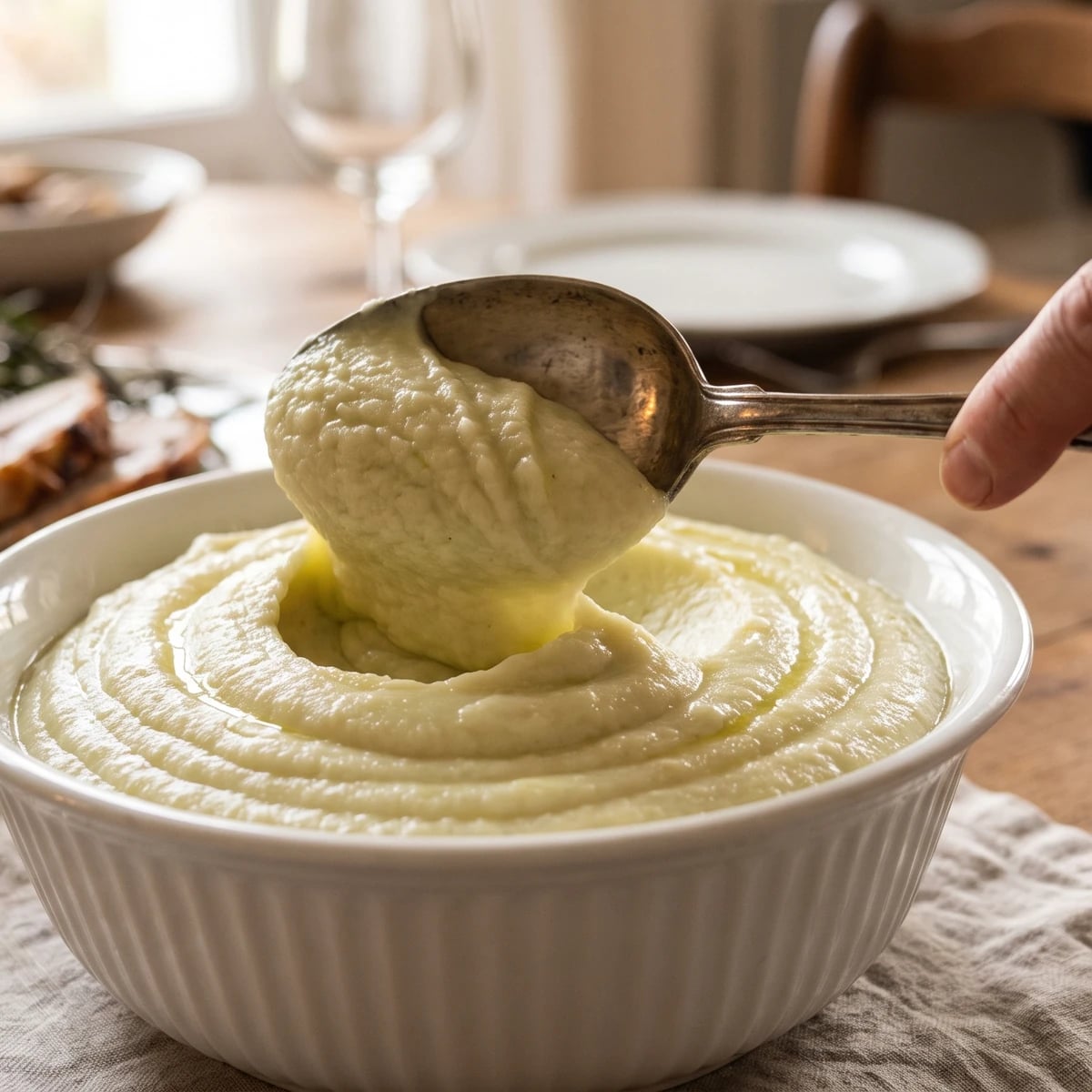
When it is right, the purée is pale ivory-green, smooth enough to gleam, and firm enough to hold the sweep of a serving spoon. The decisive moment comes after stewing: drain the celery promptly, clear the fat from its liquor, and add that liquor back by spoonfuls, not by hope.

Purée de céleri belongs to the Parisian classical service of vegetable purées rather than to one provincial larder, and it traveled readily from grand kitchens to cuisine bourgeoise, the generous middle-class home table. Its fine texture came from the tamis rather than cream, while potato supplied structure when watery vegetables could not hold a mound alone. Modern menus often use céleri to mean celeriac, but this formula begins with sliced stalk celery, parboiled and stewed in fat consommé before sieving.

The technique, the tradition, and the story behind every dish.

Discover Culinary Explorer

Ingredients

stalk celery

Quantity

2 large heads, about 8 packed cups (1.9 L / 900 g) after trimming

tough strings removed and stalks sliced crosswise 1/4 inch (6 mm) thick

floury potatoes

Quantity

1 pound, about 3 packed cups (710 ml / 450 g)

peeled and cut into 1 1/2-inch (4 cm) pieces

water

Quantity

4 quarts (3.8 L / 3.8 kg)

divided

fine sea salt

Quantity

1 tablespoon (15 ml / 18 g), plus more if needed

divided

rich unsalted chicken consommé

Quantity

1 1/2 cups (360 ml / 360 g)

rendered chicken fat

Quantity

1 1/2 tablespoons (22 ml / 20 g)

cold unsalted butter

Quantity

4 tablespoons (60 ml / 57 g)

cut into small pieces

Equipment Needed

  • Two medium saucepans, one wide-sided
  • Potato ricer or fine food mill
  • Sturdy fine-mesh sieve
  • Flexible bowl scraper or silicone spatula
  • Fat separator or narrow heatproof jug
  • 1-quart warmed timbale or deep serving bowl

Instructions

  1. 1

    Prepare both vegetables

    Remove the tough strings from the outer celery stalks and slice every stalk evenly across the grain. Divide the water between two saucepans, using the larger share for the celery. Season the celery water with two-thirds of the salt and bring it to a boil; put the potatoes into the second pan with the remaining salt while its water is still cold.

  2. 2

    Make firm potato purée

    Bring the potatoes gently to a simmer and cook for 15 to 20 minutes, until a knife enters without resistance. Drain thoroughly, return them to the dry pan over low heat for 1 to 2 minutes, and shake until their surfaces look floury. Pass them through a potato ricer while hot. Add no milk, cream, butter, or cooking water; this must remain a very white, firm potato purée, ready to give the celery ballast without diluting its flavor.

    Never put the potatoes in a blender or food processor. The fast blade works their starch into glue, and no quantity of butter can give glued potato its lightness back.
  3. 3

    Parboil the celery

    Lower the sliced celery into the boiling salted water and parboil it for 5 minutes. It should brighten, soften at the edges, and bend without yet collapsing. Drain immediately. This first cooking removes the harsh raw edge and begins breaking the fibers, but it does not replace the slow stewing that follows.

  4. 4

    Stew until yielding

    Bring the consommé and rendered chicken fat to a bare simmer in a wide saucepan. Add the parboiled celery, cover, and stew over low heat for 25 to 35 minutes, stirring occasionally, until every slice crushes readily against the pan with a spoon and no string resists. Keep the liquid at a quiet tremble. Undercooked celery will fight the sieve and leave a raw, fibrous purée, so complete tenderness is the step that cannot be shortened.

  5. 5

    Drain and degrease

    Drain the celery as soon as it is tender, reserving every drop of cooking liquor. Pour the liquor into a fat separator and draw off the clear liquid beneath the fat; without a separator, let it settle briefly in a narrow heatproof jug and skim the surface carefully with a spoon. The consommé carries the celery's flavor back into the purée, but the cooking fat has finished its work and must not leave a greasy surface.

  6. 6

    Sieve and thicken

    Set a sturdy fine-mesh sieve over a clean wide saucepan and force the hot celery through with a flexible scraper, adding the degreased cooking liquor one tablespoon at a time only when the fibers become too dry to move. Discard the strings left in the sieve. Fold three-quarters of the firm potato purée into the celery, then add the remainder gradually until the mixture holds a soft mound. If it slumps into a puddle, do not bury it under more potato. Ça se rattrape: spread it across the wide pan and stir over low heat until the excess liquor evaporates, then add the reserved potato. If it is too stiff, loosen it with the degreased liquor, one spoonful at a time.

  7. 7

    Mount with butter

    Heat the purée gently, stirring from the bottom so it does not catch, then remove the pan from the heat. Monter au beurre, finish with butter, by working in the cold pieces one at a time until the surface turns smooth and glossy. Taste and correct the salt only now. If butter forms a yellow slick, the pan was too hot; let it stand for 30 seconds and stir steadily until the fat draws back into the potato. Spoon the purée into a warmed timbale or deep serving bowl and serve at once. À table!

Chef Tips

  • This entry means stalk celery, not celeriac. Choose heads that feel heavy and crisp, but there is no need to pay extra for tender hearts; long stewing and the sieve will tame sturdy outer stalks.
  • The original fat consommé is recreated here with unsalted chicken consommé and rendered chicken fat, which carries flavor through the stewing before being removed. If true consommé is unavailable, use a clear, gelatin-rich unsalted chicken stock. A salty boxed broth becomes severe as it cooks down.
  • Floury potatoes are essential. Russet, Maris Piper, or another dry mashing potato will bind the celery cleanly; waxy potatoes stay dense and can make the purée heavy.
  • Serve Purée de Céleri with roast veal, beef, poultry, or game, especially when there is a proper pan jus to meet it on the plate. It needs no herb garnish and certainly no cream. Butter gives all the finish required.
  • Leftovers keep for up to two days in the refrigerator. Reheat over very low heat with a spoonful of consommé, stirring gently so the bottom does not catch.

Advance Preparation

  • The celery can be stewed and sieved up to four hours ahead. Keep it covered separately from the riced potato, then combine, heat, and add the butter only when the meal is ready.
  • For preparation one day ahead, combine the celery and potato without the butter, cool in a shallow covered container, and refrigerate. Reheat gently with a little reserved consommé, then work in the measured cold butter at the last moment.
  • Freezing is not advised. Celery releases water as it thaws, while the potato loses its close, smooth texture.

Frequently Asked Questions

Nutrition Information

1 serving (about 400g)

Calories
280 calories
Total Fat
17 g
Saturated Fat
9 g
Trans Fat
0 g
Unsaturated Fat
8 g
Cholesterol
35 mg
Sodium
550 mg
Total Carbohydrates
27 g
Dietary Fiber
5 g
Sugars
4 g
Protein
6 g

Note: Chef personas and recipes are created with AI assistance. Cook with care: follow safe food-handling practices, check doneness with a thermometer when needed, and adapt for allergies and your kitchen.

Where cooking meets culture.

Culinary guides, cultural storytelling, and the editorial depth that makes cooking meaningful.

Discover Culinary Explorer

More from Vegetables and Farinaceous Products - Carrots, Cêpes and Mushrooms

Browse the full collection