Chef Juliette
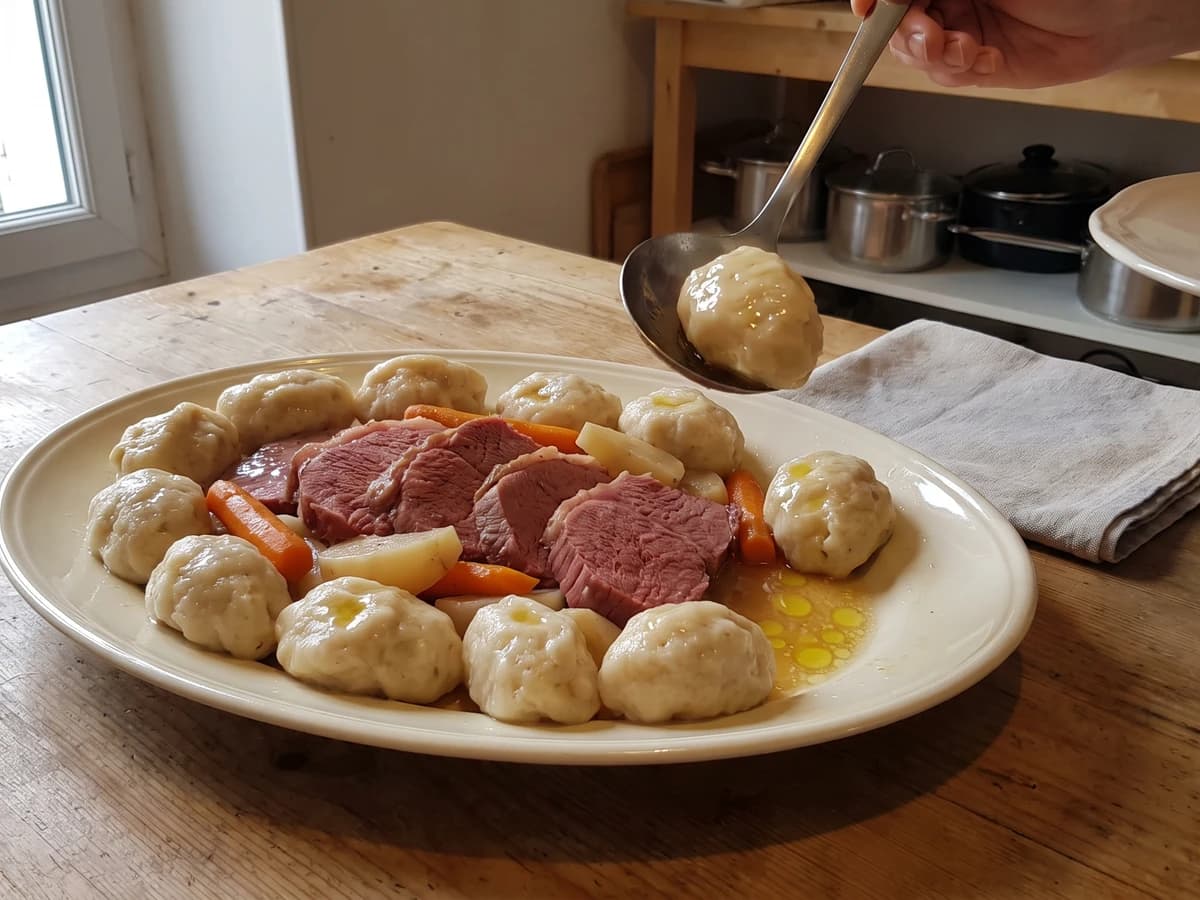
Suet Dumpling
Boulettes au suif, poached beside salt beef, turn equal weights of flour and finely chopped suet into tender, rich dumplings. Keep the beef liquor at a bare tremble and the old garnish works beautifully at home.
A cooking platform built around craft, culture, and the stories behind what we eat.
Created by Chef Juliette
Based on No. 204, Special Stuffings for Fish, from Le Guide Culinaire (1907) by Auguste Escoffier
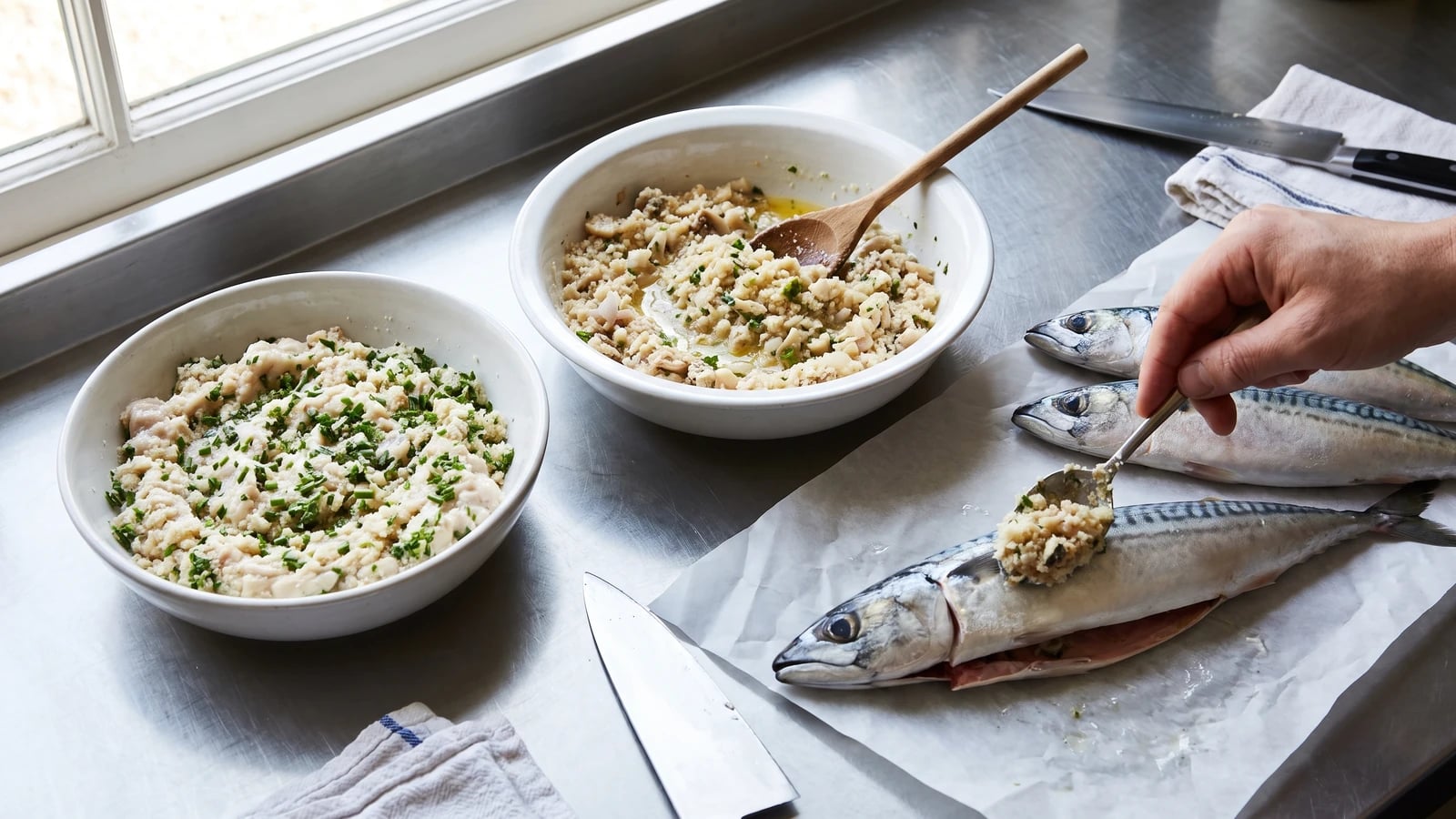
Two farces for rich whole fish, one of milt and fine herbs, the other of milk-soaked crumb and mushroom, each bound with egg and seasoned to make mackerel, herring, or shad feel lighter.
Farces spéciales pour poissons (special stuffings for fish) teach one thing before you touch a pan: control the water. Mackerel, herring, and shad are generous, oily fish; the farce must season them from inside without becoming a wet plug. Press the milk-soaked crumb hard, press the chopped mushroom harder, and the filling stays tender while herbs, alliums, garlic, and nutmeg cut cleanly through the richness.
The source gives two farces, alternatives, not layers. The first folds raw fish milt, la laitance (soft roe), into soaked crumb and fine herbs; the second uses twice the crumb with butter-softened onion and shallot plus raw pressed mushroom. A classical kitchen assumed a broad chopping block, a rocking knife, and a fishmonger who could supply milt. At home, a sharp chef's knife, one mixing bowl, and the second farce when milt is unavailable are the honest equivalents. This is already a compact batch for four medium fish, so the proportions stay intact. Only the workflow changes: components are chopped separately, mixed in a bowl, and a teaspoon is cooked for safe seasoning.
The brigade's batch chopping is scaffolding and can go. Thorough draining, a fine cut, cool aromatics, and even seasoning are the dish and must stay. The one step that decides both methods is the pressing: squeeze until no milk or mushroom liquor runs, then mix. One cook, one stove, one evening.
Farces spéciales pour poissons belong to the classical fish kitchens supplied by the Atlantic and Channel ports, then carried into Parisian cookery for mackerel, herring, and shad, fish whose rich flesh welcomes sharp green seasoning. The milt version preserves la laitance, the soft roe of a male fish, a seasonal ingredient fishmongers hand over with the catch; the breadcrumb and mushroom farce provides the same condimentary purpose without it. The traditional claim that these farces make oily fish more digestible is best understood as a culinary observation, not a medical promise: herbs, alliums, and nutmeg make the richness feel lighter at the table.
Quantity
about ½ cup (120 ml / 113 g)
finely chopped
Quantity
1 cup lightly packed (240 ml / 57 g)
Quantity
½ cup (120 ml / 123 g)
for soaking
Quantity
¾ cup lightly packed (180 ml / 42 g)
finely chopped
Quantity
½ clove
crushed
Quantity
2
Quantity
¾ teaspoon (3.75 ml / 4 g)
Quantity
¼ teaspoon (1.25 ml / 0.6 g)
Quantity
⅛ teaspoon (0.6 ml / 0.25 g)
Quantity
2 cups lightly packed (480 ml / 113 g)
Quantity
1 cup (240 ml / 245 g)
for soaking
Quantity
2 teaspoons (10 ml / 9 g)
Quantity
2 tablespoons (30 ml / 14 g)
finely chopped
Quantity
2 tablespoons (30 ml / 14 g)
finely chopped
Quantity
⅓ cup before pressing (80 ml / 28 g)
finely chopped and pressed dry
Quantity
1 tablespoon (15 ml / 4 g)
finely chopped
Quantity
⅛ teaspoon (0.6 ml / 0.5 g), about the size of a pea
crushed
Quantity
2
Quantity
¾ teaspoon (3.75 ml / 4 g)
Quantity
¼ teaspoon (1.25 ml / 0.6 g)
Quantity
⅛ teaspoon (0.6 ml / 0.25 g)
Quantity
up to 2 tablespoons (30 ml / 7 g)
| Ingredient | Quantity |
|---|---|
| Method 1, raw fish miltfinely chopped | about ½ cup (120 ml / 113 g) |
| Method 1, fine fresh white breadcrumbs | 1 cup lightly packed (240 ml / 57 g) |
| Method 1, whole milkfor soaking | ½ cup (120 ml / 123 g) |
| Method 1, equal-weight mixture of chives, flat-leaf parsley, chervil, shallot, and sweet basilfinely chopped | ¾ cup lightly packed (180 ml / 42 g) |
| Method 1, garliccrushed | ½ clove |
| Method 1, large eggs | 2 |
| Method 1, fine salt | ¾ teaspoon (3.75 ml / 4 g) |
| Method 1, finely ground white pepper | ¼ teaspoon (1.25 ml / 0.6 g) |
| Method 1, freshly grated nutmeg | ⅛ teaspoon (0.6 ml / 0.25 g) |
| Method 2, fine fresh white breadcrumbs | 2 cups lightly packed (480 ml / 113 g) |
| Method 2, whole milkfor soaking | 1 cup (240 ml / 245 g) |
| Method 2, unsalted butter | 2 teaspoons (10 ml / 9 g) |
| Method 2, onionfinely chopped | 2 tablespoons (30 ml / 14 g) |
| Method 2, shallotfinely chopped | 2 tablespoons (30 ml / 14 g) |
| Method 2, raw button mushroomsfinely chopped and pressed dry | ⅓ cup before pressing (80 ml / 28 g) |
| Method 2, flat-leaf parsleyfinely chopped | 1 tablespoon (15 ml / 4 g) |
| Method 2, garliccrushed | ⅛ teaspoon (0.6 ml / 0.5 g), about the size of a pea |
| Method 2, large eggs | 2 |
| Method 2, fine salt | ¾ teaspoon (3.75 ml / 4 g) |
| Method 2, finely ground white pepper | ¼ teaspoon (1.25 ml / 0.6 g) |
| Method 2, freshly grated nutmeg | ⅛ teaspoon (0.6 ml / 0.25 g) |
| fine fresh white breadcrumbs for rescuing a loose farce (optional) | up to 2 tablespoons (30 ml / 7 g) |
Choose one method; the two preparations are complete alternatives and are never combined. Use Method 1 when a trusted fishmonger can supply very fresh milt, and keep it cold until chopping. Use Method 2 when milt is unavailable. Both quantities fill about four medium cleaned fish, though a broad shad takes more than a slender herring.
For Method 1, soak the 1 cup (240 ml / 57 g) breadcrumbs in the ½ cup (120 ml / 123 g) milk. For Method 2, soak the 2 cups (480 ml / 113 g) breadcrumbs in the 1 cup (240 ml / 245 g) milk. Leave them for 5 minutes, then gather the crumb in a clean towel and twist firmly until no milk drips. This pressing is the technique, not an inconvenience; wet crumb makes a slack farce that leaks into the fish. If the crumb still feels pasty, open the towel, redistribute it, and press again. Ça se rattrape.
For Method 1, chop the cold milt very finely. Combine it with the pressed breadcrumb, the equal-weight mixture of chives, parsley, chervil, shallot, and sweet basil, the crushed half garlic clove, 2 eggs, salt, white pepper, and nutmeg. Beat firmly with a wooden spoon until every herb is evenly carried through the mixture and the farce becomes cohesive, but stop before it turns to paste. Cover and keep cold.
For Method 2, melt the butter over low heat and add the onion and shallot. Cook for 3 to 5 minutes, stirring, until soft and translucent without browning, then spread them on a plate to cool completely. If the edges begin to colour, pull the pan off the heat and add a teaspoon of the soaking milk to stop the cooking; the farce will be a touch sweeter, but it is rescued. Warm alliums would begin setting the eggs before the stuffing reaches the fish.
For Method 2, wrap the finely chopped raw mushrooms in a clean towel and squeeze until the cloth no longer dampens beneath your hand. Mix them with the pressed breadcrumb, cold onion and shallot, parsley, crushed garlic, 2 eggs, salt, white pepper, and nutmeg. Beat until thoroughly combined. The mushrooms remain raw, exactly as the preparation requires; pressing removes their excess liquor without trading their fresh woodland note for a browned one.
Chill the chosen farce for 10 minutes, then lift a spoonful. It should hold a soft mound and spread without running. If it slumps, first chill it 10 minutes longer; if it is still loose, work in the optional unsoaked breadcrumb 1 tablespoon (15 ml / 3.5 g) at a time and rest it for 5 minutes before judging again. If it is stiff, loosen it with milk 1 teaspoon (5 ml / 5 g) at a time. Ça se rattrape, but measured pressing usually makes either correction unnecessary.
Cook a teaspoon of farce in a small nonstick pan until fully set, then taste and correct the salt, pepper, or nutmeg. Never taste a mixture containing raw egg or raw milt. Spoon the farce loosely into cleaned fish cavities, filling them no more than two-thirds full so the binding can swell without bursting the fish; close with kitchen string or toothpicks. Cook the stuffed fish immediately by the method in its own recipe, checking that the centre of the filling reaches 160°F (71°C). À table!
1 serving (about 110g)
Culinary guides, cultural storytelling, and the editorial depth that makes cooking meaningful.
Discover Culinary ExplorerChef Juliette
Boulettes au suif, poached beside salt beef, turn equal weights of flour and finely chopped suet into tender, rich dumplings. Keep the beef liquor at a bare tremble and the old garnish works beautifully at home.

Chef Juliette
Bread, flour, frangipane, and rice become four cool, supple panades for binding forcemeats, each changing body and flavor while preserving tenderness. The finest Mousselines need none, and knowing that distinction is the lesson.

Chef Juliette
Panade au pain is bread, milk, salt, heat, and attention: stir until the paste releases cleanly, butter it against a skin, and you have the quiet binder behind tender French farces.

Chef Juliette
Panade de farine teaches the drying stroke behind pâte à choux: flour meets boiling buttered water, then stays over the fire until the paste gathers, smooths, and quits the pan cleanly.