Chef Juliette
Bouillabaisse à la Marseillaise
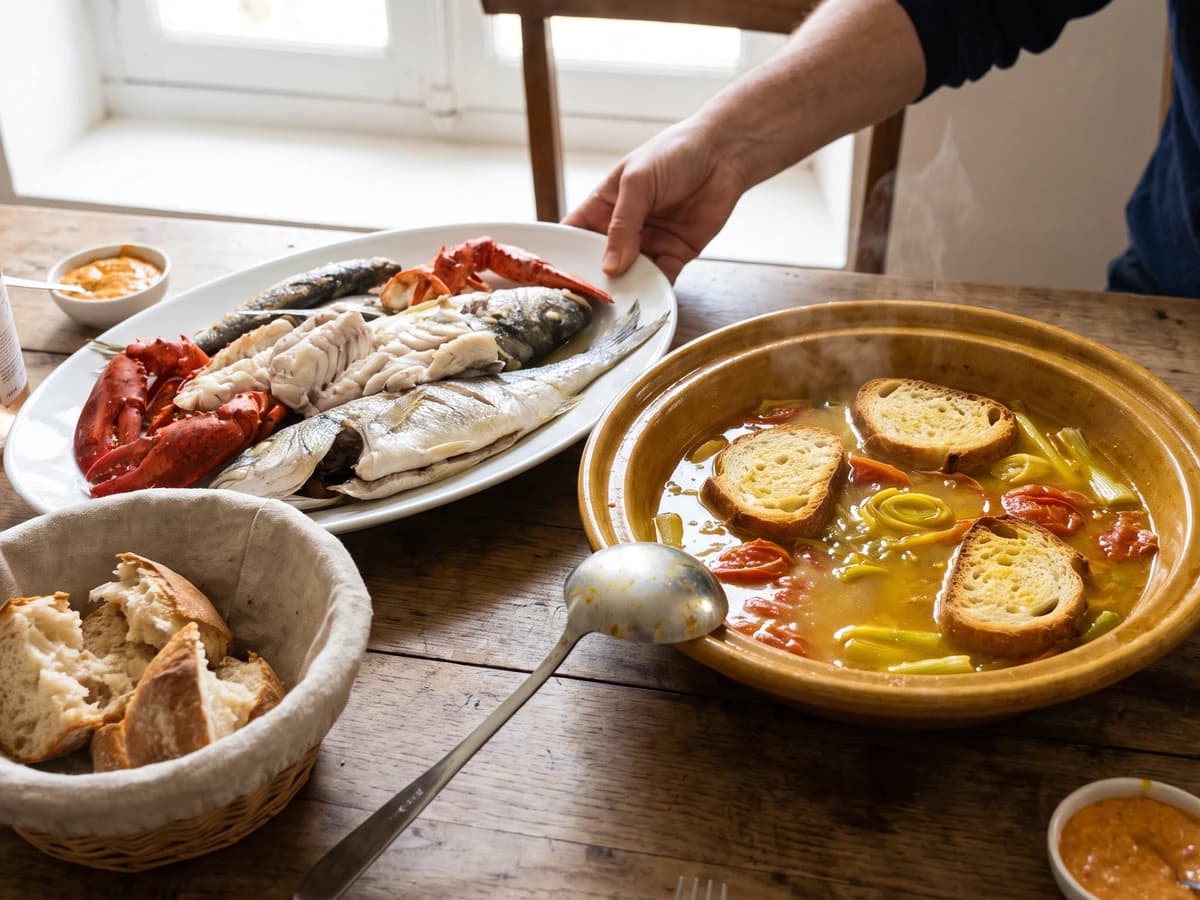
Marseille's great fish stew, saffron-gold and garlic-scented, proves that a hard boil can be the careful choice: it binds olive oil into broth before the whole pot meets bread.
A cooking platform built around craft, culture, and the stories behind what we eat.
Created by Chef Juliette
Based on No. 2, The Preparation of Clarified Consommé for Clear Soups, from Le Guide Culinaire (1907) by Auguste Escoffier
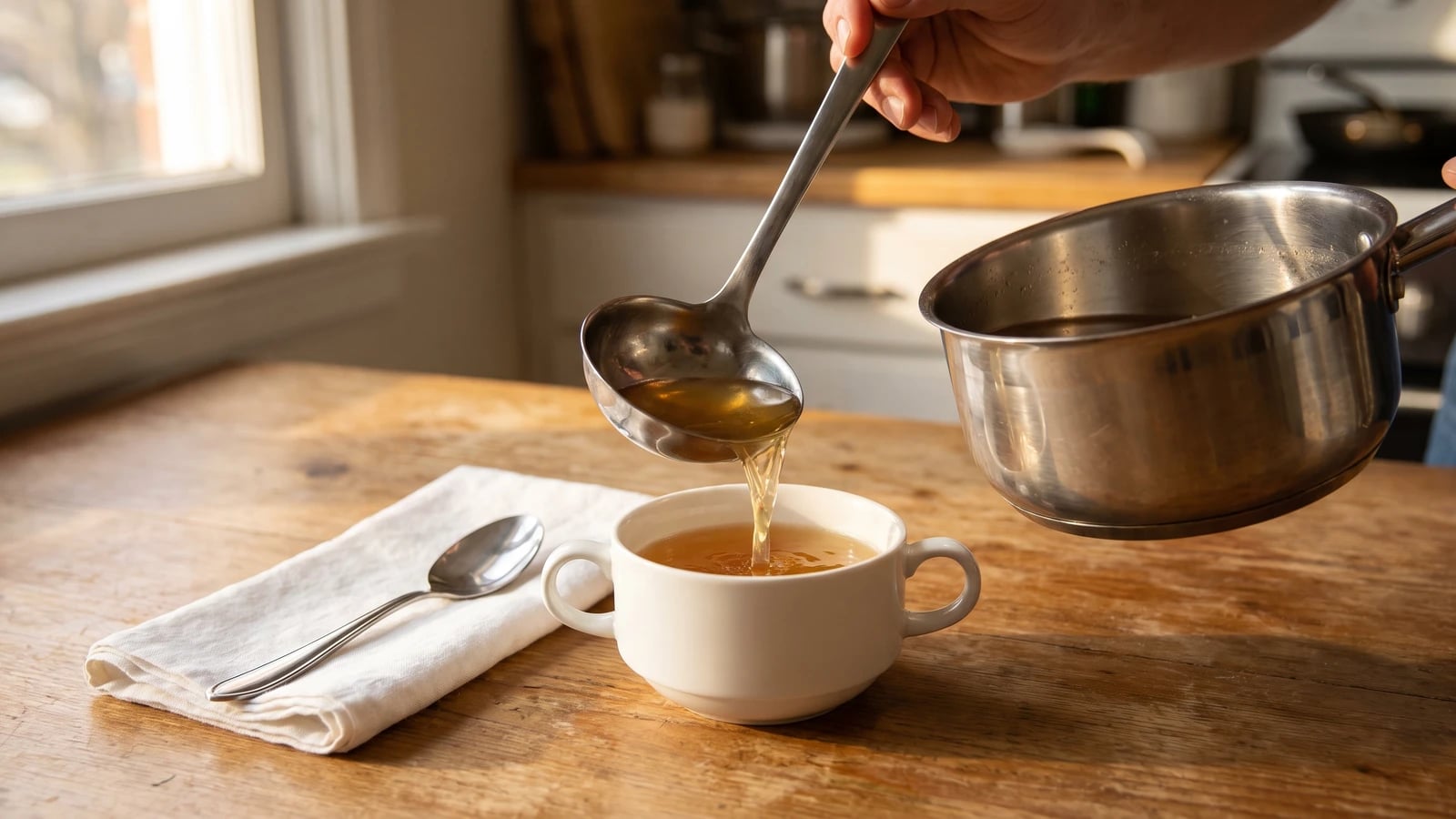
A clear soup lesson in one pot: lean beef, egg white, and roasted chicken bones rise into a raft, gathering every cloudy particle while the consommé holds at the barest tremble beneath.
Consommé clarifié (clarified consommé for clear soups) teaches one true thing: clarity comes from stillness. Lean beef and egg white gather into a raft that draws suspended particles from the broth, but only while the liquid moves gently beneath it. Stir after the raft forms or let the pot boil hard, and the clarification breaks apart.
The original method assumed five quarts of consommé, a saucier tending the fire, stock never off the fire, a tall narrow stewpan, and a mortar large enough to pound beef with a fowl carcass. Here every quantity is halved, taking the professional yield from four quarts to about two. An 8-quart heavy pot replaces the stewpan, a food processor minces the beef, and poultry shears expose the chicken bones without sending them through a machine. Those changes remove brigade scaffolding. The cold start, the gradual heating, and the full hour at a bare simmer remain, because they are the dish. One cook, one stove, one evening.
The broth will look worse before it looks splendid: gray, cloudy, and thoroughly unpromising, then capped by a firm raft while pale amber consommé clears underneath. Don't interfere with that transformation. Once the raft rises, stop stirring and keep the broth at the barest tremble. That is the step that decides the dish.
Consommé clarifié belongs to the Parisian classical kitchen, where clear soups opened formal meals and the clarity of the broth demonstrated the discipline of the stockpot. From grand service it moved into bourgeois dining rooms, where small garnishes could change the name of the finished soup while the limpid base remained the same. The raft is often mistaken for a lid or simple filter, but its coagulating beef and egg proteins gather suspended particles from within the liquid, which is why a hard boil defeats the method.
Quantity
10 cups (2½ quarts / 2.4 L / about 2.4 kg)
Quantity
About 2 cups loosely packed (12 oz / 340 g)
all visible fat and sinew removed, coarsely minced
Quantity
1 tablespoon (15 ml / 15 g), equal to ½ large egg white
Quantity
½ carcass (about 8 oz / 225 g)
roasted if possible, with skin and loose fat removed and bones cut into small sections
| Ingredient | Quantity |
|---|---|
| cold, fully degreased Ordinary Consommé | 10 cups (2½ quarts / 2.4 L / about 2.4 kg) |
| very lean beef roundall visible fat and sinew removed, coarsely minced | About 2 cups loosely packed (12 oz / 340 g) |
| egg white | 1 tablespoon (15 ml / 15 g), equal to ½ large egg white |
| chicken carcassroasted if possible, with skin and loose fat removed and bones cut into small sections | ½ carcass (about 8 oz / 225 g) |
Begin with the Ordinary Consommé completely cold. Lift away every patch of congealed fat, then measure the required 10 cups (2.4 L); fat left in the broth slips through the clarification and leaves a greasy haze. Reserve 1 cup (240 ml) for loosening the beef mixture and keep everything cold.
Pulse the chilled lean beef in short bursts until finely minced, but stop before it becomes a smooth paste. Transfer it to a bowl and work in the egg white, followed by the reserved cold consommé, until the mixture is loose and evenly combined. Fold in the cut chicken carcass. The old mortar crushed meat and bones together; poultry shears and a processor used separately give the home cook the same exposed surfaces without putting bones near a blade.
Put the beef, egg white, and carcass mixture into a tall 8-quart (7.5 L) heavy-bottomed pot. Add the remaining cold consommé gradually, stirring thoroughly after each addition so the clarifying mixture disperses through the broth rather than sitting in lumps. Scrape along the floor and into the corners of the pot.
Set the pot over medium-low heat and stir continuously from the bottom as it warms, preventing the meat and egg proteins from scorching. The broth will turn gray and cloudy, then the solids will begin gathering and rising. (It will look alarming. It is exactly right.) When the first bubbles appear at the edge and a raft covers the surface, stop stirring completely.
Move the pot to the smallest burner at its lowest setting. Hold the consommé at a bare simmer for 1 hour: the surface should quiver, with an occasional bubble at the edge, but it must never roll. Don't stir, poke, or press the raft. If the heat surges, lift the pot off immediately and leave it undisturbed for 5 minutes before returning it to gentler heat; a merely cracked raft will settle and the muslin will catch loose fragments. If it breaks apart completely and the broth remains cloudy, strain it, cool it quickly over ice, and clarify it again with a fresh mixture in the same proportions. Ça se rattrape, though the second pass will reduce the yield.
Take the pot off the heat and let it stand for 5 minutes. Skim away any beads of fat resting on the raft with a small spoon, working lightly so the raft stays intact. A clean corner of paper towel touched briefly to the surface will lift the last fine droplets.
Rinse the muslin in cold water and wring it well, then use it to line a fine-mesh strainer set over a clean saucepan. Make a small opening at the edge of the raft and ladle the consommé through the muslin without pressing the solids. Transfer the last liquid by tilting the pot gently, stopping before the raft tumbles into the strainer. The finished consommé should be limpid and pale amber-gold. If it contains a few visible specks, pass it once more through fresh damp muslin; squeezing the cloth only pushes particles back into the broth.
Use the consommé at once, or cool it rapidly before storing. Add any chosen clear-soup garnish only after clarification, since vegetables, pasta, custards, or dumplings introduced earlier would obstruct the raft and cloud the broth. Reheat gently without reducing it, then correct the seasoning for the finished soup. À table!
1 serving (about 240g)
Culinary guides, cultural storytelling, and the editorial depth that makes cooking meaningful.
Discover Culinary ExplorerChef Juliette
Marseille's great fish stew, saffron-gold and garlic-scented, proves that a hard boil can be the careful choice: it binds olive oil into broth before the whole pot meets bread.
Chef Juliette
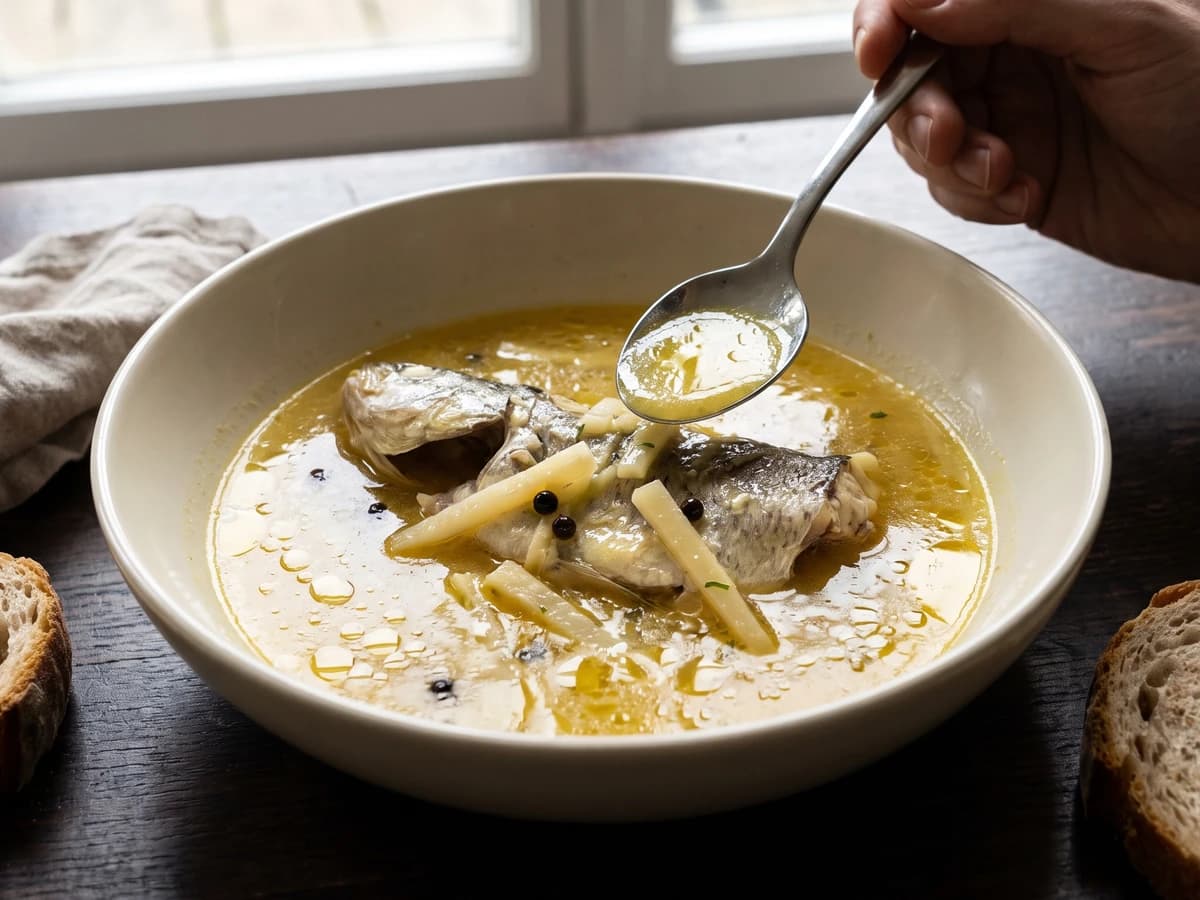
Waterzoi asks fresh, bone-in river fish to thicken its own buttery broth, with parsley root and pepper for company. No flour, no stockpot, just a brisk simmer watched closely.
Chef Juliette
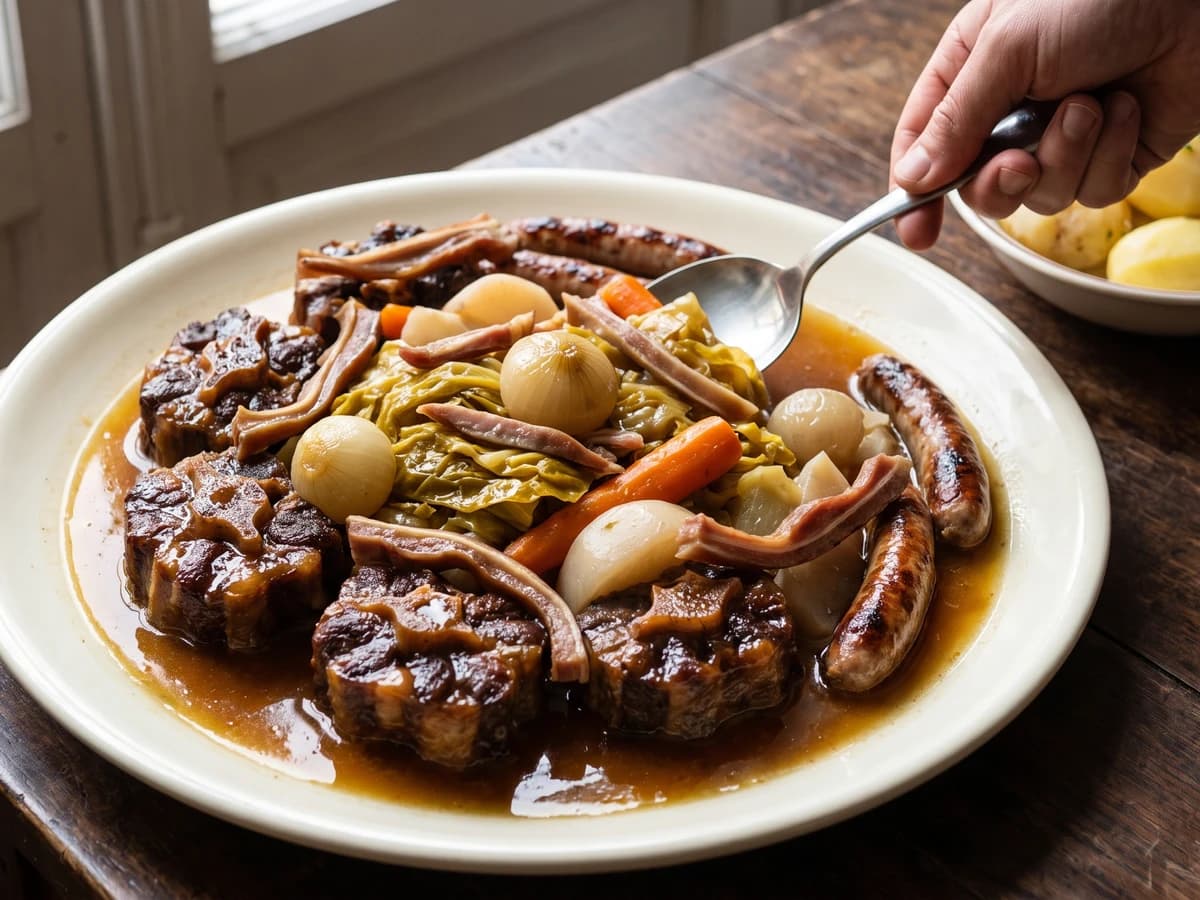
Queue de Bœuf en Hochepot gathers oxtail, pig's trotter and ear, cabbage, roots, and grilled chipolatas around a clear, gelatin-rich broth whose quiet simmer keeps every piece tender and distinct.
Chef Juliette
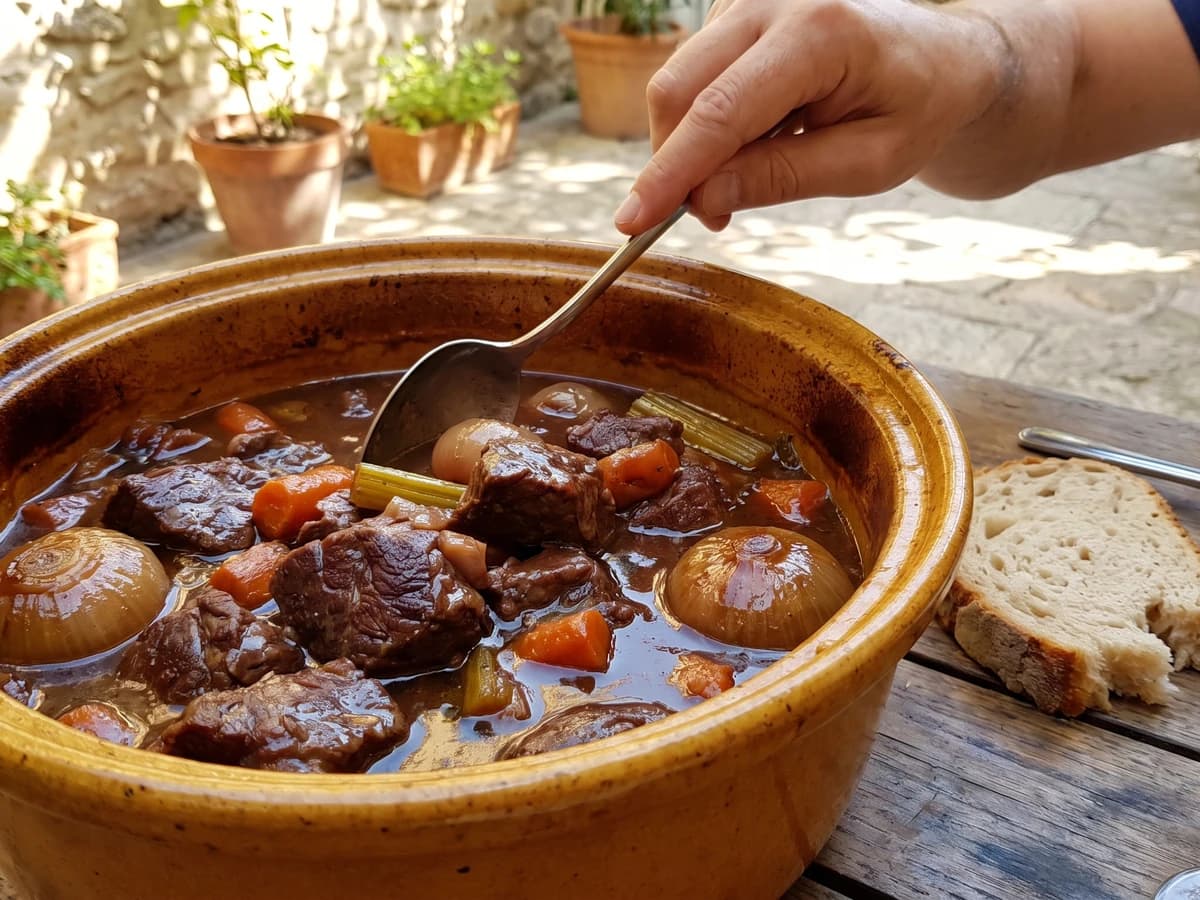
Beef shoulder larded with bacon, sharpened by red wine and vinegar, then sealed with garlic, vegetables, and dry lemon peel until the low oven turns it yielding and the gravy darkly glossy.