Chef Juliette
Suet Dumpling
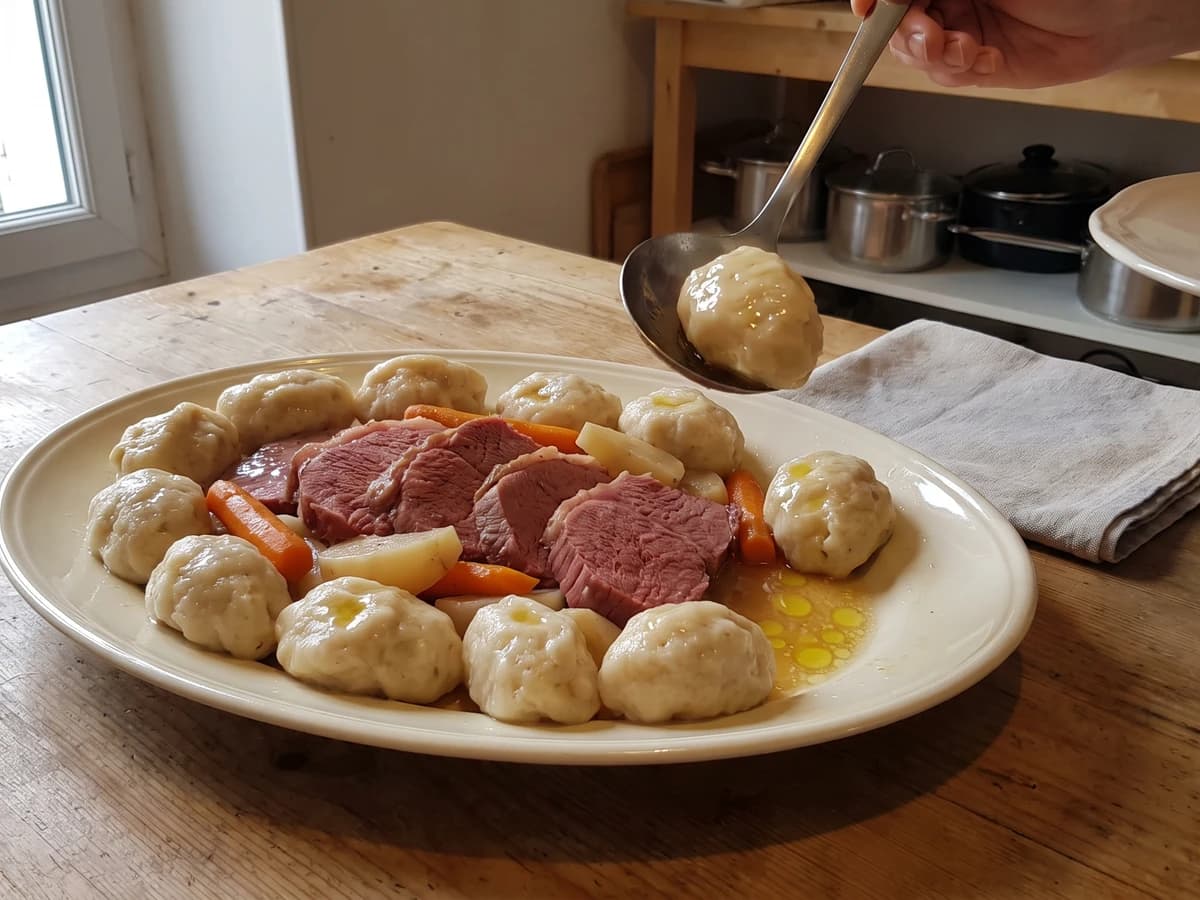
Boulettes au suif, poached beside salt beef, turn equal weights of flour and finely chopped suet into tender, rich dumplings. Keep the beef liquor at a bare tremble and the old garnish works beautifully at home.
A cooking platform built around craft, culture, and the stories behind what we eat.
Created by Chef Juliette
Based on No. 199, Veal Forcemeat with Fat and Cream, from Le Guide Culinaire (1907) by Auguste Escoffier
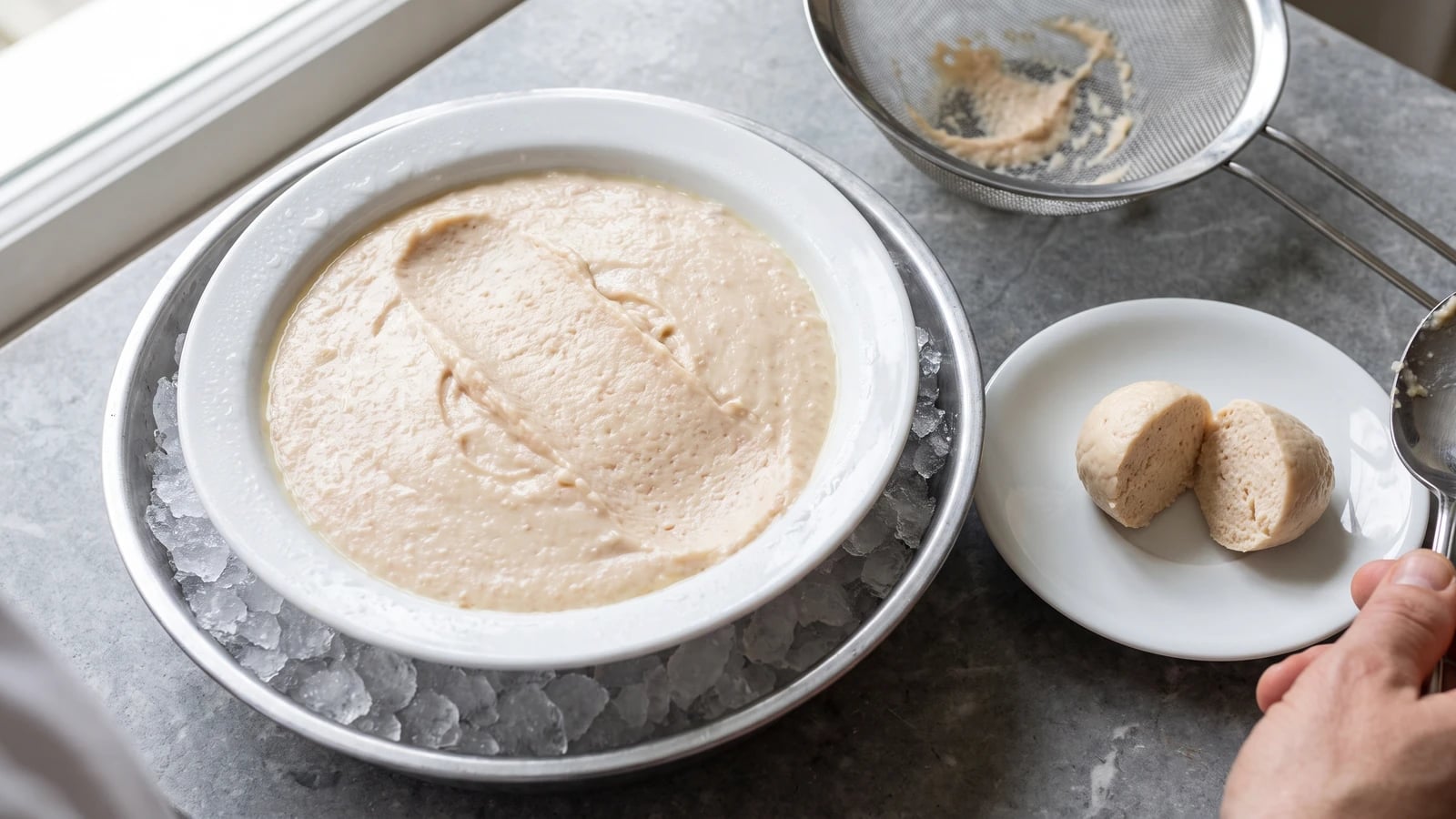
Farce de veau grasse à la crème turns cold veal, beef suet, egg, and cream into a satin-smooth stuffing, with one test-poached spoonful telling you exactly how to correct the whole batch.
Farce de veau grasse à la crème (veal forcemeat with fat and cream) teaches one true thing: cold is structure. The veal, kidney suet, eggs, cream, bowl, and blade must stay cold enough for the fat to remain suspended in a fine paste. Let the mixture warm and the suet smears away from the meat; keep it cold and the cooked farce becomes pale, supple, and close-grained.
This formula asks nothing of a saucier, a stockpot, or a salamander. Its professional assumptions were more relevant: a heavy mortar, a fine sieve, abundant ice, and someone free to pound without stopping. A chilled food processor replaces the mortar, and the refrigerator replaces the ice bed. The original quantity is halved for a home batch while every proportion remains intact. Hand-pounding was brigade scaffolding and can go; the separate chopping, fine sieve, overnight rest, gradual cream, and test poach are the dish and must stay.
This is one cook and two short sessions, because the overnight rest cannot honestly be hurried. On the second day, poach one spoonful before filling anything. If it is firm, add cream; if it is loose, add egg white. That test poach is the step that matters most, because it lets you correct the whole farce while correction is still possible.
Farce de veau grasse à la crème belongs to the national classical kitchen codified through the professional kitchens of Paris rather than to one regional household table. It grew from the older French practice of pounding meat and fat for stuffings, pâtés, and shaped preparations, then became finer through sieving, eggs, and gradually incorporated cream. Though sometimes mistaken for a finished pâté, this farce is a working preparation meant to be filled, shaped, or molded and then thoroughly cooked.
Quantity
8 ounces (225 g)
all tendons and silverskin removed, cut into ½-inch (1.25 cm) cubes
Quantity
8 ounces (225 g)
membrane and blood spots removed, cut into ½-inch (1.25 cm) cubes
Quantity
1¼ teaspoons (7 g)
Quantity
¼ teaspoon (0.6 g)
Quantity
⅛ teaspoon (0.25 g)
Quantity
1
chilled
Quantity
1
chilled
Quantity
1½ cups (360 ml / 360 g), plus up to 2 tablespoons (30 ml / 30 g) for correction if needed
well chilled
Quantity
1
lightly beaten, for correction if needed
| Ingredient | Quantity |
|---|---|
| very pale veal filletall tendons and silverskin removed, cut into ½-inch (1.25 cm) cubes | 8 ounces (225 g) |
| pared beef kidney suetmembrane and blood spots removed, cut into ½-inch (1.25 cm) cubes | 8 ounces (225 g) |
| fine salt | 1¼ teaspoons (7 g) |
| finely ground white pepper | ¼ teaspoon (0.6 g) |
| freshly grated nutmeg | ⅛ teaspoon (0.25 g) |
| large eggchilled | 1 |
| large egg yolkchilled | 1 |
| heavy creamwell chilled | 1½ cups (360 ml / 360 g), plus up to 2 tablespoons (30 ml / 30 g) for correction if needed |
| large egg white (optional)lightly beaten, for correction if needed | 1 |
Refrigerate the food processor bowl and blade, fine sieve, receiving bowl, and shallow resting dish for 30 minutes. Trim every tendon and strip of silverskin from the veal. Pare the papery membrane and any blood spots from the kidney suet, then cube the veal and suet separately. Spread them on separate plates and chill until very firm, about 15 minutes in the freezer, but do not freeze them solid.
Pulse the veal alone in short bursts until very finely chopped, then transfer it to the chilled receiving bowl. Process the suet separately to the same fineness. Return both to the processor, add the salt, white pepper, and nutmeg, then process in brief bursts until they form a fine, even paste. Scrape the bowl often so no coarse pockets hide beneath the blade. If the paste softens or begins to show separate grease, stop, spread it thin in the chilled dish, and refrigerate for 15 minutes before continuing.
With the processor running in short intervals, add the chilled whole egg and process until it disappears completely into the paste. Add the yolk and incorporate it just as thoroughly. This preserves the source method of adding the eggs consecutively without ceasing to pound, but the pauses keep a home processor from warming the mixture. The paste should look homogeneous and slightly elastic, never oily.
Press the paste through a sturdy fine-mesh sieve or tamis with a flexible scraper, working in small amounts and discarding any sinew left behind. This is not brigade scaffolding. The sieve is what turns minced meat into fine farce, so do not skip it. Spread the sieved mixture no more than 1 inch (2.5 cm) deep in the chilled dish, press food-safe wrap directly against its surface, and refrigerate at 40°F (4°C) or colder for 12 to 24 hours.
Return the rested farce to the chilled processor and work it for 20 to 30 seconds. Add the 1½ cups (360 ml / 360 g) chilled cream little by little, about 2 tablespoons at a time, processing only until each addition is fully absorbed before adding the next. Scrape the bowl between additions. If the mixture turns grainy or cream beads around the edge, stop immediately and chill it for 15 minutes; resume with brief pulses once it is firm again.
Heat a small saucepan of water to about 180°F (82°C), where the surface barely trembles. Shape 1 tablespoon of farce into a small oval and poach it gently until fully cooked and 160°F (71°C) at the center, about 5 minutes. Let it settle for a minute, then cut and taste it. If it is too firm or rubbery, beat 1 tablespoon (15 ml / 15 g) additional chilled cream into the batch and test again. If it is loose, porous, or will not hold its shape, beat in the reserved egg white 1 teaspoon at a time and repeat the test. Ça se rattrape. Correct the seasoning only after tasting the cooked sample.
Transfer the corrected farce to a clean chilled container, press food-safe wrap directly against the surface, and refrigerate immediately. Use it within 24 hours as a stuffing or shaped preparation. The test morsel cooks only the sample, so the remaining farce is still raw; cook the center of the finished preparation to at least 160°F (71°C) before serving. À table!
1 serving (about 113g)
Culinary guides, cultural storytelling, and the editorial depth that makes cooking meaningful.
Discover Culinary ExplorerChef Juliette
Boulettes au suif, poached beside salt beef, turn equal weights of flour and finely chopped suet into tender, rich dumplings. Keep the beef liquor at a bare tremble and the old garnish works beautifully at home.

Chef Juliette
Bread, flour, frangipane, and rice become four cool, supple panades for binding forcemeats, each changing body and flavor while preserving tenderness. The finest Mousselines need none, and knowing that distinction is the lesson.

Chef Juliette
Panade au pain is bread, milk, salt, heat, and attention: stir until the paste releases cleanly, butter it against a skin, and you have the quiet binder behind tender French farces.

Chef Juliette
Panade de farine teaches the drying stroke behind pâte à choux: flour meets boiling buttered water, then stays over the fire until the paste gathers, smooths, and quits the pan cleanly.