
Chef Juliette
John Dory (St. Pierre)
John Dory has the delicacy of sole and the firmness of turbot. A light flouring, a quick butter sauté, and nut-brown beurre noisette show exactly why looks never mattered.
A cooking platform built around craft, culture, and the stories behind what we eat.
Created by Chef Juliette
Based on No. 1982, Pluviers Dorés (Golden Plover), from Le Guide Culinaire (1907) by Auguste Escoffier
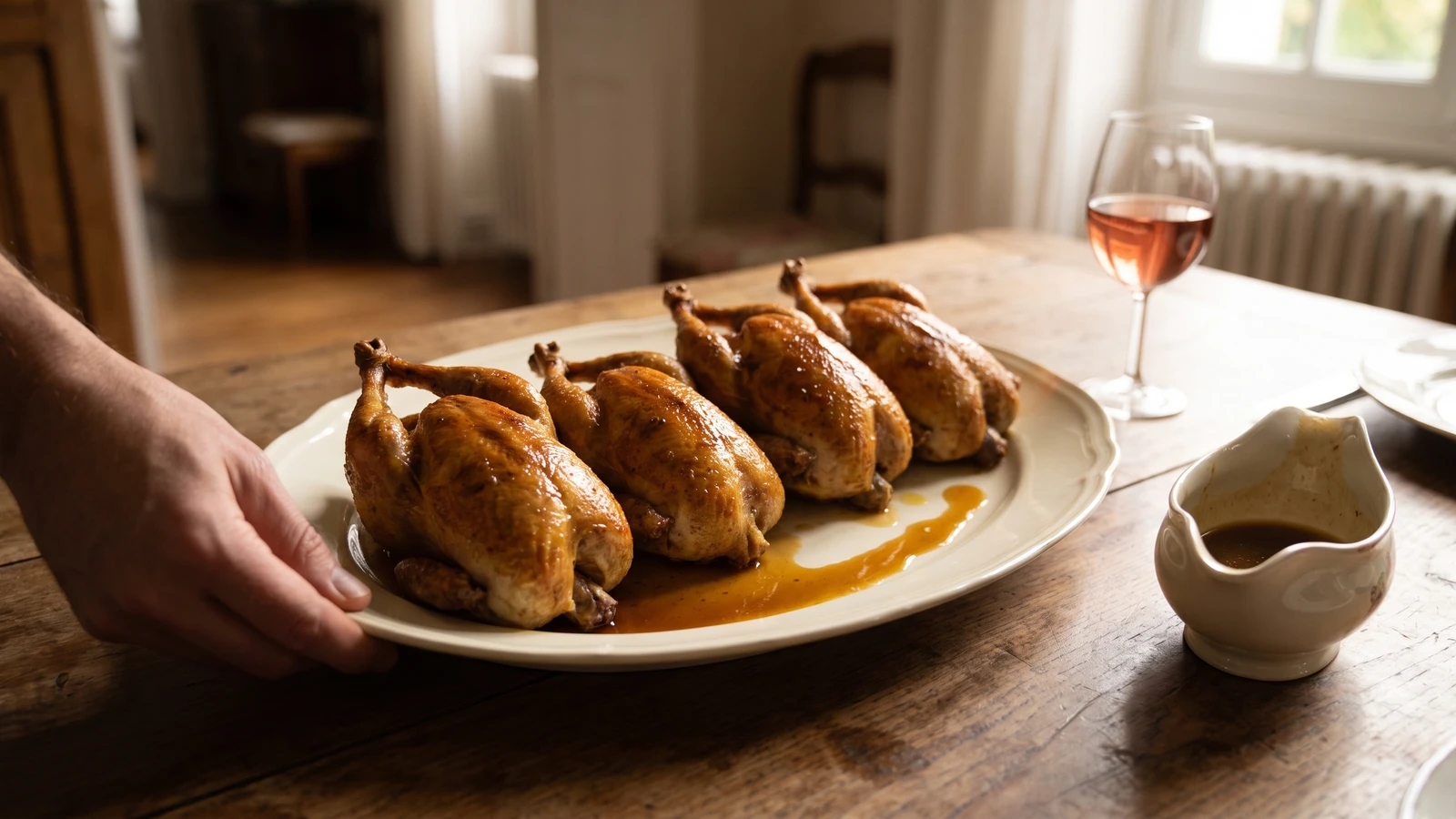
Pluviers Dorés need fierce heat and immediate service: bare little game birds roasted bronze, kept juicy, and carried straight to the table with only their glossy, concentrated pan jus.
Pluviers Dorés teach that timing can be flavor. The one true thing to know before touching a pan is that the entire table must be ready first. These tiny game birds want bare skin browned under fierce heat, flesh kept juicy, and the platter moving while the pan jus still shines. Hold them, and their delicacy drains away.
The source assumes a fierce open fire and enough hands to carry the birds straight from spit to table. It does not call for the usual brigade scaffolding of a saucier, a stockpot never off the fire, or a salamander, so neither will we invent them. At home, a 500°F (260°C) oven and a preheated metal skillet reproduce that hard radiant heat. Boiling water lifts the fond, then cold butter binds it into a jus très court (very short pan gravy). The entry gives no brigade quantity, so this version fixes the scale at four birds for four people. One cook, one stove, one evening.
The extra hands are scaffolding and can go. Fierce heat, no bacon, no garnish, a tightly reduced jus, and immediate service are the dish itself, so every one stays. Clarified butter prevents its milk solids from burning at this heat without imposing another flavor. The safety endpoint changes plainly: the source's somewhat underdone bird becomes juicy but fully cooked, pulled at 162°F (72°C) and confirmed at 165°F (74°C) after its brief rest.
Preheat the skillet, warm the platter, and gather the diners before seasoning the birds. That preparation decides the dish. If the browning lags, the broiler can rescue it in seconds, ça se rattrape, but nothing restores moisture lost while dinner waits.
Pluviers dorés belong to the French table of gibier à plume from the northern plains of Picardy and the marshes along the Channel, where migrating birds passed from hunters and game dealers into bourgeois dining rooms and grand kitchens. Classical books group golden plover with vanneaux and chevaliers because these small marsh birds demanded the roast course's quick fire rather than elaborate saucework. The striking rule is the refusal of barding: although bacon protected many lean game birds, these were roasted bare and served only with a very short jus.
Quantity
4 birds, about 5 to 7 oz (140 to 200 g) each
fully plucked and eviscerated, with heads and feet removed
Quantity
1 teaspoon (5 ml / 6 g)
Quantity
1/2 teaspoon (2.5 ml / 1 g)
Quantity
2 tablespoons (30 ml / 28 g)
melted
Quantity
1/4 cup (60 ml / 60 g)
for the jus
Quantity
1 tablespoon (15 ml / 14 g)
diced
| Ingredient | Quantity |
|---|---|
| oven-ready golden plovers from a lawful, inspected sourcefully plucked and eviscerated, with heads and feet removed | 4 birds, about 5 to 7 oz (140 to 200 g) each |
| fine sea salt | 1 teaspoon (5 ml / 6 g) |
| freshly ground black pepper | 1/2 teaspoon (2.5 ml / 1 g) |
| clarified buttermelted | 2 tablespoons (30 ml / 28 g) |
| boiling waterfor the jus | 1/4 cup (60 ml / 60 g) |
| cold unsalted butterdiced | 1 tablespoon (15 ml / 14 g) |
Set a rack in the upper third of the oven and heat it to 500°F (260°C). Put a 12-inch (30 cm) heavy flameproof skillet or shallow metal roasting pan inside for at least 20 minutes. Fill the serving platter with hot water so it will be warm when needed, set the table, and have the diners within calling distance. Immediate service is part of the cooking here, not ceremony.
Keep the plovers cold until the oven and table are ready. Inspect each bird for pinfeathers, bruised shot channels, or pellets, then dry the skin and cavities thoroughly. Season inside and out with the salt and pepper. Brush every surface with the clarified butter, leaving no heavy pools. Butter, not bacon: the source is emphatic, and barding would soften the skin and mask the bird's own flavor.
Using dry oven mitts, pull out the blistering-hot skillet and arrange the birds breast-side up with space between them. Return the pan immediately to the upper rack. Roast undisturbed for 6 minutes, rotate the pan, then continue for 3 to 6 minutes. Begin checking each bird at 9 minutes by inserting an instant-read thermometer horizontally into the thickest breast without touching bone. Remove each one as it reaches 162°F (72°C); their skins should be taut and deep hazelnut-brown. If the flesh reaches temperature while the skin is pale, place it under the broiler for 15 to 30 seconds and watch without looking away. If the wing tips darken too quickly, shield only those tips with small pieces of foil rather than wrapping the bird.
Empty and dry the warmed platter, then transfer the birds to it and leave them uncovered. Set the roasting skillet over high heat. Pour off loose fat but preserve the mahogany fond, add the boiling water carefully, and scrape until every brown deposit dissolves. Boil hard for 45 to 90 seconds, until about 3 tablespoons (45 ml) remain and the liquid looks concentrated rather than watery. Take the pan off the heat and whisk in the cold butter a few pieces at a time. If the jus looks greasy, skim the loose fat and whisk in 1 teaspoon (5 ml) boiling water; if it reduced too far, loosen it with another spoonful. Ça se rattrape. Taste before adding any salt.
After the birds have rested for about 3 minutes while the jus was made, confirm that each breast has reached 165°F (74°C). If one has not, return it to the hot skillet and oven for 60 seconds, then check again. Spoon a little jus beneath and around each plover, keeping the burnished breast skin exposed. Add no bacon, herbs, vegetables, or decorative garnish. Carry the platter directly to the table, warn diners that whole game birds contain fine bones and may retain an occasional shot fragment, and serve at once. À table!
1 serving (about 155g)
Culinary guides, cultural storytelling, and the editorial depth that makes cooking meaningful.
Discover Culinary ExplorerChef Juliette
John Dory has the delicacy of sole and the firmness of turbot. A light flouring, a quick butter sauté, and nut-brown beurre noisette show exactly why looks never mattered.

Chef Juliette
Fresh haddock proves its delicacy in the meunière pan: a fine flour crust, moist pearly flakes, and beurre noisette sharpened with lemon and parsley, ready from one skillet in half an hour.

Chef Juliette
Éperlans à l’Anglaise turns small fish into a lesson in disciplined coating: boned smelts under a close, crisp crumb, pan-fried in clarified butter and finished with bright, half-melted maître d’hôtel butter.

Chef Juliette
Tiny smelts, shallot, mushrooms, white wine, gratin sauce, and fine bread raspings meet a fierce oven, where the fish must turn tender in the same breath the buttered crust bronzes.