
Chef Juliette
John Dory (St. Pierre)
John Dory has the delicacy of sole and the firmness of turbot. A light flouring, a quick butter sauté, and nut-brown beurre noisette show exactly why looks never mattered.
A cooking platform built around craft, culture, and the stories behind what we eat.
Created by Chef Juliette
Based on No. 1977, Roast Woodcock, from Le Guide Culinaire (1907) by Auguste Escoffier
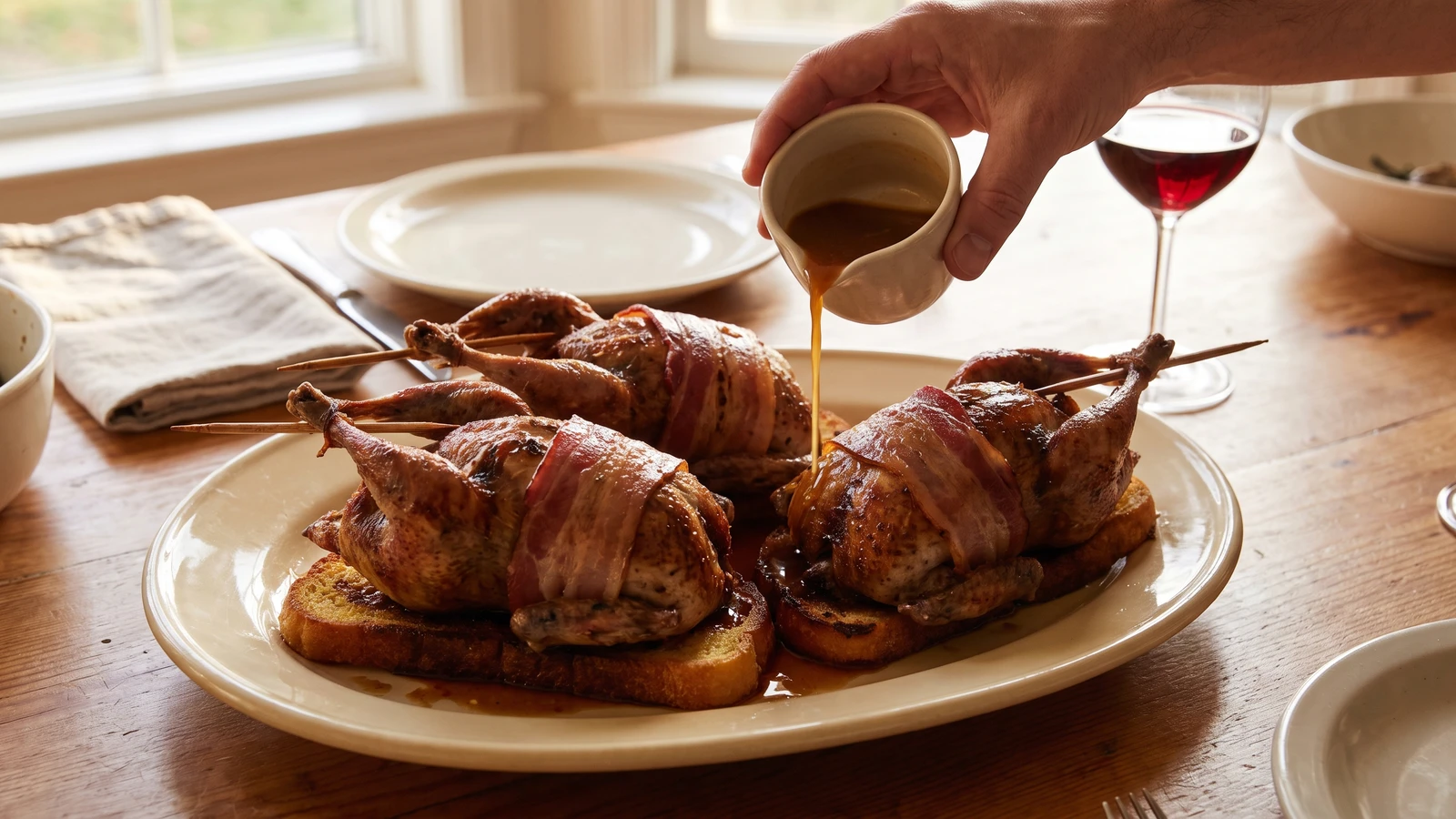
Four woodcock, barded in bacon and roasted fiercely over butter-fried bread, with every precious drip caught beneath and the pan swilled with Cognac for a dark, glossy liquor served alongside.
Bécasses rôties (roast woodcock) teach economy of flavor in its purest form: roast a small bird quickly, lose none of its juices, and make the sauce from what the pan gives you. The woodcock is left undrawn except for its gizzard, barded with bacon, and set over fried bread that catches the rich drippings. That bread is not decoration. It is half the dish.
The original assumed a turning spit before a good fire, a game dealer who knew when a bird was "just sufficiently high," and a saucier reaching for game gravy from a stockpot never off the fire. Your equivalents are a fiercely heated oven, legally sourced birds matured and prepared by the dealer, and one teaspoon of concentrated game gravy. The spit and separate sauce station are brigade scaffolding and can go; a salamander has no work here. The beak truss, bacon barding, undrawn bird, fried bread, and brandy swill must stay. One cook, one stove, one evening.
High heat decides the dish. A timid oven dries woodcock before it bronzes, while a properly heated one cooks it within the source's brief fifteen-to-eighteen-minute window and leaves the bacon burnished and the croûton saturated beneath. Preheat thoroughly, then keep the oven door shut until the first temperature check.
Bécasses rôties belong to French hunting tables, especially the woodland country of Sologne and the pine forests of the Landes, where migrating woodcock were prized above larger game for their deep flavor. From estate roasting fires the dish passed into the grand kitchens and dining rooms of Paris, but its defining practice remained intact: only the gritty gizzard was removed, while the remaining soft innards seasoned a croûton beneath the bird. This was deliberate economy, not careless dressing, and the enriched bread became one of the most valued mouthfuls on the platter.
Quantity
4 birds, about 8 to 10 ounces (225 to 285 g) each
legally sourced, plucked, head and beak attached, eyes and gizzard removed, all other viscera intact
Quantity
8 slices, about 4 ounces (115 g)
Quantity
4 slices, each ½ inch (1.25 cm) thick, about 6 ounces (170 g) total
Quantity
¼ cup (60 ml / 57 g)
Quantity
¼ cup (60 ml / 57 g)
Quantity
1 teaspoon (5 ml / 5 g)
| Ingredient | Quantity |
|---|---|
| oven-ready whole woodcocklegally sourced, plucked, head and beak attached, eyes and gizzard removed, all other viscera intact | 4 birds, about 8 to 10 ounces (225 to 285 g) each |
| very thin unsmoked streaky bacon | 8 slices, about 4 ounces (115 g) |
| firm day-old country bread | 4 slices, each ½ inch (1.25 cm) thick, about 6 ounces (170 g) total |
| unsalted butter | ¼ cup (60 ml / 57 g) |
| Cognac or other French brandy | ¼ cup (60 ml / 57 g) |
| concentrated game gravy | 1 teaspoon (5 ml / 5 g) |
Set a rack in the upper third of the oven and heat it to 475°F (245°C) for a full thirty minutes. Take the woodcock from the refrigerator twenty minutes before roasting and pat every surface dry without rinsing. Fold the wings behind each bird, cross the legs over the abdomen, turn the head alongside the body, and carefully pass the long beak through the fleshy part of both thighs to hold them. If a beak begins to split, stop forcing it. Ça se rattrape: secure the legs and head against the body with unwaxed cotton kitchen twine instead.
Trim each bread slice into a broad oval just large enough to support one bird. Melt the butter in a wide skillet over medium heat and fry the slices until pale gold on both sides, about two minutes per side. They will brown again beneath the woodcock, so stop before their edges turn dark. Arrange the croûtons in a small heavy roasting pan with a little space between them.
Drape two bacon slices over the breast of each woodcock, overlapping them enough to cover the lean meat, then set each bird breast-side up on its croûton. Roast without opening the oven for fifteen minutes. Check each bird at the thickest part of the breast and innermost thigh without touching bone; it must reach 165°F (74°C). Continue roasting as necessary, checking at one-minute intervals, usually no more than eighteen minutes for birds of this size. The skin should be chestnut-brown, the bacon bronzed at its edges, and the bread dark gold with rich juices gathered at its center.
Lift each bird together with its croûton onto a warmed oval platter, keeping the bacon in place. Rest them for five minutes while you make the pan liquor. The brief rest settles the juices, but don't hold woodcock longer than this; a tiny roast cools with astonishing speed.
Spoon off any large pool of clear bacon fat while leaving the dark fond in the roasting pan. Remove the pan from the burner before adding the Cognac, especially over a gas flame, then return it to medium heat and scrape the floor clean with a wooden spoon. Simmer for one to two minutes, until the raw alcoholic edge softens and the liquor reduces slightly. Stir in the concentrated game gravy and bring it just back to a simmer. If it turns sticky, loosen it with a teaspoon of hot water; if fat sheets across the surface, spoon that fat away. Ça se rattrape. The finished liquor should be thin, dark, and glossy, not thickened like a conventional sauce.
Pour the pan liquor into a warmed sauceboat and serve it separately, exactly as the source directs. Give each guest one whole woodcock on its butter-fried croûton, with the bacon still draped over the breast, and pass the liquor for spooning at the table. The crisp edges and richly soaked center of the bread belong in every serving. À table!
1 serving (about 280g)
Culinary guides, cultural storytelling, and the editorial depth that makes cooking meaningful.
Discover Culinary ExplorerChef Juliette
John Dory has the delicacy of sole and the firmness of turbot. A light flouring, a quick butter sauté, and nut-brown beurre noisette show exactly why looks never mattered.

Chef Juliette
Fresh haddock proves its delicacy in the meunière pan: a fine flour crust, moist pearly flakes, and beurre noisette sharpened with lemon and parsley, ready from one skillet in half an hour.

Chef Juliette
Éperlans à l’Anglaise turns small fish into a lesson in disciplined coating: boned smelts under a close, crisp crumb, pan-fried in clarified butter and finished with bright, half-melted maître d’hôtel butter.

Chef Juliette
Tiny smelts, shallot, mushrooms, white wine, gratin sauce, and fine bread raspings meet a fierce oven, where the fish must turn tender in the same breath the buttered crust bronzes.