
Chef Juliette
John Dory (St. Pierre)
John Dory has the delicacy of sole and the firmness of turbot. A light flouring, a quick butter sauté, and nut-brown beurre noisette show exactly why looks never mattered.
A cooking platform built around craft, culture, and the stories behind what we eat.
Created by Chef Juliette
Based on No. 1949, Roast Sirloin, from Le Guide Culinaire (1907) by Auguste Escoffier
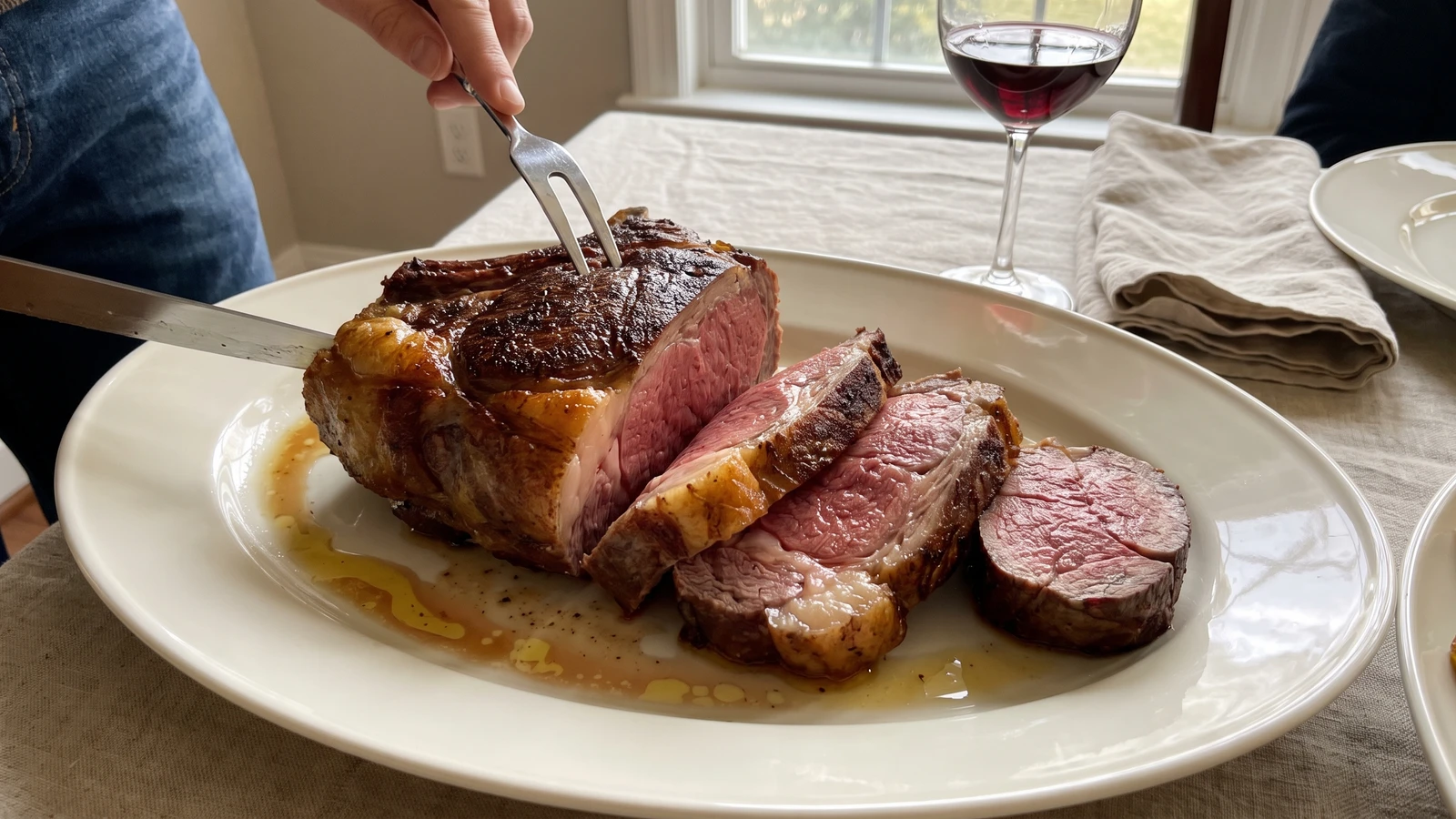
Aloyau rôti asks for restraint before the oven: leave the undercut under its heavy fat shield, roast over steady heat, and carve a bronze-crusted joint with both loin and fillet still rosy.
Aloyau rôti teaches restraint before heat: leave the fat alone. The smaller undercut, or tenderloin, cooks more quickly than the broad upper loin, and its thick covering of fat is the shield that lets both muscles reach the table rosy and juicy. Trim that protection away and no clever timing will put the moisture back.
The grand kitchen assumed an enormous loin, a butcher who cracked the flat vertebral bones without detaching them, and a concentrated roasting fire tended throughout. For four, the honest equivalent is a two-bone joint prepared the same way, a steady conventional oven, and a thermometer placed in each muscle before the roast comes out. This entry called for no saucier, stockpot, or salamander, so neither will we. Only the brigade scale and the old fire arrangement have gone; the protective fat, attached bones, and patient heat remain. One cook, one stove, one evening.
The one step that decides the dish happens at the butcher's block, before your pan is warm. Ask for the undercut to remain attached and thickly covered, with only the loose excess of flank removed. A steady, concentrated fire follows, never a fierce one.
Aloyau rôti belongs to the classical Parisian dining room, where French butchery met the English custom of presenting a large roast-beef joint for carving. In French service, the upper loin and tender undercut remained together on the vertebral bones, making the butcher's preparation part of the cooking method rather than mere presentation. The heavy fat covering is sometimes mistaken for waste, but here it serves as working equipment, protecting the fillet until the larger muscle is ready.
Quantity
1 joint, 4½ to 5 lb (2 to 2.3 kg)
tenderloin attached, thick fat and flank covering left over the undercut, vertebral bones cracked at the base but not detached
Quantity
1 tablespoon (15 ml / 18 g)
Quantity
2 teaspoons (10 ml / 4 g)
Quantity
2 tablespoons (30 ml / 30 g)
only if needed to keep the drippings from scorching
| Ingredient | Quantity |
|---|---|
| bone-in short-loin sirloin roasttenderloin attached, thick fat and flank covering left over the undercut, vertebral bones cracked at the base but not detached | 1 joint, 4½ to 5 lb (2 to 2.3 kg) |
| fine sea salt | 1 tablespoon (15 ml / 18 g) |
| coarsely ground black pepper | 2 teaspoons (10 ml / 4 g) |
| hot water (optional)only if needed to keep the drippings from scorching | 2 tablespoons (30 ml / 30 g) |
Ask the butcher for a two-bone section of short-loin sirloin with both the broad upper loin and its smaller undercut, or tenderloin, attached. Have the flat vertebral bones cracked through at their base but left in place, which preserves the joint during roasting and lets a carving knife free the bones afterward. Remove only loose, ragged excess from the flank. The thick fat covering the undercut must stay.
Pat every exposed surface dry, leaving the roast tied if the butcher secured it. Season evenly with the salt and pepper, pressing the seasoning onto the fat as well as the meat. Let the joint stand in a cool kitchen for 45 minutes while the oven heats; this gives the salt time to dissolve and the surface time to dry, but it does not need to become warm at its centre.
Heat a conventional oven to 375°F (190°C), with a rack in the lower-middle position. Set the roast bone-side down in a heavy, low-sided roasting pan, with the broad upper loin toward the slightly hotter rear of the oven and the protected undercut toward the door. The bones form a natural rack. Insert a probe into the centre of the upper loin without touching bone. Do not begin with a fierce burst of heat; a dark exterior gained before the two muscles cook evenly defeats the whole preparation.
Roast without disturbing the joint for 60 minutes, then begin checking both muscles with an instant-read thermometer every 10 minutes. For a rosy medium-rare finish, remove the roast when the upper loin reaches 125 to 128°F (52 to 53°C) and the protected undercut is no higher than 132°F (56°C), usually after 75 to 90 minutes. If the fat becomes deeply bronzed before the upper loin reaches 115°F (46°C), cover only that dark patch loosely with foil. If the undercut runs more than 10°F ahead of the upper loin, shield its side as well and turn the broad loin toward the rear of the oven. Ça se rattrape. If the pan residue threatens to blacken, add the hot water to a bare corner of the pan without wetting the roast.
Transfer the roast to a large board with a juice groove and leave it uncovered for 25 to 30 minutes. The internal temperature will continue to rise as the heat settles through the joint, while the meat fibres relax enough to hold their juices when cut. If the temperature has already passed your target, move the roast immediately to a cool board and do not cover it; this limits further cooking. Pour off the clear beef fat from the roasting pan, preserving any dark meat juices underneath.
Remove the twine. Run a long knife against the cracked vertebral bones and lift the bone section away in one piece; if the butcher did not crack them, carve each muscle away from the skeleton rather than forcing a household knife through bone. Slice the broad loin across the grain, then cut the tenderloin into slightly thicker medallions. Arrange both on a warmed platter, spoon over the resting juices and the dark juices from the pan, and serve at once. The exterior fat may be left at the edge of each slice or removed at the plate, because its protecting work is now complete. À table!
1 serving (about 320g)
Culinary guides, cultural storytelling, and the editorial depth that makes cooking meaningful.
Discover Culinary ExplorerChef Juliette
John Dory has the delicacy of sole and the firmness of turbot. A light flouring, a quick butter sauté, and nut-brown beurre noisette show exactly why looks never mattered.

Chef Juliette
Fresh haddock proves its delicacy in the meunière pan: a fine flour crust, moist pearly flakes, and beurre noisette sharpened with lemon and parsley, ready from one skillet in half an hour.

Chef Juliette
Éperlans à l’Anglaise turns small fish into a lesson in disciplined coating: boned smelts under a close, crisp crumb, pan-fried in clarified butter and finished with bright, half-melted maître d’hôtel butter.

Chef Juliette
Tiny smelts, shallot, mushrooms, white wine, gratin sauce, and fine bread raspings meet a fierce oven, where the fish must turn tender in the same breath the buttered crust bronzes.