
Chef Juliette
John Dory (St. Pierre)
John Dory has the delicacy of sole and the firmness of turbot. A light flouring, a quick butter sauté, and nut-brown beurre noisette show exactly why looks never mattered.
A cooking platform built around craft, culture, and the stories behind what we eat.
Created by Chef Juliette
Based on No. 1940, Vanneaux (Lapwings), from Le Guide Culinaire (1907) by Auguste Escoffier
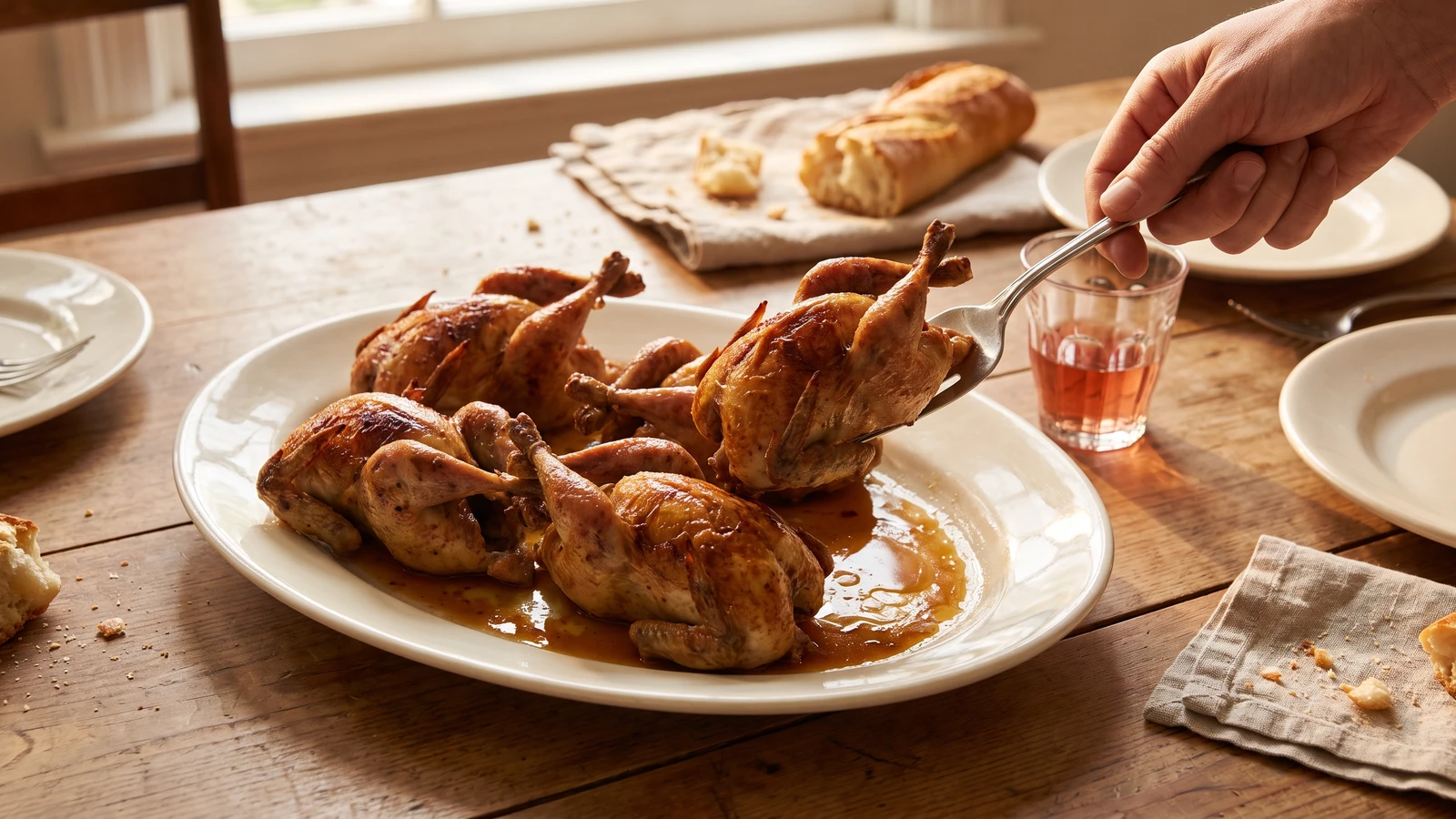
Four small lapwings, browned in butter and roasted fast, arrive with crisp burnished skin and a glossy pan jus. The lesson is exact: keep the skin for roasting, discard it before any salmis cullis.
Vanneaux rôtis (roast lapwings) teach a sharp distinction: skin is an asset under fierce roasting heat and a liability in salmis (a ragout of partly roasted game). Before touching a pan, know that any rank note in the skin or fat grows louder in the cullis, the concentrated game sauce, and no reduction takes it back out.
The source entry is terse because its kitchen assumed birds dressed by a game dealer, a turning spit, a hand free to baste, and a salamander ready to correct pale skin. Your honest equivalent is one heavy ovenproof skillet, a hot oven, and three turns of the birds. A saucier and a stockpot never off the fire belong to the salmis branch, not this roast, so neither is invented here. Four birds replace the brigade quantity, and the source gives no aromatics, so none are added. The spit and extra hands are scaffolding; swift roasting, butter basting, proper resting, and the clean flavor of the bird are the dish.
For tonight, the skin stays on and becomes burnished over real butter. If the cooked birds later go into salmis, strip that skin completely before preparing the cullis. The step that decides this roast is the temperature check: little birds race from ready to dry, so measure early and pull them the moment both breast and inner thigh reach 74°C / 165°F.
Vanneaux belonged to the French bourgeois game table rather than one provincial cuisine, arriving through game dealers from the wet meadows and marsh country of northern and western France. Classical menu language ranked them as ordinary fare below woodcock and snipe, but ordinary described their place in the menu hierarchy, not careless cooking. Roasting was their usual treatment; when they entered a salmis, the skin was discarded because its strong flavor could taint the cullis and become harsher as the sauce reduced.
Quantity
4 large birds (about 8 to 10 oz / 225 to 280 g each)
giblets removed and pinfeathers plucked
Quantity
2 teaspoons (10 ml / 12 g)
Quantity
1 teaspoon (5 ml / 2 g)
Quantity
6 tablespoons (90 ml / 85 g)
divided, with 2 tablespoons kept cold
Quantity
½ cup (120 ml / 120 g)
divided
| Ingredient | Quantity |
|---|---|
| legally sourced, fully dressed lapwingsgiblets removed and pinfeathers plucked | 4 large birds (about 8 to 10 oz / 225 to 280 g each) |
| fine sea salt | 2 teaspoons (10 ml / 12 g) |
| freshly ground black pepper | 1 teaspoon (5 ml / 2 g) |
| unsalted butterdivided, with 2 tablespoons kept cold | 6 tablespoons (90 ml / 85 g) |
| cold waterdivided | ½ cup (120 ml / 120 g) |
Heat the oven to 230°C / 450°F, or 220°C / 425°F with a fan, with the rack set in the upper-middle position. Examine each lapwing while it is cold. It should smell clean, faintly mineral, and gamey, never sour, ammonia-like, or rank. Remove any remaining pinfeathers and cut away bruised tissue surrounding a shot channel. Do not rinse the birds; water spreads contamination and leaves the skin too wet to brown. Pat the cavities and skin thoroughly dry.
Season the cavities and skin evenly with the salt and pepper. Tie each bird's legs together with kitchen twine and tuck the wing tips beneath the body so they do not scorch. Leave the seasoned birds uncovered for 10 minutes while the oven finishes heating. Dry skin and fierce heat are what give a small game bird its bronze coat.
Set a heavy 30 to 35 cm / 12 to 14 inch ovenproof skillet over medium heat and melt 4 tablespoons of the butter until its foam subsides. Lay the birds on one side and let them color for 2 minutes, then turn them onto the other side for another 2 minutes. Finish with the breasts facing upward and spoon the butter over them. The butter should smell nutty and look hazelnut-brown, never black. If it burns, lift out the birds, pour away the blackened fat, wipe out the loose specks, and continue with 1 tablespoon of the reserved butter. Ça se rattrape.
Transfer the skillet to the oven and roast for 8 minutes. Baste the birds with the pan butter, then begin checking their temperature with a thin probe in the thickest part of the breast and the inner thigh, avoiding bone. Continue roasting for 3 to 7 minutes, checking frequently, until both places reach 74°C / 165°F. If the skin darkens before the meat is ready, shield the breasts loosely with foil and lower the oven to 205°C / 400°F. High heat followed by early checking protects the flesh; a long gentle roast only dries a bird this small.
Move the lapwings to a warm platter and rest them for 8 to 10 minutes under a loose tent of foil. Do not wrap them tightly, or the crisp skin softens. Pour any juices released during the rest back into the skillet before finishing the jus.
Pour off excess fat from the skillet, leaving about 1 tablespoon and every brown trace of fond, the glaze stuck to the pan. Reserve 1 tablespoon of the cold water, then add the remainder to the skillet over medium heat. Scrape the fond into the liquid and reduce for 3 to 5 minutes, until the jus is glossy and lightly coats a spoon. Remove the skillet from the heat and monter au beurre, finish by whisking in the remaining cold butter a little at a time. If the jus separates into greasy beads, whisk in the reserved tablespoon of cold water off the heat. Ça se rattrape.
Remove the twine and set one whole lapwing on each warmed plate, or split the birds lengthwise with poultry shears for easier eating. Spoon the jus around them rather than over the skin, which keeps that hard-won surface crisp. Warn diners that wild game can contain small bones or an overlooked pellet. Serve immediately. À table!
1 serving (about 215g)
Culinary guides, cultural storytelling, and the editorial depth that makes cooking meaningful.
Discover Culinary ExplorerChef Juliette
John Dory has the delicacy of sole and the firmness of turbot. A light flouring, a quick butter sauté, and nut-brown beurre noisette show exactly why looks never mattered.

Chef Juliette
Fresh haddock proves its delicacy in the meunière pan: a fine flour crust, moist pearly flakes, and beurre noisette sharpened with lemon and parsley, ready from one skillet in half an hour.

Chef Juliette
Éperlans à l’Anglaise turns small fish into a lesson in disciplined coating: boned smelts under a close, crisp crumb, pan-fried in clarified butter and finished with bright, half-melted maître d’hôtel butter.

Chef Juliette
Tiny smelts, shallot, mushrooms, white wine, gratin sauce, and fine bread raspings meet a fierce oven, where the fish must turn tender in the same breath the buttered crust bronzes.