
Chef Juliette
John Dory (St. Pierre)
John Dory has the delicacy of sole and the firmness of turbot. A light flouring, a quick butter sauté, and nut-brown beurre noisette show exactly why looks never mattered.
A cooking platform built around craft, culture, and the stories behind what we eat.
Created by Chef Juliette
Based on No. 1933, Ortolans, from Le Guide Culinaire (1907) by Auguste Escoffier
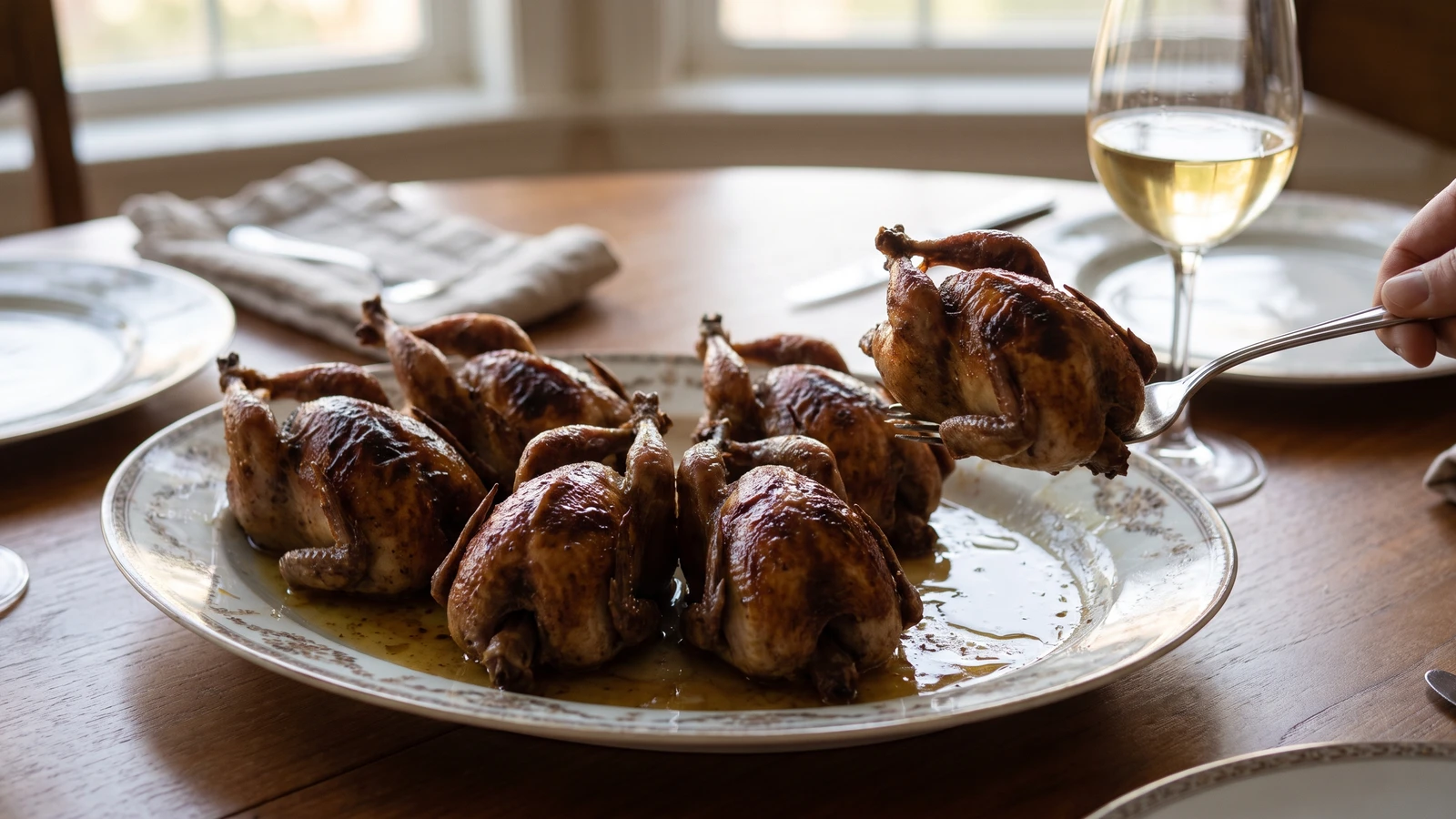
The canon’s starkest lesson in restraint, made lawfully with farmed quail: butter, salt, fierce heat, and no sauce, roasted just until the skin bronzes and the flesh stays juicy.
Ortolans rôtis (roasted ortolans) teach restraint. The source gives one firm instruction: roast the bird and serve it as plainly as possible. Anything added for display only obscures the point. Here the flavour is built from browned skin, concentrated roasting juices, and butter, not from a sauce waiting nearby.
The book assumed legally available wild ortolan, a tiny bird fat enough to baste itself over a fierce roasting fire. That ingredient is no longer an option because ortolan buntings are protected. This version uses headless, eviscerated farmed quail, and the change is stated plainly: quail is larger and leaner, so each diner receives two birds and a little real butter supplies the basting fat it lacks.
Unlike the grand sauced preparations, this entry needs no saucier, perpetual stockpot, or salamander. Trussing and turning dozens of birds on a spit were brigade scaffolding; a rack, a hot home oven, and eight evenly sized quail do the same work for one cook, one stove, one evening. Dry every surface, then trust fierce heat for a short roast. That is the one step that decides the dish.
Ortolan belongs to the fraught table history of Landes in Gascony, along the southwest migratory route where the tiny wild birds were trapped and fattened before appearing at ceremonial meals. The napkin ritual came to dominate the legend, but the source formula makes a quieter culinary claim: simplicity and roasting were all the bird required. The ortolan bunting is protected throughout France and the European Union, so lawful cooking cannot reproduce the ingredient; farmed quail preserves the roasting intent while openly changing the bird.
Quantity
8, each 5 to 6 ounces (140 to 170 g)
fully thawed, giblets removed, patted dry
Quantity
4 tablespoons (60 ml / 56 g)
melted and cooled slightly
Quantity
2 teaspoons (10 ml / 12 g)
Quantity
½ teaspoon (2.5 ml / 1 g)
| Ingredient | Quantity |
|---|---|
| headless, eviscerated farmed quailfully thawed, giblets removed, patted dry | 8, each 5 to 6 ounces (140 to 170 g) |
| unsalted buttermelted and cooled slightly | 4 tablespoons (60 ml / 56 g) |
| fine sea salt | 2 teaspoons (10 ml / 12 g) |
| freshly ground black pepper | ½ teaspoon (2.5 ml / 1 g) |
Set a rack in the upper third of the oven and heat it to 245°C (475°F), or 230°C (450°F) with convection, for a full 25 minutes. Fit a wire rack inside a heavy rimmed sheet pan. The fierce, fully established heat replaces the turning spit and gives these small birds colour before their lean flesh has time to dry.
Check each cavity for giblets or loose bone fragments, then blot the quail thoroughly inside and out. Season evenly with the salt and pepper, including a small pinch inside each cavity, and leave them at room temperature for no more than 20 minutes while the oven finishes heating. If moisture beads on the skin, blot again. Wet skin softens in the oven, and no amount of extra roasting will improve it without drying the meat.
Tuck the wing tips beneath the bodies without tight trussing. Brush the quail all over with half the melted butter, working a little into each cavity, then arrange them breast-side up on the rack with space between them. Keep the remaining butter warm. This extra fat is the one necessary change from ortolan to leaner farmed quail; it replaces what the original bird supplied for itself.
Roast without opening the door for 8 minutes. Rotate the pan, brush the birds with the remaining butter, and roast for another 4 to 7 minutes. Begin checking the smallest bird first: probe sideways into the thickest breast and the inner thigh without touching bone. Remove each quail as it reaches 74°C (165°F); the skin should be chestnut-gold and the butter on it deeply browned. If a bird reaches temperature while its skin is still pale, place it about 15 cm (6 inches) beneath a fully heated broiler for 30 to 45 seconds, watching without looking away. Ça se rattrape. Do not keep roasting merely to chase colour.
Transfer the quail to a warm platter and rest them uncovered for 5 minutes so the skin stays crisp. If the tray juices taste sweet and nutty rather than scorched, spoon only the clear butter and roasting juices over the birds, leaving any blackened milk solids behind. Serve two quail per person, whole and without sauce or decorative garnish. These are quail, not ortolan: eat the meat from the bones and leave the bones themselves. Restraint is the recipe. À table!
1 serving (about 240g)
Culinary guides, cultural storytelling, and the editorial depth that makes cooking meaningful.
Discover Culinary ExplorerChef Juliette
John Dory has the delicacy of sole and the firmness of turbot. A light flouring, a quick butter sauté, and nut-brown beurre noisette show exactly why looks never mattered.

Chef Juliette
Fresh haddock proves its delicacy in the meunière pan: a fine flour crust, moist pearly flakes, and beurre noisette sharpened with lemon and parsley, ready from one skillet in half an hour.

Chef Juliette
Éperlans à l’Anglaise turns small fish into a lesson in disciplined coating: boned smelts under a close, crisp crumb, pan-fried in clarified butter and finished with bright, half-melted maître d’hôtel butter.

Chef Juliette
Tiny smelts, shallot, mushrooms, white wine, gratin sauce, and fine bread raspings meet a fierce oven, where the fish must turn tender in the same breath the buttered crust bronzes.