Chef Juliette
Suet Dumpling
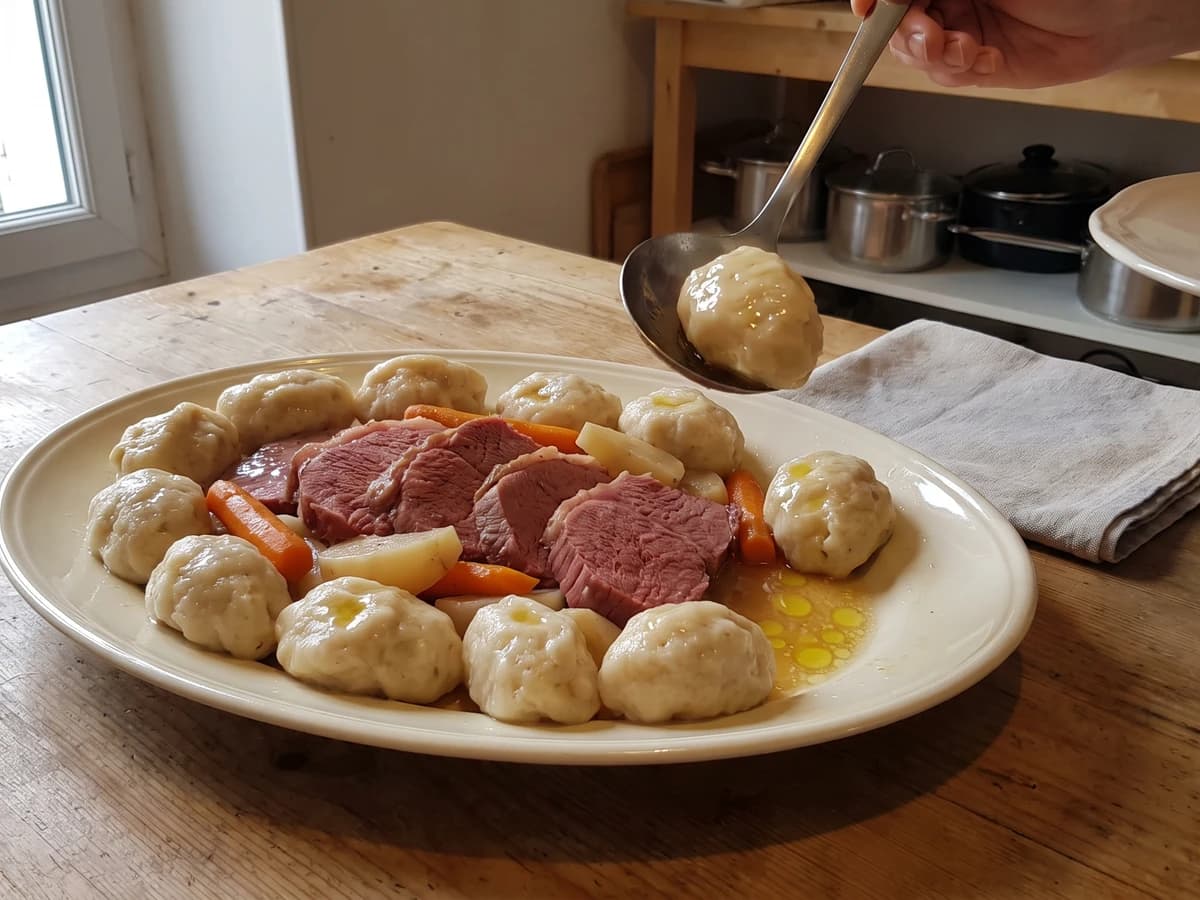
Boulettes au suif, poached beside salt beef, turn equal weights of flour and finely chopped suet into tender, rich dumplings. Keep the beef liquor at a bare tremble and the old garnish works beautifully at home.
A cooking platform built around craft, culture, and the stories behind what we eat.
Created by Chef Juliette
Based on No. 193, Chicken Forcemeat with Panada and Butter, from Le Guide Culinaire (1907) by Auguste Escoffier
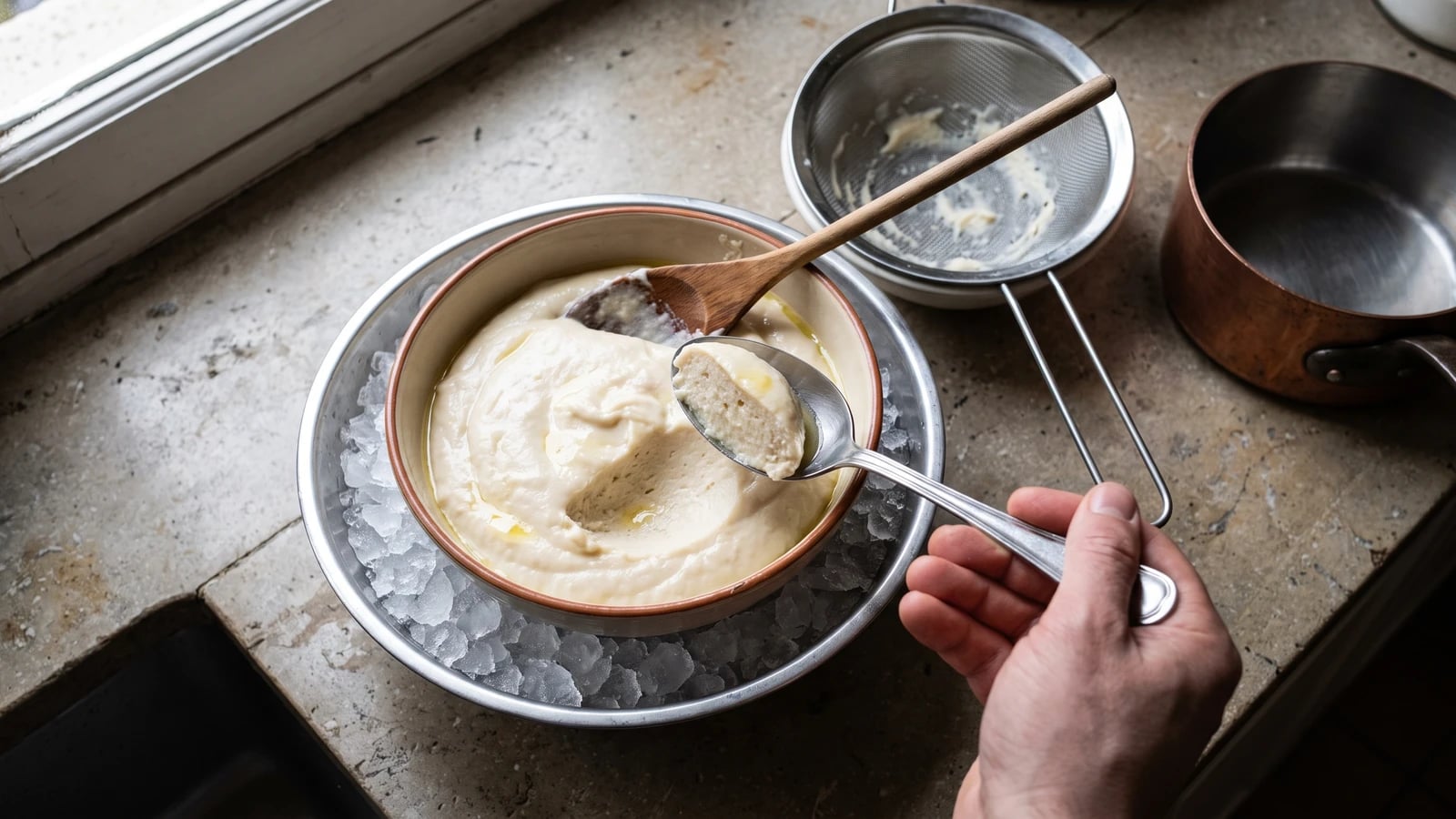
Farce de volaille à la panade et au beurre turns cold chicken, panada, butter, and eggs into a satin-smooth binding forcemeat. Keep everything cold, then let one poached spoonful tell you what it needs.
Farce de volaille à la panade et au beurre (chicken forcemeat with panada and butter) teaches the central law of every fine farce: cold is structure. Chicken worked with panada, butter, and egg becomes pale, satin-smooth, and tender only while the fat remains held inside the meat. Let the mixture warm and it turns greasy before it ever reaches the poaching water.
This formula needed neither a saucier on staff, a stock never off the fire, nor a salamander. It assumed a stone mortar, a tamis, and a cook with the strength and time to pound a brigade quantity while another hand kept it cold. At home, a chilled food processor replaces the mortar, and the formula is halved to about 2¼ cups. The mortar work was scaffolding. The exact 2:1:1 balance of chicken, panada, and butter, the order of incorporation, the sieve, and the poached test are the dish, so they stay.
The poached spoonful tells you what the raw mixture cannot: whether the seasoning is awake and the texture holds without becoming rubbery. Too light, it takes egg white; too stiff, softened butter. Ça se rattrape. Before the chicken touches the blade, chill every component and the equipment. That is the one step that decides the farce.
Farce fine de volaille belongs to the garde-manger of the French classical kitchen, particularly the Paris grand-kitchen repertoire, and traveled into cuisine bourgeoise as a filling for poultry, galantines, quenelles, and molded garnishes. Panada is sometimes mistaken for an economical filler, but its practical work is to retain moisture and distribute butter and egg through the pounded meat, producing a tender, even cut rather than a coarse stuffing. The poached test was the cook's proof, allowing both seasoning and structure to be corrected while the basin could still be saved.
Quantity
8 oz (227 g)
tendons removed and cut into 1-inch cubes
Quantity
½ cup (4 oz / 113 g) A. Bread Panada (No. 190)
Quantity
½ cup (4 oz / 113 g)
cut into small cubes and kept cold
Quantity
¾ teaspoon (4.7 g)
Quantity
⅛ teaspoon (0.3 g)
Quantity
1 small pinch (about 1/16 teaspoon / 0.1 g)
Quantity
1
Quantity
2
Quantity
1
lightly beaten
Quantity
1 tablespoon (15 ml / 14 g)
for correcting a stiff forcemeat
Quantity
4 cups (950 ml / 950 g)
for the poached test
Quantity
2 teaspoons (10 ml / 12 g)
for the poaching water
| Ingredient | Quantity |
|---|---|
| boneless, skinless chicken meattendons removed and cut into 1-inch cubes | 8 oz (227 g) |
| very cold A. Bread Panada | ½ cup (4 oz / 113 g) A. Bread Panada (No. 190) |
| unsalted buttercut into small cubes and kept cold | ½ cup (4 oz / 113 g) |
| fine salt | ¾ teaspoon (4.7 g) |
| finely ground white pepper | ⅛ teaspoon (0.3 g) |
| freshly grated nutmeg | 1 small pinch (about 1/16 teaspoon / 0.1 g) |
| large egg | 1 |
| large egg yolks | 2 |
| extra egg white (optional)lightly beaten | 1 |
| softened unsalted butter (optional)for correcting a stiff forcemeat | 1 tablespoon (15 ml / 14 g) |
| waterfor the poached test | 4 cups (950 ml / 950 g) |
| fine saltfor the poaching water | 2 teaspoons (10 ml / 12 g) |
Chill the food processor bowl, blade, and receiving bowl for 15 minutes. Keep the chicken, butter, and panada cold until each is called for. Temperature is structure here: once the butter softens enough to smear, the farce loses its fine emulsion and becomes greasy.
Put the chicken, salt, white pepper, and nutmeg in the chilled processor. Pulse in short bursts, scraping the bowl often, until the meat becomes a very fine, tacky paste with no visible cubes. Do not run the machine continuously; friction warms the chicken, and warm chicken cannot hold the butter cleanly. Scrape the paste into the chilled receiving bowl.
Place the very cold A. Bread Panada (No. 190) in the processor and work it until completely smooth. Add the cold butter a few cubes at a time, processing only until each addition disappears before adding the next. Scrape down the bowl as needed. The finished base should look uniform and creamy, without hard butter flecks or a greasy film.
Return the pounded chicken to the processor and work it briefly with the panada and butter until the mixture is seamless. Add the whole egg and process until fully absorbed, then add the yolks one at a time, waiting until each disappears before adding the next. The farce should be pale, smooth, and softly glossy. If beads of butter appear, stop immediately and chill the bowl for 10 minutes, then pulse briefly until it comes together. Ça se rattrape.
Set a fine-mesh sieve or tamis over the chilled bowl. Press the farce through in small batches with a firm flexible scraper, leaving behind any sinew or stubborn fibers. Scrape the underside of the sieve into the bowl, then smooth the farce with a wooden spoon. The processor replaces the mortar, but the sieve stays; this is what turns a fine mince into a true farce.
Bring the water and poaching salt to a boil, then lower the heat to gentle bubbling. Shape 1 tablespoon of farce into a small oval and poach it until firm and cooked through, about 3 to 4 minutes, with a center temperature of 165°F (74°C). Cut it open and taste. If the farce is too light, loose, or fragile, work in beaten egg white 1 teaspoon at a time. If it is too stiff, bouncy, or dry, work in softened butter 1 teaspoon at a time. Correct the seasoning and poach another spoonful after every adjustment. This test is indispensable because the raw mixture cannot tell you the truth safely.
Transfer the corrected farce to a cold bowl, smooth the surface, and cover it directly so no skin forms. Use it immediately or refrigerate it at 40°F (4°C) or colder for no more than 24 hours. Fill poultry only when ready to cook, and do not pack it tightly. Whether used as stuffing, shaped into quenelles, or cooked in a mold, the center must reach 165°F (74°C). À table!
1 serving (about 68g)
Culinary guides, cultural storytelling, and the editorial depth that makes cooking meaningful.
Discover Culinary ExplorerChef Juliette
Boulettes au suif, poached beside salt beef, turn equal weights of flour and finely chopped suet into tender, rich dumplings. Keep the beef liquor at a bare tremble and the old garnish works beautifully at home.

Chef Juliette
Bread, flour, frangipane, and rice become four cool, supple panades for binding forcemeats, each changing body and flavor while preserving tenderness. The finest Mousselines need none, and knowing that distinction is the lesson.

Chef Juliette
Panade au pain is bread, milk, salt, heat, and attention: stir until the paste releases cleanly, butter it against a skin, and you have the quiet binder behind tender French farces.

Chef Juliette
Panade de farine teaches the drying stroke behind pâte à choux: flour meets boiling buttered water, then stays over the fire until the paste gathers, smooths, and quits the pan cleanly.