
Chef Juliette
John Dory (St. Pierre)
John Dory has the delicacy of sole and the firmness of turbot. A light flouring, a quick butter sauté, and nut-brown beurre noisette show exactly why looks never mattered.
A cooking platform built around craft, culture, and the stories behind what we eat.
Created by Chef Juliette
Based on No. 1923, Grouse, from Le Guide Culinaire (1907) by Auguste Escoffier
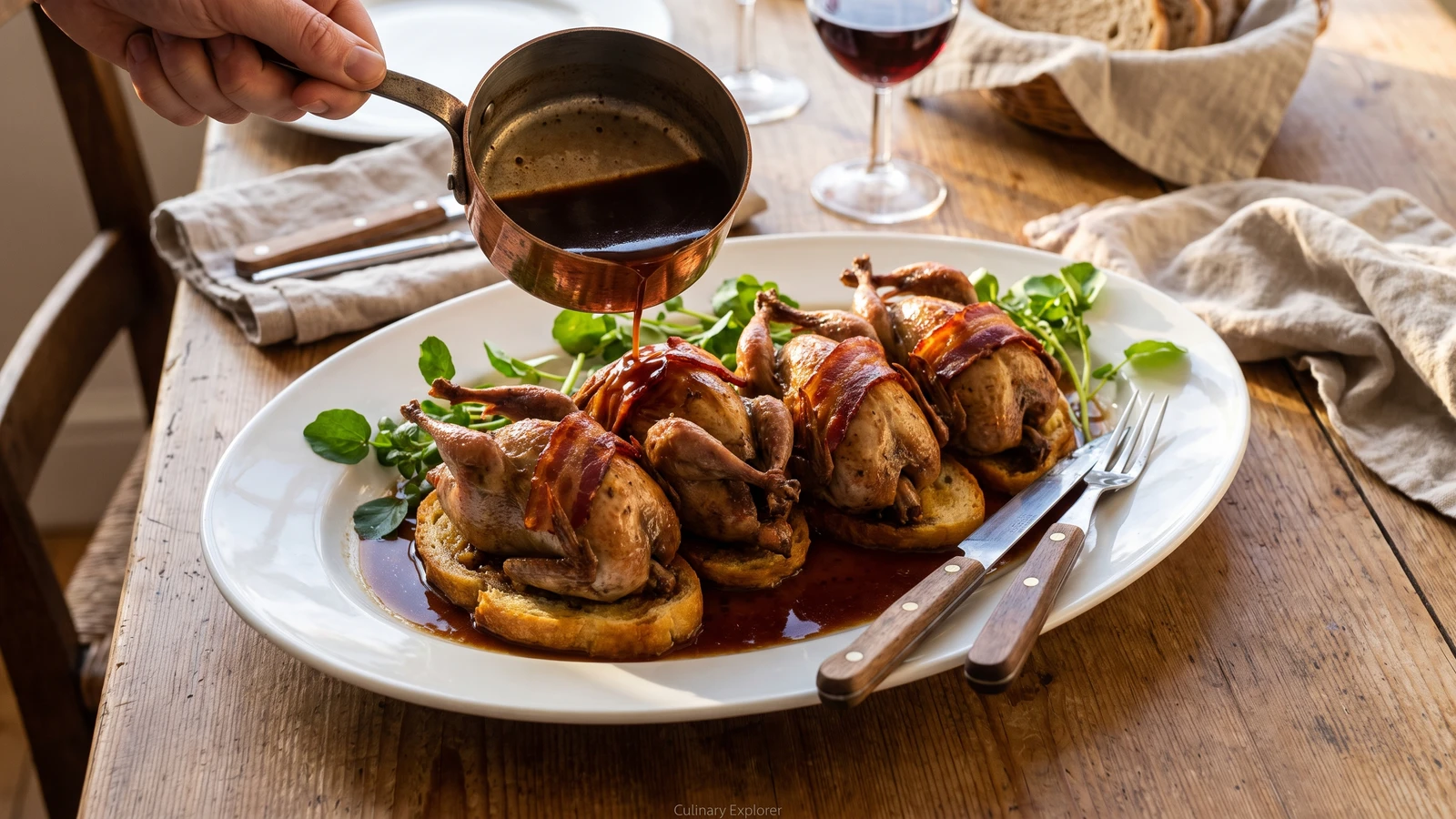
Grouse Rôtie teaches the nerve of roasting feathered game: shield the lean breast with bacon, build a dark fond, and stop while the meat remains succulent.
Grouse Rôtie au Jus (roast grouse with pan jus) teaches the hardest grace in cooking feathered game: knowing when to stop. The breast is very lean, the flavour finely bitter, and another few minutes meant kindly will turn both dry and blunt. Freshness first, then a swift roast.
The old entry is terse because it assumed cooks already fluent in roast game, a saucier at the elbow, stock never off the fire, and a salamander ready to correct pale skin. For four at home, each guest gets one small bird; the roasting tin supplies its own fond, measured unsalted stock replaces the stockpot, and your broiler stands in for the salamander. The separate sauce station and prolonged holding were brigade scaffolding, so they go. Bardage, hard heat, and immediate service remain, because they are the dish. This version also takes wild birds to a safe home-kitchen doneness rather than assuming a rosy service understood by a professional game cook.
You want bronzed skin, crisp bacon, juicy dark flesh, and a short jus with just enough bitterness to announce the moor. Begin checking every bird before you think it can be ready. If the colour lags behind the temperature, rescue it beneath the broiler, never with five more minutes of roasting. Ça se rattrape.
The red grouse served at French tables belongs properly to the heather moors of Scotland and northern England, and the classical canon retained that foreign identity rather than pretending the bird was French. Grand kitchens also turned grouse into mousses, mousselines, and salmis, but roasting remained the favoured treatment because very fresh flesh needs little ceremony. The insistence that grouse is best in its own country is practical: its delicate wild bitterness loses grace as the bird ages or travels.
Quantity
4, about 14 to 18 oz (400 to 500 g) each
necks and hearts reserved if included
Quantity
7 tablespoons (105 ml / 100 g)
divided
Quantity
1½ teaspoons (7.5 ml / 9 g)
Quantity
1 teaspoon (5 ml / 2 g)
Quantity
8 thin slices (about 7 oz / 200 g)
Quantity
4 thick slices (about 5½ oz / 160 g)
crusts trimmed
Quantity
1 large, about ¼ cup (60 ml / 50 g)
finely minced
Quantity
½ cup (120 ml / 120 g)
Quantity
1½ cups (360 ml / 360 g)
Quantity
2 packed cups (500 ml / 60 g)
tough stems removed
| Ingredient | Quantity |
|---|---|
| young oven-ready grousenecks and hearts reserved if included | 4, about 14 to 18 oz (400 to 500 g) each |
| unsalted butterdivided | 7 tablespoons (105 ml / 100 g) |
| fine sea salt | 1½ teaspoons (7.5 ml / 9 g) |
| freshly ground black pepper | 1 teaspoon (5 ml / 2 g) |
| unsmoked streaky bacon | 8 thin slices (about 7 oz / 200 g) |
| pain de mie or firm white sandwich breadcrusts trimmed | 4 thick slices (about 5½ oz / 160 g) |
| shallotfinely minced | 1 large, about ¼ cup (60 ml / 50 g) |
| dry red wine | ½ cup (120 ml / 120 g) |
| unsalted chicken or light game stock | 1½ cups (360 ml / 360 g) |
| watercresstough stems removed | 2 packed cups (500 ml / 60 g) |
Heat the oven to 450°F (230°C) conventional or 410°F (210°C) fan, with a rack in the upper middle. Take the grouse from the cold twenty minutes before roasting. Remove any stray feathers with tweezers and inspect the shot channels carefully for visible pellets or bone fragments; never rinse the birds, which only spreads raw juices around the sink. Fresh grouse smells clean, mineral, and faintly wild. If a bird smells sour or ammoniacal, don't cook it.
Pat every bird thoroughly dry, including the cavities. Rub them inside and out with 2 tablespoons (30 ml / 28 g) of the softened butter, then season evenly with the salt and pepper. Tuck the wing tips underneath, draw the legs together, and tie each bird compactly with kitchen twine. Cover each breast with two bacon slices. This is bardage, protecting lean meat with a layer of fat, and it stays: wet skin will not brown, while an uncovered grouse breast can dry before the legs are properly hot.
Set a large shallow roasting pan across two burners over medium-high heat. Melt 1 tablespoon (15 ml / 14 g) butter and, if the birds came with necks and hearts, brown them until well coloured, about four minutes. Pour in ½ cup (120 ml / 120 g) of the stock and scrape up the browned glaze. Fit a low roasting rack into the pan and arrange the birds with space between them. The liquid underneath protects the first fond from scorching while the drippings join it.
Roast the barded grouse for 12 minutes. Lift off the bacon, lay it beside the birds to crisp, and baste each breast with the fat in the pan. Return the pan to the oven for 5 to 10 minutes, beginning temperature checks after five. Probe the coldest part of each breast and inner thigh without touching bone. For home service, every bird should reach 158°F (70°C) and remain there for two minutes; take birds for pregnant, elderly, immunocompromised, or otherwise vulnerable guests to 165°F (74°C). If the pan liquid threatens to scorch, add a small splash from the remaining stock at once. A black fond cannot make a good jus.
While the birds roast, melt 2 tablespoons (30 ml / 28 g) butter in a broad skillet over medium heat. Fry the bread until deep gold on both sides, about two minutes per side, adding a little of the butter already in the pan if a dry patch appears. Set the croûtes on a warm platter. They should remain crisp at the edges so they can catch the grouse juices without collapsing into paste.
Transfer each grouse to its croûte and rest for 10 minutes in a warm place, uncovered so the skin stays crisp. Remove the twine. Keep the crisp bacon beside the birds rather than draping it back over the skin. Pour every resting juice into the roasting pan; those few spoonfuls belong to the sauce.
Remove the rack, necks, and hearts, then spoon off all but 1 tablespoon of fat from the roasting pan. Set the pan over medium heat, add the shallot, and cook for one minute without browning. Pour in the red wine and scrape until every dark patch of fond has dissolved. Reduce the wine by about two-thirds, add the remaining stock and the resting juices, then boil steadily until roughly ¾ cup (180 ml) remains and the flavour is concentrated but not salty. Strain into a small saucepan. Off the heat, monter au beurre, finish with cold butter, by whisking in the final 2 tablespoons (30 ml / 28 g) a piece at a time. If the jus separates, put 1 tablespoon (15 ml) cold stock in a clean bowl and whisk in the broken jus gradually. Ça se rattrape.
Arrange the watercress loosely around the croûtes and set the crisp bacon alongside each bird. Spoon the glossy jus around the bread, not over the bronzed skin, and bring the platter straight to the table. Remind guests that even a carefully inspected wild bird may conceal a small pellet. Grouse waits for no one. À table!
1 serving (about 370g)
Culinary guides, cultural storytelling, and the editorial depth that makes cooking meaningful.
Discover Culinary ExplorerChef Juliette
John Dory has the delicacy of sole and the firmness of turbot. A light flouring, a quick butter sauté, and nut-brown beurre noisette show exactly why looks never mattered.

Chef Juliette
Fresh haddock proves its delicacy in the meunière pan: a fine flour crust, moist pearly flakes, and beurre noisette sharpened with lemon and parsley, ready from one skillet in half an hour.

Chef Juliette
Éperlans à l’Anglaise turns small fish into a lesson in disciplined coating: boned smelts under a close, crisp crumb, pan-fried in clarified butter and finished with bright, half-melted maître d’hôtel butter.

Chef Juliette
Tiny smelts, shallot, mushrooms, white wine, gratin sauce, and fine bread raspings meet a fierce oven, where the fish must turn tender in the same breath the buttered crust bronzes.