
Chef Juliette
John Dory (St. Pierre)
John Dory has the delicacy of sole and the firmness of turbot. A light flouring, a quick butter sauté, and nut-brown beurre noisette show exactly why looks never mattered.
A cooking platform built around craft, culture, and the stories behind what we eat.
Created by Chef Juliette
Based on No. 1922, Ptarmigan, from Le Guide Culinaire (1907) by Auguste Escoffier
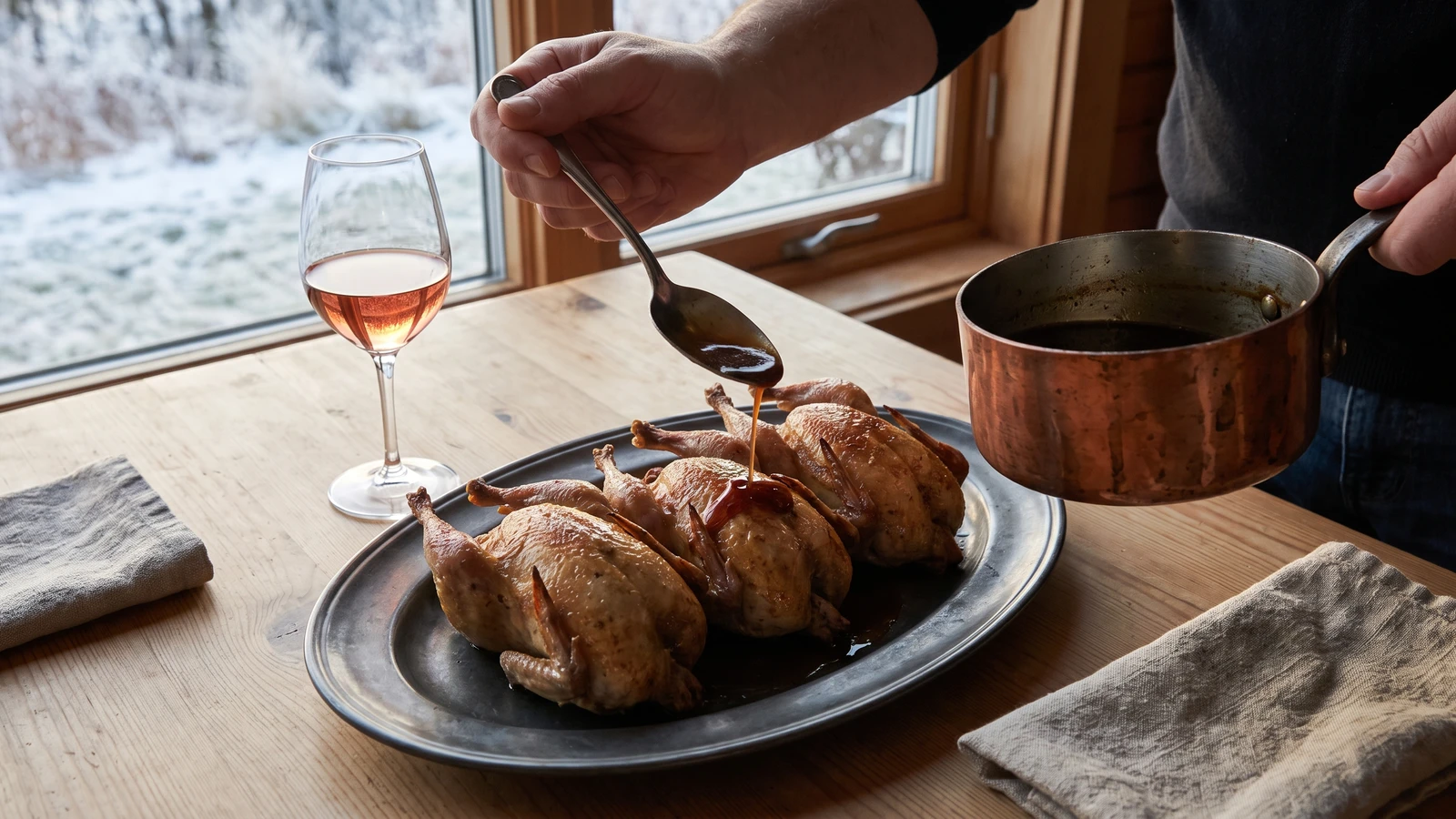
Lagopède roasted under a thin barde of fatback, turned like a bird before the fire, then carried to the table with crisp bronze skin and a pan jus built from its own fond.
Lagopède rôti (roast ptarmigan) teaches the first law of feathered game: freshness decides the dish before heat does. Ptarmigan should smell clean and faintly mineral, with firm flesh and a dry surface. If its handling or cold chain is uncertain, change the menu. No quantity of butter can rescue spoiled game.
The original kitchen assumed birds dressed close to service, a turning spit, a hand free for basting, and jus always within reach from a stockpot that never cooled. At home, a rack in a shallow roasting pan and three deliberate positions reproduce the spit, while one measured cup of light stock turns the roasting fond into enough jus for four plates. The brigade's separate roasting and sauce stations are scaffolding, so they go; the fast roast, vigilant turning, and pure flavor of the fresh bird stay. One cook, one stove, one evening.
A barde (thin covering of pork fat) protects these exceptionally lean breasts until the final minutes, when it comes off and the skin bronzes. The moment that matters is the finish: test each bird separately and stop as soon as it is safely cooked. Ptarmigan gives you delicacy, not forgiveness.
Lagopède belongs to the high mountain and northern game larders, with the French table meeting it in Alpine and Pyrenean hunting country rather than through one provincial sauce. Classical kitchens placed it beside grouse and hazel-hen among the gibier à plume and sent the freshest birds first to the spit; mousses, mousselines, and salmis were further uses rather than the preferred beginning. In a salmis, a sauce-bound ragout of roasted game, the ptarmigan's skin and legs must be discarded because their bitterness passes into the sauce and cannot be corrected.
Quantity
4 birds, 12 to 16 ounces (340 to 450 g) each
very fresh; necks and gizzards reserved if supplied
Quantity
2 teaspoons (10 ml / 12 g)
Quantity
1 teaspoon (5 ml / 2 g)
Quantity
8 sprigs
Quantity
4 cloves
lightly crushed
Quantity
8 very thin slices, about 4 ounces (115 g)
Quantity
5 tablespoons (75 ml / 70 g)
divided
Quantity
2, about ⅔ cup (160 ml / 100 g)
thinly sliced
Quantity
1 cup (240 ml / 240 g)
homemade or good store-bought
| Ingredient | Quantity |
|---|---|
| whole oven-ready ptarmiganvery fresh; necks and gizzards reserved if supplied | 4 birds, 12 to 16 ounces (340 to 450 g) each |
| fine sea salt | 2 teaspoons (10 ml / 12 g) |
| freshly ground black pepper | 1 teaspoon (5 ml / 2 g) |
| fresh thyme | 8 sprigs |
| garliclightly crushed | 4 cloves |
| unsmoked fatback | 8 very thin slices, about 4 ounces (115 g) |
| unsalted butterdivided | 5 tablespoons (75 ml / 70 g) |
| medium shallotsthinly sliced | 2, about ⅔ cup (160 ml / 100 g) |
| light unsalted poultry stockhomemade or good store-bought | 1 cup (240 ml / 240 g) |
Heat the oven to 450°F (230°C) with a rack in the upper third. Examine each bird for pinfeathers, damaged tissue, and stray shot, then wipe the cavities and pat every surface thoroughly dry. The flesh should be firm and smell clean, never sour or ammoniacal. A tacky surface, unpleasant odor, or uncertain cold chain ends the recipe; ça ne se rattrape pas, and the bird must not be cooked.
Season the birds inside and out with the salt and pepper. Put two thyme sprigs and one crushed garlic clove into each cavity. Rub the breasts and legs with 2 tablespoons (30 ml / 28 g) of the softened butter, then cover each breast with two overlapping slices of fatback. Tie the barde in place with kitchen string, keeping the legs close to the body so the birds roast evenly.
Scatter the shallots and any reserved necks and gizzards in a shallow flameproof roasting pan with 1 tablespoon (15 ml / 14 g) of the butter. Do not add the livers, which can make the jus muddy and bitter. Set a wire rack over the pan and arrange the birds on one side without letting them touch.
Roast the birds on their first side for 6 minutes, turn them onto the opposite side for another 6 minutes, then set them breast-side up. Remove the strings and bardes, baste with the rendered fat, and roast for 6 to 10 minutes more. Test each bird separately at the thickest breast and inner thigh without touching bone; both must reach 165°F (74°C). If the skin colors before the flesh is ready, lay the barde back over the breast. If the pan solids threaten to burn, add a spoonful of the measured stock. If they have already turned black, move the birds to a clean tray and discard the burnt solids; build the jus from the resting juices and stock instead. Ça se rattrape.
Transfer each finished bird to a warm platter and rest for 8 to 10 minutes under a loose tent of foil. Do not wrap them tightly, which softens the bronzed skin. Remove and discard the thyme and garlic from the cavities before serving, and save every drop of juice released during the rest.
Pour off the excess roasting fat, leaving about 1 tablespoon in the pan with the browned film, the fond, on its floor. Set the pan over medium heat, add the remaining stock, and scrape until every brown deposit dissolves. Simmer until reduced by half and glossy, then strain into a small saucepan. Add the resting juices, remove from the heat, and whisk in the remaining 2 tablespoons (30 ml / 28 g) cold butter a little at a time. If the jus looks oily, whisk in a teaspoon of cold stock; if it is thin, reduce it further before adding the butter. If it tightens too far, loosen it with stock.
Give each guest one whole ptarmigan, or halve the birds lengthwise if their size calls for it. Spoon the jus around them rather than over the skin, keeping that final bronze intact. Serve immediately while the butter still gives the sauce its gloss. À table!
1 serving (about 250g)
Culinary guides, cultural storytelling, and the editorial depth that makes cooking meaningful.
Discover Culinary ExplorerChef Juliette
John Dory has the delicacy of sole and the firmness of turbot. A light flouring, a quick butter sauté, and nut-brown beurre noisette show exactly why looks never mattered.

Chef Juliette
Fresh haddock proves its delicacy in the meunière pan: a fine flour crust, moist pearly flakes, and beurre noisette sharpened with lemon and parsley, ready from one skillet in half an hour.

Chef Juliette
Éperlans à l’Anglaise turns small fish into a lesson in disciplined coating: boned smelts under a close, crisp crumb, pan-fried in clarified butter and finished with bright, half-melted maître d’hôtel butter.

Chef Juliette
Tiny smelts, shallot, mushrooms, white wine, gratin sauce, and fine bread raspings meet a fierce oven, where the fish must turn tender in the same breath the buttered crust bronzes.