
Chef Juliette
John Dory (St. Pierre)
John Dory has the delicacy of sole and the firmness of turbot. A light flouring, a quick butter sauté, and nut-brown beurre noisette show exactly why looks never mattered.
A cooking platform built around craft, culture, and the stories behind what we eat.
Created by Chef Juliette
Based on No. 1919, Hazel-hens, from Le Guide Culinaire (1907) by Auguste Escoffier
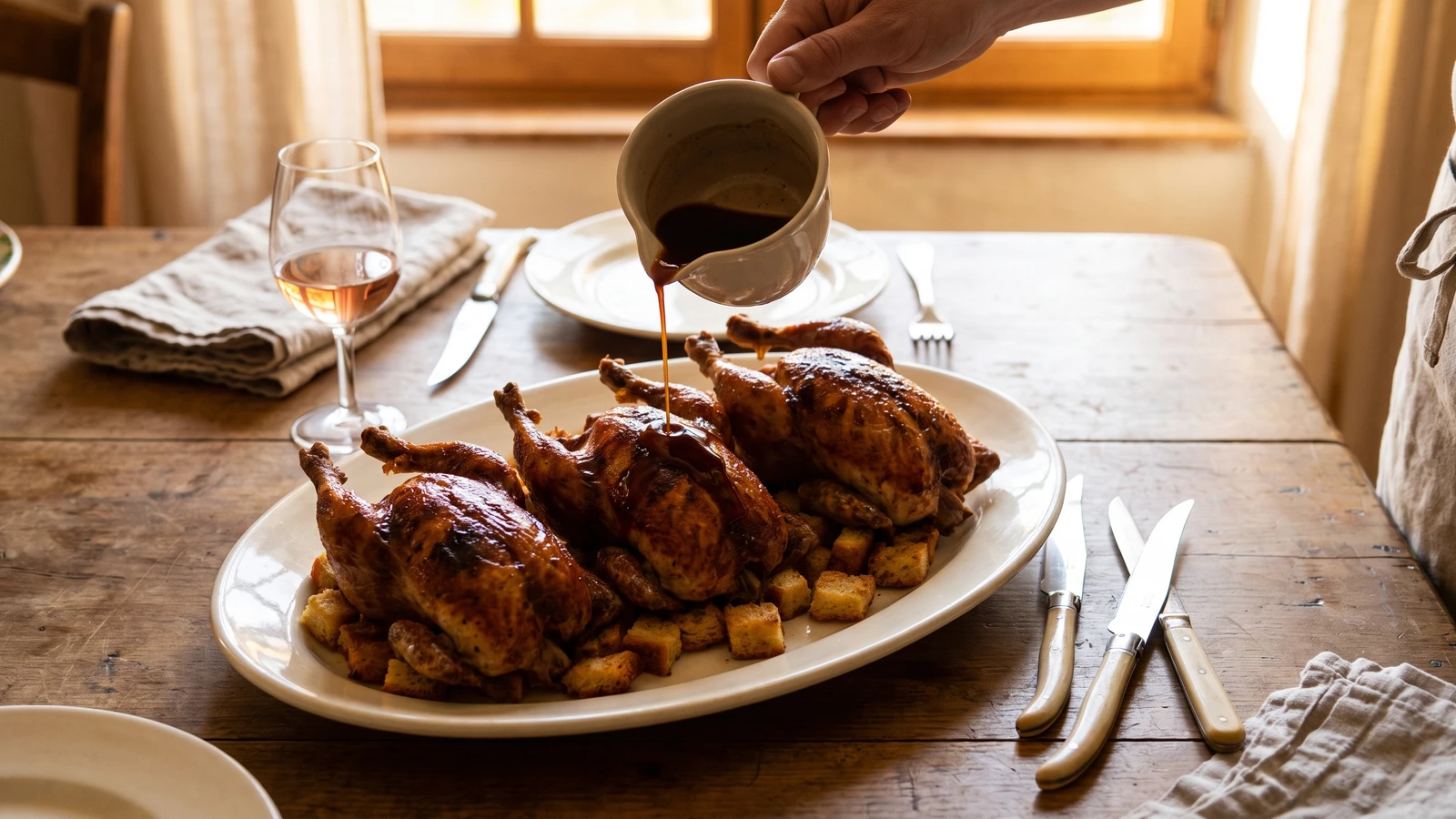
Gélinottes rôties teach the roast of delicate game: protect the breasts with pork fat, drive colour quickly, and stop at safe doneness, then turn the pan fond into a spare, glossy jus.
Gélinottes rôties (roast hazel-hens) teach the narrowest and most useful lesson in roasting feathered game: delicacy is protected by speed, not rescued by sauce. These small forest birds should arrive deeply bronzed, succulent at the joints, and tasting wholly of themselves. Before touching a pan, know this one true thing: freshness and the stopping point matter more than elaborate seasoning.
The original entry assumed birds arriving at their freshest, a turning spit, and a brigade able to roast to order while a saucier attended the drippings. At home, four birds fit in one heavy skillet. Thin fatback replaces continuous basting, turning the birds during roasting imitates the spit, the broiler answers for a salamander only when colour needs correction, and a little water releases the fond without calling for a stockpot. I changed the equipment and the scale, not the intent. Bardage and the quick roast are the dish; elaborate garnish and prolonged holding are brigade scaffolding, so they go. One cook, one stove, one evening.
The decisive step is the final five minutes: uncover the skin, watch colour and thermometer together, and remove each bird the instant its thickest flesh reaches 165°F (74°C). If colour lags, the broiler corrects it briefly; if browning runs ahead, protect the breasts again with the fatback. Ça se rattrape.
The gélinotte des bois is the hazel grouse of the mixed mountain forests of eastern France, especially the Jura, Vosges, and Alps; despite the English name, it is no domestic hen. Forest game entered the classical French table chiefly through roasting, which preserved its celebrated delicacy, while mousses, mousselines, and salmis gave cooks other forms when service required them. In salmis, the skin and legs were rejected before the cullis was built because their bitterness would pass into the sauce, a practical rule rather than a flourish.
Quantity
4, each 10 to 12 ounces (280 to 340 g)
legally sourced and very fresh
Quantity
8 paper-thin sheets (about 4 ounces / 115 g)
Quantity
4 tablespoons (60 ml / 56 g)
divided: 1 tablespoon softened, 2 tablespoons for the croûtons, and 1 tablespoon kept cold
Quantity
1½ teaspoons (7.5 ml / 9 g)
Quantity
½ teaspoon (2.5 ml / 1 g)
Quantity
4 slices, each ½ inch (1.25 cm) thick, about 7 ounces (200 g) total
Quantity
½ cup (120 ml / 120 g)
| Ingredient | Quantity |
|---|---|
| oven-ready hazel-hens (gélinottes des bois)legally sourced and very fresh | 4, each 10 to 12 ounces (280 to 340 g) |
| fresh unsmoked pork fatback | 8 paper-thin sheets (about 4 ounces / 115 g) |
| unsalted butterdivided: 1 tablespoon softened, 2 tablespoons for the croûtons, and 1 tablespoon kept cold | 4 tablespoons (60 ml / 56 g) |
| fine sea salt | 1½ teaspoons (7.5 ml / 9 g) |
| freshly ground black pepper | ½ teaspoon (2.5 ml / 1 g) |
| firm white country bread | 4 slices, each ½ inch (1.25 cm) thick, about 7 ounces (200 g) total |
| cold water | ½ cup (120 ml / 120 g) |
Set an oven rack in the upper third and heat the oven to 450°F (230°C). Examine the hazel-hens before proceeding: they should smell clean and faintly of game, never sour, and the flesh should feel firm rather than tacky. If a bird smells wrong, don't cook it; freshness is the foundation of this dish and no seasoning can repair spoilage. Check the cavities, remove any pinfeathers or visible shot with the tip of a paring knife, and pat the birds thoroughly dry without washing them. Leave them at cool room temperature for 20 minutes while the oven heats.
Melt 2 tablespoons of the butter in a 12-inch ovenproof skillet over medium heat. Add the bread and cook until both faces are evenly golden and crisp at the edges, about 2 minutes per side. Transfer the croûtons to a warm serving platter. Wipe loose crumbs from the skillet, but don't wash away the buttered film.
Rub the birds all over with 1 tablespoon of softened butter, then season the cavities and skins with the salt and pepper. Barder, to wrap with pork fat, is the protection delicate game needs while it roasts. Lay 2 sheets of fatback across each breast, covering the broadest portion without enclosing the legs, and secure them with kitchen twine. Tie the legs loosely together so the birds keep their shape while heat can still reach the joints.
Warm the skillet over medium-high heat until hot but not smoking. Arrange the birds on their backs with space between them and transfer the skillet to the oven. Roast for 10 minutes, then remove and reserve the fatback, baste the birds with the rendered fat, and roll them onto one side. Roast for 3 minutes, turn them onto the other side for 3 minutes, then return them to their backs and continue until both the thickest breast and inner thigh register 165°F (74°C) without the probe touching bone, usually another 4 to 8 minutes. Check each bird separately and remove smaller ones first. If the skin is pale as the temperature approaches 160°F (71°C), use the broiler for 30 to 60 seconds and watch without looking away. If the breasts brown too quickly, lay the reserved fatback over them again while the joints finish.
Transfer the birds to the croûtons and rest them for 8 minutes under a very loose tent of foil. Meanwhile, reserve 1 tablespoon of the measured cold water and pour the remainder into the roasting skillet. Set it over medium heat and scrape up every mahogany-coloured trace of fond, leaving any black scorched specks behind because bitterness cannot be seasoned away. Reduce to about ⅓ cup (80 ml), then remove the skillet from the heat. Monter au beurre, whisk in cold butter, with the final tablespoon until the jus becomes lightly thickened and glossy. If it turns oily, whisk in the reserved cold water a teaspoon at a time. Ça se rattrape. Add the juices collected beneath the resting birds and taste before adding any further salt.
Snip away the twine and set one gélinotte on each buttered croûton. Spoon the roasting jus around the birds rather than over their bronzed skins, and carry the platter straight to the table with sharp knives. The flesh waits badly and the croûtons wait beautifully, which is precisely why they belong together. À table!
1 serving (about 260g)
Culinary guides, cultural storytelling, and the editorial depth that makes cooking meaningful.
Discover Culinary ExplorerChef Juliette
John Dory has the delicacy of sole and the firmness of turbot. A light flouring, a quick butter sauté, and nut-brown beurre noisette show exactly why looks never mattered.

Chef Juliette
Fresh haddock proves its delicacy in the meunière pan: a fine flour crust, moist pearly flakes, and beurre noisette sharpened with lemon and parsley, ready from one skillet in half an hour.

Chef Juliette
Éperlans à l’Anglaise turns small fish into a lesson in disciplined coating: boned smelts under a close, crisp crumb, pan-fried in clarified butter and finished with bright, half-melted maître d’hôtel butter.

Chef Juliette
Tiny smelts, shallot, mushrooms, white wine, gratin sauce, and fine bread raspings meet a fierce oven, where the fish must turn tender in the same breath the buttered crust bronzes.