
Chef Juliette
John Dory (St. Pierre)
John Dory has the delicacy of sole and the firmness of turbot. A light flouring, a quick butter sauté, and nut-brown beurre noisette show exactly why looks never mattered.
A cooking platform built around craft, culture, and the stories behind what we eat.
Created by Chef Juliette
Based on No. 1917, Mousses de Cailles, from Le Guide Culinaire (1907) by Auguste Escoffier
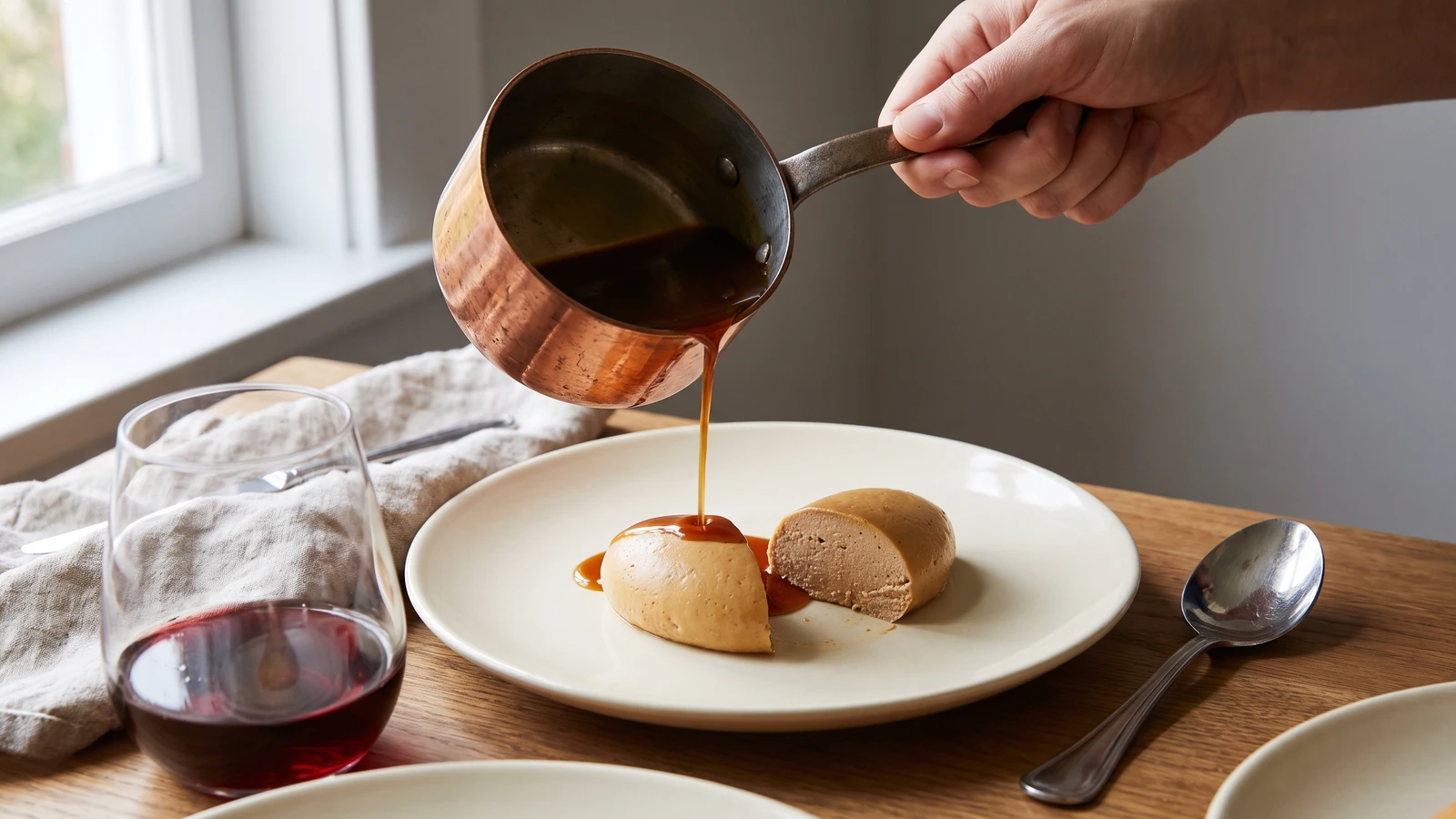
Silken quail, cold cream, and patient sieving become eight delicate mousses, set gently in a bain-marie and served with their own Madeira-dark jus. The discipline is temperature: let the mixture warm and it splits.
Mousses de Cailles (warm quail mousses) teach the cold emulsion. Before you touch a pan, clear room for an ice bath and chill the meat, cream, egg whites, bowl, and blade. Quail and cream will bind into something silken only while both remain cold; let the paste warm in the bowl and the fat slips away from the meat.
The book sends quail to the same working rule used for pheasant, partridge, and woodcock because its brigade cook already understood the grammar: pound, sieve, enrich with cream, and set gently. That kitchen assumed a mortar, a tamis, a cold larder station, and a saucier drawing from game stock never off the fire. Here, a processor replaces the mortar, a fine sieve replaces the tamis, and the quail carcasses make a concentrated jus while the mousse chills. A salamander has no honest work in this pale preparation, so no browned top is invented. Those are changes to the scaffolding. Pounding, sieving, cold cream, and the gentle bain-marie must stay. One cook, one stove, one evening.
When it lands properly, each mousse is ivory-beige and faintly trembling, with a fine grain that yields beneath the fork and a dark, glossy ring of Madeira-scented quail jus. Keep the mixture below 50°F (10°C) while adding the cream. That is the one step that decides the dish.
Mousses de Cailles belong to the Parisian classical table, where small game birds were pounded into refined forcemeats and molded for formal service. The preparation follows the same working family as pheasant, partridge, and woodcock mousse, methods that traveled from brigade kitchens to bourgeois dinner tables because the molds could be filled ahead and gently set near service. Here mousse describes tenderness rather than a mass of bubbles: its texture comes from sieving and a cold cream emulsion, not aggressive whipping.
Quantity
6 (about 30 oz / 850 g total; yielding about 14 oz / 400 g skinless meat)
boned, meat cut into 1-inch pieces, carcasses and trimmings reserved
Quantity
2 tsp (10 ml / 10 g)
Quantity
¼ tsp (1.25 ml / 0.5 g)
Quantity
⅛ tsp (0.6 ml / 0.25 g)
Quantity
2 (about ¼ cup / 60 g)
very cold
Quantity
1⅔ cups (400 ml / 400 g)
very cold
Quantity
2 tbsp (30 ml / 30 g)
very cold
Quantity
1½ tbsp (22 ml / 21 g)
softened
Quantity
3 tbsp (45 ml / 42 g)
divided
Quantity
1 medium (about 1½ oz / 40 g)
thinly sliced
Quantity
1 small (about 2 oz / 60 g)
finely diced
Quantity
½ cup (120 ml / 120 g)
Quantity
3 cups (720 ml / 720 g)
Quantity
1 sprig
Quantity
1
Quantity
½ cup (120 ml / 120 g)
Quantity
¼ tsp (1.25 ml / 1.5 g), plus more only after reduction
| Ingredient | Quantity |
|---|---|
| whole quailboned, meat cut into 1-inch pieces, carcasses and trimmings reserved | 6 (about 30 oz / 850 g total; yielding about 14 oz / 400 g skinless meat) |
| fine sea salt | 2 tsp (10 ml / 10 g) |
| ground white pepper | ¼ tsp (1.25 ml / 0.5 g) |
| freshly grated nutmeg | ⅛ tsp (0.6 ml / 0.25 g) |
| large egg whitesvery cold | 2 (about ¼ cup / 60 g) |
| heavy cream, at least 35 percent fatvery cold | 1⅔ cups (400 ml / 400 g) |
| heavy cream for rescuing the emulsion (optional)very cold | 2 tbsp (30 ml / 30 g) |
| unsalted butter for the moldssoftened | 1½ tbsp (22 ml / 21 g) |
| unsalted butter for the jusdivided | 3 tbsp (45 ml / 42 g) |
| shallotthinly sliced | 1 medium (about 1½ oz / 40 g) |
| carrotfinely diced | 1 small (about 2 oz / 60 g) |
| dry Madeira | ½ cup (120 ml / 120 g) |
| cold water | 3 cups (720 ml / 720 g) |
| thyme | 1 sprig |
| bay leaf | 1 |
| heavy cream for the sauce | ½ cup (120 ml / 120 g) |
| fine sea salt for the sauce | ¼ tsp (1.25 ml / 1.5 g), plus more only after reduction |
Remove the skin and every visible piece of sinew from the quail meat, then cut it into 1-inch pieces. Spread the meat on a metal tray and place it in the freezer for 20 minutes, until very firm at the edges but not frozen solid. Chill the processor bowl and blade beside it, and set the egg whites and cream over ice. The mixture must remain below 50°F (10°C) from first pounding to final molding.
Chop the reserved carcasses into a few pieces with poultry shears. Melt 1 tablespoon (15 ml / 14 g) of the butter in a small heavy saucepan over medium-high heat, add the bones and trimmings, and brown them deeply for 10 to 12 minutes. Add the shallot and carrot and cook until their edges color. Pour in the Madeira, scrape up the fond from the pan floor, and reduce until only a syrupy glaze remains. Add the cold water, thyme, and bay leaf, then hold at a bare simmer for 45 minutes while you make the mousse.
Put the chilled meat and 2 teaspoons of salt in the cold processor and pulse until the meat becomes a smooth, tacky paste. Salt begins extracting the proteins that will bind the cream, so it goes in before anything else. Add the egg whites, white pepper, and nutmeg, then pulse only until incorporated. Scrape the paste through a fine-mesh sieve into a chilled metal bowl, leaving sinew behind. This sieving is not brigade scaffolding. It is the dish, and it gives the Mousses de Cailles their fine, close texture.
Nest the bowl of quail paste inside a larger bowl of ice. Work in the 1⅔ cups of cold cream in four additions with a sturdy spatula, fully incorporating each before adding the next. The farce mousseline, a fine cream-bound forcemeat, should become pale, glossy, and softly mounded. If it turns grainy or develops a greasy rim, stop immediately. Spread it thinly against the cold bowl, leave it over ice for 10 minutes, then beat in 1 tablespoon of the optional cold cream, adding the second only if needed. Ça se rattrape. Continuing while it is warm is what finishes the split.
Poach a teaspoon of the mixture in barely simmering water until its center reaches 165°F (74°C), about 3 minutes, then taste it for seasoning. It should feel tender and finely grained, not rubbery. Butter eight 4-ounce (120 ml) dariole molds or ramekins generously, fill them with the mousse, and tap each mold once against a folded towel to release hidden air pockets. Smooth the tops, cover them with buttered parchment rounds, and chill for 20 minutes.
Heat the oven to 300°F (150°C). Arrange the molds in a deep roasting pan and pour hot water around them to reach halfway up their sides, making a bain-marie, or water bath. Cover the pan loosely with foil and bake for 20 to 25 minutes, until the mousses feel gently resilient and their centers reach 165°F (74°C). The water must never boil. If bubbles gather around the molds, remove a ladleful and replace it with cool water before the mousse develops holes or curdles. Rest the molds in the bath for 5 minutes.
Strain the quail liquid into a clean saucepan, pressing the bones only lightly, and reduce it to ¾ cup (180 ml). Add the ½ cup of cream and the measured sauce salt, then simmer until the sauce is nappant, thick enough to coat the back of a spoon. Remove it from the heat and monter au beurre, finishing it by whisking in the remaining 2 tablespoons of cold butter a piece at a time. If the sauce turns oily, put 1 tablespoon of cold water in a clean pan and slowly whisk the broken sauce into it. Taste only after reduction, because Madeira, salt, and quail all concentrate.
Run a thin knife around each mold and invert two mousses onto every warmed plate. Spoon the glossy jus de caille au madère, the quail reduction with Madeira, around them rather than burying their smooth surfaces. The mousses should tremble slightly when the plate moves and cut with the pressure of a fork. Serve at once. À table!
1 serving (about 285g)
Culinary guides, cultural storytelling, and the editorial depth that makes cooking meaningful.
Discover Culinary ExplorerChef Juliette
John Dory has the delicacy of sole and the firmness of turbot. A light flouring, a quick butter sauté, and nut-brown beurre noisette show exactly why looks never mattered.

Chef Juliette
Fresh haddock proves its delicacy in the meunière pan: a fine flour crust, moist pearly flakes, and beurre noisette sharpened with lemon and parsley, ready from one skillet in half an hour.

Chef Juliette
Éperlans à l’Anglaise turns small fish into a lesson in disciplined coating: boned smelts under a close, crisp crumb, pan-fried in clarified butter and finished with bright, half-melted maître d’hôtel butter.

Chef Juliette
Tiny smelts, shallot, mushrooms, white wine, gratin sauce, and fine bread raspings meet a fierce oven, where the fish must turn tender in the same breath the buttered crust bronzes.