
Chef Juliette
John Dory (St. Pierre)
John Dory has the delicacy of sole and the firmness of turbot. A light flouring, a quick butter sauté, and nut-brown beurre noisette show exactly why looks never mattered.
A cooking platform built around craft, culture, and the stories behind what we eat.
Created by Chef Juliette
Based on No. 1892, Cailles à la Normande, from Le Guide Culinaire (1907) by Auguste Escoffier
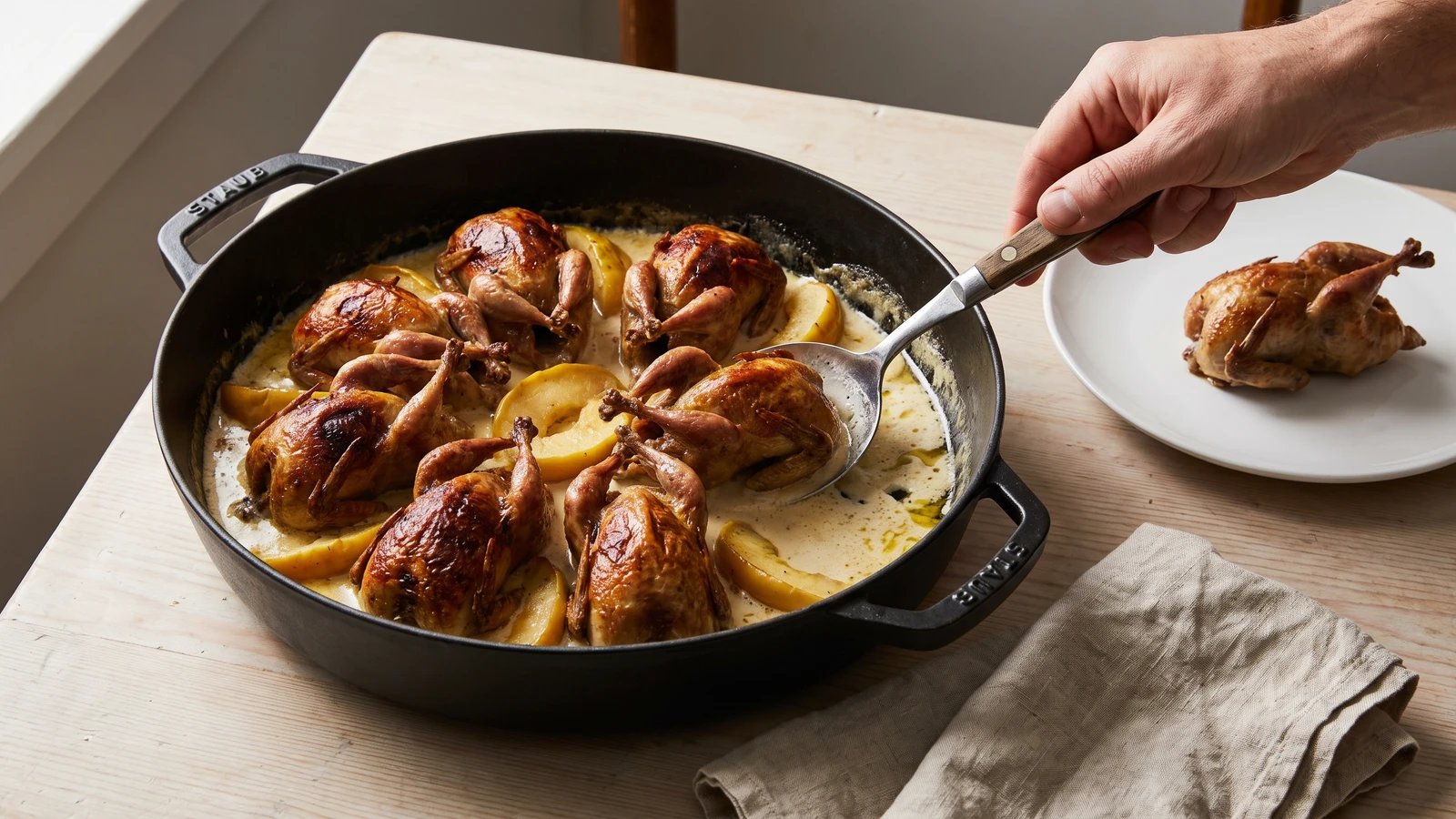
Eight butter-browned quails, four apples, and a little cream become Normandy in a cocotte, with deep bronze skin above tender fruit and an ivory sauce below.
Cailles à la Normande (Norman-style quails) teaches sequence. Butter first, cream last. The birds must meet the cocotte dry and leave it bronze, the apples must soften without surrendering their shape, and only then may the cream gather the browned fond into a sauce. One true thing before you touch the pan: if the quails don't brown before the cream arrives, they never will.
The source entry assumes its apple garnish is already in the cook's hands and that a brigade can judge small birds by touch. It asks for no stockpot, roux, or saucier, because the quail fond and cream make the sauce directly in the cocotte. At home, a 12-inch cocotte and an instant-read thermometer replace the service vessel and the brigade eye. Eight quails and exactly half an apple per bird make four generous servings. Preparing and holding a separate apple garnish is brigade scaffolding, so that goes; the half-apple ratio, butter browning, layered cocotte, and cream finish are the dish, and every one stays.
Done properly, the apples are tender but recognizable, the quails remain succulent, and their juices turn a spare pour of cream into a glossy ivory sauce. Cooking well is not cooking fancy. Brown the quails deeply without burning the butter's milk solids; that is the step that decides the dish.
Cailles à la Normande belong to Normandy's butter-and-cream table, where apples move easily from orchard desserts into savory dishes with poultry and game birds. The classical kitchen carried that regional pairing into the cocotte, using the apple bed as both garnish and a gentle cushion for the small birds while their juices enriched the cream. Despite what some modern menus suggest, Calvados and cider are not compulsory markers of à la Normande; this spare formula identifies itself with apples, butter, and cream alone.
Quantity
8 (about 3 pounds / 1.35 kilograms total)
giblets removed and patted dry
Quantity
4 medium (about 1½ pounds / 680 grams before peeling)
peeled, cored, and sliced ¼ inch / 6 millimeters thick
Quantity
7 tablespoons (105 milliliters / 100 grams)
divided
Quantity
6 tablespoons (90 milliliters / 90 grams)
divided
Quantity
2 teaspoons (10 milliliters / 12 grams)
divided
Quantity
1 teaspoon (5 milliliters / 2 grams)
divided
| Ingredient | Quantity |
|---|---|
| whole quailsgiblets removed and patted dry | 8 (about 3 pounds / 1.35 kilograms total) |
| firm tart-sweet applespeeled, cored, and sliced ¼ inch / 6 millimeters thick | 4 medium (about 1½ pounds / 680 grams before peeling) |
| unsalted butterdivided | 7 tablespoons (105 milliliters / 100 grams) |
| cold heavy creamdivided | 6 tablespoons (90 milliliters / 90 grams) |
| fine sea saltdivided | 2 teaspoons (10 milliliters / 12 grams) |
| freshly ground black pepperdivided | 1 teaspoon (5 milliliters / 2 grams) |
Heat the oven to 400°F / 200°C conventional, or 350°F / 180°C fan. Season the quails inside and out with most of the salt and pepper, reserving a pinch of each for the apples. Tie the legs together and fold the wing tips behind the breasts so the small birds cook evenly. Peel, core, and slice the apples only after the quails are ready; even slices soften at the same pace, while scraps collapse before the birds reach the oven.
Melt 3 tablespoons of the butter in a wide ovenproof cocotte over medium-high heat. When the foam subsides, add the apples and the reserved pinches of salt and pepper. Toss for 6 to 8 minutes, until the slices bend without breaking and carry patches of butter-gold color, but still hold their shape. Work in two batches if the pot is crowded. If the apples release enough juice to simmer, spread them out and raise the heat until the moisture cooks away. If a few slices collapse, put those on the bottom of the cocotte later, where no one will know. Ça se rattrape. Lift all the apples to a plate.
Let any apple moisture evaporate from the cocotte, then add 2 tablespoons of butter. Once its foam settles, lay in four quails breast-side down. Brown them for about 2 minutes on the breast, then turn them onto each side and the back until the skin is deep gold all around, 5 to 6 minutes altogether. They must remain raw at the center. Remove them and repeat with the final four quails and remaining 2 tablespoons butter. If the milk solids turn black rather than hazelnut-brown, stop: lift the birds, wipe away only the loose burnt specks, lower the heat, and continue with clean measured butter. Burnt butter is bitter, but the clean amber fond underneath is the foundation of the sauce.
Cover the bottom of the cocotte with half the apples, putting any broken slices underneath. Set the browned quails on top, breast-side up and in one layer. Tuck the remaining apples between and around them, leaving the bronze breast skin exposed. Pour 5 tablespoons of the cream around the birds and over the apples, reserving the final cold tablespoon. Cover the cocotte. No stock and no flour enter here; the cream will loosen the quail fond and mingle with the butter and apple juices in the oven.
Transfer the covered cocotte to the oven and cook for 12 minutes, then check the thickest part of a thigh without touching bone. Continue in 2-minute intervals until the quails reach 165°F / 74°C, usually 14 to 18 minutes altogether. The cream should tremble gently around the apples, never boil hard. If it throws oily beads, remove the cocotte at once, lift the birds to a warm plate, and whisk the reserved cold cream into the sauce off the heat until it closes again. Ça se rattrape. If the birds need more cooking, lower the oven to 325°F / 160°C before returning them for their final minutes.
Lift the quails onto a warm platter and rest them for 5 minutes. If juicy apples have left the sauce thin, set the cocotte over medium-low heat and simmer gently for 1 to 3 minutes, just until the cream lightly coats a spoon. If it is already thick, stir in the reserved cream, provided it was not needed for the rescue. Return the quails and their resting juices, then spoon the apples and ivory sauce around them without hiding the browned breasts. Serve two quails per person. À table!
1 serving (about 360g)
Culinary guides, cultural storytelling, and the editorial depth that makes cooking meaningful.
Discover Culinary ExplorerChef Juliette
John Dory has the delicacy of sole and the firmness of turbot. A light flouring, a quick butter sauté, and nut-brown beurre noisette show exactly why looks never mattered.

Chef Juliette
Fresh haddock proves its delicacy in the meunière pan: a fine flour crust, moist pearly flakes, and beurre noisette sharpened with lemon and parsley, ready from one skillet in half an hour.

Chef Juliette
Éperlans à l’Anglaise turns small fish into a lesson in disciplined coating: boned smelts under a close, crisp crumb, pan-fried in clarified butter and finished with bright, half-melted maître d’hôtel butter.

Chef Juliette
Tiny smelts, shallot, mushrooms, white wine, gratin sauce, and fine bread raspings meet a fierce oven, where the fish must turn tender in the same breath the buttered crust bronzes.