
Chef Juliette
John Dory (St. Pierre)
John Dory has the delicacy of sole and the firmness of turbot. A light flouring, a quick butter sauté, and nut-brown beurre noisette show exactly why looks never mattered.
A cooking platform built around craft, culture, and the stories behind what we eat.
Created by Chef Juliette
Based on No. 1880, Timbale de Bécasse Metternich, from Le Guide Culinaire (1907) by Auguste Escoffier
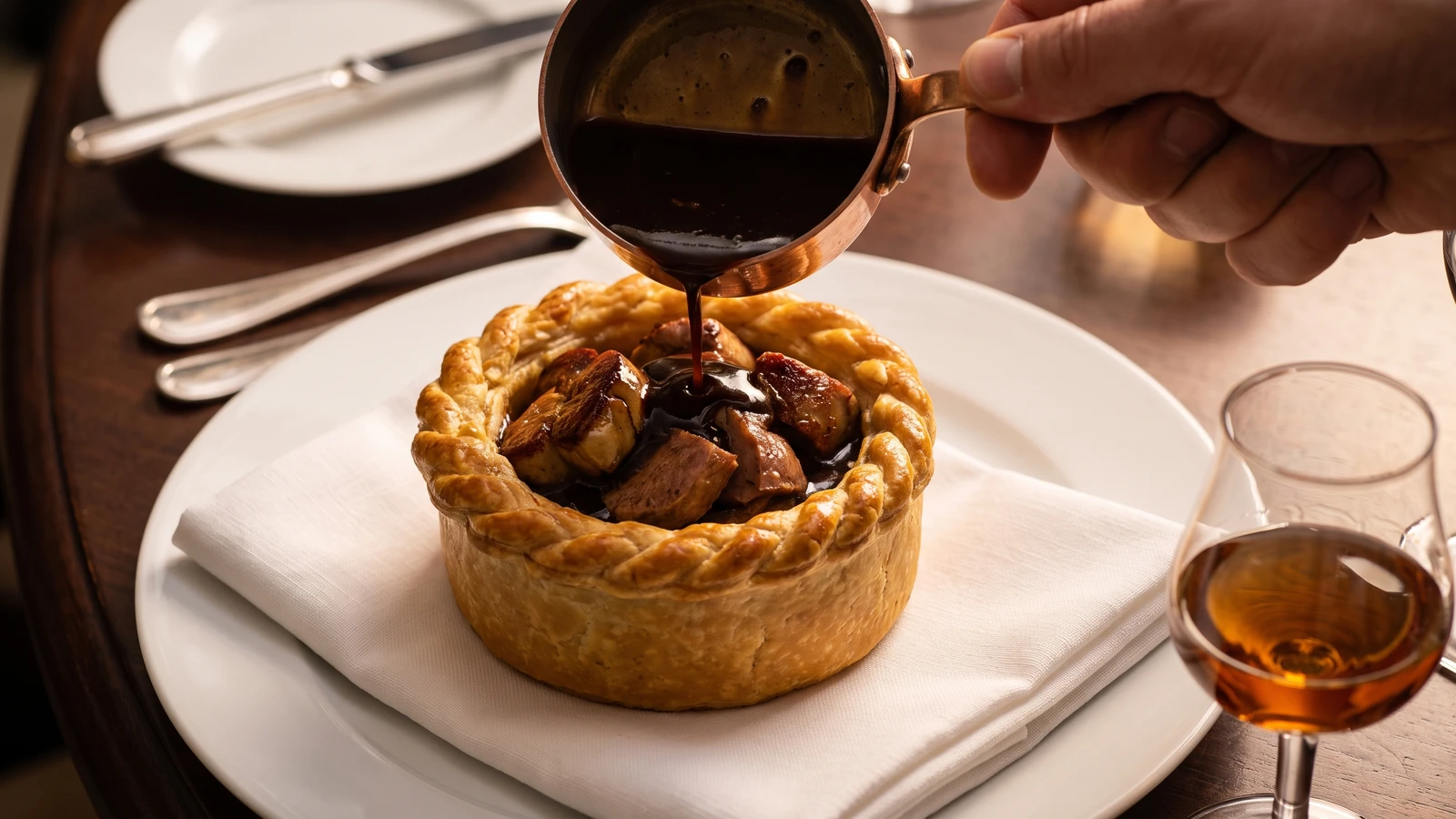
Woodcock gives twice in this grand timbale: tender suprêmes beside bronze-edged foie gras, then the roasted carcasses become a truffle-dark cullis, strained smooth and warmed without boiling.
Timbale de Bécasse Metternich (woodcock and foie gras in a pastry timbale) teaches one uncompromising principle: the roasted bird must become its own sauce. The suprêmes, meaning the breast fillets, fill the crust with foie gras sautéed at the last moment, while the remaining flesh and carcasses are pounded into a cullis, a deeply concentrated, sieved sauce. Heat that cullis gently. Boil it and the proteins tighten, turning it grey and grainy.
The source formula assumed a pâtissier shaping the decorated crust, a saucier pounding and straining the birds, a stockpot never off the fire, prepared truffle essence, and a tammy waiting on the bench. For one cook, one stove, one evening, an eight-inch ring replaces the brigade mould, brown poultry stock and preserved truffle juice stand in for the prepared essence, and a medium sieve followed by damp cheesecloth replaces the tammy. The decoration and folded-napkin service may be simplified because they are scaffolding. The shallow crust, underdone-at-withdrawal roast, last-minute foie gras, pounded carcasses, and double-strained cullis must stay because they are the dish.
When it reaches the table, the pastry should be deeply golden, the foie gras bronze at its edges, and the butter-mounted cullis glossy enough to gather around every suprême. Keep your attention for the sauce: once it has passed through the second sieve, it may grow hot, but it must never bubble.
Timbale de Bécasse Metternich belongs to the Parisian grand-kitchen table, where game, foie gras, truffle, and pastry were assembled into named celebration dishes. Its title follows the canon's habit of honoring diplomatic and aristocratic tables, while its method remains thoroughly French: the roast bird supplies both the suprêmes and the body of its own cullis. The surprise is that the carcasses are not discarded for stock; they are pounded and sieved, making the woodcock itself the sauce.
Quantity
2 cups plus 2 tablespoons (505 ml / 266 g)
divided between the pastry and dusting
Quantity
9 tablespoons (135 ml / 128 g)
cubed for the pastry
Quantity
1½ teaspoons (7.5 ml / 9 g)
divided
Quantity
2
1 for the pastry and 1 beaten for sealing and decoration
Quantity
2 to 3 tablespoons (30 to 45 ml / 30 to 45 g)
Quantity
4 (about 2½ pounds / 1.1 kg total)
Quantity
2 tablespoons (30 ml / 28 g)
for roasting
Quantity
¾ teaspoon (3.75 ml / 1.5 g)
divided
Quantity
1 cup (240 ml / 240 g)
Quantity
2 tablespoons (30 ml / 30 g)
Quantity
8 ounces / 225 g
cut into 8 slices about ½ inch thick and kept very cold
Quantity
2 teaspoons (10 ml / 10 g)
Quantity
1 tablespoon (15 ml / 14 g)
Quantity
2 tablespoons (30 ml / 28 g)
cut into small pieces for finishing the cullis
| Ingredient | Quantity |
|---|---|
| all-purpose flourdivided between the pastry and dusting | 2 cups plus 2 tablespoons (505 ml / 266 g) |
| cold unsalted buttercubed for the pastry | 9 tablespoons (135 ml / 128 g) |
| fine sea saltdivided | 1½ teaspoons (7.5 ml / 9 g) |
| large eggs1 for the pastry and 1 beaten for sealing and decoration | 2 |
| ice water | 2 to 3 tablespoons (30 to 45 ml / 30 to 45 g) |
| legally harvested, fully eviscerated oven-ready woodcocks | 4 (about 2½ pounds / 1.1 kg total) |
| softened unsalted butterfor roasting | 2 tablespoons (30 ml / 28 g) |
| freshly ground black pepperdivided | ¾ teaspoon (3.75 ml / 1.5 g) |
| unsalted brown poultry or game stock | 1 cup (240 ml / 240 g) |
| preserved black truffle juice | 2 tablespoons (30 ml / 30 g) |
| fresh foie gras collopscut into 8 slices about ½ inch thick and kept very cold | 8 ounces / 225 g |
| fresh lemon juice | 2 teaspoons (10 ml / 10 g) |
| Cognac or another fine liqueur-brandy | 1 tablespoon (15 ml / 14 g) |
| cold unsalted buttercut into small pieces for finishing the cullis | 2 tablespoons (30 ml / 28 g) |
Combine 2 cups (250 g) of the flour with ½ teaspoon of the salt. Cut in the 9 tablespoons of cold butter until the mixture resembles coarse crumbs with a few pea-sized pieces remaining. Beat 1 egg with 2 tablespoons of the ice water, work it into the flour, and add the final spoonful of water only if dry crumbs remain. Press the dough together without kneading, flatten it into a disc, wrap it, and chill for 30 minutes. This sturdy pâte à foncer must support the filling, so tender is welcome but flaky and fragile is not.
Heat the oven to 375°F (190°C). Roll two-thirds of the dough about ⅛ inch (3 mm) thick and line an 8-inch by 2-inch (20 by 5 cm) cake ring or springform pan set on a baking sheet. Press the pastry firmly into the bottom corner, trim the rim evenly, and dock the base. Cut a simple braided cord or leaves from the remaining dough, attach them to the rim with beaten egg, and chill the shell for 15 minutes. Line it with parchment and baking weights, bake for 18 minutes, then remove the weights. Brush the interior with beaten egg and bake for 8 to 10 minutes more, until firm and deeply golden. If a crack appears, press a thin scrap of dough over it while the shell is warm, brush with egg, and bake for another 3 minutes. Ça se rattrape. Cool for 5 minutes, unmould carefully, and hold the crust in a 200°F (95°C) oven.
Increase the oven to 450°F (230°C). Dry the woodcocks thoroughly, rub them with the softened butter, and season inside and out with ¾ teaspoon of the remaining salt and ½ teaspoon of the pepper. Arrange them breast-side up in a close-fitting roasting pan and roast for 10 to 16 minutes, depending on size, until an instant-read thermometer inserted from the side into the thickest breast reaches 160°F (71°C). Rest for 5 minutes and verify that they reach 165°F (74°C). This preserves the source's instruction to withdraw the birds underdone relative to their final temperature without serving wild poultry raw.
Carve the two suprêmes cleanly from each rested woodcock, following the breastbone with a narrow knife. Cover them loosely and keep them near the stove. Include every remaining roasted part in the cullis: legs, wings, skin, attached meat, carcasses, and the roasting juices. Cut the remains into small pieces with poultry shears so the bones can be pounded safely and evenly.
Combine the brown stock and black truffle juice to make the home truffle essence, reserving 2 tablespoons for adjustment. Warm the rest without boiling, use a little to release every browned trace from the roasting pan, and add those juices to the chopped carcasses. Working in batches, pound the remains in a heavy mortar until they form a coarse paste, adding the warm truffle essence gradually to thin it. Force the mixture through a sturdy medium sieve, pressing heavily with the back of a ladle. Pass the resulting cullis a second time through a fine sieve lined with two layers of damp cheesecloth, the home equivalent of a tammy. Do not skip this second pass or accept the least trace of bone grit.
Place the strained cullis in a small heavy saucepan over low heat and stir until it reaches 155 to 160°F (68 to 71°C), with no bubbling at the edge. Add the lemon juice and Cognac. Remove the pan from the heat and whisk in the 2 tablespoons of cold butter, one piece at a time, until the cullis gleams and lightly coats a spoon. Taste and use the remaining salt and pepper as needed. If bubbles appear, transfer the sauce immediately to a cool pan and whisk in a spoonful of the reserved cold truffle essence. If graininess has begun, pass it through the damp fine sieve again before adding the butter. Ça se rattrape, though the lost colour cannot be entirely restored.
Keep the foie gras cold until the cullis and crust are ready. Heat a dry heavy skillet over medium-high heat. Season the collops lightly with the remaining salt and pepper, then sauté them in batches for 45 to 60 seconds per side, until bronze at the edges and cooked through to 160°F (71°C). Transfer them immediately to absorbent paper. If they begin shedding fat before they colour, the pan is too cool; lift them out, wipe the pan, heat it properly, and continue.
Set the warm timbale crust on a warm round platter, using a folded clean napkin beneath it if you wish to retain the source's presentation. Arrange the eight suprêmes inside, separating each with a freshly sautéed foie gras collop. Give the cullis one final gentle stir off the heat, then pour it into the timbale so it flows between the pieces without drowning the decorated rim. Carry it straight to the table while the crust is crisp and the sauce still gleams. À table!
1 serving (about 320g)
Culinary guides, cultural storytelling, and the editorial depth that makes cooking meaningful.
Discover Culinary ExplorerChef Juliette
John Dory has the delicacy of sole and the firmness of turbot. A light flouring, a quick butter sauté, and nut-brown beurre noisette show exactly why looks never mattered.

Chef Juliette
Fresh haddock proves its delicacy in the meunière pan: a fine flour crust, moist pearly flakes, and beurre noisette sharpened with lemon and parsley, ready from one skillet in half an hour.

Chef Juliette
Éperlans à l’Anglaise turns small fish into a lesson in disciplined coating: boned smelts under a close, crisp crumb, pan-fried in clarified butter and finished with bright, half-melted maître d’hôtel butter.

Chef Juliette
Tiny smelts, shallot, mushrooms, white wine, gratin sauce, and fine bread raspings meet a fierce oven, where the fish must turn tender in the same breath the buttered crust bronzes.