
Chef Juliette
John Dory (St. Pierre)
John Dory has the delicacy of sole and the firmness of turbot. A light flouring, a quick butter sauté, and nut-brown beurre noisette show exactly why looks never mattered.
A cooking platform built around craft, culture, and the stories behind what we eat.
Created by Chef Juliette
Based on No. 1871, Epigrammes de Perdreau, from Le Guide Culinaire (1907) by Auguste Escoffier
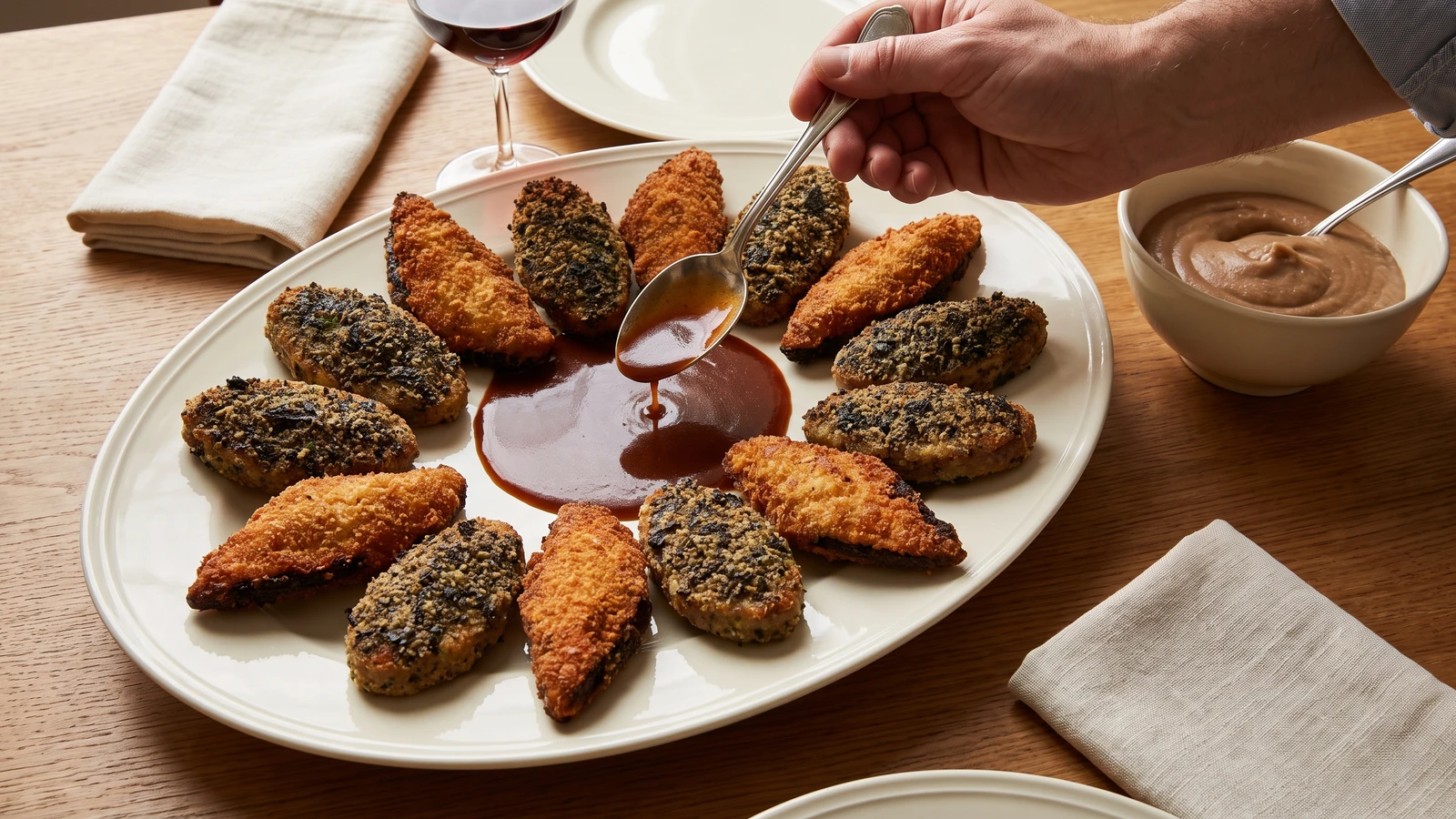
Two textures from one young bird: butter-crumbed fillets gently grilled, leg meat lifted into mousseline and truffle, then a glossy carcass cullis and chestnut purée to gather the whole ring.
Épigrammes de Perdreau (partridge fillets with moulded mousseline cutlets) teaches the whole-bird grammar in a single platter. The breasts keep their natural grain beneath buttered crumbs, while the leg meat and minion fillets become Mousselines, small moulded portions of light forcemeat. The one truth to know before touching a pan is that these textures must remain distinct.
The source kitchen assumed a saucier to turn the carcasses into cullis, stock never off the fire, ranks of tiny cutlet moulds, and a salamander watched by another pair of hands. At home, four young birds feed four people; a saucepan and good unsalted stock build the cullis, a food processor replaces hand-pounding, small silicone moulds replace the batterie of copper forms, and a domestic broiler supplies the gentle radiant heat. One cook, one stove, one evening.
The separate sauce station and the hand-pounding were brigade scaffolding, so they can go. The division of the bird, the cold mousseline, the buttered crumbs, the pressed truffle crust, and the carcass cullis are the dish, so they stay. Before anything else, chill the meat, cream, blade, and processor bowl; that cold emulsion decides whether the Mousselines emerge satin-smooth or coarse.
Épigrammes de perdreau belongs to the Parisian classical table, where épigramme came to mean a matched arrangement of small cutlet-shaped pieces rather than a seasoning or a regional preparation. The form began with pressed breast of lamb, then grand kitchens carried its play of repeated shapes into game, pairing a natural fillet with a moulded mousseline from the same bird. Its circle is not empty display: the alternating pieces declare the cook's command of texture, while the carcass returns as the cullis at their centre.
Quantity
4, about 14 oz / 400 g each
giblets removed
Quantity
12 oz (340 g)
reserved from the birds
Quantity
2 tablespoons (30 ml / 28 g)
Quantity
2, about 3 oz / 80 g
thinly sliced
Quantity
1, about 2½ oz / 70 g
thinly sliced
Quantity
4 cups (960 ml / 960 g)
Quantity
1
Quantity
1
Quantity
¾ cup (180 ml / 180 g)
Quantity
3 teaspoons (15 ml / 18 g)
divided
Quantity
1 teaspoon (5 ml / 2 g)
divided
Quantity
1 tablespoon (15 ml / 14 g)
Quantity
About 6 cups (1.4 litres / 1.4 kg)
Quantity
4 tablespoons (60 ml / 56 g)
melted
Quantity
2 cups (480 ml / 120 g)
Quantity
2
lightly beaten
Quantity
½ cup (120 ml / 80 g)
fresh or drained preserved whole truffle, finely chopped
Quantity
3 tablespoons (45 ml / 42 g)
Quantity
3 cups (720 ml / 450 g)
Quantity
1½ cups (360 ml / 360 g)
Quantity
3 tablespoons (45 ml / 42 g)
Quantity
2 tablespoons (30 ml / 28 g)
cubed
| Ingredient | Quantity |
|---|---|
| oven-ready young partridgesgiblets removed | 4, about 14 oz / 400 g each |
| chilled partridge leg and minion fillet meatreserved from the birds | 12 oz (340 g) |
| unsalted butter for browning the carcasses | 2 tablespoons (30 ml / 28 g) |
| medium shallotsthinly sliced | 2, about 3 oz / 80 g |
| small carrotthinly sliced | 1, about 2½ oz / 70 g |
| unsalted or low-sodium chicken stock for the cullis | 4 cups (960 ml / 960 g) |
| bouquet garni | 1 |
| large egg white | 1 |
| cold heavy cream | ¾ cup (180 ml / 180 g) |
| fine sea saltdivided | 3 teaspoons (15 ml / 18 g) |
| freshly ground white pepperdivided | 1 teaspoon (5 ml / 2 g) |
| softened unsalted butter for the moulds | 1 tablespoon (15 ml / 14 g) |
| hot water for the bain-marie | About 6 cups (1.4 litres / 1.4 kg) |
| unsalted butter for the filletsmelted | 4 tablespoons (60 ml / 56 g) |
| very fine fresh white breadcrumbs | 2 cups (480 ml / 120 g) |
| large eggslightly beaten | 2 |
| black trufflefresh or drained preserved whole truffle, finely chopped | ½ cup (120 ml / 80 g) |
| unsalted butter for tossing the truffle cutlets | 3 tablespoons (45 ml / 42 g) |
| cooked peeled chestnuts | 3 cups (720 ml / 450 g) |
| unsalted or low-sodium chicken stock for the chestnut purée | 1½ cups (360 ml / 360 g) |
| unsalted butter for the chestnut purée | 3 tablespoons (45 ml / 42 g) |
| cold unsalted butter for finishing the culliscubed | 2 tablespoons (30 ml / 28 g) |
Chill the food processor bowl and blade. Remove both breast fillets from each partridge by keeping a flexible knife tight against the breastbone and ribs, leaving the wing bones attached to the carcasses as the source directs. Pull away the small minion fillets, remove and debone the legs, and trim every hard tendon from the leg meat. Weigh 12 oz (340 g) of leg and minion meat, cut it into 1-inch pieces, and return it to the cold. Keep the eight breast fillets covered separately. Chop the carcasses, wing bones, and leg bones into manageable pieces with poultry shears.
Melt 2 tablespoons (30 ml / 28 g) butter in a heavy saucepan over medium heat. Add the chopped carcasses and bones, then brown them patiently for 12 to 15 minutes, turning until their surfaces are a deep hazelnut colour without any black patches. Add the shallots and carrot and cook for 5 minutes. Pour in 4 cups (960 ml / 960 g) chicken stock, scraping the fond from the pan floor, and add the bouquet garni. Hold at a bare simmer for 45 minutes, skimming excess fat from the surface. Strain without pressing, then reduce the liquid until about 1¼ cups remain and it lightly coats a spoon. Set it aside without adding the finishing butter yet.
Put the chestnuts and 1½ cups (360 ml / 360 g) stock in a saucepan. Cover and simmer gently for about 20 minutes, until a chestnut crushes readily beneath a spoon. Drain, reserving the stock, then pass the chestnuts through a food mill or potato ricer while hot. Beat in 3 tablespoons (45 ml / 42 g) butter and enough reserved stock to make a smooth purée that holds a soft mound. Season with salt and white pepper. If it becomes dry or grainy, beat in warm stock one spoonful at a time; if it is loose, stir it over low heat until it gathers. Ça se rattrape. Cover and keep warm.
Keep 2 tablespoons of the measured cream in reserve. Put the thoroughly chilled partridge meat in the cold processor with ½ teaspoon salt and pulse until it becomes a fine, tacky paste. Add the egg white and process only until absorbed. Press the paste through a fine-mesh sieve to remove any remaining sinew, return it to the chilled processor, and add the remaining cold cream gradually while pulsing. Season lightly with white pepper. The mousseline should look smooth and satiny, never oily. If it begins to turn greasy, stop immediately, set the bowl over ice, and stir from the edge towards the centre until it tightens, adding the reserved cream only if needed. Poach a teaspoonful in barely simmering water, taste it, and correct the seasoning before moulding the rest.
Heat the oven to 300°F (150°C). Butter eight small 2-ounce (60 ml) oval moulds and divide the mousseline among them, pressing it firmly into the corners and smoothing the tops. Cover with buttered parchment and set the moulds in a roasting tin. Add enough hot water to reach halfway up their sides, then poach in the oven for 12 to 16 minutes, until the centres reach 165°F (74°C). Rest for 3 minutes and turn them out onto a clean cloth. If one catches or cracks, loosen it with a thin knife and press it gently back into its oval while warm; the egg and truffle coating will cloak the repair.
Set the broiler to low, or position a rack about 8 inches beneath a high element. Dry the breast fillets carefully and season them on both sides. Roll each one in the 4 tablespoons (60 ml / 56 g) melted butter, then in the fine breadcrumbs, pressing just firmly enough to secure an even coat. Lay them on a buttered wire rack over a tray and chill for 10 minutes so the crumbs settle against the meat.
Grill the crumbed fillets gently beneath the broiler, turning once, until both sides are butter-gold with bronze edges and the centres reach 165°F (74°C), about 7 to 10 minutes in total depending on their thickness. The crumbs should colour at the same pace as the meat cooks. If they darken too quickly, lower the tray and finish the fillets in a 400°F (200°C) oven. Rest them for 5 minutes while you finish the moulded cutlets.
Blot the poached mousseline cutlets completely dry. Dip each one in beaten egg, let the excess run away, then roll it in the finely chopped black truffle. Press the truffle into the egg with the flat of a knife exactly as the source instructs, then correct the oval cutlet shape with your hands. If the crust slides, the surface was wet or the egg coat was too heavy; blot the exposed place, touch it with a little fresh egg, and press on more truffle.
Melt 3 tablespoons (45 ml / 42 g) butter in a wide skillet over medium-low heat. Add the truffle-coated cutlets and toss them gently in the butter, turning with two spoons, until the egg has set, the truffle smells full and earthy, and the cutlets are hot through, about 3 to 4 minutes. Keep the heat moderate. Scorched truffle turns bitter, and no amount of sauce can make that pleasant.
Reheat the cullis to a bare simmer and taste for salt. Take it off the heat and monter au beurre, whisk in the 2 tablespoons (30 ml / 28 g) cold butter a few cubes at a time, until the sauce gleams and coats the spoon. Do not boil it after this point. If the butter separates, remove the pan from all heat and whisk in a teaspoon of cold stock; ça se rattrape. Arrange the eight natural fillets and eight truffle cutlets alternately in a circle on a warmed platter. Pour the cullis into the centre and send the chestnut purée to the table in a separate warm bowl. À table!
1 serving (about 585g)
Culinary guides, cultural storytelling, and the editorial depth that makes cooking meaningful.
Discover Culinary ExplorerChef Juliette
John Dory has the delicacy of sole and the firmness of turbot. A light flouring, a quick butter sauté, and nut-brown beurre noisette show exactly why looks never mattered.

Chef Juliette
Fresh haddock proves its delicacy in the meunière pan: a fine flour crust, moist pearly flakes, and beurre noisette sharpened with lemon and parsley, ready from one skillet in half an hour.

Chef Juliette
Éperlans à l’Anglaise turns small fish into a lesson in disciplined coating: boned smelts under a close, crisp crumb, pan-fried in clarified butter and finished with bright, half-melted maître d’hôtel butter.

Chef Juliette
Tiny smelts, shallot, mushrooms, white wine, gratin sauce, and fine bread raspings meet a fierce oven, where the fish must turn tender in the same breath the buttered crust bronzes.