Culinary Explorer

A cooking platform built around craft, culture, and the stories behind what we eat.
Discover Culinary Explorer
Côtelettes de Faisan

Côtelettes de Faisan

Created by Chef Juliette

Based on No. 1857, Côtelettes de Faisan, from Le Guide Culinaire (1907) by Auguste Escoffier

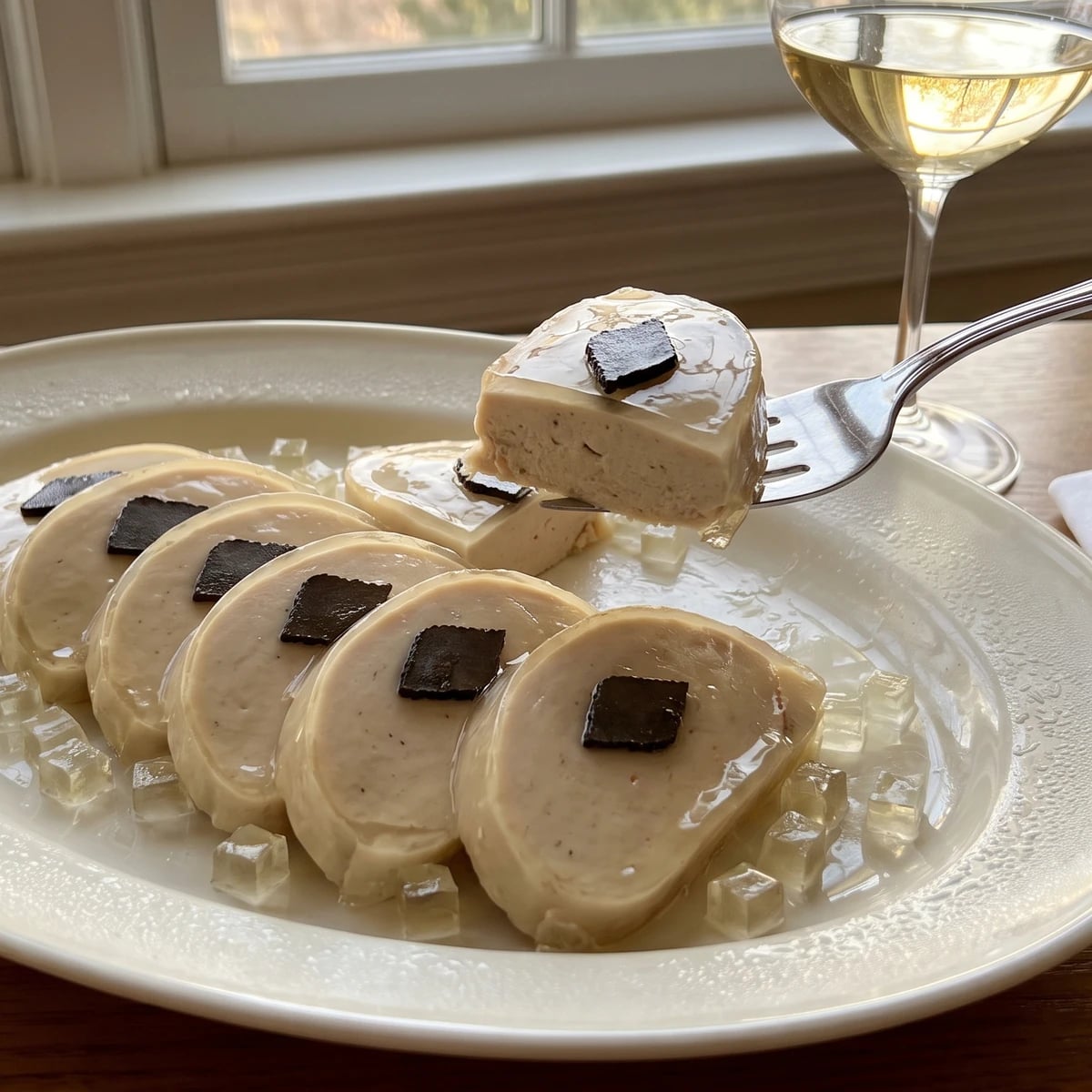
Cold pheasant mousseline, cut into neat côtelettes, masked with glossy sauce chaud-froid, truffled, and sealed beneath clear aspic: a grand cold preparation made manageable for one attentive home cook.

Main Dishes
French
Dinner Party
Make Ahead
1 hr 20 min
Active Time
55 min cook7 hr 30 min total
Yield4 servings

Côtelettes de Faisan (cold pheasant cutlets) teach the discipline of cold sauces: chilling is part of the construction, not merely the serving temperature. Before you touch a pan, know this one thing: the cooked pheasant mousseline must be thoroughly cold and firm before you cut it, or the knife drags, the edges go ragged, and the coating reveals every flaw.

The book gives this entry in one sentence, directing the cook to proceed as for Côtelettes froides de Volaille, because its kitchen already had a saucier, clear stock never off the fire, metal cutlet molds, and aspic ready to pour. A salamander belonged to that brigade too, but it had no work here; this finish is built by cold. At home, a food processor, an 8-inch square pan, one saucepan, and the refrigerator produce eight small côtelettes. The individual molds, display plinth, and acreage of decorative jelly were brigade scaffolding, so they go. The pheasant mousseline, sauce chaud-froid, truffle decoration, and clear aspic glaze are the dish, so they stay.

Make the slab in the morning or the day before, then cut, mask, decorate, and glaze once it is firmly set. The sauce should fall over each côtelette in one opaque ivory sheet, glossy but never thick as paste. The first long chill before the knife arrives is the step that decides everything.

Côtelettes de faisan belong to the Parisian grande cuisine repertoire of cold game, prepared for formal suppers and buffet service where sauce chaud-froid and aspic protected cooked poultry while giving it a polished finish. The name is a small deception: these are not chops cut from a pheasant, but mousseline shaped in the silhouette of a côtelette, a form borrowed from the meat course and carried into the cold kitchen. The pheasant version traveled directly from Côtelettes froides de Volaille, changing the bird while preserving its method.

The technique, the tradition, and the story behind every dish.

Discover Culinary Explorer

Ingredients

boneless, skinless pheasant breast

Quantity

1 lb (450 g)

cut into 1-inch pieces and thoroughly chilled

large egg whites

Quantity

2

thoroughly chilled

heavy cream

Quantity

2 cups (480 ml / 480 g)

ice-cold and divided

fine salt

Quantity

2 teaspoons (10 ml / 12 g)

divided

ground white pepper

Quantity

1/2 teaspoon (2.5 ml / 1 g)

divided

freshly grated nutmeg

Quantity

1/8 teaspoon (0.6 ml / 0.2 g)

softened unsalted butter

Quantity

1 tablespoon (15 ml / 14 g)

for the pan

clear, unsalted pheasant or pale chicken stock

Quantity

4 cups (960 ml / 960 g)

divided

unsalted butter

Quantity

3 tablespoons (45 ml / 42 g)

all-purpose flour

Quantity

1/4 cup (60 ml / 30 g)

powdered gelatin

Quantity

5 teaspoons (25 ml / 15 g)

divided

cold water

Quantity

5 tablespoons (75 ml / 75 g)

divided

fresh lemon juice

Quantity

1 tablespoon (15 ml / 15 g)

fresh or preserved black truffle

Quantity

1/4 cup (60 ml / 28 g)

thinly sliced

Equipment Needed

  • Food processor with metal blade
  • 8-inch (20 cm) square metal pan
  • Deep roasting dish for the bain-marie
  • Instant-read thermometer
  • Medium heavy saucepan
  • Fine-mesh sieve
  • Wire rack and rimmed tray
  • Offset spatula and long slicing knife
  • Chilled oval serving platter

Instructions

  1. 1

    Chill and bloom

    Chill the food processor bowl and blade for 15 minutes. Keep the pheasant, egg whites, and cream in the refrigerator until the moment they are needed. In one small bowl, sprinkle 2 teaspoons of the gelatin over 2 tablespoons of the cold water; in another, sprinkle the remaining 3 teaspoons over the remaining 3 tablespoons. Leave both portions to bloom until swollen and opaque.

    Cold is structural here. Warm meat and cream lose their emulsion in the processor, leaving a grainy mousseline that releases fat during cooking.
  2. 2

    Make the mousseline

    Process the cold pheasant with 1 1/2 teaspoons of the salt, 1/4 teaspoon of the white pepper, and the nutmeg until very fine, stopping to scrape the bowl. Add the egg whites and process until the paste turns sticky and uniform. With the machine running, pour in 1 cup plus 2 tablespoons of the cold cream in a thin stream, reserving 2 tablespoons. Stop as soon as the mousseline, the fine pheasant-and-cream emulsion, is smooth and glossy. If it begins looking oily or feels warmer than cool room temperature, stop immediately, chill the bowl for 15 minutes, then process in the reserved cream a teaspoon at a time. Fry or gently poach a teaspoonful, taste it cold, and adjust the remaining salt and pepper before proceeding.

  3. 3

    Poach the slab

    Heat the oven to 325°F (165°C). Butter an 8-inch (20 cm) square pan and line its base with parchment. Spread in the mousseline, pressing it firmly into the corners and smoothing the surface to an even thickness. Cover directly with buttered parchment, then set the pan in a roasting dish and add hot water halfway up its sides to make a bain-marie, a water bath. Cook for 22 to 28 minutes, until the center reaches 165°F (74°C) and feels set without browning. Lift the pan from the water, uncover it, and cool for 20 minutes. Cover and refrigerate for at least 4 hours, preferably overnight.

  4. 4

    Build the chaud-froid

    Reserve 1 1/2 cups of the stock for the aspic. Bring the remaining 2 1/2 cups to a lively simmer and reduce it to 1 1/2 cups. In a clean saucepan, melt the 3 tablespoons of butter, stir in the flour, and cook for 2 minutes without allowing the roux to color. Whisk in the reduced stock gradually, then simmer gently for 10 minutes, whisking along the bottom. Add the remaining 3/4 cup cream and simmer until the sauce coats the back of a spoon in an opaque layer. Remove it from the heat, whisk in the smaller portion of bloomed gelatin and the lemon juice, then strain through a fine sieve. Taste for salt and white pepper. Press parchment against the surface and let the sauce cool.

  5. 5

    Set the aspic

    Warm the reserved 1 1/2 cups stock without boiling. Remove it from the heat and stir in the larger portion of bloomed gelatin until completely dissolved. Strain it into a shallow container and refrigerate until firm, about 2 hours. This aspic supplies both the clear final glaze and the diced garnish, so keep it pale and clean rather than seasoning it aggressively.

  6. 6

    Cut the côtelettes

    Invert the thoroughly chilled mousseline onto a board and remove the parchment. With a long knife dipped in hot water and wiped dry, cut the square into two equal bands, then cut each band into four rectangles, making eight pieces. Round one short end of each piece and taper the opposite end to suggest a small côtelette. Clean and reheat the knife between cuts. If the edges drag or crumble, stop. Ça se rattrape: press any loose mousse gently back into place, return the pieces to the refrigerator for 45 minutes, and trim them again with the hot, dry knife.

  7. 7

    Mask with chaud-froid

    Set the côtelettes on a wire rack over a tray. Cool the sauce chaud-froid until it has the body of thick pouring cream, then spoon it over each piece in one continuous pass, covering the top and sides. Chill for 10 minutes and apply a second thin coat wherever the mousse shows through. If the sauce slides off, it is too warm; chill it briefly and try again. If it lands in ridges or clumps, it is too cold; warm it gently over hot water and whisk until smooth. Temperature, not extra liquid, is the correction.

  8. 8

    Decorate and glaze

    While the final coating is still slightly tacky, place a neat slice or diamond of truffle on each côtelette. Chill for 20 minutes. Cut one-third of the firm aspic into small cubes for serving, then melt the remainder very gently and cool it until slightly viscous but still fluid. Brush each côtelette with a thin, even coat. If the aspic pools or softens the sauce beneath it, it is too warm; chill both components for 10 minutes, allow the surface to reset, and apply another thin coat.

  9. 9

    Chill and serve

    Transfer the glazed côtelettes to a cold oval platter and arrange them in a slightly overlapping fan. Tuck the diced aspic around them without burying their shape. Refrigerate for at least 1 hour to set the finish, then take the platter out 10 minutes before serving so the pheasant and truffle are cool rather than numb. Serve two côtelettes per person. À table!

Chef Tips

  • Choose pheasant breasts without shot damage and remove every trace of skin, tendon, and silver membrane. These tough strands survive the processor and spoil the smooth cut face.
  • The stock decides both the sauce and the aspic. Use a pale pheasant or chicken stock with good body, not a dark roasted stock, which muddies the ivory coating. A good frozen stock is the honest home equivalent of the brigade pot that never left the fire.
  • Fresh black truffle is splendid when available, but a whole preserved truffle is the classical pantry's sensible answer out of season. Drain it well and slice it thinly; truffle paste cannot make the clean decoration this preparation requires.
  • Serve the côtelettes with a simply dressed bitter-leaf salad and bread, not a crowd of competing garnishes. A full-bodied dry white Burgundy has enough weight for the pheasant, cream, and truffle.

Advance Preparation

  • Cook the mousseline slab up to two days ahead and keep it covered in the refrigerator. Leave it uncut until firm; this protects the surface and gives the knife clean resistance.
  • The sauce chaud-froid and aspic can be prepared a day ahead. Rewarm the sauce gently over hot water and remelt the glazing portion of aspic without boiling either one.
  • The finished glazed côtelettes may be refrigerated overnight on their serving platter. Cover them with a deep lid or an inverted tray that cannot touch the glossy surface.
  • Keep the dish at or below 40°F (4°C) and return leftovers promptly to the refrigerator. Eat them within two days.

Frequently Asked Questions

Nutrition Information

1 serving (about 520g)

Calories
730 calories
Total Fat
59 g
Saturated Fat
36 g
Trans Fat
2 g
Unsaturated Fat
21 g
Cholesterol
240 mg
Sodium
1280 mg
Total Carbohydrates
10 g
Dietary Fiber
1 g
Sugars
4 g
Protein
36 g

Note: Chef personas and recipes are created with AI assistance. Cook with care: follow safe food-handling practices, check doneness with a thermometer when needed, and adapt for allergies and your kitchen.

Where cooking meets culture.

Culinary guides, cultural storytelling, and the editorial depth that makes cooking meaningful.

Discover Culinary Explorer

More from Poultry (Volaille) - Venison and Ground Game

Browse the full collection