
Chef Juliette
John Dory (St. Pierre)
John Dory has the delicacy of sole and the firmness of turbot. A light flouring, a quick butter sauté, and nut-brown beurre noisette show exactly why looks never mattered.
A cooking platform built around craft, culture, and the stories behind what we eat.
Created by Chef Juliette
Based on No. 1791, Selle de Chevreuil et Cuissot, from Le Guide Culinaire (1907) by Auguste Escoffier
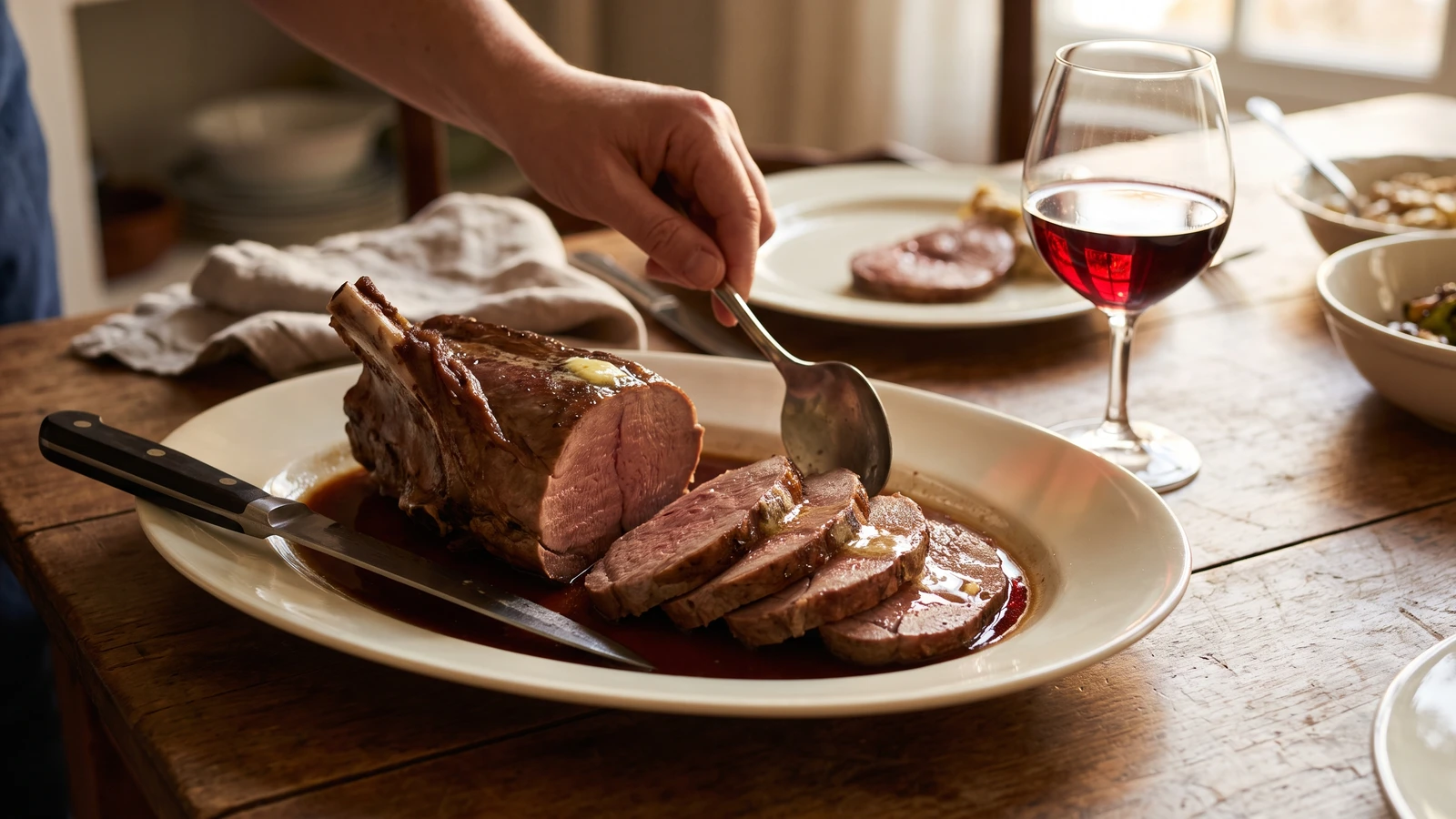
Selle de Chevreuil et Cuissot teaches the discipline of game: strip every tendon, skip marinade for a young, well-hung joint, roast in butter, and stop before leanness turns to dryness.
Selle de Chevreuil et Cuissot (saddle and leg of roebuck) teaches the first discipline of lean game: every visible tendon and sheet of peau d'argent must come off before heat, because roasting cannot soften them before the meat dries. The saddle and cuissot take the same treatment, though you cook one joint, not both, and trust temperature rather than forcing two different shapes onto one timetable.
A grand kitchen could send an entire back to the roasting station with a larding needle at hand, while a saucier, a stockpot never off the fire, and a salamander waited for whichever finished preparation followed. This entry calls for none of those sauces or garnishes, so I won't invent them. At home, the whole back becomes a short lumbar saddle or a compact tied cuissot, the larding needle becomes a slim skewer when larding is truly needed, and the roasting pan supplies a jus court from its own fond. The banquet-sized joint and automatic larding were brigade scaffolding. Careful paring, butter, and exact roasting are the dish. One cook, one stove, one evening.
Young, properly hung roebuck wants no marinade at all. A mature or exceptionally lean joint may be larded for protection, but soaking good young meat only blurs the flavor and leaves its surface wet. Before you touch the pan, pare the joint patiently, dry it thoroughly, and know where your thermometer will enter the thickest muscle without meeting bone. That preparation decides the roast.
Selle de chevreuil et cuissot belongs to the cuisine de chasse of Sologne and to hunting tables throughout wooded France, where the saddle and haunch were treated as companion roasting joints and offered with the same garnitures. The old preference for game taken without a long chase recorded a practical concern: an exhausted carcass deteriorated rapidly unless it was dressed and chilled at once. The preparation also corrects a stubborn misconception, because clean, young roebuck properly hung under controlled conditions should taste fresh and distinct, never tainted or hidden beneath a strong marinade.
Quantity
1 saddle, 3 to 3½ lb (1.35 to 1.6 kg), or 1 cuissot, 2½ to 3 lb (1.1 to 1.35 kg)
saddle ribs cut short so it sits level, or cuissot tied into an even roast
Quantity
8 to 10 batons, about 1½ oz (45 g)
chilled and cut roughly 4 in (10 cm) long and ¼ in (6 mm) thick
Quantity
2 teaspoons (10 ml / 12 g)
Quantity
1 teaspoon (5 ml / 2 g)
Quantity
6 tablespoons (90 ml / 85 g)
divided, with 2 tablespoons kept cold for the jus
Quantity
1 cup (240 ml / 240 g)
| Ingredient | Quantity |
|---|---|
| short bone-in lumbar saddle of roebuck or boneless cuissot roastsaddle ribs cut short so it sits level, or cuissot tied into an even roast | 1 saddle, 3 to 3½ lb (1.35 to 1.6 kg), or 1 cuissot, 2½ to 3 lb (1.1 to 1.35 kg) |
| unsmoked larding bacon (optional)chilled and cut roughly 4 in (10 cm) long and ¼ in (6 mm) thick | 8 to 10 batons, about 1½ oz (45 g) |
| fine sea salt | 2 teaspoons (10 ml / 12 g) |
| freshly ground black pepper | 1 teaspoon (5 ml / 2 g) |
| unsalted butterdivided, with 2 tablespoons kept cold for the jus | 6 tablespoons (90 ml / 85 g) |
| cold water | 1 cup (240 ml / 240 g) |
Use roebuck that was promptly dressed, properly chilled, and handled by a trustworthy game dealer or butcher. It should smell clean and faintly mineral, never sour, sweetly putrid, or musty. Pare the joint by sliding a sharp boning knife directly beneath every tendon and sheet of silvery membrane, angling the blade toward the tissue so you remove as little meat as possible. Work patiently around the saddle loins or along each muscle of the cuissot. Heat tightens this tissue rather than tenderizing it, so what remains will pull against the carved slices.
If the roebuck is young, tender, and properly hung, omit the larding bacon. If the joint is mature or exceptionally lean, chill the bacon batons until firm, make narrow channels through the meat parallel to its grain with a slim metal skewer, and ease one baton into each channel with a narrow chopstick. Space them evenly rather than crowding the center. Larding is insurance, not ceremony, and forcing too many channels into a small home-sized joint does more damage than the bacon repairs. Do not marinate the meat.
Tie a boneless cuissot at 1½-inch (4 cm) intervals so its thickness stays even; a butcher-prepared saddle needs no further tying unless the loins lift from the bone. Dry the entire surface thoroughly, season with the salt, and leave it uncovered for 30 minutes while the oven heats to 425°F (220°C). Add the pepper immediately before browning. A dry surface gives the butter something to bronze, while marinade or surface moisture makes the meat stew.
Melt 3 tablespoons of the butter in a heavy ovenproof pan over medium-high heat. When the foam subsides and the butter smells nutty, add the joint and brown every accessible surface, taking 8 to 10 minutes altogether. Move the meat only when each side releases easily and shows a deep Maillard bronze. Keep the fond, but watch the butter closely. If its milk solids turn black or smell acrid, lift out the meat, wipe away only the burnt fat, and begin again with fresh butter. Ça se rattrape. Burnt butter left beneath the roast will make the entire jus bitter.
Add 1 tablespoon butter to the pan and place the joint in the oven. Baste with the foaming butter and pan juices every 8 minutes. Begin checking a short saddle after 18 minutes and expect roughly 20 to 30 minutes; begin checking a cuissot after 30 minutes and expect roughly 35 to 50 minutes. Shape matters more than weight. Insert the thermometer into the thickest muscle, away from bone and any bacon channel, and remove the roast at 140°F (60°C). Rest it loosely covered for 15 to 20 minutes, then verify that the center has reached at least 145°F (63°C). If it has not, return it to a 325°F (165°C) oven for a few minutes and check again. Once lean game passes its mark, the lost moisture cannot be put back, so the thermometer is the honest safeguard.
While the meat rests, set the roasting pan over medium heat and pour off any excess fat while preserving every browned deposit. Add the cold water and scrape the pan thoroughly, dissolving the fond into a jus court, a short pan jus. Boil until reduced to about ½ cup (120 ml) and glossy enough to leave a light trail across the pan. Remove it from the heat, add the resting juices, and whisk in the remaining 2 tablespoons of cold butter a little at a time. This monté au beurre, finishing with cold butter, gives the jus body and sheen without flour or a separate stock. If it turns greasy or separates, whisk in 1 teaspoon cold water away from the heat. Ça se rattrape.
For the saddle, run the knife closely along each side of the backbone, lift off the two loins, and cut them crosswise into generous slices. For the cuissot, remove the string, identify the direction of each major muscle, and slice across its grain rather than treating the leg as one uniform piece. Warm the jus gently without boiling, taste for salt and pepper, and pool a little on a warm platter before arranging the meat. Spoon the remainder over the carved surfaces and serve at once. À table!
1 serving (about 255g)
Culinary guides, cultural storytelling, and the editorial depth that makes cooking meaningful.
Discover Culinary ExplorerChef Juliette
John Dory has the delicacy of sole and the firmness of turbot. A light flouring, a quick butter sauté, and nut-brown beurre noisette show exactly why looks never mattered.

Chef Juliette
Fresh haddock proves its delicacy in the meunière pan: a fine flour crust, moist pearly flakes, and beurre noisette sharpened with lemon and parsley, ready from one skillet in half an hour.

Chef Juliette
Éperlans à l’Anglaise turns small fish into a lesson in disciplined coating: boned smelts under a close, crisp crumb, pan-fried in clarified butter and finished with bright, half-melted maître d’hôtel butter.

Chef Juliette
Tiny smelts, shallot, mushrooms, white wine, gratin sauce, and fine bread raspings meet a fierce oven, where the fish must turn tender in the same breath the buttered crust bronzes.