
Chef Juliette
John Dory (St. Pierre)
John Dory has the delicacy of sole and the firmness of turbot. A light flouring, a quick butter sauté, and nut-brown beurre noisette show exactly why looks never mattered.
A cooking platform built around craft, culture, and the stories behind what we eat.
Created by Chef Juliette
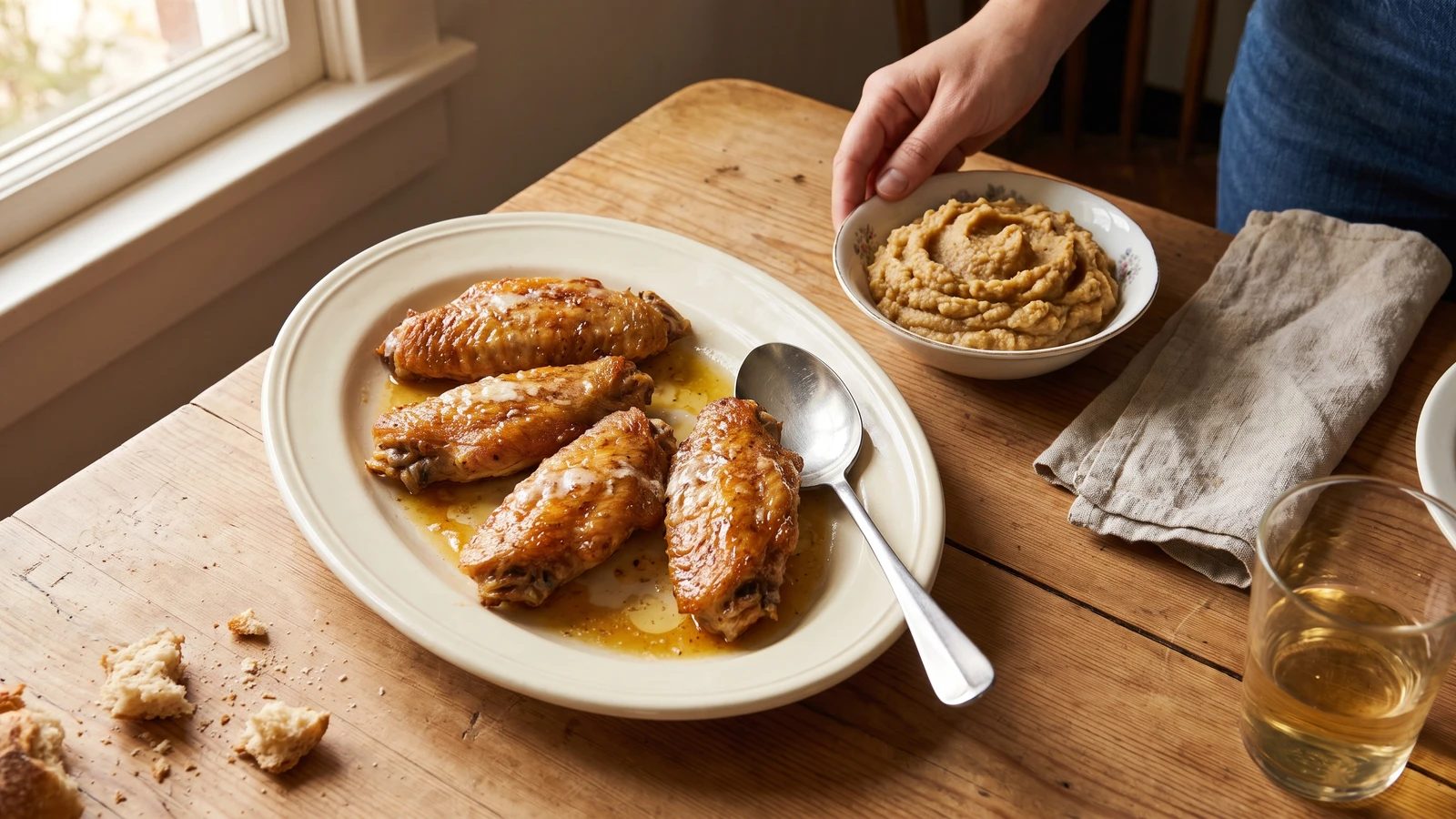
Based on No. 1722, Ailerons de Dindonneau Dorés à la Purée de Marrons, from Le Guide Culinaire (1907) by Auguste Escoffier
Butter-gilded turkey pinions, cooked almost dry over carrot, onion, and herbs, teach the discipline of gentle heat; the glossy pan jus and fine chestnut purée make a thrifty cut feel generous.
Ailerons de Dindonneau Dorés à la Purée de Marrons (butter-gilded young turkey wing pinions with chestnut purée) teaches control of heat. The one true thing to know before touching the pan is this: the butter must stay gently emulsified with the poultry juices, not split and scorch. Low, steady heat gives you bronze skin, tender joints, and a savory butter-rich jus. Fierce heat gives you bitter milk solids and stubborn meat.
The original service assumed a saucier free to baste the pan, light stock never off the fire, and a tamis, a fine drum sieve, waiting for the chestnuts. Your home equivalent is a tight-lidded ovenproof sauté pan, a timer set for regular basting, good unsalted chicken stock, and a food processor followed by an ordinary fine sieve. Market-cleaned wings make singeing largely obsolete, so tweezers replace the flame. A salamander has no work here because the color is made in butter before the pan enters the oven. The molded timbale is presentation scaffolding and may go; the gentle gilding, almost-dry cooking, frequent basting, and slightly fatty reduced jus are the dish and must stay. One cook, one stove, one evening.
The finished pinions should shine deep gold beneath their jus, with the chestnut purée alongside, smooth, savory, and generous enough for every swipe of the fork. Watch the butter during the covered cooking. That quiet pan, neither frying hard nor swimming in liquid, is the step that decides everything.
At the Parisian classical and bourgeois table, ailerons were the two outer joints of a poultry wing, the flat and tip together, not the meaty drumette commonly called a wing today. Grand kitchens turned these inexpensive joints into a luncheon entrée by slow-cooking them over aromatics and finishing their buttery cooking juices as a short jus. Chestnut purée became a favored companion to turkey because its mellow sweetness and dense texture balanced the savory, slightly fatty sauce, not because the dish belonged to one particular chestnut-growing region.
Quantity
4, about 3½ to 4 pounds (1.6 to 1.8 kg) total
flat and tip kept joined
Quantity
8 tablespoons (120 ml / 113 g), divided
Quantity
1 medium
thinly sliced
Quantity
1 medium
thinly sliced
Quantity
6
Quantity
2 sprigs
Quantity
1
Quantity
2 teaspoons (10 ml / 12 g), divided
Quantity
½ teaspoon (2.5 ml / 1 g)
Quantity
2 cups (480 ml / 480 g), divided
kept hot
Quantity
3½ cups (830 ml / 500 g)
vacuum-packed or jarred and drained
Quantity
1 to 2 tablespoons (15 to 30 ml / 15 to 30 g)
| Ingredient | Quantity |
|---|---|
| turkey wing pinionsflat and tip kept joined | 4, about 3½ to 4 pounds (1.6 to 1.8 kg) total |
| unsalted butter | 8 tablespoons (120 ml / 113 g), divided |
| carrotthinly sliced | 1 medium |
| yellow onionthinly sliced | 1 medium |
| parsley stalks | 6 |
| thyme | 2 sprigs |
| bay leaf | 1 |
| fine sea salt | 2 teaspoons (10 ml / 12 g), divided |
| freshly ground black pepper | ½ teaspoon (2.5 ml / 1 g) |
| light unsalted chicken stockkept hot | 2 cups (480 ml / 480 g), divided |
| cooked peeled whole chestnutsvacuum-packed or jarred and drained | 3½ cups (830 ml / 500 g) |
| hot water (optional) | 1 to 2 tablespoons (15 to 30 ml / 15 to 30 g) |
Heat the oven to 300°F (150°C). If you bought whole turkey wings, cut through the joint between each drumette and flat, reserving the drumettes for another pot; each pinion consists of the flat and tip kept together. Inspect the skin, pull out any remaining pinfeathers with clean tweezers, and trim only loose scraps of skin. Pat the pinions very dry, then season them moderately with 1½ teaspoons of the salt and all the pepper.
Melt 4 tablespoons of the butter in a heavy ovenproof sauté pan or shallow braiser just large enough to hold the pinions in one layer. Use medium-low heat and wait until the butter foams. Add the pinions and color them gently on both sides, turning only when the first surface is an even deep gold, about 15 to 18 minutes in all. The butter should murmur, never spit furiously. Transfer the gilded pinions to a plate and leave every browned trace in the pan.
Add the carrot and onion to the same butter. Cook over low heat for 7 to 9 minutes, stirring occasionally, until both soften and take a pale hazelnut color without crisping. Add the parsley stalks, thyme, and bay leaf, then settle the pinions over the aromatics with their broadest sides down. Cover the pan tightly.
Transfer the covered pan to the oven and cook for 1 hour 25 minutes to 1 hour 45 minutes. Every 20 minutes, open the pan and spoon the buttery juices over the pinions, replacing the lid promptly. Add no stock at this stage unless the pan threatens to dry. If the butter turns completely clear, its milk solids begin browning sharply, or the aromatics start frying, the heat is too fierce. Pull the pan from the oven, add 1 tablespoon of hot water around the edge, baste until the juices look cloudy again, and lower the oven to 275°F (135°C). Ça se rattrape.
While the pinions cook, combine the chestnuts with 1¼ cups (300 ml / 300 g) of the hot stock in a saucepan. Cover and simmer very gently for 15 minutes, then uncover and continue until the chestnuts crush easily and only a little liquid remains. Process them while hot, adding the remaining 4 tablespoons of butter a piece at a time and the remaining ½ teaspoon salt. Press the purée through a fine sieve for the smooth finish the dish requires. If it becomes stiff or grainy, beat in hot stock a tablespoon at a time; if it is loose, stir it over low heat until it holds a soft mound. Keep it covered and warm.
The pinions are ready when the flat joint bends without resistance, the meat yields easily beside the bone, and the thickest fleshy section registers at least 165°F (74°C), though the texture is usually better nearer 185°F (85°C). If the temperature is safe but the joint remains tight, cover and continue cooking for 15 minutes. Arrange the finished pinions radially on a warm shallow platter, tips pointing outward, and cover loosely while you make the jus.
Set the cooking pan over medium-low heat and add the remaining ¾ cup (180 ml / 180 g) hot stock, scraping the fond from the bottom. Simmer gently for 15 minutes, pressing the aromatics into the liquid, until about ½ cup (120 ml / 120 g) glossy jus remains. Strain it through a fine sieve. Spoon away only any broad pool of clear grease; the source intends this jus to remain somewhat fatty, so don't strip away its butter. If it reduces too far, loosen it with hot stock. If it looks split and oily, whisk in 1 teaspoon of hot water off the heat until it comes back together.
Pour the hot jus over the arranged pinions, letting it pool around their lower halves. Spoon the chestnut purée into a separate warmed bowl and mark its surface with the back of the spoon so the butter catches in the hollows. Bring both dishes to the table immediately. À table!
1 serving (about 440g)
Culinary guides, cultural storytelling, and the editorial depth that makes cooking meaningful.
Discover Culinary ExplorerChef Juliette
John Dory has the delicacy of sole and the firmness of turbot. A light flouring, a quick butter sauté, and nut-brown beurre noisette show exactly why looks never mattered.

Chef Juliette
Fresh haddock proves its delicacy in the meunière pan: a fine flour crust, moist pearly flakes, and beurre noisette sharpened with lemon and parsley, ready from one skillet in half an hour.

Chef Juliette
Éperlans à l’Anglaise turns small fish into a lesson in disciplined coating: boned smelts under a close, crisp crumb, pan-fried in clarified butter and finished with bright, half-melted maître d’hôtel butter.

Chef Juliette
Tiny smelts, shallot, mushrooms, white wine, gratin sauce, and fine bread raspings meet a fierce oven, where the fish must turn tender in the same breath the buttered crust bronzes.