
Chef Juliette
John Dory (St. Pierre)
John Dory has the delicacy of sole and the firmness of turbot. A light flouring, a quick butter sauté, and nut-brown beurre noisette show exactly why looks never mattered.
A cooking platform built around craft, culture, and the stories behind what we eat.
Created by Chef Juliette
Based on No. 1717, Dindonneau à la Catalane, from Le Guide Culinaire (1907) by Auguste Escoffier
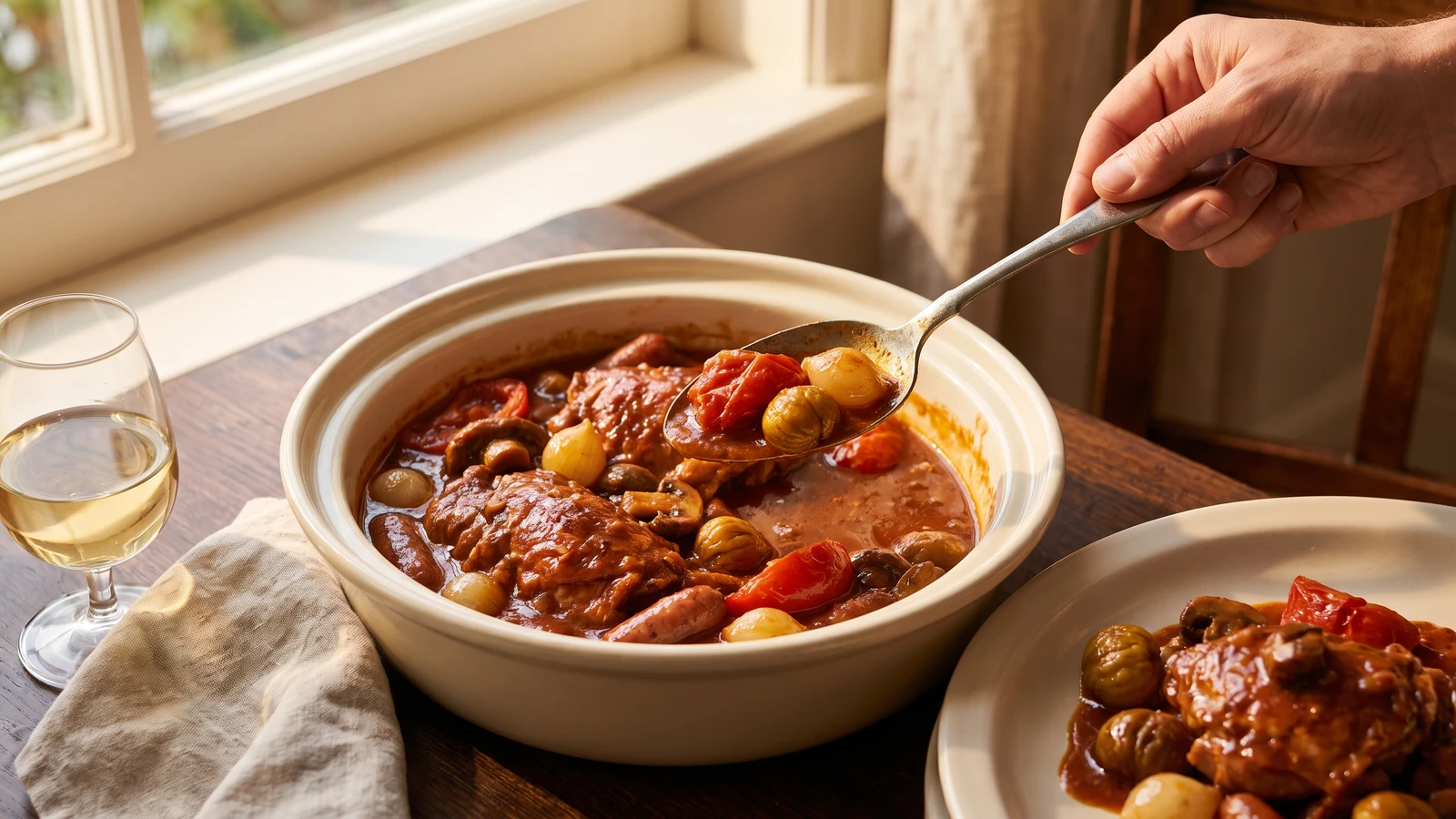
Dindonneau à la Catalane gathers browned turkey, white wine, tomato, chestnuts, glazed onions, mushrooms, and little sausages into one glossy southern braise, with every garnish cooked just enough to keep its own character.
Dindonneau à la Catalane (young turkey in the Catalan manner) teaches one crucial order of operations: brown the bird, then reduce the white wine completely before adding the sauce. Leave the wine loose and the finished braise tastes thin and sharp; boil it down against the fond and it becomes the bright backbone beneath the tomato, chestnuts, onions, mushrooms, and sausages.
The original assumed a whole young turkey cut by a brigade, a saucier with Sauce Espagnole and brown stock always ready, and enough hands to tend three garnishes while the bird cooked. For four, I halve the garnish count, ask the butcher to cut half a young turkey into neat fricassée pieces, and use prepared Sauce Espagnole and good brown stock. Peeled cooked chestnuts are warmed in consommé instead of being peeled at the stove, and the final cooking happens in a deep ovenproof serving dish. Formal reshaping and another transfer are brigade scaffolding; the hard browning, complete wine reduction, smooth strained sauce, and separately cooked garnishes are the dish, so they stay.
What reaches the table is generous and deeply colored: bronze turkey in a glossy tomato-brown sauce, chestnuts soft but whole, little onions shining, mushrooms browned at their edges, and sausages carrying the sauce into every bite. One cook, one stove, one evening. Before you touch the pan, remember the step that decides everything: reduce the wine until only a sticky, fragrant glaze remains.
Dindonneau à la Catalane belongs to the French classical vocabulary of à la Catalane, a designation pointing toward Roussillon and French Catalonia through tomato, garlic, chestnuts, onions, and sausage. It is not a claim that every Catalan household cooked turkey by this exact formula; the composed garnish is the grand kitchen's translation of a southern border larder, with each element prepared separately before meeting in a smooth brown sauce. In the canon, Catalane names this particular garnish and tomato-garlic profile, not a vague Provençal identity.
Quantity
1, about 4 lb (1.8 kg)
divided into 6 bone-in fricassée pieces
Quantity
2 teaspoons (10 ml / 12 g)
divided
Quantity
¾ teaspoon (3.75 ml / 1.5 g)
divided
Quantity
5 tablespoons (75 ml / 70 g)
divided
Quantity
1 cup (240 ml / 240 g)
Quantity
1 pea-size piece, about ⅛ teaspoon (0.6 ml / 0.5 g)
crushed
Quantity
1 cup (240 ml / 245 g)
Quantity
1 cup (240 ml / 250 g)
Quantity
1¼ cups (300 ml / 300 g)
divided
Quantity
4 ounces (115 g)
quartered
Quantity
10, about 5 ounces (140 g)
Quantity
1 cup (240 ml / 240 g)
Quantity
10, about 5 ounces (140 g)
peeled
Quantity
½ teaspoon (2.5 ml / 2 g)
Quantity
3 small, about 9 ounces (255 g)
quartered
Quantity
5, about 8 ounces (225 g) total
| Ingredient | Quantity |
|---|---|
| butcher-cut half young turkeydivided into 6 bone-in fricassée pieces | 1, about 4 lb (1.8 kg) |
| fine sea saltdivided | 2 teaspoons (10 ml / 12 g) |
| freshly ground black pepperdivided | ¾ teaspoon (3.75 ml / 1.5 g) |
| unsalted butterdivided | 5 tablespoons (75 ml / 70 g) |
| dry white wine | 1 cup (240 ml / 240 g) |
| garliccrushed | 1 pea-size piece, about ⅛ teaspoon (0.6 ml / 0.5 g) |
| tomato purée | 1 cup (240 ml / 245 g) |
| prepared Sauce Espagnole | 1 cup (240 ml / 250 g) |
| unsalted brown turkey or chicken stockdivided | 1¼ cups (300 ml / 300 g) |
| button mushroomsquartered | 4 ounces (115 g) |
| peeled cooked chestnuts | 10, about 5 ounces (140 g) |
| prepared chicken consommé | 1 cup (240 ml / 240 g) |
| pearl onionspeeled | 10, about 5 ounces (140 g) |
| granulated sugar | ½ teaspoon (2.5 ml / 2 g) |
| ripe plum tomatoesquartered | 3 small, about 9 ounces (255 g) |
| small fresh pork chipolatas | 5, about 8 ounces (225 g) total |
Heat the oven to 325°F (165°C). Pat the turkey pieces thoroughly dry, then season them on every side with 1½ teaspoons of the salt and ½ teaspoon of the pepper. Set out the sauce components and prepare all the garnishes before browning begins; once the wine reaches the pan, the work should move without a long pause.
Melt 3 tablespoons of the butter in a heavy cocotte over medium-high heat. When the foam subsides, sauté the turkey, cooking it quickly in the hot butter in two batches so the pan never crowds. Brown every piece to a deep, even bronze, giving the skin side the longest contact with the pan, then transfer it to a tray. If the butter darkens too quickly, lower the heat slightly, but do not hurry the turkey out while it is still pale. This color cannot be added later.
Pour the white wine into the cocotte and scrape up every brown speck of fond with a wooden spoon. Add the crushed garlic and the remaining salt and pepper, then boil briskly until the wine is completely reduced, about 8 to 10 minutes. The pan should hold only a few syrupy spoonfuls, and the raw wine smell should be gone. If the fond begins catching before the wine has reduced, lower the heat and add a tablespoon of the measured stock. Ça se rattrape. If any specks have burned black and smell acrid, pour the good liquid into a clean cocotte and leave those specks behind.
Stir the tomato purée into the reduced wine, followed by the Sauce Espagnole and 1 cup of the brown stock, keeping the Sauce Espagnole and braising stock in equal measure as the original directs. Bring the sauce to a bare simmer, then return the turkey pieces and their collected juices. In a snug cocotte, the liquid should nearly cover the pieces; if your pan is too broad, move everything to a smaller vessel rather than diluting the sauce. Cover and cook in the oven for 40 minutes.
While the turkey cooks, place the chestnuts and consommé in a small saucepan and hold them at the gentlest simmer for 10 minutes, until the chestnuts are hot through and have taken in some of the consommé. Lift them out carefully and reserve the liquid. For the onions, melt 1 tablespoon of butter in a small pan, add the onions, sugar, and remaining ¼ cup stock, then cover and simmer gently until nearly tender. Uncover and roll them through the reducing liquid until they are glossy and lightly colored. Melt the final tablespoon of butter in a wide skillet and sauté the quartered mushrooms over lively heat until their moisture has evaporated and their edges brown. If they first flood the pan, keep cooking; once the water disappears, the butter can do its proper work.
After the turkey has cooked for 40 minutes, lift the pieces out. Trim away only loose flaps of skin or any visible bone splinters; sculpting every piece into formal service shapes is brigade scaffolding and can go. Skim obvious surface fat from the sauce, then strain it through a fine-mesh sieve. Arrange the turkey in a deep 3-quart ovenproof serving dish, surround it with the mushrooms, chestnuts, glazed onions, quartered tomatoes, and uncooked chipolatas, then pour the strained sauce evenly over everything.
Return the assembled dish to the oven, uncovered, for 25 minutes, turning the sausages once so they cook evenly in the sauce. The turkey must reach at least 165°F (74°C) at its thickest point, and the pork sausages at least 160°F (71°C). If a breast piece reaches temperature before the sausages, lift it to a warm plate and return it when the rest is ready. Young white meat keeps a shorter clock, and attending to it preserves the source's generous mixed cut without drying it.
The finished sauce should be nappante, coating the back of a spoon in a smooth, glossy layer. If it is thin, transfer the turkey and garnishes to a warm dish and boil the sauce alone until it reaches that texture. If it is too tight, loosen it gradually with the reserved chestnut consommé. If sausage fat has gathered on the surface, skim it with a shallow spoon. Ça se rattrape. Return everything to the sauce, rest the dish for 10 minutes, and bring it to the table in its deep serving dish. À table!
1 serving (about 650g)
Culinary guides, cultural storytelling, and the editorial depth that makes cooking meaningful.
Discover Culinary ExplorerChef Juliette
John Dory has the delicacy of sole and the firmness of turbot. A light flouring, a quick butter sauté, and nut-brown beurre noisette show exactly why looks never mattered.

Chef Juliette
Fresh haddock proves its delicacy in the meunière pan: a fine flour crust, moist pearly flakes, and beurre noisette sharpened with lemon and parsley, ready from one skillet in half an hour.

Chef Juliette
Éperlans à l’Anglaise turns small fish into a lesson in disciplined coating: boned smelts under a close, crisp crumb, pan-fried in clarified butter and finished with bright, half-melted maître d’hôtel butter.

Chef Juliette
Tiny smelts, shallot, mushrooms, white wine, gratin sauce, and fine bread raspings meet a fierce oven, where the fish must turn tender in the same breath the buttered crust bronzes.