
Chef Juliette
John Dory (St. Pierre)
John Dory has the delicacy of sole and the firmness of turbot. A light flouring, a quick butter sauté, and nut-brown beurre noisette show exactly why looks never mattered.
A cooking platform built around craft, culture, and the stories behind what we eat.
Created by Chef Juliette
Based on No. 1679, Pilaw de Volaille à la Grecque, from Le Guide Culinaire (1907) by Auguste Escoffier
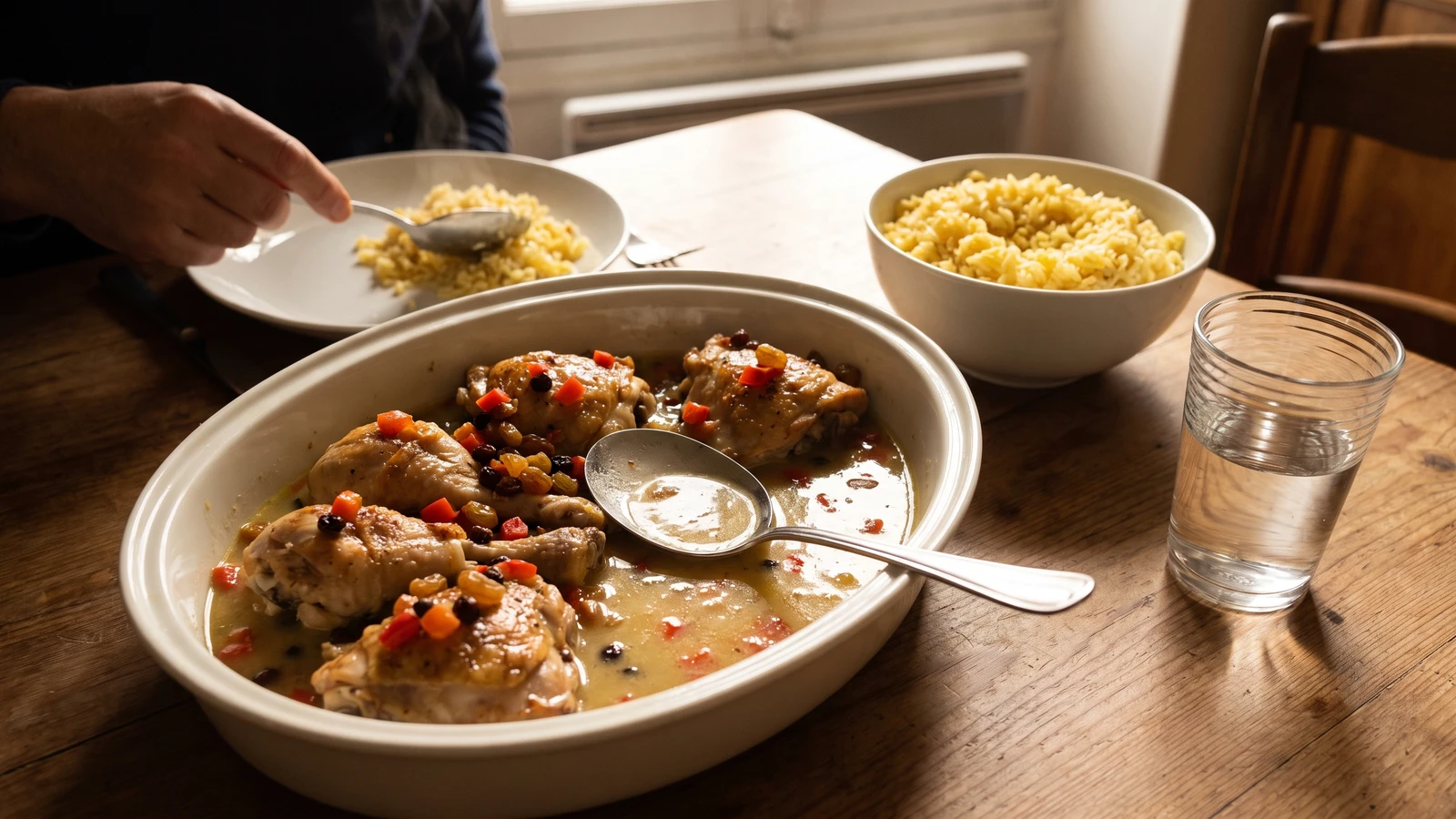
Chicken browned with onion, bound lightly with flour and consommé, then simmered with capsicum, currants, and sultanas. The separate pilaw stays loose, ready to catch every spoonful of glossy sauce.
Pilaw de Volaille à la Grecque (Greek-style chicken pilaw) teaches separation. The chicken builds its sauce in one pan, while the pilaw comes to the table beside it, loose enough to absorb that sauce without becoming a stew. The one true thing to know before touching the pan is this: cook the flour in the fat before the consommé arrives, then add the liquid gradually. That small discipline gives you a supple sauce rather than a floury paste.
The original assumed a saucier watching the pan, white consommé, a clear refined stock, from a pot never off the fire, and another hand to send the pilaw separately. At home, cook the rice first and hold it covered, then use one wide sauté pan for the chicken. Rendered mutton fat remains the first choice; clarified butter is the honest equivalent when rendering sheep fat would become an evening of its own.
For a table of four, one small chicken receives the entry's proportions: 85 grams of onion, 28 grams of flour, 560 millilitres of consommé, two-thirds of a capsicum, and 42 grams of currants and sultanas combined. Two tablespoons of frying fat give the home pan the usable measure the old direction left to the cook's eye. A warmed deep serving bowl replaces the service timbale. The separate kitchen stations and formal vessel are scaffolding; frying the poultry with onion, singer with flour, moistening with consommé, and cooking gently are the dish, so they stay.
The finished sauce should be savory first, with little flashes of sweet pepper and dried fruit, never sugary and never heavy. When the consommé meets the flour, add it in three pours and stir each one smooth before the next. That is the step that decides the evening.
Pilaw de Volaille à la Grecque belongs to the Parisian classical repertoire rather than to one particular Greek regional table; à la grecque here is a French service name, signaled by capsicum and dried vine fruits. Pilaw entered French kitchens through Ottoman and eastern Mediterranean rice traditions, then classical service placed the rice beside the sauced poultry so each retained its proper texture. Despite its title, the dish is the French canon's interpretation of those flavors, not a claim to reproduce a Greek household pilafi.
Quantity
1 (3 to 3½ lb / 1.4 to 1.6 kg)
jointed into 10 small bone-in pieces
Quantity
2 tablespoons (30 ml / 28 g)
Quantity
½ cup (120 ml / 85 g)
finely chopped
Quantity
¼ cup (60 ml / 28 g)
Quantity
2⅓ cups (560 ml / 560 g)
Quantity
⅔ large, about ⅔ cup (160 ml / 100 g)
cut into ⅜-inch (1 cm) dice
Quantity
2 tablespoons (30 ml / 21 g)
Quantity
2 tablespoons (30 ml / 21 g)
Quantity
1½ teaspoons (7.5 ml / 9 g)
divided
Quantity
½ teaspoon (2.5 ml / 1 g)
Quantity
4 cups (950 ml / 680 g)
kept hot for serving separately
| Ingredient | Quantity |
|---|---|
| small whole chickenjointed into 10 small bone-in pieces | 1 (3 to 3½ lb / 1.4 to 1.6 kg) |
| rendered mutton fat, or clarified butter | 2 tablespoons (30 ml / 28 g) |
| yellow onionfinely chopped | ½ cup (120 ml / 85 g) |
| all-purpose flour | ¼ cup (60 ml / 28 g) |
| white consommé, or clear unsalted chicken stock | 2⅓ cups (560 ml / 560 g) |
| large red capsicum (bell pepper)cut into ⅜-inch (1 cm) dice | ⅔ large, about ⅔ cup (160 ml / 100 g) |
| dried currants | 2 tablespoons (30 ml / 21 g) |
| sultanas (golden raisins) | 2 tablespoons (30 ml / 21 g) |
| fine sea saltdivided | 1½ teaspoons (7.5 ml / 9 g) |
| freshly ground black pepper | ½ teaspoon (2.5 ml / 1 g) |
| prepared pilaw ricekept hot for serving separately | 4 cups (950 ml / 680 g) |
Have the prepared pilaw rice hot and covered; it goes to the table separately. Pat every chicken piece dry, then season with 1 teaspoon of the salt and all the pepper. Keep the chopped onion, capsicum, currants, sultanas, flour, and consommé beside the stove. Once the flour enters the pan, the liquid must follow promptly.
Melt the mutton fat or clarified butter in a heavy 12-inch (30 cm) sauté pan over medium-high heat. Brown the chicken in two batches so the pan never crowds, about 3 to 4 minutes per side, then set the pieces aside. Lower the heat to medium, return all the chicken, and add the onion. Fry for about 5 minutes, turning the pieces, until the onion softens and begins to color against the browned fond on the pan floor. Do not chase crisp skin; the gentle cooking ahead will soften it.
If the chicken has released a great deal of fat, spoon away the excess, leaving about 2 tablespoons and every bit of the brown film beneath it. Singer, to dust with flour: sprinkle the flour evenly over the chicken and onion, then turn the pieces until no dry pockets remain. Cook for 2 minutes. The flour should lose its raw smell and form a pale, slightly pasty coating. It will look alarming. It is exactly right.
Pour in one-third of the consommé and stir firmly around and beneath the chicken, scraping the fond from the pan. Add the remaining consommé in two more pours, stirring each addition smooth before the next. If the sauce forms lumps, lift the chicken into a bowl and take the pan off the heat. Whisk the sauce smooth with another splash of consommé, then return the chicken. Ça se rattrape. Bring the sauce only to a bare simmer.
Add the diced capsicum, currants, and sultanas, pressing them into the sauce. Cover with the lid slightly ajar and cook at the gentlest simmer for 25 to 35 minutes, turning the chicken once. Remove breast pieces when they reach 165°F (74°C); let the leg pieces continue until they are at least as hot and yield easily beside the bone. If the sauce tightens before the chicken is tender, loosen it with 2 tablespoons of hot water. If it remains thin after the chicken is done, lift out the pieces and reduce the sauce uncovered for 3 to 5 minutes, until it coats the back of a spoon.
Return any held chicken pieces to the pan off the heat and turn them through the sauce. Taste, then add some or all of the remaining salt as the consommé requires. Transfer the chicken, capsicum, fruits, and every spoonful of sauce to a warmed deep serving bowl, the home equivalent of the timbale. Fluff the pilaw rice and bring it in its own bowl. Let each person spoon the chicken and sauce beside the rice at the table. À table!
1 serving (about 525g)
Culinary guides, cultural storytelling, and the editorial depth that makes cooking meaningful.
Discover Culinary ExplorerChef Juliette
John Dory has the delicacy of sole and the firmness of turbot. A light flouring, a quick butter sauté, and nut-brown beurre noisette show exactly why looks never mattered.

Chef Juliette
Fresh haddock proves its delicacy in the meunière pan: a fine flour crust, moist pearly flakes, and beurre noisette sharpened with lemon and parsley, ready from one skillet in half an hour.

Chef Juliette
Éperlans à l’Anglaise turns small fish into a lesson in disciplined coating: boned smelts under a close, crisp crumb, pan-fried in clarified butter and finished with bright, half-melted maître d’hôtel butter.

Chef Juliette
Tiny smelts, shallot, mushrooms, white wine, gratin sauce, and fine bread raspings meet a fierce oven, where the fish must turn tender in the same breath the buttered crust bronzes.