
Chef Juliette
Filets
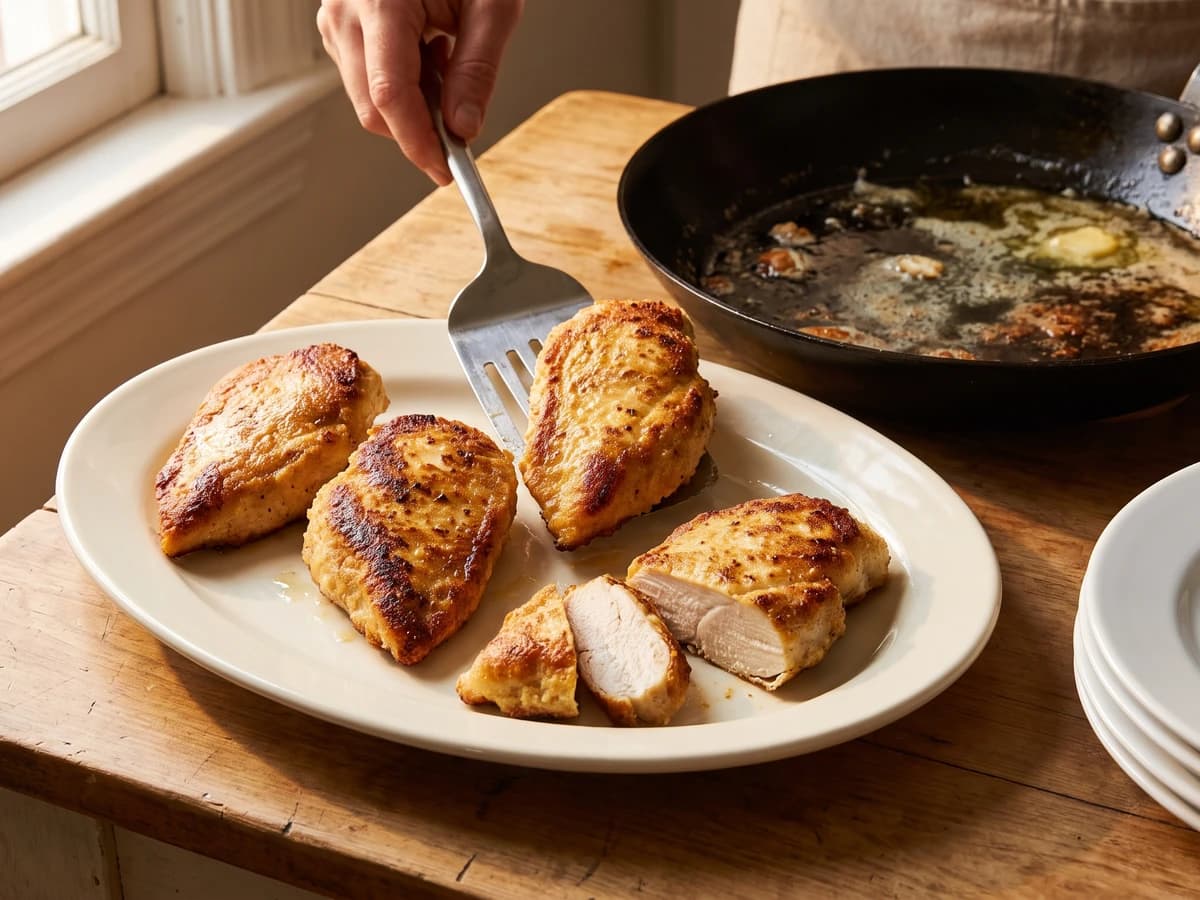
Filets de volaille sautés teach the discipline of even cutting and last-minute cooking: flour lightly, gild quickly in clarified butter, and serve before a tender chicken breast has time to harden.
A cooking platform built around craft, culture, and the stories behind what we eat.
Created by Chef Juliette
Based on No. 1626, Nonnettes de Poulet Agnès Sorel, from Le Guide Culinaire (1907) by Auguste Escoffier
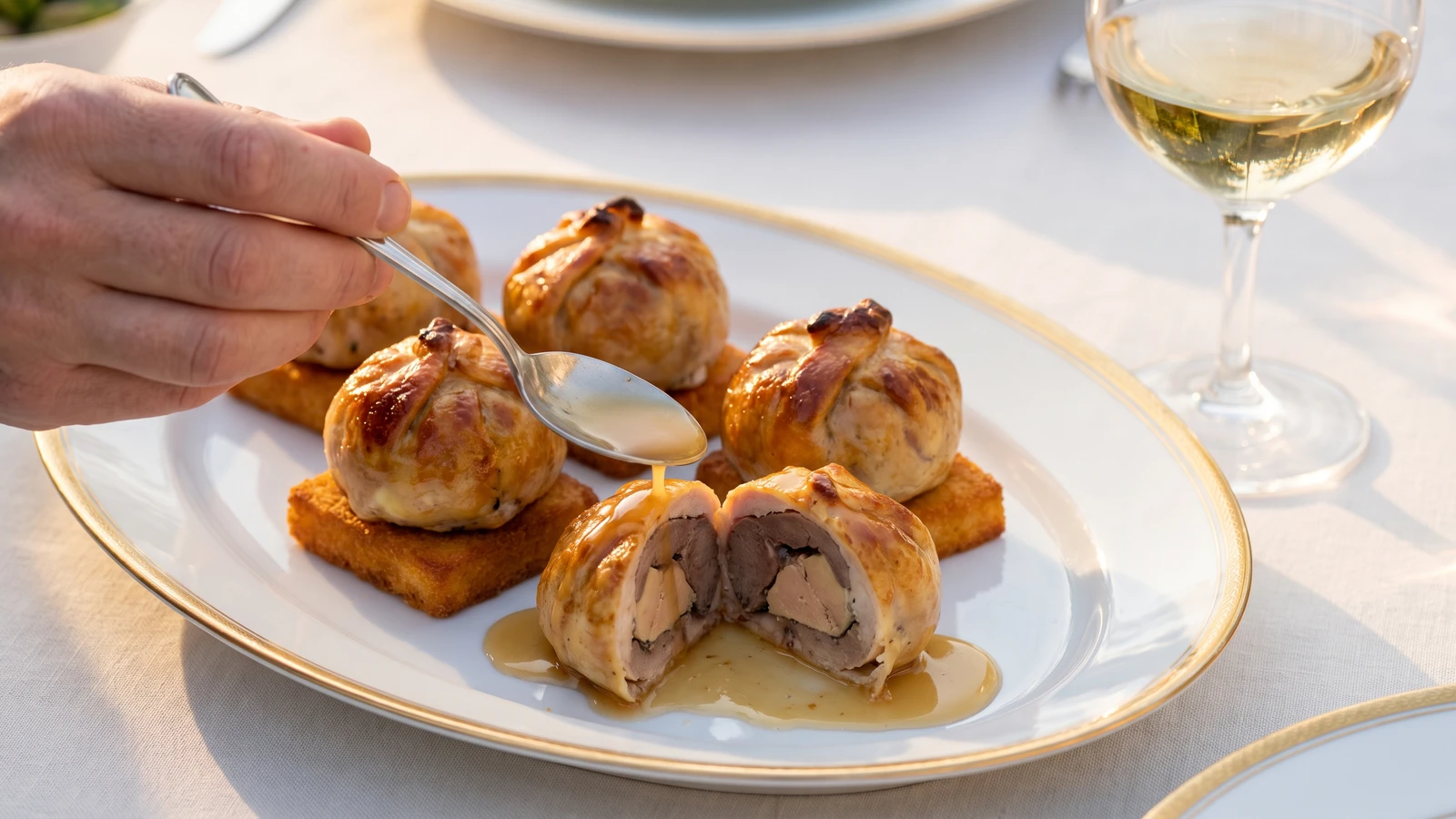
Paired chicken suprêmes become Paupiettes around butter-stiffened quail, roasted fierce and fast, then seated on foie gras croûtons under a light, lemon-bright chicken glaze at the table.
Nonnettes de Poulet Agnès Sorel (paired chicken fillets wrapped around quail) teach the geometry of a Paupiette, a filled, rolled parcel. Two thin Suprêmes, the breast fillets, must overlap into one broad, even wrapper, tight enough to hold the small bird but not so tight that the chicken tears. Know this before touching the pan: make the wrapper even before you make it snug.
The original assumed twelve ortolans, the fillets of twelve spring chickens, a saucier on staff, stock never off the fire, a fierce service oven, and spare hands frying croûtons while the glaze was finished. A home kitchen gets four portions. Protected ortolan becomes fully boned quail, four large market breasts become eight thin fillets, rich stock reduces into a light chicken glaze, and a smooth prepared foie gras purée replaces a separate brigade preparation. There is no salamander work to reproduce. Quail is larger than ortolan, so the roasting takes longer than the original final rush, but the intent remains fierce and fast. One cook, one stove, one evening.
Making chicken glaze from repeated stock reductions and preparing foie gras purée from a whole liver were brigade scaffolding, and they can go. What stays is the dish: the game bird briefly stiffened in butter, the paired chicken wrapper, the string, the foaming butter, the fierce oven, the hollow fried croûton, foie gras, restrained glaze, and a final drop of lemon. Pound the chicken evenly and secure the overlap before wrapping. That quiet bit of knife-board work decides everything.
Nonnettes de Poulet Agnès Sorel belong to the Parisian grand-kitchen repertory, where individual poultry entrées joined suprêmes, small game birds, foie gras, and concentrated glaze in elaborate service pieces. The form passed from banquet service into the codified classical canon; Agnès Sorel's name is a courtly signal of luxury, not evidence that she devised the dish herself. Ortolan trapping and sale are prohibited, so quail is the honest successor to the original game bird, with its greater size acknowledged in the cooking time.
Quantity
4 (about 12 ounces / 340 grams total)
patted dry
Quantity
4 (about 1½ pounds / 680 grams total)
split horizontally into 8 thin fillets
Quantity
10 tablespoons (150 milliliters / 140 grams)
divided
Quantity
2 cups (480 milliliters / 480 grams)
Quantity
4 thick slices (about 7 ounces / 200 grams total)
crusts removed
Quantity
½ cup (120 milliliters / 115 grams)
softened bloc de foie gras may be pressed through a fine sieve
Quantity
1 teaspoon (5 milliliters / 6 grams)
divided
Quantity
½ teaspoon (2.5 milliliters / 2.5 grams)
| Ingredient | Quantity |
|---|---|
| fully boned, skin-on quailpatted dry | 4 (about 12 ounces / 340 grams total) |
| large skinless, boneless chicken breastssplit horizontally into 8 thin fillets | 4 (about 1½ pounds / 680 grams total) |
| unsalted butterdivided | 10 tablespoons (150 milliliters / 140 grams) |
| rich unsalted chicken stock | 2 cups (480 milliliters / 480 grams) |
| pain de mie or firm white sandwich breadcrusts removed | 4 thick slices (about 7 ounces / 200 grams total) |
| smooth foie gras puréesoftened bloc de foie gras may be pressed through a fine sieve | ½ cup (120 milliliters / 115 grams) |
| fine sea saltdivided | 1 teaspoon (5 milliliters / 6 grams) |
| fresh lemon juice | ½ teaspoon (2.5 milliliters / 2.5 grams) |
Reserve 2 tablespoons of the cold chicken stock for adjusting the sauce. Pour the remainder into a wide saucepan and bring it to a lively simmer, skimming any foam that rises. Reduce it to ½ cup, about 20 to 25 minutes, until its flavour is concentrated and it approaches nappant, lightly coating the back of a spoon. Do not salt it yet; reduction magnifies salt, and the foie gras will bring more at the table.
Fold each boned quail into a compact oval, tucking the legs inward, and secure it with one loose loop of kitchen string. Melt 1 tablespoon of the butter in a skillet over medium-high heat. When the foam is lively, add the quail and turn them through the butter for 60 to 90 seconds, just until the flesh firms and holds its shape without taking more than faint colour. Transfer them to a clean plate, let them cool for 5 minutes, and remove the temporary strings.
Place each chicken fillet between sheets of parchment and pound it to an even ⅛ inch thickness. Pair the fillets, overlapping their long edges by about 1 inch, then tap the overlap gently with the flat side of the pounder so the two pieces adhere. Season the chicken and quail moderately, using about three-quarters of the salt. Set one quail in the middle of each paired wrapper, draw the chicken around it, and turn the seam underneath. Tie each parcel once around its waist and once from end to end so it holds a plump, rounded shape. If a seam tears, lay a thin chicken trimming over the opening, tie directly across the patch, and chill the parcel for 10 minutes. Ça se rattrape.
Cut the bread into four squares about 3½ inches wide. Hollow a well from the centre of each square, leaving a ½ inch base and sturdy walls to hold the foie gras. Melt 4 tablespoons of butter in the skillet over medium heat, working in two batches if necessary, and fry the croûtons until every outer face is crisp and deep butter-gold, about 4 to 6 minutes. Drain them hollow-side up on a rack. They may wait while the Paupiettes roast, but do not fill them yet or the foie gras will soften the bread.
Set a rack in the upper third of the oven and heat it to 450°F. Arrange the Paupiettes seam-side down in a shallow ovenproof sauté pan, leaving space between them. Heat 3 tablespoons of butter until it foams vigorously and just begins to turn blond, then pour it over the parcels. Roast for 14 to 18 minutes, basting once, until the chicken is burnished and a thermometer inserted into the quail at the centre registers 165°F. If the surface colours before the centre is ready, cover it loosely with foil and continue. Let the parcels rest for 3 minutes.
While the Paupiettes rest, bring the reduced stock back to a bare simmer. If it is still thin, reduce it before adding any butter. Take the pan from the heat and monter au beurre, whisking in the remaining 2 tablespoons of cold butter a little at a time until the glaze shines and lightly coats a spoon. If it becomes too thick, loosen it with reserved stock. If the emulsion splits, remove it from all heat and whisk in 1 teaspoon of cold stock until it comes together. Ça se rattrape. Taste and add only as much of the remaining salt as it needs.
Snip away every piece of string and account for each one. Stir the foie gras purée until smooth, then spread one-quarter inside each warm croûton. Set a nonnette squarely on every croûton, coat it moderately with the light chicken glaze, and place a few drops of lemon juice on each parcel. The glaze should gleam and pool a little without drowning the fried bread. Serve at once. À table!
1 serving (about 340g)
Culinary guides, cultural storytelling, and the editorial depth that makes cooking meaningful.
Discover Culinary ExplorerChef Juliette
Filets de volaille sautés teach the discipline of even cutting and last-minute cooking: flour lightly, gild quickly in clarified butter, and serve before a tender chicken breast has time to harden.
Chef Juliette
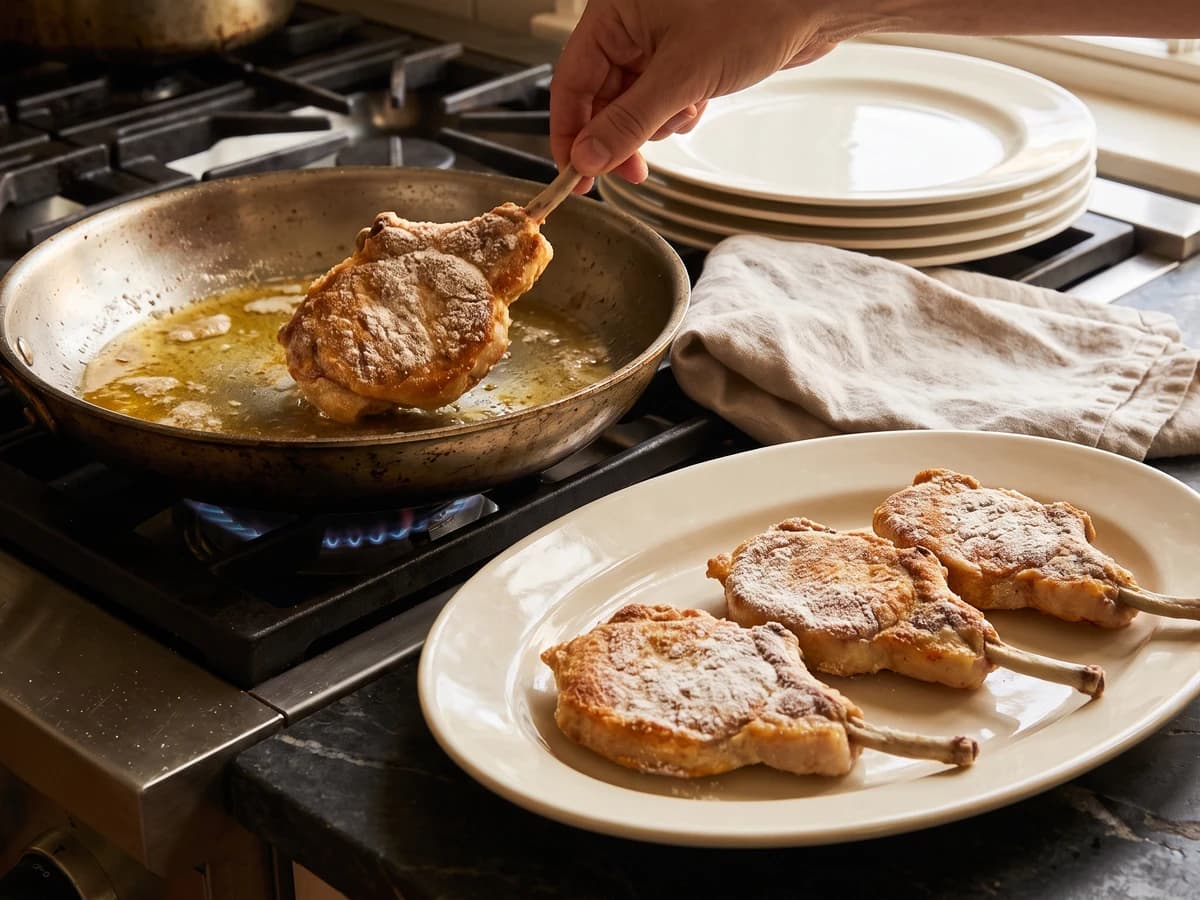
Suprêmes de volaille sautés teach the Paris rule of tender breast meat: flour lightly, gild quickly in clarified butter, add no liquid, and carry the plates straight from skillet to table.
Chef Juliette
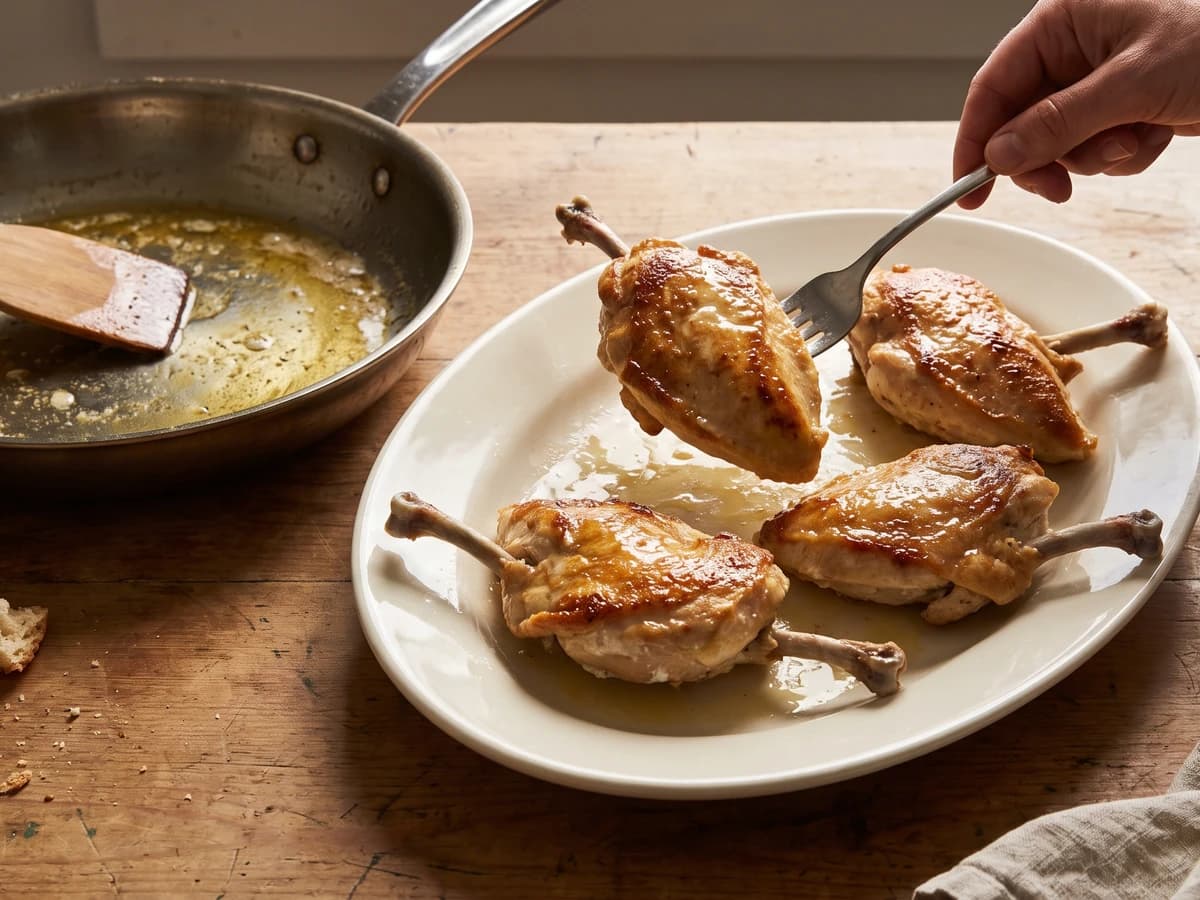
Small chicken suprêmes, wing bone attached, take a veil of flour and a swift bath in clarified butter, turning golden at the exact moment their flesh becomes tender.
Chef Juliette
Ailerons de poulet teach the discipline of fast sautéing: small skinless breasts, wing bone attached, floured lightly and gilded in clarified butter, then carried straight from pan to warm platter before tenderness has time to leave.