
Chef Juliette
Filets
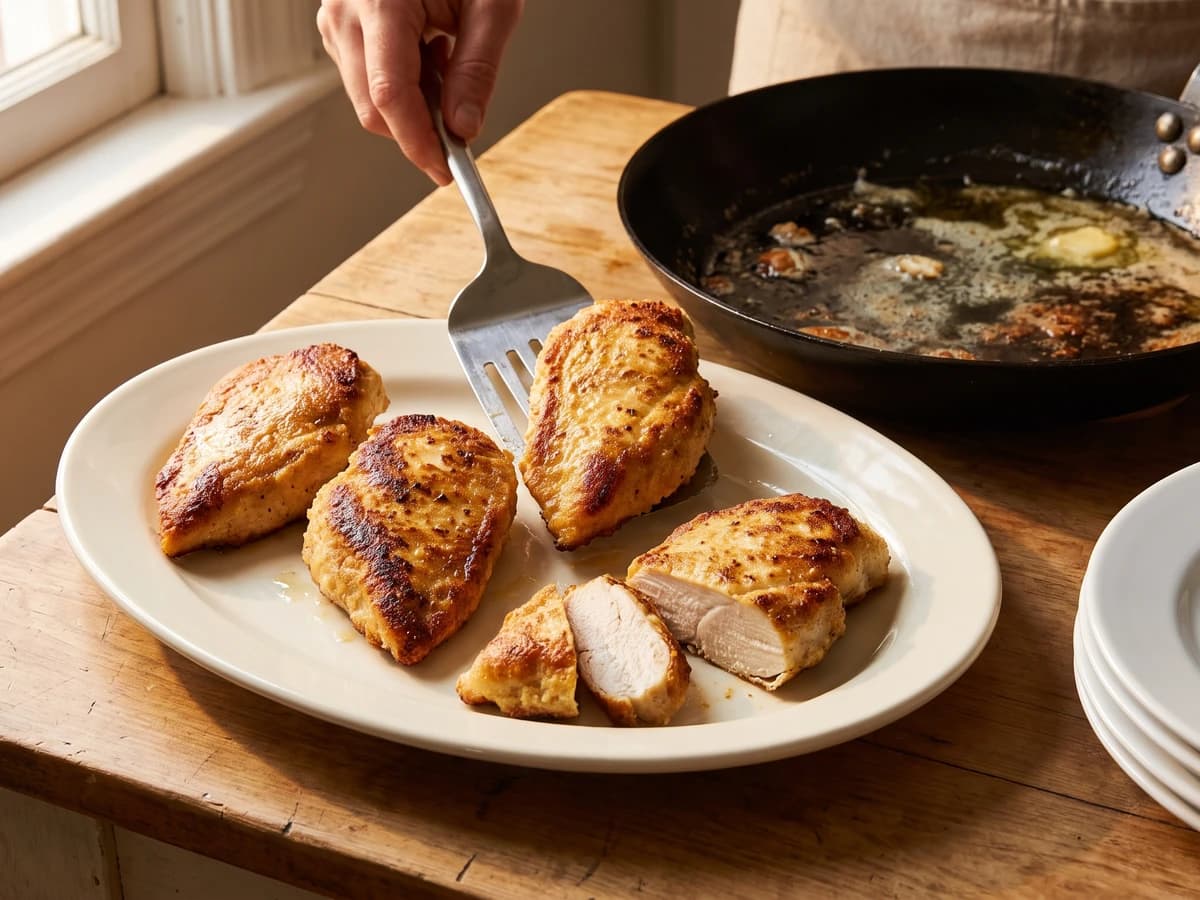
Filets de volaille sautés teach the discipline of even cutting and last-minute cooking: flour lightly, gild quickly in clarified butter, and serve before a tender chicken breast has time to harden.
A cooking platform built around craft, culture, and the stories behind what we eat.
Created by Chef Juliette
Based on No. 1625, Mignonnettes de Poulet, from Le Guide Culinaire (1907) by Auguste Escoffier
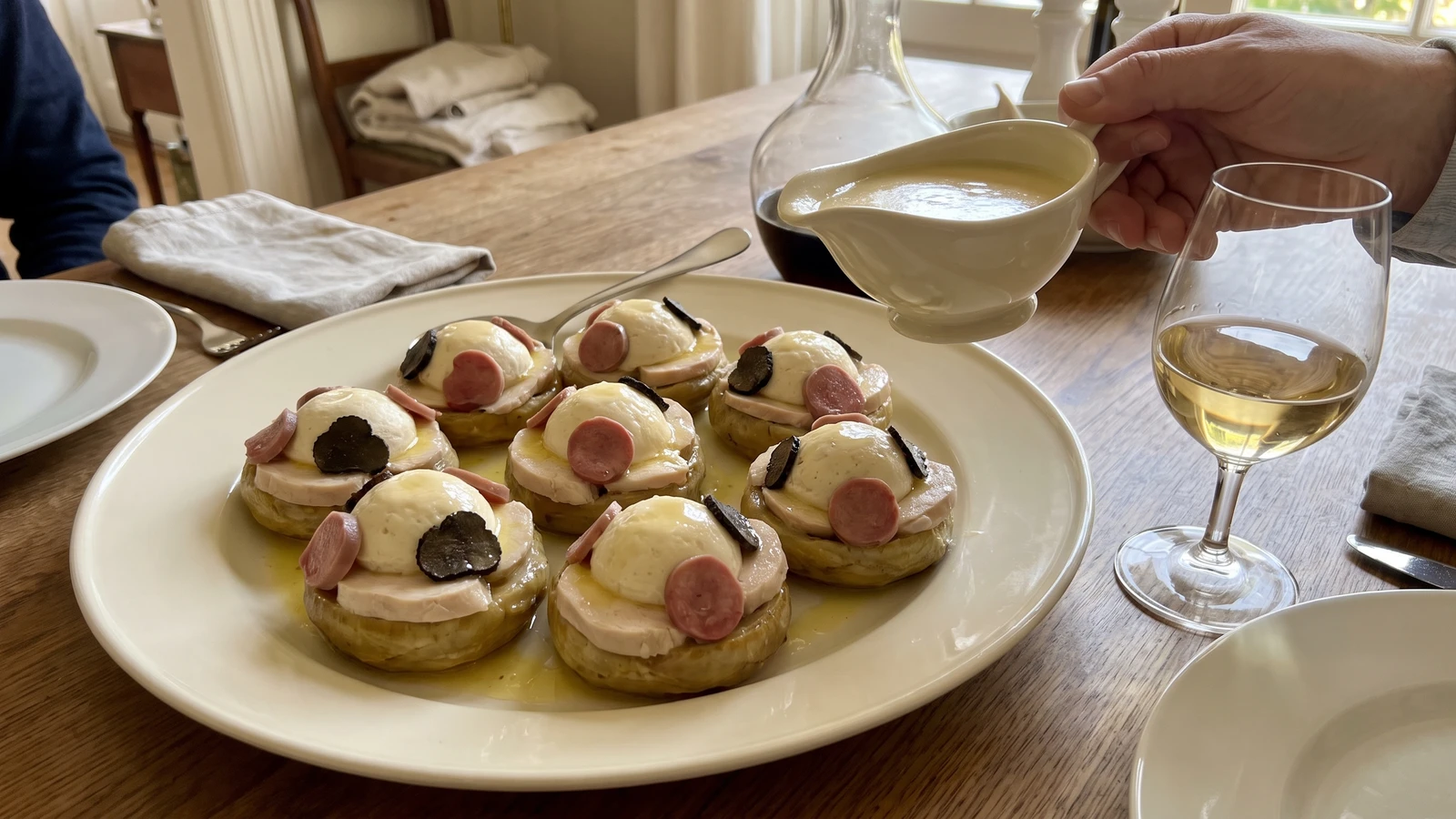
Tender chicken mignonnettes, contised with black truffle and tongue, curved into rings, gently poached, and perched on buttered artichoke bottoms with pale chicken purée and glossy sauce Suprême served alongside.
Mignonnettes de Poulet (little chicken fillets) teach the discipline of cooking something delicate without making it timid. The one true thing to know before touching a pan is this: chicken tenderloins have no time to forgive you. Shape them carefully, keep them cold, and poach them only until they are done. Their pale tenderness is the point, not a lack of ambition.
The brigade recipe assumed a saucier tending the Suprême sauce, white stock never off the fire, mushroom cooking liquor saved from another preparation, a mortar and sieve for the chicken purée, and enough matching fillets to fill a grand platter. At home, eight bought tenderloins, a small batch of mushroom liquor, a food processor, and prepared Suprême sauce do the same work for four. Making gallons of each component was brigade scaffolding and can go. The contiser, the ring shape, the artichoke pedestal, the stiff white purée, and the five- to six-minute poach are the dish and must stay. No salamander is needed because the fillets are poached, not glazed. One cook, one stove, one evening.
Done properly, the platter is pale but never dull: butter-gold artichoke bottoms, ivory chicken purée, curved fillets punctuated with black truffle and rosy tongue, and a sauceboat of Suprême beside them. The poaching is the step that decides everything. Watch the temperature rather than waiting for colour, because colour will arrive only after the chicken has gone too far.
Mignonnettes de poulet belong to the Parisian grand-kitchen repertoire, where the small inner fillets of a pullet were prized as a separate cut and arranged with the precision expected of a formal entrée. Contiser, the practice of slipping truffle or another garnish into shallow incisions, made costly ingredients visible while perfuming the meat during cooking. From grand dining rooms the composition passed into bourgeois entertaining, where the artichoke pedestal and separate sauceboat remained but the brigade quantities sensibly disappeared.
Quantity
8 (about 12 oz / 340 g)
central tendons removed
Quantity
1 (about 8 oz / 225 g)
Quantity
8 (about 14 oz / 400 g)
thawed if frozen or drained and rinsed if jarred
Quantity
8 oz (about 3 cups quartered / 225 g)
quartered
Quantity
3/4 cup (180 ml / 180 g)
Quantity
1 tablespoon (15 ml / 15 g)
Quantity
2 cups (480 ml / 480 g)
Quantity
1/3 cup (80 ml / 80 g)
Quantity
8 tablespoons (120 ml / 113 g)
divided
Quantity
1 small truffle (about 1 oz / 28 g)
cut into 24 paper-thin roundels
Quantity
24 paper-thin roundels (about 1/3 cup / 55 g)
Quantity
1 1/2 cups (360 ml / about 370 g)
Quantity
1 1/2 teaspoons (7.5 ml / 9 g)
divided
Quantity
1/4 teaspoon (1 ml / 0.5 g)
| Ingredient | Quantity |
|---|---|
| chicken tenderloins, the minion filletscentral tendons removed | 8 (about 12 oz / 340 g) |
| skinless chicken breast for the purée | 1 (about 8 oz / 225 g) |
| artichoke bottomsthawed if frozen or drained and rinsed if jarred | 8 (about 14 oz / 400 g) |
| button mushroomsquartered | 8 oz (about 3 cups quartered / 225 g) |
| water | 3/4 cup (180 ml / 180 g) |
| fresh lemon juice | 1 tablespoon (15 ml / 15 g) |
| light chicken stock | 2 cups (480 ml / 480 g) |
| heavy cream | 1/3 cup (80 ml / 80 g) |
| unsalted butterdivided | 8 tablespoons (120 ml / 113 g) |
| black trufflecut into 24 paper-thin roundels | 1 small truffle (about 1 oz / 28 g) |
| cooked veal or beef tongue | 24 paper-thin roundels (about 1/3 cup / 55 g) |
| prepared Suprême sauce | 1 1/2 cups (360 ml / about 370 g) |
| fine saltdivided | 1 1/2 teaspoons (7.5 ml / 9 g) |
| ground white pepper | 1/4 teaspoon (1 ml / 0.5 g) |
Put the mushrooms, water, lemon juice, 1 tablespoon of the butter, and a pinch of the salt in a small saucepan. Cover and simmer gently for 8 minutes, until the mushrooms surrender their liquor but remain pale. Strain without pressing, reserve the mushrooms for another meal, and measure the liquid. If you have more than 1/3 cup, reduce it uncovered to 1/3 cup (80 ml / 80 g); if you have less, add enough water to reach that amount. This small extraction replaces the brigade pan of mushrooms kept ready for service.
Bring the chicken stock to the barest simmer in a small saucepan. Add the chicken breast, cover, and poach gently for 10 to 12 minutes, turning once, until its centre reaches 160°F (71°C). Lift it out and rest it for 5 minutes so it reaches 165°F (74°C), then reserve the stock. Hard boiling tightens the meat and gives the purée a grainy backbone, so keep the liquid at a quiet tremble.
Cut the warm poached breast into small pieces and put them in a food processor with 2 tablespoons of butter, 1/2 teaspoon salt, the white pepper, and half the cream. Process until smooth, scraping the bowl often, then add only enough remaining cream to make a very white, dense purée that holds a rounded spoonful without spreading. Press it through a fine sieve for the classical finish and hold it covered over warm water. If the purée slumps, ça se rattrape: stir it over low heat for a minute to evaporate excess moisture. If it is too stiff or grainy, beat in warm reserved stock one teaspoon at a time.
Heat the oven to 400°F (200°C). Pat the tenderloins dry and lay them with their smooth outer faces upward. Make six short, shallow, diagonal incisions across each fillet without cutting through, then contise them, meaning half-insert alternating roundels of truffle and tongue into the cuts, three of each per fillet. Season the undersides lightly. Curve each fillet into a ring with the decorated side facing outward and pin the narrow end to the thick end with a toothpick. If a cut goes through, lay its roundel over the opening and position that side inside the ring. Once pinned, it will hold.
If using frozen artichoke bottoms, simmer them in lightly salted water until a paring knife enters easily, usually 8 to 12 minutes, then drain and dry them well. Trim each into a neat round and cut shallow V-shaped notches around the rim to form the indented edge described in the original preparation. Melt 3 tablespoons of butter in a wide skillet and warm the bottoms gently on both sides without browning. Arrange them in a circle on a warmed round platter, spoon about 2 tablespoons of chicken purée onto each, and shape the purée into a smooth dome. Cover loosely while the mignonnettes cook.
Warm the prepared Suprême sauce in a small saucepan over low heat, whisking gently until it flows in a soft ribbon and naps the back of a spoon. Do not boil it. If a skin forms, whisk it back in; if the sauce has tightened while cold, loosen it with reserved warm chicken stock one tablespoon at a time. Keep it covered over the gentlest heat and pour it into a warm sauceboat just before serving.
Use 1 tablespoon of butter to coat a shallow baking dish and the remaining tablespoon to butter a sheet of parchment. Set the chicken rings in the dish without crowding and sprinkle the mushroom cooking liquor around and over them. Cover closely with the parchment, buttered side down, and seal the dish with a lid or foil. Poach in the oven for 5 to 6 minutes. Check the thickest ring immediately: it should register 160°F (71°C), then reach 165°F (74°C) during its brief rest. If it is below temperature, cover again and cook in 1-minute increments. Do not wait for browning. A mignonnette is meant to remain pale, tender, and glossy.
Remove the toothpicks without disturbing the truffle and tongue. Set one mignonnette squarely upon each domed artichoke bottom, keeping the arrangement in a clean circle and letting the contised outer surfaces show. Spoon any clear buttery poaching juices around the bases, never over the decoration. Bring the platter to the table at once with the delicate Suprême sauce served separately. À table!
1 serving (about 450g)
Culinary guides, cultural storytelling, and the editorial depth that makes cooking meaningful.
Discover Culinary ExplorerChef Juliette
Filets de volaille sautés teach the discipline of even cutting and last-minute cooking: flour lightly, gild quickly in clarified butter, and serve before a tender chicken breast has time to harden.
Chef Juliette
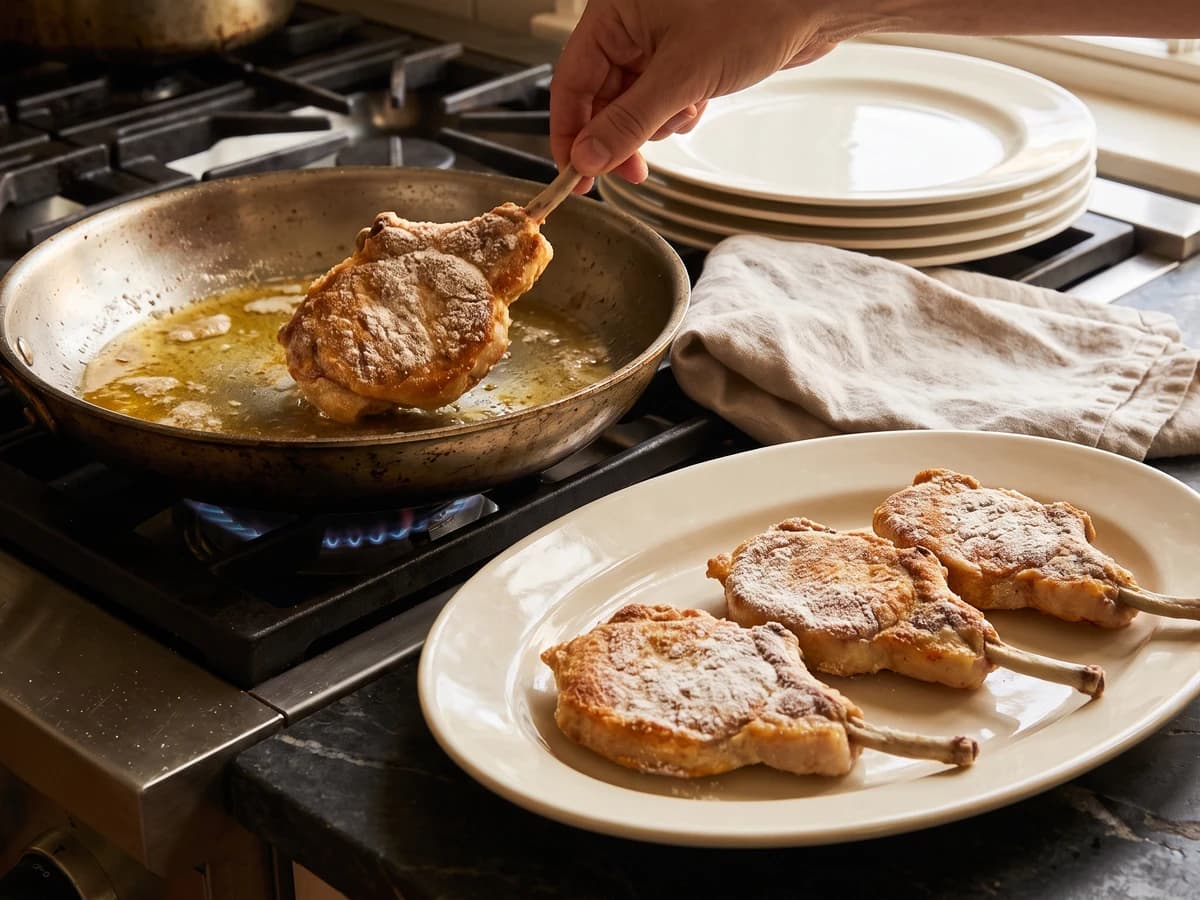
Suprêmes de volaille sautés teach the Paris rule of tender breast meat: flour lightly, gild quickly in clarified butter, add no liquid, and carry the plates straight from skillet to table.
Chef Juliette
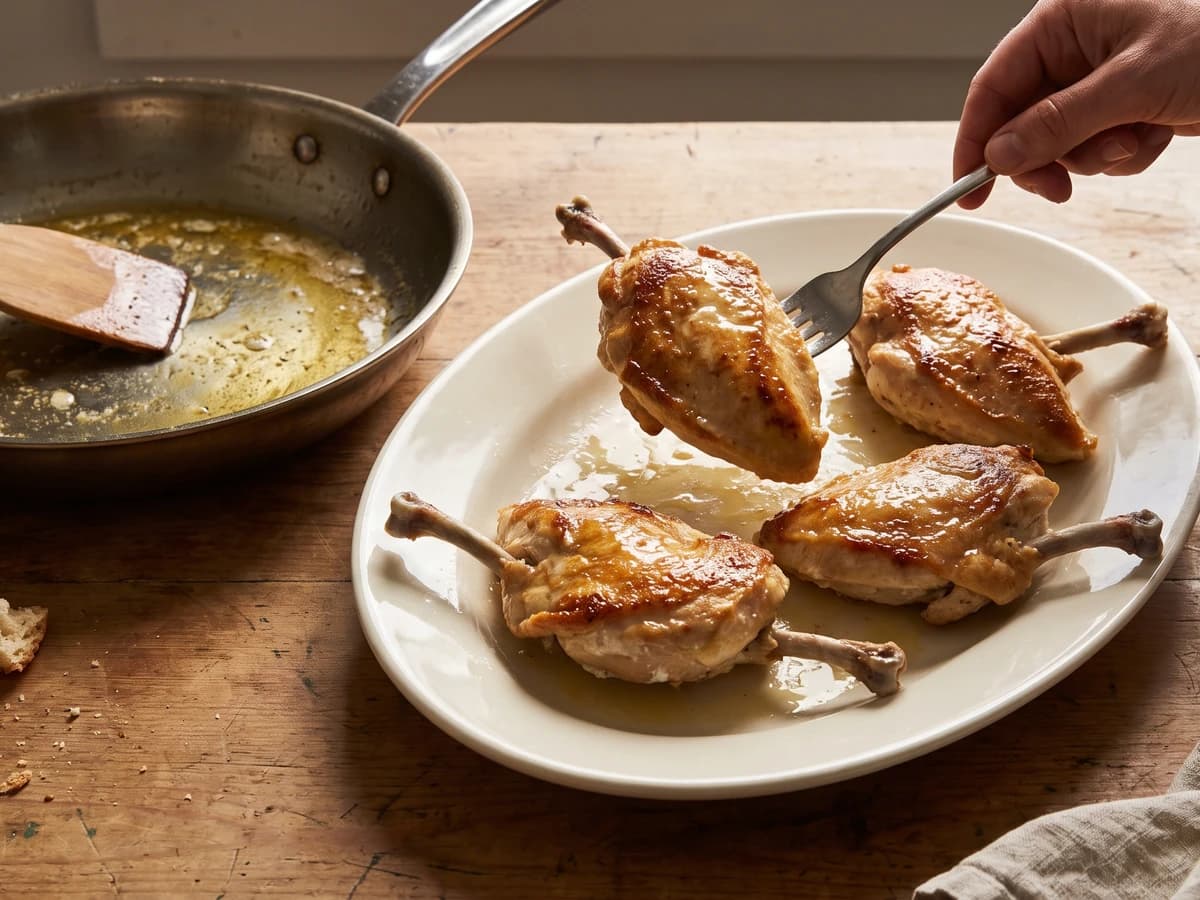
Small chicken suprêmes, wing bone attached, take a veil of flour and a swift bath in clarified butter, turning golden at the exact moment their flesh becomes tender.
Chef Juliette
Ailerons de poulet teach the discipline of fast sautéing: small skinless breasts, wing bone attached, floured lightly and gilded in clarified butter, then carried straight from pan to warm platter before tenderness has time to leave.