Culinary Explorer

A cooking platform built around craft, culture, and the stories behind what we eat.
Discover Culinary Explorer
Suprêmes de Volaille Maréchale

Suprêmes de Volaille Maréchale

Created by Chef Juliette

Based on No. 1606, Suprêmes de Volaille Maréchale, from Le Guide Culinaire (1907) by Auguste Escoffier

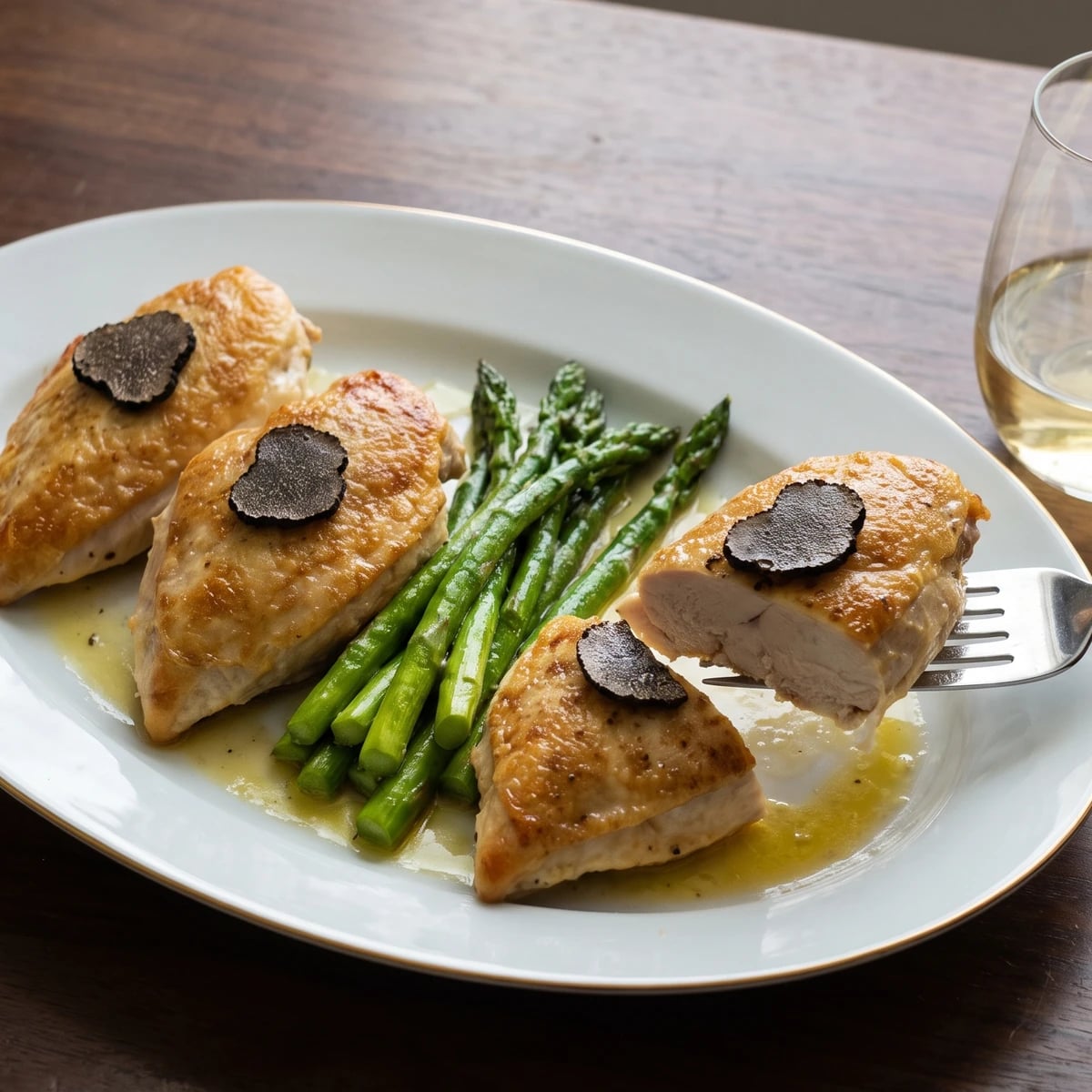
À la Maréchale teaches the discipline of a thin, even coating: four tender chicken suprêmes sautéed in butter, crowned with truffle, and arranged around glossy asparagus tips.

Main Dishes
French
Dinner Party
Special Occasion
30 min
Active Time
30 min cook1 hr total
Yield4 servings

Suprêmes de Volaille Maréchale (chicken breast fillets Maréchale-style) teach one exact lesson: the coating and the meat must finish together. Flatten the suprêmes evenly, coat them lightly, then sauté them at a quiet butter sizzle. A thick coat or fierce pan gives you dark crumbs before the chicken is cooked; a timid pan gives you a pale, greasy crust.

The grand repertoire often assumed a saucier, a stockpot never off the fire, and a salamander. This entry needs none of them, and inventing a sauce would only bury its clean logic. Its brigade conveniences were clarified butter waiting by the stove, asparagus heads already trimmed, and enough truffle to chop in place of bread crumbs. For one cook, one stove, one evening, the book's own economical à l’anglaise treatment, a flour, egg, and fine-crumb coating, stands in honestly. The literal chopped-truffle coating remains an option. The entry records buttered paper over a gentle grill as the former method, but directs the cook to sauté in butter; a heavy home skillet carries out that intent precisely.

Done properly, the suprêmes arrive butter-gold and tender, each marked with one dark slice of truffle, with bright asparagus gathered in the crown and glazed until the butter clings. The flour, egg, and coating are scaffolding; the controlled butter sauté, truffle finish, and butter-bound asparagus are the dish. The step that decides everything is keeping the butter at a quiet, steady sizzle from the first suprême to the last.

À la Maréchale belongs to the honorific vocabulary of Parisian classical kitchens rather than to one regional larder. Contrary to the common shorthand, the name did not originally mean merely breaded: chopped truffle replaced the customary bread crumbs, while a slice of truffle and asparagus heads completed the service. The more economical à l’anglaise coating became common practice, preserving the butter sauté and formal crown without pretending truffle was inexpensive.

The technique, the tradition, and the story behind every dish.

Discover Culinary Explorer

Ingredients

skinless, boneless chicken breast fillets

Quantity

4 fillets (about 1½ lb / 680 g total)

fine sea salt

Quantity

1½ teaspoons (7.5 ml / 9 g)

finely ground white pepper

Quantity

½ teaspoon (2.5 ml / 1 g)

all-purpose flour

Quantity

½ cup (120 ml / 60 g)

large eggs

Quantity

2

fine dry white bread crumbs

Quantity

1 cup (240 ml / 90 g)

for the à l’anglaise option

black truffle (optional)

Quantity

½ cup (120 ml / 70 g)

finely chopped, in place of the bread crumbs for the literal Maréchale coating

unsalted butter

Quantity

10 tablespoons (150 ml / 142 g)

divided

medium asparagus spears

Quantity

20 spears (about 12 oz / 340 g)

fine sea salt for the asparagus water

Quantity

1 tablespoon (15 ml / 18 g)

fresh or whole preserved black truffle

Quantity

1 small truffle (about ½ oz / 15 g)

cut into 4 thin slices

Equipment Needed

  • Smooth meat mallet or rolling pin
  • Three shallow coating dishes
  • Small saucepan for clarifying butter
  • Wide 3-quart saucepan
  • Heavy 12-inch skillet
  • Wire rack and small sheet pan
  • Instant-read thermometer
  • Warmed oval serving platter

Instructions

  1. 1

    Shape the suprêmes

    Pat the suprêmes thoroughly dry. Place each between two sheets of parchment and tap the thick end with a smooth meat mallet or rolling pin until the breast is an even ½ inch (1.25 cm) thick, keeping its natural oval shape. Season both sides with the 1½ teaspoons salt and the white pepper. Even thickness is not cosmetic: it lets the center cook at the same pace as the coating.

    Tap rather than pound. Torn fibers release moisture, and moisture loosens the coating before the butter can set it.
  2. 2

    Clarify the butter

    Melt 8 tablespoons of the butter very gently in a small saucepan. Skim away the white foam, then pour the clear golden butterfat into a cup, leaving the milky sediment behind; you should have about 6 tablespoons of clarified butter. The brigade kept this ready by the stove. Your five-minute saucepan does the same work, giving the suprêmes real butter flavor without milk solids burning in the pan. Reserve the remaining 2 tablespoons whole butter for the asparagus.

  3. 3

    Prepare the asparagus

    Cut the top 3 inches (7.5 cm) from each asparagus spear; save the lower stalks for a soup or omelet. Bring a wide saucepan of water to a boil and add the tablespoon of salt. Blanch the asparagus tips until bright green and just tender when pierced, 2 to 4 minutes depending on thickness. Lift them into cold water to stop the cooking, then drain and dry them carefully. Reserve ¼ cup (60 ml) of the blanching water for finishing.

  4. 4

    Paner à l’anglaise

    Set the flour, beaten eggs, and bread crumbs in three shallow dishes. For the literal Maréchale treatment, put the finely chopped truffle in the third dish instead of the crumbs. Pass each suprême lightly through the flour and shake off every loose speck, coat it completely with egg, then press on a thin, even layer of crumbs or chopped truffle. Rest the coated suprêmes on a rack for 10 minutes so the covering adheres. If a bare patch appears, brush it with a little egg and press on more coating. Ça se rattrape. Thick patches must come off, because they will brown before the chicken cooks.

  5. 5

    Sauté the suprêmes

    Heat the oven to 225°F (110°C) and set a wire rack over a small sheet pan. Heat a heavy 12-inch skillet over medium heat, then add half the clarified butter. When it glistens and gives a quiet sizzle around one test crumb, lay in two suprêmes without crowding. Cook until the underside is evenly butter-gold, 3 to 4 minutes, then turn only once and cook the second side for another 3 to 4 minutes, until the thickest part reaches 165°F (74°C). Hold the first batch on the rack in the low oven while cooking the remaining two in fresh clarified butter. If the coating darkens too quickly, lift the skillet off the burner for 30 seconds and lower the heat; the crust must bronze steadily, not race ahead of the meat.

  6. 6

    Butter-bind the asparagus

    Melt the reserved 2 tablespoons whole butter in the emptied asparagus saucepan with 3 tablespoons of the reserved blanching water. Bring it to a brisk bubble and swirl until the liquid turns glossy and lightly creamy, then add the asparagus tips and toss just until hot and coated. The butter should cling rather than puddle. If it separates into oily beads, remove the pan from the heat, add a teaspoon of cold water, and swirl firmly until it comes together again.

  7. 7

    Form the crown

    Arrange the four suprêmes on a warmed oval platter in a loose crown, slightly overlapping them with their narrow ends pointing toward the center. Set the butter-glazed asparagus tips in the middle and spoon their remaining butter over the asparagus only, keeping the crust dry. Lay one fine truffle slice on each hot suprême so its perfume opens at the table. Serve immediately. À table!

Chef Tips

  • The literal Maréchale coating is chopped black truffle in place of bread crumbs. It is magnificent and costly. The à l’anglaise version is not an invention made to flatter a modern budget; the source itself gives it as the common economical treatment.
  • Choose four modest breasts of similar size, not two enormous ones cut in half. Their natural oval shape makes the crown, and matching thickness keeps every portion tender.
  • A whole preserved black truffle is an honest classical-pantry answer when fresh truffles aren't in season. Drain it well and slice it thinly; truffle oil does not replace either the texture or the aroma of the real slice.
  • Serve with a full, dry white Burgundy or another restrained Chardonnay. The wine needs enough body for butter and truffle, but too much oak will flatten the asparagus.

Advance Preparation

  • Clarify the butter up to three days ahead and keep it covered in the refrigerator. Warm it gently before sautéing.
  • Shape and season the suprêmes, trim and blanch the asparagus, and slice the truffle up to four hours ahead. Keep everything separately covered and chilled, then dry the asparagus again before glazing.
  • Apply the coating no more than 30 minutes before cooking and hold the suprêmes on a rack. Longer resting draws moisture into the crumbs. The finished dish does not improve by waiting, so sauté it as guests come to the table.

Frequently Asked Questions

Nutrition Information

1 serving (about 320g)

Calories
655 calories
Total Fat
37 g
Saturated Fat
21 g
Trans Fat
1 g
Unsaturated Fat
15 g
Cholesterol
295 mg
Sodium
1200 mg
Total Carbohydrates
33 g
Dietary Fiber
4 g
Sugars
3 g
Protein
48 g

Note: Chef personas and recipes are created with AI assistance. Cook with care: follow safe food-handling practices, check doneness with a thermometer when needed, and adapt for allergies and your kitchen.

Where cooking meets culture.

Culinary guides, cultural storytelling, and the editorial depth that makes cooking meaningful.

Discover Culinary Explorer

More from Poultry (Volaille) - Suprêmes de Volaille

Browse the full collection