
Chef Juliette
John Dory (St. Pierre)
John Dory has the delicacy of sole and the firmness of turbot. A light flouring, a quick butter sauté, and nut-brown beurre noisette show exactly why looks never mattered.
A cooking platform built around craft, culture, and the stories behind what we eat.
Created by Chef Juliette
Based on No. 1602, Suprêmes de Volaille Hongroise, from Le Guide Culinaire (1907) by Auguste Escoffier
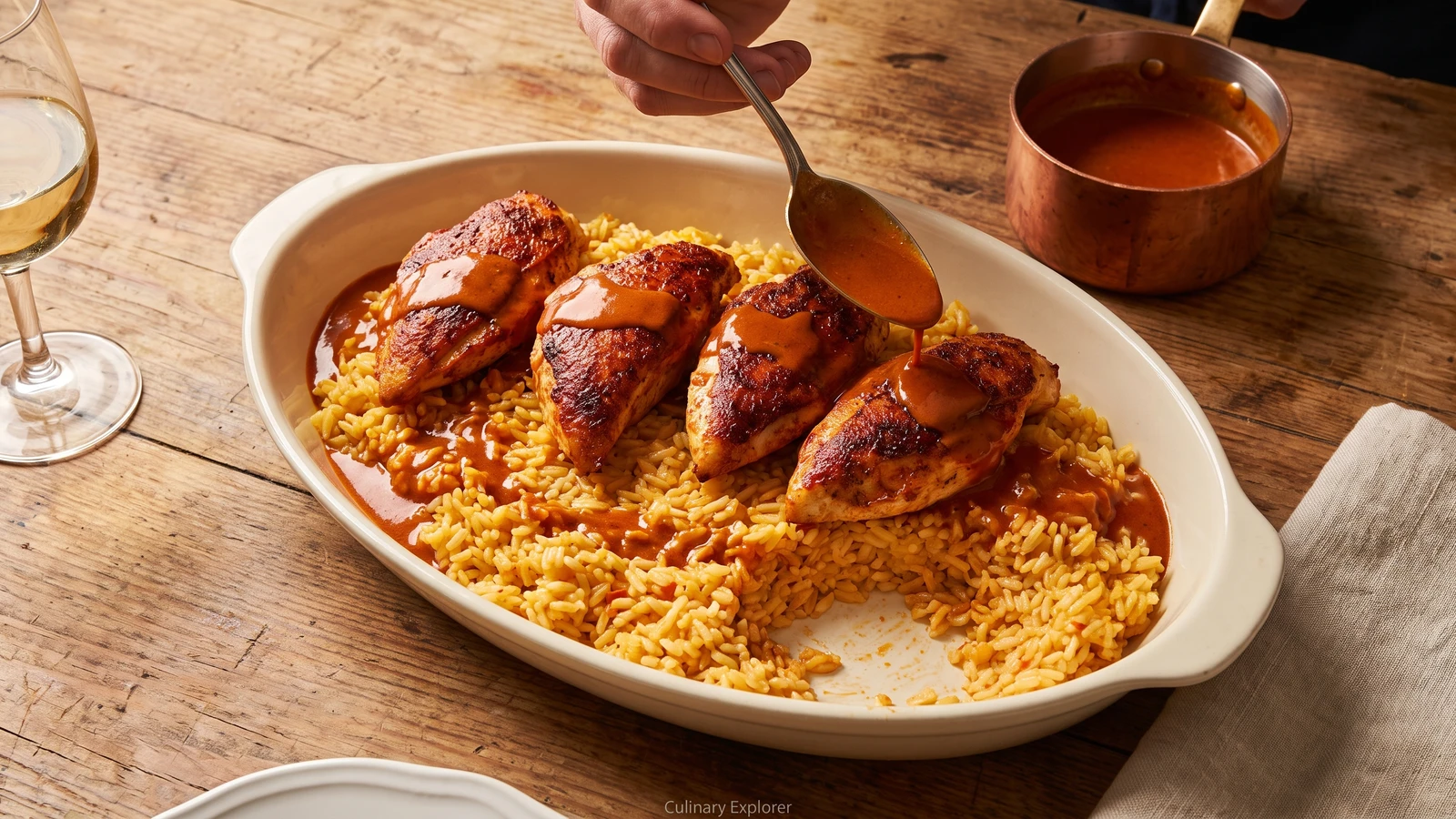
Paprika warms the chicken, tomato concassée brightens the pilaff, and cream gathers the pan fond into sauce hongroise, a generous Parisian classic with Budapest in its vocabulary.
Suprêmes de Volaille Hongroise (paprika chicken breasts on tomato pilaff with a creamy paprika sauce) teaches a sharp rule: paprika wants warm butter, not fierce heat. Bloom it gently and it becomes brick-red, fragrant, and round; scorch it and bitterness follows the sauce all the way to the table. That is the one true thing to know before touching the pan.
The source recipe speaks to a brigade: pilaff rice ready, Sauce Hongroise waiting, a saucier on staff, and a stock never off the fire. At home, a small onion-and-paprika sauce base cooks while the pilaff rests, four suprêmes sauté in clarified butter, and the chicken pan is swilled with cream before the two sauces meet. A warmed shallow serving dish takes the timbale's place; no salamander is needed, because the gloss comes from reduction, not browning.
The separate sauce department and a brigade-sized batch are scaffolding, so they go. The paprika seasoning, tomato concassée folded through true pilaff rice, clarified-butter sauté, cream deglaze, and Sauce Hongroise are the dish, so they stay. It reaches the table ivory and copper-red, the sauce gleaming over tender chicken and grains that remain distinct. One cook, one stove, one evening. Keep the paprika below scorching when the suprêmes meet the butter; that sauté decides everything.
Suprêmes de Volaille Hongroise belongs to the Parisian classical repertoire, where sauces often carried the name of the larder that inspired their dominant seasoning. Hongroise points toward Hungary and Budapest through paprika, but the construction remains French: a breast fillet sautéed in clarified butter, pilaff rice with concassed tomato, and a stock sauce finished with cream. It is not a Hungarian household chicken dish transplanted whole, but a French grand-kitchen composition that made paprika part of its own sauce grammar.
Quantity
4, about 6 oz (170 g) each
patted dry and gently evened to about ¾ inch (2 cm) thick
Quantity
1½ teaspoons (7.5 ml / 9 g), plus more as needed
divided
Quantity
¼ teaspoon (1.25 ml / 0.5 g)
Quantity
1 tablespoon (15 ml / 7 g)
divided
Quantity
2 tablespoons (30 ml / 28 g)
divided
Quantity
1 cup (240 ml / 185 g)
Quantity
2 tablespoons (30 ml / 28 g)
divided
Quantity
1 medium (about 5 oz / 140 g)
very finely chopped and divided
Quantity
1½ cups (360 ml / 360 g)
Quantity
1
Quantity
1 cup (240 ml / 180 g)
peeled, seeded, roughly chopped, and well drained
Quantity
1 tablespoon (15 ml / 8 g)
Quantity
1 cup (240 ml / 240 g)
Quantity
½ cup (120 ml / 120 g)
kept cold
| Ingredient | Quantity |
|---|---|
| boneless, skinless chicken breast fillets (suprêmes)patted dry and gently evened to about ¾ inch (2 cm) thick | 4, about 6 oz (170 g) each |
| fine saltdivided | 1½ teaspoons (7.5 ml / 9 g), plus more as needed |
| ground white pepper | ¼ teaspoon (1.25 ml / 0.5 g) |
| sweet Hungarian paprikadivided | 1 tablespoon (15 ml / 7 g) |
| clarified butterdivided | 2 tablespoons (30 ml / 28 g) |
| long-grain white rice | 1 cup (240 ml / 185 g) |
| unsalted butterdivided | 2 tablespoons (30 ml / 28 g) |
| yellow onionvery finely chopped and divided | 1 medium (about 5 oz / 140 g) |
| hot unsalted chicken stock, for the pilaff | 1½ cups (360 ml / 360 g) |
| bay leaf | 1 |
| tomato concasséepeeled, seeded, roughly chopped, and well drained | 1 cup (240 ml / 180 g) |
| all-purpose flour | 1 tablespoon (15 ml / 8 g) |
| unsalted chicken stock, for Sauce Hongroise | 1 cup (240 ml / 240 g) |
| heavy creamkept cold | ½ cup (120 ml / 120 g) |
For fresh tomato concassée, score the tomatoes, lower them into boiling water for about 20 seconds, then cool them immediately in cold water. Peel, halve, remove the seeds, and chop the flesh roughly. If using canned whole tomatoes, drain them well before chopping. Leave the concassée in a sieve while you cook; the word means roughly chopped, but the draining matters because wet tomato turns distinct pilaff grains heavy.
Melt 1 tablespoon of the unsalted butter in a 2-quart saucepan over medium-low heat. Add two-thirds of the onion and ½ teaspoon of the salt, then cook for 3 minutes without letting the onion color. Add the rice and nacrez it, coating each grain in butter until it glistens and the edges look pearly, about 2 minutes. Pour in the 1½ cups of hot stock, add the bay leaf, and bring to a boil. Cover tightly, turn the heat to its lowest setting, and cook for 15 minutes. Remove from the heat and leave covered for 10 minutes. If a grain is still chalky, add 2 tablespoons of the stock reserved for the sauce, cover, and rest for another 5 minutes; if the rice looks wet, uncover it over low heat for 2 minutes.
While the pilaff rests, melt the remaining 1 tablespoon unsalted butter in a small saucepan over medium-low heat. Add the remaining onion and cook until soft but colorless, about 3 minutes. Take the pan off the heat, stir in 1 teaspoon of the paprika for 15 seconds, then stir in the flour. Return it to low heat and cook for 1 minute without browning. Gradually whisk in ¾ cup of the sauce stock, reserving the remainder, then simmer gently for 8 to 10 minutes until the sauce lightly coats a spoon. If it turns lumpy, stop adding liquid and whisk off the heat until smooth, then continue; the final sieve catches any stubborn bits. Ça se rattrape. Strain the Sauce Hongroise and keep it warm.
Season the dry suprêmes just before cooking with the remaining 2 teaspoons paprika, the remaining 1 teaspoon salt, and the white pepper. Heat the clarified butter in a 12-inch skillet over medium heat until fluid and glossy. Lay in the chicken without crowding, working in two batches if necessary, and cook for 4 to 5 minutes without disturbing it. Turn, lower the heat slightly, and cook for another 3 to 5 minutes, until the thickest part reaches 160°F (71°C); it will rise to 165°F (74°C) while resting. Transfer the suprêmes to a warm plate for 5 minutes. If the paprika film turns black rather than deep copper, lift the chicken at once, wipe the skillet when safe, and finish at lower heat. Keep the chicken, lose the burnt fond.
Reserve 1 tablespoon of the cold cream. Pour the rest into the chicken skillet while it is still hot, scraping up every amber trace of fond, and simmer for 1 to 2 minutes. Whisk in the strained Sauce Hongroise and any juices from the resting chicken, then simmer gently until the sauce naps the back of a spoon and runs from it in a broad ribbon. If it tightens too far, add the reserved sauce stock a spoonful at a time. If it looks greasy, pull it off the heat and whisk in the reserved cold cream until the sauce comes together. Taste and correct the salt.
Remove the bay leaf and fluff the pilaff with a fork. Fold in the well-drained tomato concassée without crushing the grains, cover, and let it warm through for 2 minutes. Spoon the pilaff into a warmed shallow serving dish and shape it into a low, generous mound, the home equivalent of the shallow timbale. Set the suprêmes on the rice and coat them generously with Sauce Hongroise, allowing a little sauce to pool around the pilaff. Bring the remaining sauce to the table. À table!
1 serving (about 400g)
Culinary guides, cultural storytelling, and the editorial depth that makes cooking meaningful.
Discover Culinary ExplorerChef Juliette
John Dory has the delicacy of sole and the firmness of turbot. A light flouring, a quick butter sauté, and nut-brown beurre noisette show exactly why looks never mattered.

Chef Juliette
Fresh haddock proves its delicacy in the meunière pan: a fine flour crust, moist pearly flakes, and beurre noisette sharpened with lemon and parsley, ready from one skillet in half an hour.

Chef Juliette
Éperlans à l’Anglaise turns small fish into a lesson in disciplined coating: boned smelts under a close, crisp crumb, pan-fried in clarified butter and finished with bright, half-melted maître d’hôtel butter.

Chef Juliette
Tiny smelts, shallot, mushrooms, white wine, gratin sauce, and fine bread raspings meet a fierce oven, where the fish must turn tender in the same breath the buttered crust bronzes.