
Chef Juliette
Filets
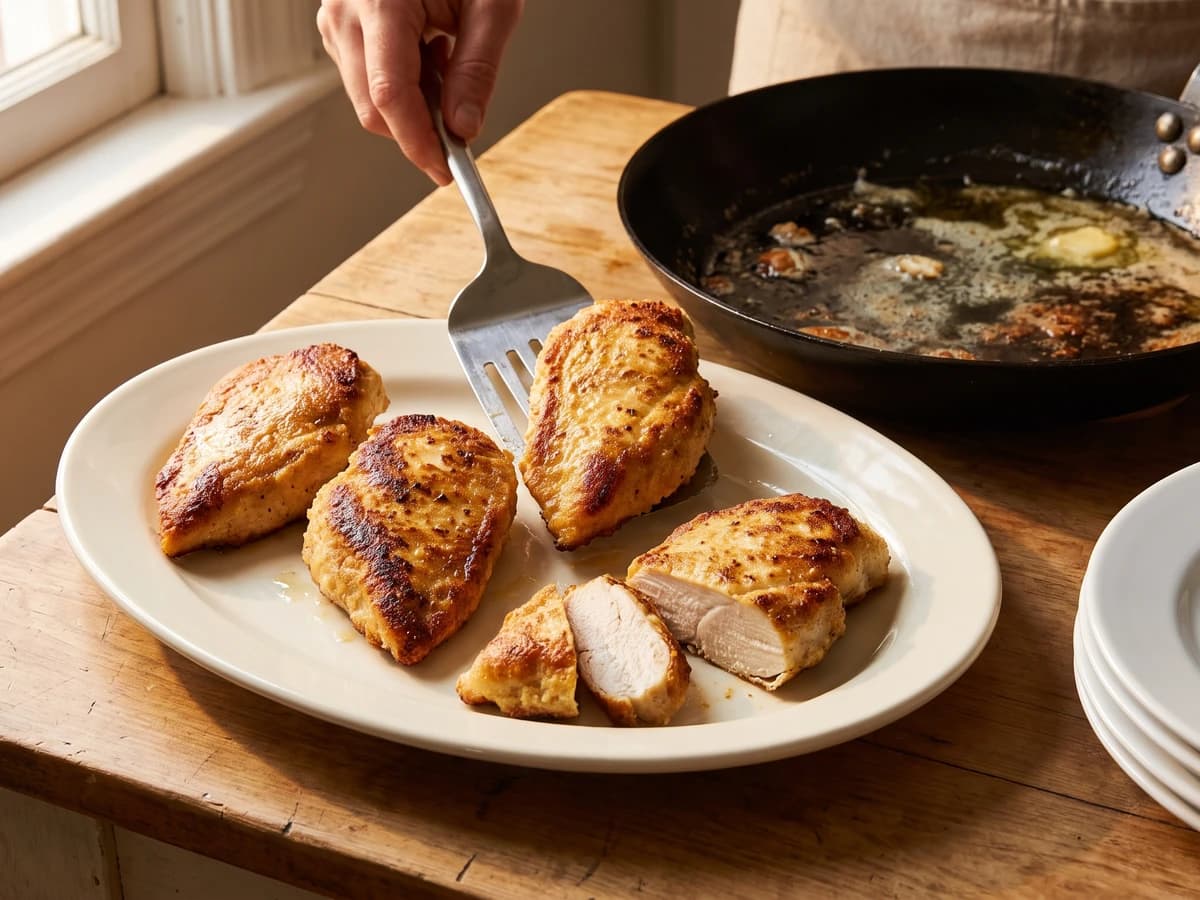
Filets de volaille sautés teach the discipline of even cutting and last-minute cooking: flour lightly, gild quickly in clarified butter, and serve before a tender chicken breast has time to harden.
A cooking platform built around craft, culture, and the stories behind what we eat.
Created by Chef Juliette
Based on No. 1600, Suprêmes de Volaille Georgette, from Le Guide Culinaire (1907) by Auguste Escoffier
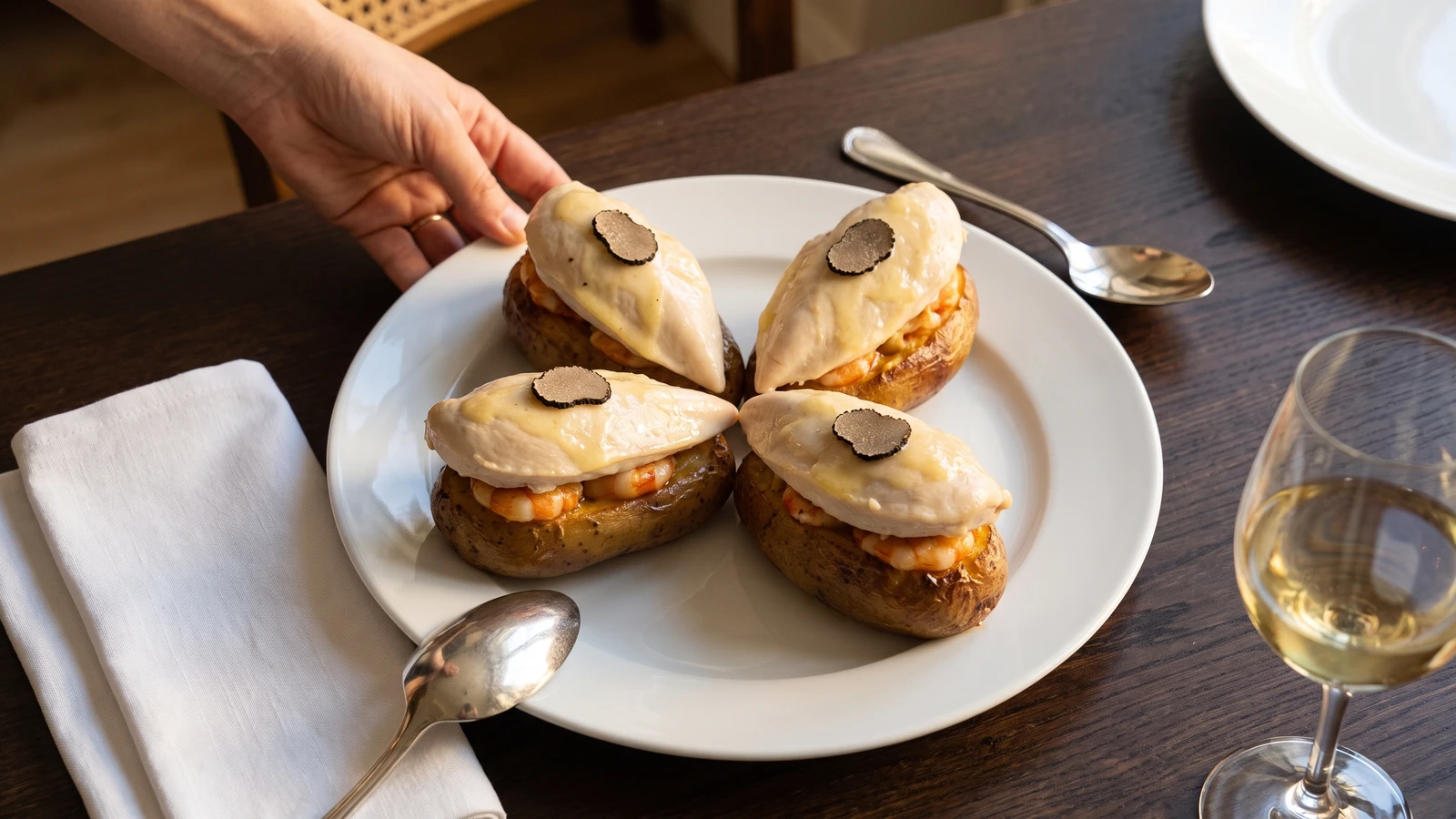
Four tender chicken suprêmes, each poised on a shrimp-filled pomme Georgette and marked with black truffle, form a handsome crown whose success depends on proportion, gentle poaching, and nothing fussy.
Suprêmes de Volaille Georgette (poached chicken breast fillets on shrimp-filled baked potatoes) teaches architecture before it teaches heat. A suprême is the fillet of the chicken breast, and here each one rests on its own pomme Georgette. Before you touch a pan, match every potato to its suprême. If the foundations are too small or uneven, the crown slips, and no flourish can persuade it otherwise.
The original instruction assumed a saucier to hold the roux-bound shrimp filling, stock never off the fire, a salamander for gratiner, and enough hands to assemble a brigade's portions at once. At home, one small saucepan builds the filling, good unsalted chicken stock supplies the poach, and the oven broiler replaces the salamander. I have reduced the crown to four portions and cut the separate holding pans and batch work, which were brigade scaffolding. The matched potatoes, shrimp filling, gentle poach, centered truffle, and crown arrangement stay. They are the dish.
When it is right, the potatoes are deeply golden at their edges, the suprêmes remain pale and tender beneath a sheen of butter, and each black truffle slice sits exactly at the center. One cook, one stove, one evening. Choose the potatoes against the chicken before cooking anything. That first comparison decides the whole plate.
Suprêmes de Volaille Georgette belongs to the named garnitures of the Parisian classical dining room, where the prized breast fillet was paired with a prepared potato and assembled for formal service. Georgette names the garnish, not a regional chicken dish or a sauce: pommes Georgette are baked potato shells filled with shrimp in a cheese-bound white sauce, while a fine black truffle slice marks each suprême. The crown arrangement carried brigade precision to the bourgeois dinner table, where a round platter allowed several individual constructions to arrive together.
Quantity
4, about 5½ to 6 ounces (155 to 170 g) each
tenderloins removed
Quantity
4, about 8 ounces (225 g) each
matched to the suprêmes
Quantity
1 cup (240 ml / 140 g)
drained and patted dry
Quantity
6 tablespoons (90 ml / 85 g)
divided
Quantity
2 tablespoons (30 ml / 16 g)
Quantity
¾ cup (180 ml / 185 g)
2 tablespoons reserved cold
Quantity
¼ cup (60 ml / 60 g)
Quantity
½ cup (120 ml / 55 g)
finely grated and divided
Quantity
2 cups (480 ml / 480 g)
¼ cup reserved cold
Quantity
2 teaspoons (10 ml / 12 g)
divided
Quantity
½ teaspoon (2.5 ml / 1 g)
divided
Quantity
⅛ teaspoon (0.6 ml / 0.25 g)
Quantity
1 small, about ¾ ounce (20 g)
cut into 4 fine slices
| Ingredient | Quantity |
|---|---|
| skinless, boneless chicken breast suprêmestenderloins removed | 4, about 5½ to 6 ounces (155 to 170 g) each |
| large oblong russet potatoesmatched to the suprêmes | 4, about 8 ounces (225 g) each |
| cooked small shrimp tailsdrained and patted dry | 1 cup (240 ml / 140 g) |
| unsalted butterdivided | 6 tablespoons (90 ml / 85 g) |
| all-purpose flour | 2 tablespoons (30 ml / 16 g) |
| whole milk2 tablespoons reserved cold | ¾ cup (180 ml / 185 g) |
| heavy cream | ¼ cup (60 ml / 60 g) |
| Gruyèrefinely grated and divided | ½ cup (120 ml / 55 g) |
| unsalted chicken stock¼ cup reserved cold | 2 cups (480 ml / 480 g) |
| fine saltdivided | 2 teaspoons (10 ml / 12 g) |
| ground white pepperdivided | ½ teaspoon (2.5 ml / 1 g) |
| freshly grated nutmeg | ⅛ teaspoon (0.6 ml / 0.25 g) |
| fresh or preserved whole black trufflecut into 4 fine slices | 1 small, about ¾ ounce (20 g) |
Heat the oven to 425°F (220°C). Set each raw suprême beside an oblong potato and compare their outlines without letting the chicken touch the potato. Choose a potato just slightly larger than its breast, with a broad, level underside and no more than ¼ inch (6 mm) projecting along either side. Season the suprêmes with 1 teaspoon of the salt and ¼ teaspoon of the white pepper, cover, and keep them cold. Matching now is the step that keeps the finished crown standing.
Prick each potato once and bake it directly on a rimmed sheet for 50 to 60 minutes, until a skewer passes through without resistance. Let the potatoes stand for 10 minutes, then cut a long, shallow lid from each one. Scoop out the flesh, leaving a sturdy ¼-inch (6 mm) wall and an unbroken base. Reserve the flesh for another meal. Brush the cavities with 1 tablespoon of the butter and season lightly with salt. If a shell splits, don't discard it. Ça se rattrape: wrap a snug collar of folded foil around its sides, leaving the cavity exposed, and keep the collar in place through gratiner.
Melt 2 tablespoons of the butter in a small saucepan over medium-low heat. Stir in the flour and cook this white roux, butter and flour cooked without browning, for 2 minutes. Add the milk, except for the reserved cold portion, a little at a time while whisking, then add the cream. Simmer gently for 3 to 4 minutes, stirring, until the sauce is thick enough to leave a clean trail across the pan. Remove it from the heat and stir in slightly more than half the Gruyère, the nutmeg, ¼ teaspoon of the white pepper, and enough salt to sharpen the flavor. Fold in the dry shrimp. If the sauce seizes or turns lumpy, stop adding ingredients. Ça se rattrape: whisk in the reserved cold milk one spoonful at a time, pass the sauce through a sieve, then fold in the shrimp.
Heat the broiler and place a rack about 6 inches (15 cm) below it. Spoon the shrimp filling into the potato shells and level it exactly with the rims rather than mounding it, because each suprême needs a flat seat. Scatter the remaining Gruyère over the filling and melt 1 tablespoon of the butter over the tops. Gratiner, brown under fierce top heat, for 3 to 5 minutes, until the cheese is spotted deep gold and the filling bubbles at the edges. If the cheese colors before the center is hot, lower the rack and finish for another minute. Turn the oven down to 200°F (95°C) and hold the pommes there only while the chicken poaches.
Warm 1¾ cups (420 ml) of the chicken stock until barely simmering, keeping the remaining ¼ cup (60 ml) cold. Coat a wide sauté pan and a round of parchment with the remaining 2 tablespoons of butter. Arrange the suprêmes smooth side up in one layer, pour in enough warm stock to reach halfway up their sides, and lay the buttered parchment directly over them. Cover and hold the liquid at the faintest quiver for 10 to 14 minutes, without browning or a hard boil, until the thickest part reaches 165°F (74°C). If the liquid begins boiling, lift the pan off the heat and add some reserved cold stock. Ça se rattrape if you cool the poach before the fibers tighten. Rest the chicken for 3 minutes, then blot only the undersides so they will sit securely.
Warm a round serving platter. Set one suprême squarely on each pomme Georgette, then place a fine slice of truffle at the exact center of every breast. Arrange the four portions radially, with their narrow ends pointing inward to form a crown. If one rocks, lift it and shave a paper-thin slice from the underside of its potato rather than wedging it with garnish. Bring the crown to the table at once, while the potato edges remain bronzed and the poached chicken still gleams. À table!
1 serving (about 520g)
Culinary guides, cultural storytelling, and the editorial depth that makes cooking meaningful.
Discover Culinary ExplorerChef Juliette
Filets de volaille sautés teach the discipline of even cutting and last-minute cooking: flour lightly, gild quickly in clarified butter, and serve before a tender chicken breast has time to harden.
Chef Juliette
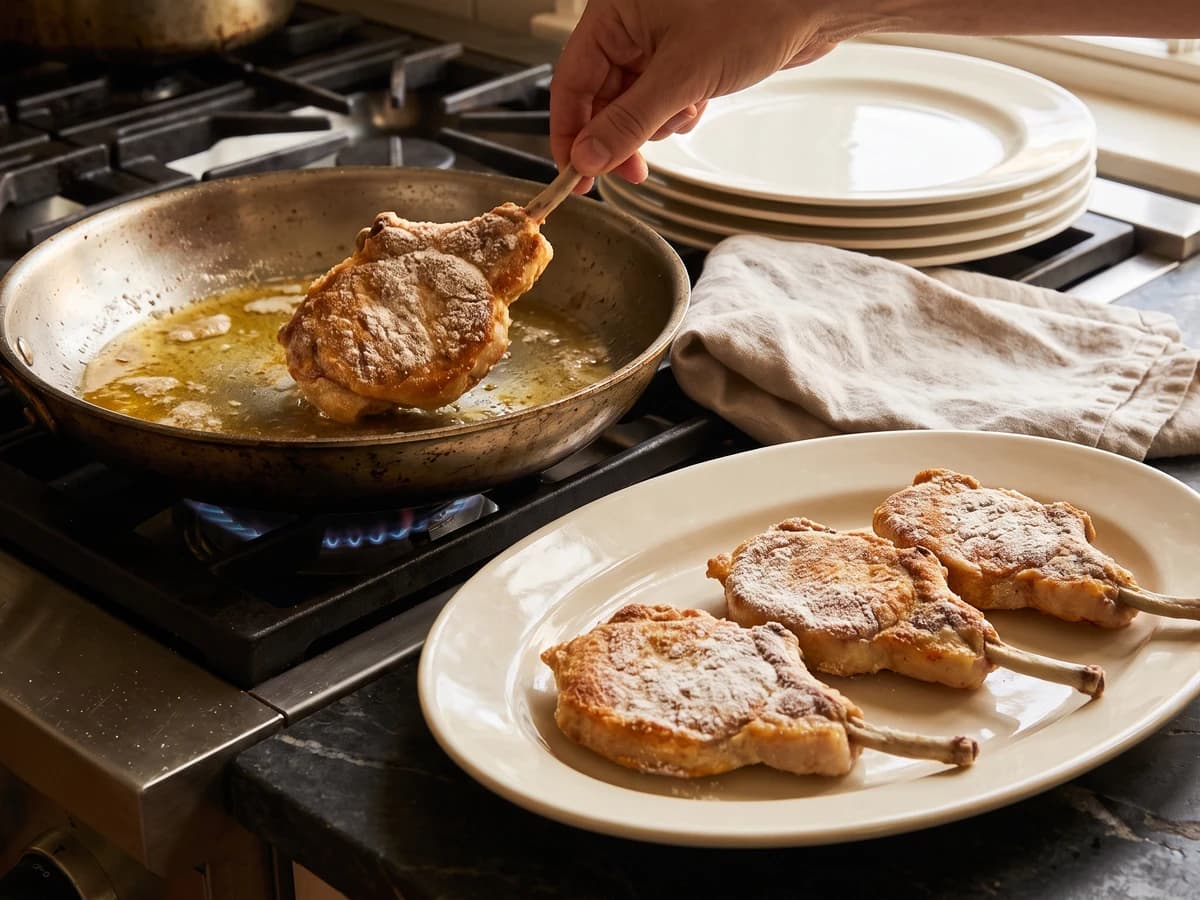
Suprêmes de volaille sautés teach the Paris rule of tender breast meat: flour lightly, gild quickly in clarified butter, add no liquid, and carry the plates straight from skillet to table.
Chef Juliette
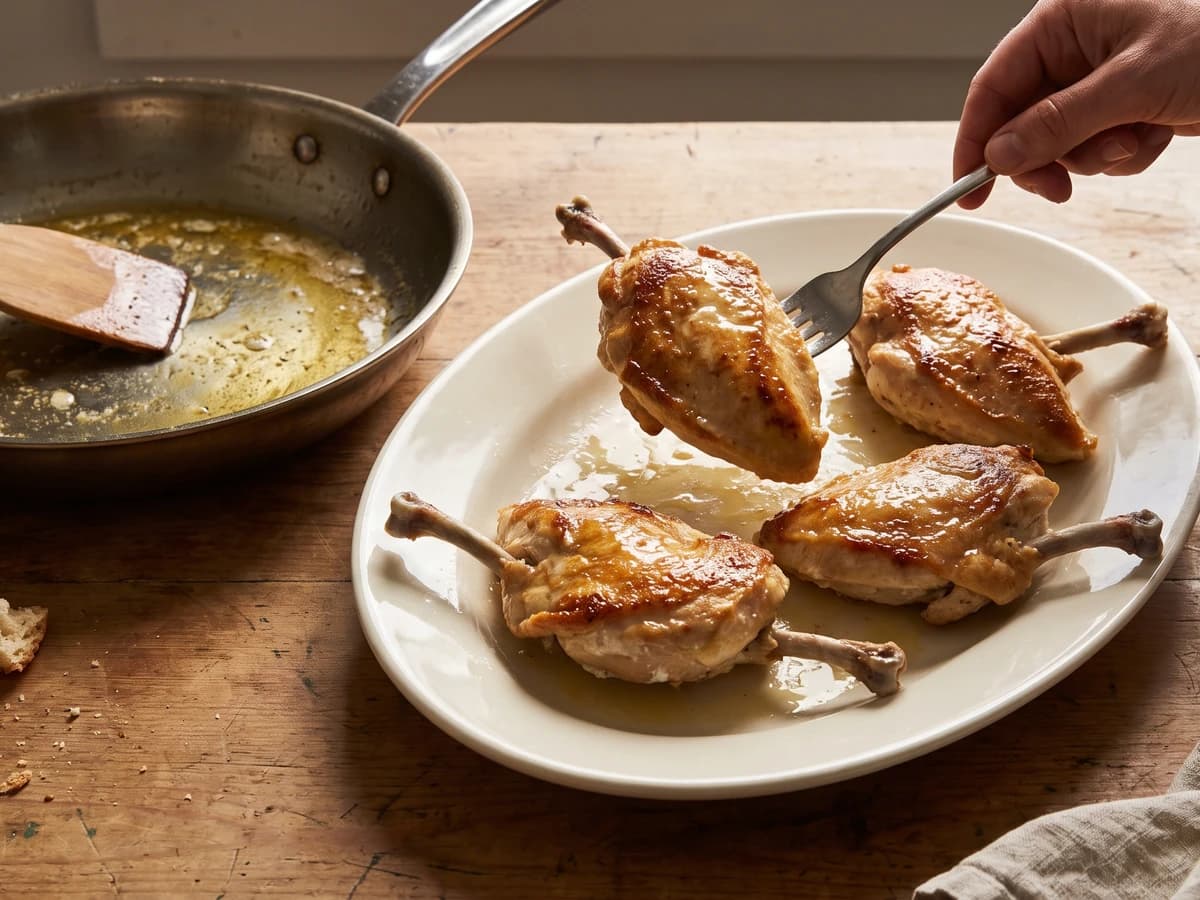
Small chicken suprêmes, wing bone attached, take a veil of flour and a swift bath in clarified butter, turning golden at the exact moment their flesh becomes tender.
Chef Juliette
Ailerons de poulet teach the discipline of fast sautéing: small skinless breasts, wing bone attached, floured lightly and gilded in clarified butter, then carried straight from pan to warm platter before tenderness has time to leave.