
Chef Juliette
Filets
Filets de volaille sautés teach the discipline of even cutting and last-minute cooking: flour lightly, gild quickly in clarified butter, and serve before a tender chicken breast has time to harden.
A cooking platform built around craft, culture, and the stories behind what we eat.
Created by Chef Juliette
Based on No. 1582, Côtelettes, from Le Guide Culinaire (1907) by Auguste Escoffier
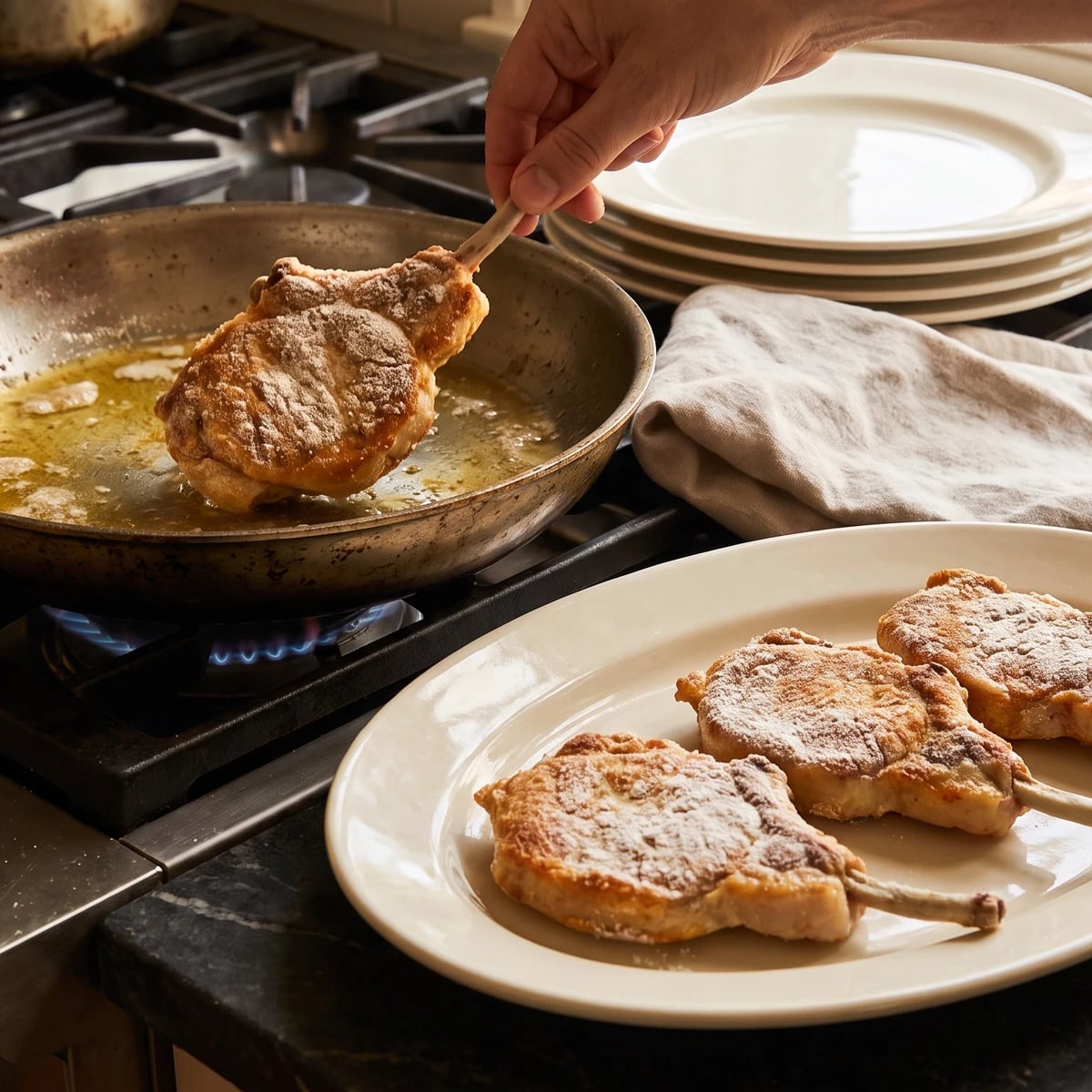
Small chicken suprêmes, wing bone attached, take a veil of flour and a swift bath in clarified butter, turning golden at the exact moment their flesh becomes tender.
Côtelettes de poulet (skinless chicken breasts with the first wing bone attached) teach the quickest and most exact lesson in the sauté pan: the meat must finish cooking at the same moment the flour turns butter-gold. The bone gives the cut its name and shape, but the timing is its soul. Very hot clarified butter, a veil of flour, and no waiting.
The original recipe assumed plump spring chickens butchered to order, clarified butter kept ready, a broad vegetable pan holding every portion at once, and diners already seated. It required no saucier on staff, no stock never off the fire, and no salamander, so we will not invent them. Your home equivalent is four small skinless airline breasts, each with the humerus attached, cooked together in one very large skillet or two ordinary skillets. Buying the cut prepared removes brigade butchery, which is scaffolding. The attached bone, skinless flesh, last-minute flouring, clarified butter, and immediate service stay, because they are the dish. One cook, one stove, one evening.
The one true thing to know before touching the pan is this: choose small, evenly thick côtelettes. A bulky market breast can brown before its centre cooks, and no amount of ceremony corrects bad geometry. If the colour races ahead, calm the heat and baste gently. Ça se rattrape. Have the table ready before you begin, because these cutlets do not wait.
Côtelettes de poulet belong to the classical Parisian service kitchen, where precise poultry cuts allowed an individual portion to travel directly from pan to dining room. The term described a suprême from a plump young chicken with the humerus left attached, the bone giving the breast the shape of a côtelette while the skin was removed for even flour-and-butter gilding. It was never the croquette-like preparation made from cooked meat that some menus also called a cutlet; from grand service, this swift sauté passed naturally to the bourgeois home table.
Quantity
4 (5 to 6 oz / 140 to 170 g each; 20 to 24 oz / 560 to 680 g total)
skin removed, wing bones frenched, thick ends gently evened
Quantity
½ cup (120 ml / 60 g)
for a very light coating; excess discarded
Quantity
1½ teaspoons (7.5 ml / 9 g)
Quantity
8 tablespoons (120 ml / 110 g)
divided
| Ingredient | Quantity |
|---|---|
| small chicken suprêmes with the humerus attachedskin removed, wing bones frenched, thick ends gently evened | 4 (5 to 6 oz / 140 to 170 g each; 20 to 24 oz / 560 to 680 g total) |
| plain flourfor a very light coating; excess discarded | ½ cup (120 ml / 60 g) |
| fine sea salt | 1½ teaspoons (7.5 ml / 9 g) |
| clarified unsalted butterdivided | 8 tablespoons (120 ml / 110 g) |
Trim away every scrap of skin, loose fat, and cartilage, then scrape the exposed wing bones clean. Leave the small inner fillet, the minion, attached and tuck it neatly beneath each breast. Pat the meat thoroughly dry. If one end rises much thicker than the rest, place the côtelette between sheets of parchment and press only that thickest part with the flat base of a small pan until the meat is an even ¾ inch (2 cm) thick. Do not pound the whole breast thin; this is a juicy suprême, not an escalope.
Warm an oval serving platter and four dinner plates, then set the table completely. Put the flour in a wide shallow dish, measure the salt, and place the thermometer and turner beside the stove. The cooking takes only minutes, and the original warning about delay is absolute: a finished côtelette held while you search for plates becomes dry.
Set one 14-inch (35 cm) skillet over medium-high heat, or set two smaller skillets on adjacent burners so all four côtelettes can cook without touching. Add 6 tablespoons (90 ml / 82 g) of the clarified butter, dividing it between two pans if needed, and hold the rest in reserve. Heat until the butter is fluid and visibly shimmering but not smoking. Only now season the côtelettes evenly with the salt, roll them through the flour, and shake them firmly so no more than a pale veil remains. Flour left in clumps drinks butter and burns.
Lay the côtelettes rounded-side down in the hot butter, starting the second skillet about 30 seconds after the first so one cook can manage both calmly. They should sizzle immediately without spitting violently. Cook undisturbed for 2½ to 3½ minutes, until the first side is an even deep butter-gold. If the flour turns chestnut during the first minute, slide that skillet off the burner, add a spoonful of the reserved clarified butter, and lower the heat before returning it. Catch it early and the coating remains sweet rather than bitter.
Turn each côtelette and cook the second side for another 2½ to 3½ minutes. Tilt the skillet occasionally and spoon the clear hot butter over the thicker end and around the wing joint. Check the centre from the side, keeping the thermometer away from the bone; the meat is ready at 165°F (74°C), resilient beneath a finger but not hard. The gold and the doneness should arrive together. If the surface is ready while the centre is still cool, move the skillet half off the burner, turn the côtelettes every 30 seconds, and baste until the temperature is reached. Ça se rattrape. Do not cover the pan or add liquid, which would turn this quick sauté into a poor poach and soften the flour.
Lift the côtelettes directly to the warm platter, rounded sides up and bones facing outward. Let excess butter fall from the turner for only a few seconds; do not drain, stack, cover, or hold them. Bring the platter straight to the table while the coating is crisp at the edges and the clarified butter still gives the meat its golden sheen. À table!
1 serving (about 125g)
Culinary guides, cultural storytelling, and the editorial depth that makes cooking meaningful.
Discover Culinary Explorer
Chef Juliette
Filets de volaille sautés teach the discipline of even cutting and last-minute cooking: flour lightly, gild quickly in clarified butter, and serve before a tender chicken breast has time to harden.

Chef Juliette
Suprêmes de volaille sautés teach the Paris rule of tender breast meat: flour lightly, gild quickly in clarified butter, add no liquid, and carry the plates straight from skillet to table.

Chef Juliette
Ailerons de poulet teach the discipline of fast sautéing: small skinless breasts, wing bone attached, floured lightly and gilded in clarified butter, then carried straight from pan to warm platter before tenderness has time to leave.

Chef Juliette
A poached chicken suprême over mushroom-filled mousseline, veiled in sauce Allemande and finished with truffle, red tongue, and pale meat glaze: grand-kitchen precision translated for four at home.