
Chef Juliette
John Dory (St. Pierre)
John Dory has the delicacy of sole and the firmness of turbot. A light flouring, a quick butter sauté, and nut-brown beurre noisette show exactly why looks never mattered.
A cooking platform built around craft, culture, and the stories behind what we eat.
Created by Chef Juliette
Based on No. 1581, Suprêmes, from Le Guide Culinaire (1907) by Auguste Escoffier
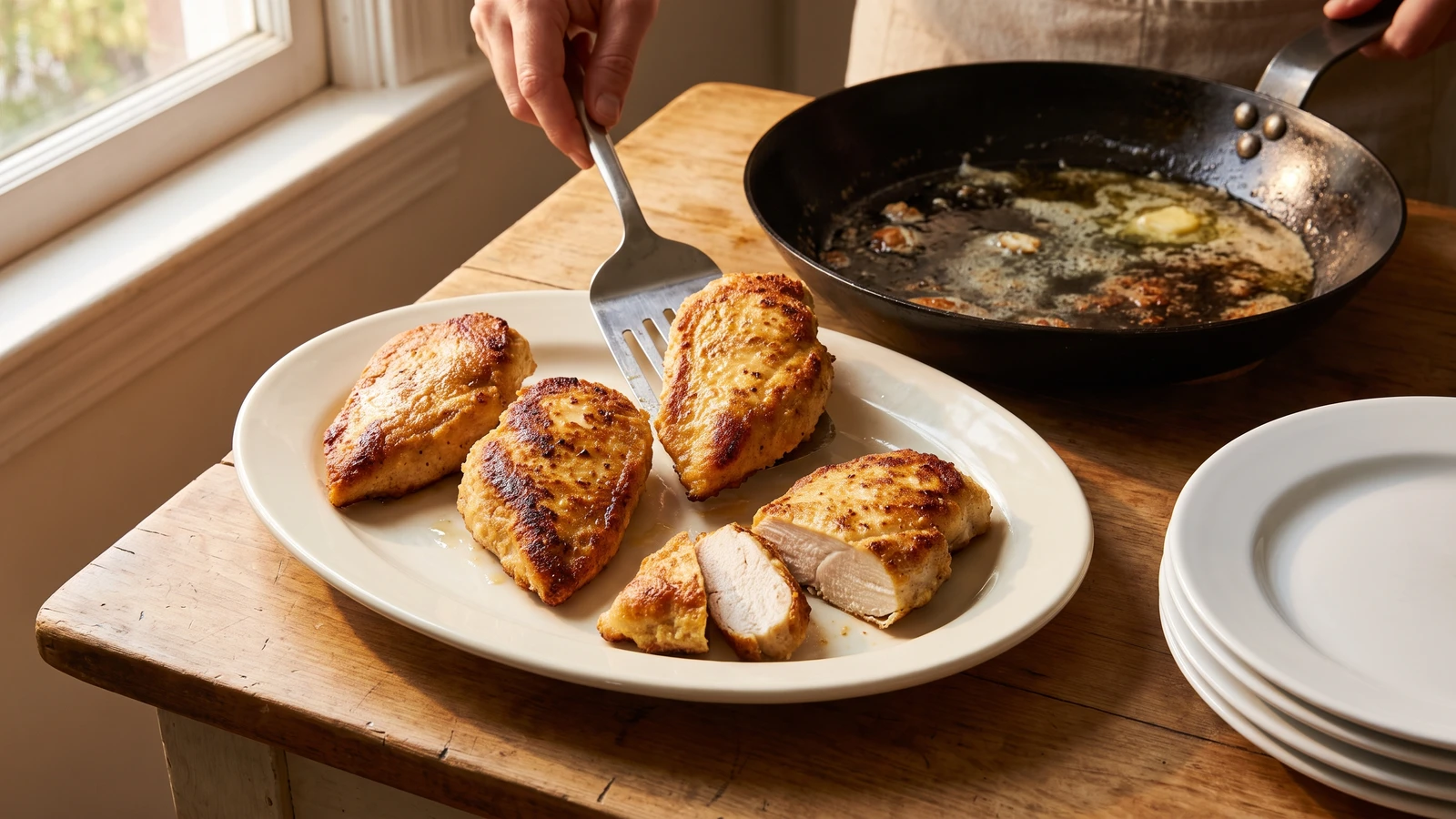
Suprêmes de volaille sautés teach the Paris rule of tender breast meat: flour lightly, gild quickly in clarified butter, add no liquid, and carry the plates straight from skillet to table.
Suprêmes de volaille sautés (quick-sautéed chicken breast fillets) teach one exacting and useful rule: tender breast meat wants almost no liquid and absolutely no wait. A suprême should leave the pan evenly gilded, juicy through the centre, and shining with butter. Let moisture bubble around it or leave it standing, and it becomes dry with astonishing efficiency.
The original entry assumed small, fleshy chickens, a cook dividing each breast along the sternum, clarified butter already waiting, and service timed to the second. It calls on none of the usual brigade supports, not a saucier on staff, not stock kept hot, not a salamander. At home, four small, evenly flattened breasts and one wide skillet are the honest equivalents. The heart-shaped trimming and tenderloin crescents contisés (slipped with slices of truffle) are brigade scaffolding, so they can go. The flour, very hot clarified butter, rapid cooking, and immediate service are the dish, so they stay. One cook, one stove, one evening.
Before the pan heats, make the suprêmes an even thickness and have every plate and accompaniment ready. That preparation is what allows the meat to gild at the same moment it cooks through. If the chicken must wait for the table, the plan is already wrong.
Suprême belongs to the vocabulary of the Parisian classical kitchen rather than to a provincial larder, and fillet and suprême traditionally name the same skinned breast portion divided along the sternum. On a small chicken the large and minion fillets remained together; from a larger bird the minion fillet could be removed, cleared of its tendon, contisé with truffle, and curved into a decorative garnish. The name is sometimes mistaken for a rich sauce, but it identifies a cut and its discipline: nearly dry cooking followed by immediate service.
Quantity
4 (about 5 oz / 140 g each; 1¼ lb / 560 g total)
Quantity
1 teaspoon (5 ml / 6 g)
Quantity
⅓ cup (80 ml / 40 g)
for a very light coating
Quantity
¼ cup (60 ml / 56 g)
divided
| Ingredient | Quantity |
|---|---|
| small boneless, skinless chicken breast halves | 4 (about 5 oz / 140 g each; 1¼ lb / 560 g total) |
| fine sea salt | 1 teaspoon (5 ml / 6 g) |
| all-purpose flourfor a very light coating | ⅓ cup (80 ml / 40 g) |
| clarified unsalted butterdivided | ¼ cup (60 ml / 56 g) |
Warm four dinner plates in a 200°F / 95°C oven, finish every accompaniment, and call everyone toward the table before cooking the chicken. Suprêmes don't improve while waiting. Set a clean serving utensil beside the stove so the finished meat can travel directly from skillet to plate.
Pat the breasts thoroughly dry. Place them between sheets of parchment and tap only the thickest parts with a flat meat mallet or rolling pin until each piece is an even ½ inch / 1.25 cm thick. Don't pound them into thin cutlets; you are equalising the thickness so the centre cooks before the surface darkens. If using unusually large modern breasts, cut them into four neat portions before flattening, just as the classical entry divides an oversized pullet breast.
Season both sides with the salt. Spread the flour in a shallow dish, coat each suprême lightly, then shake off every loose patch. The flour should be a veil, not a crust. Do this immediately before cooking because flour left sitting on damp meat becomes paste and prevents clean gilding. Discard the flour that touched the raw chicken.
Heat a wide, heavy skillet over medium-high heat for 2 minutes. Add 3 tablespoons (45 ml / 42 g) of the clarified butter; when it shimmers and runs freely across the pan, lay in the suprêmes smooth-side down without letting them touch. Cook undisturbed for 2½ to 3 minutes, turn once, and cook the second side for another 2 to 3 minutes. They are ready when both sides are butter-gold, the meat feels resilient, and the thickest point reaches 165°F / 74°C. The meat cooks and gilds at the same moment. If the butter darkens before the chicken colours, lower the heat slightly. If the pan fills with liquid, lift the chicken onto a separate plate at once, carefully drain the liquid, return the skillet to the heat until dry, and add the reserved butter before finishing the meat. Ça se rattrape. Never let that moisture boil around the suprêmes.
Move each suprême directly to a warmed plate, gilded side up. If the butter remaining in the skillet is clear and golden, spoon a little over the meat while leaving any dark flour sediment behind. Carry the plates to the table immediately and cut the chicken only when it is being eaten, so its juices remain where they belong. À table!
1 serving (about 130g)
Culinary guides, cultural storytelling, and the editorial depth that makes cooking meaningful.
Discover Culinary ExplorerChef Juliette
John Dory has the delicacy of sole and the firmness of turbot. A light flouring, a quick butter sauté, and nut-brown beurre noisette show exactly why looks never mattered.

Chef Juliette
Fresh haddock proves its delicacy in the meunière pan: a fine flour crust, moist pearly flakes, and beurre noisette sharpened with lemon and parsley, ready from one skillet in half an hour.

Chef Juliette
Éperlans à l’Anglaise turns small fish into a lesson in disciplined coating: boned smelts under a close, crisp crumb, pan-fried in clarified butter and finished with bright, half-melted maître d’hôtel butter.

Chef Juliette
Tiny smelts, shallot, mushrooms, white wine, gratin sauce, and fine bread raspings meet a fierce oven, where the fish must turn tender in the same breath the buttered crust bronzes.