
Chef Juliette
John Dory (St. Pierre)
John Dory has the delicacy of sole and the firmness of turbot. A light flouring, a quick butter sauté, and nut-brown beurre noisette show exactly why looks never mattered.
A cooking platform built around craft, culture, and the stories behind what we eat.
Created by Chef Juliette
Based on No. 1574, Poulet Sauté Provençale, from Le Guide Culinaire (1907) by Auguste Escoffier
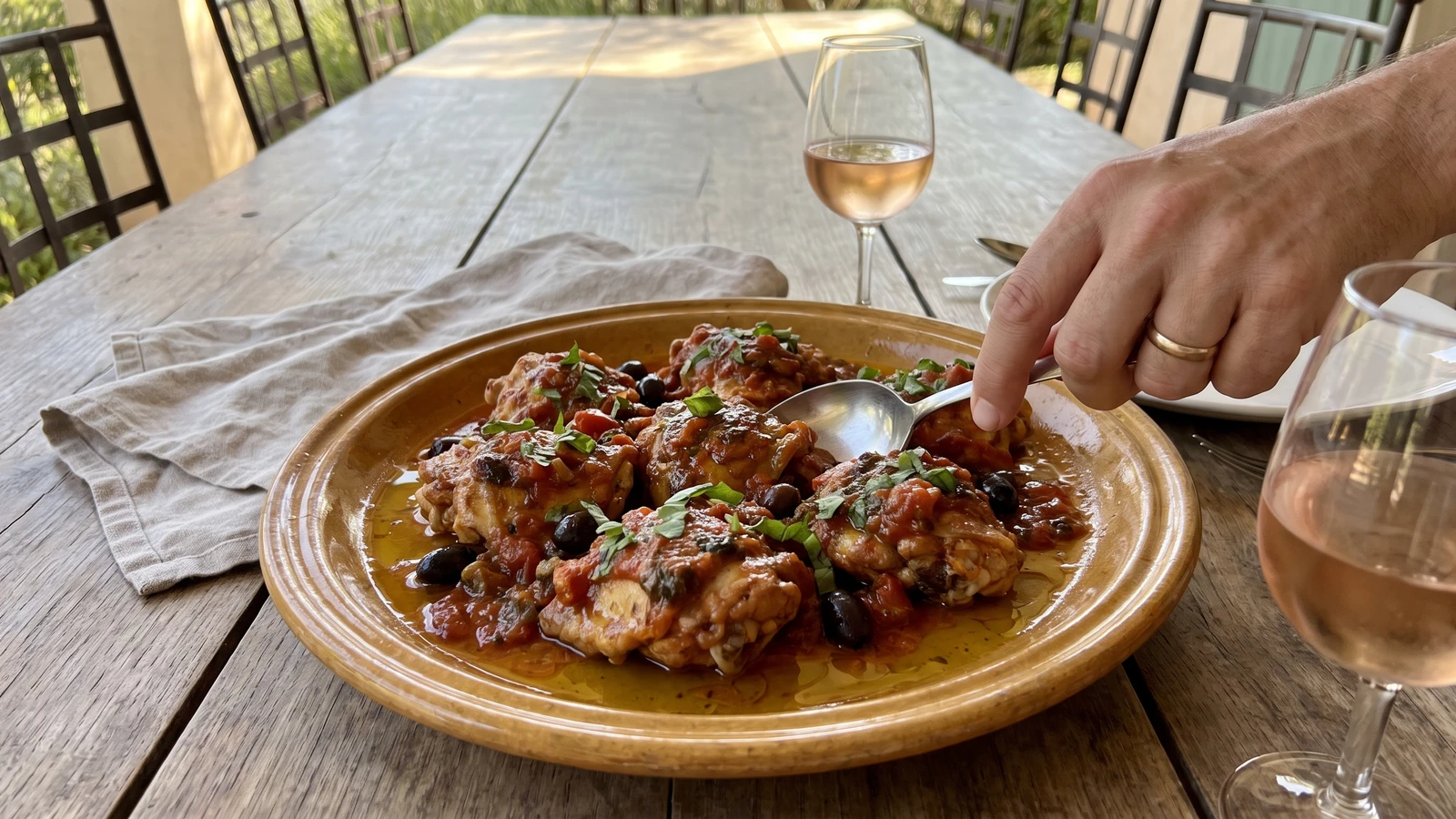
Golden chicken and the grammar of a quick pan sauce: deglaze the fond with white wine, then give tomato, anchovy, black olives, garlic, and basil five minutes to become Provence entire.
Poulet Sauté Provençale (Provençal sautéed chicken) teaches the quick pan sauce. The chicken builds a bronze fond, wine lifts it, and five minutes with garlic, tomates concassées, anchovy, black olives, and basil turns those browned juices into Provence entire. The one true thing to know before touching the pan is that dry chicken browns while wet chicken merely cooks; dry it thoroughly, because the fond is the sauce's foundation.
The source entry assumed a brigade-ready bird, a cook free to manage its pieces, a saucier on staff, and a hot platter waiting. It calls for neither a stockpot nor a salamander, and we won't invent them. One wide skillet replaces the separate sauté and sauce stations, while a pre-cut chicken and an instant-read thermometer make the timing honest for one cook. The entry's three ounces of tomato, four anchovies, and twelve olives remain intact for four servings; only its unspecified wine and oil have been measured so the home cook doesn't have to guess.
Separate pans and platter choreography are brigade scaffolding and can go. The sauté in olive oil, the honest deglaze, and the five-minute finish are the dish and must stay. Olive oil, not butter; Provence cooks on another fat. Watch the fond above everything else, and don't let deep chestnut cross into black.
Poulet Sauté Provençale belongs to the classical kitchen's Provençal register, built from the region's olive oil, tomatoes, garlic, anchovies, black olives, and basil rather than the butter and cream of northern France. Grand kitchens gathered that regional larder into a named garnish and applied it to quickly cooked poultry, fish, and small cuts of meat. The anchovy is not meant to announce itself as fish; it dissolves into the sauce, sharpening the tomato and olives with a quiet savory depth.
Quantity
1 chicken, 3½ to 4 pounds (1.6 to 1.8 kg)
cut into 8 serving pieces
Quantity
½ teaspoon (2.5 ml / 3 g)
Quantity
3 tablespoons (45 ml / 41 g)
Quantity
½ cup (120 ml / 120 g)
Quantity
1 small clove
crushed
Quantity
⅓ cup (80 ml / 85 g)
roughly chopped into tomates concassées
Quantity
4 fillets (about ½ ounce / 16 g)
finely diced
Quantity
12 olives (about 2 ounces / 55 g)
pitted
Quantity
1 generous pinch, about 1 teaspoon (5 ml / 1 g)
chopped
| Ingredient | Quantity |
|---|---|
| whole chickencut into 8 serving pieces | 1 chicken, 3½ to 4 pounds (1.6 to 1.8 kg) |
| fine sea salt | ½ teaspoon (2.5 ml / 3 g) |
| extra-virgin olive oil | 3 tablespoons (45 ml / 41 g) |
| dry white wine | ½ cup (120 ml / 120 g) |
| garliccrushed | 1 small clove |
| ripe tomatoroughly chopped into tomates concassées | ⅓ cup (80 ml / 85 g) |
| anchovy filletsfinely diced | 4 fillets (about ½ ounce / 16 g) |
| salt-cured black olivespitted | 12 olives (about 2 ounces / 55 g) |
| fresh sweet basilchopped | 1 generous pinch, about 1 teaspoon (5 ml / 1 g) |
Bring a small saucepan of water to a boil. Add the pitted olives and parboil them for 1 minute, then drain and dry them; this softens the leathery edge of salt-cured olives without washing away their character. Roughly chop the tomato into tomates concassées, which simply means roughly chopped here. Dice the anchovies, crush the garlic, and chop the basil so everything is ready before the chicken meets the pan.
Pat every chicken piece thoroughly dry, especially inside the folds of skin, then season with the salt. Leave the pieces uncovered while the skillet heats. Moisture is the enemy of the fond: if the surface is wet, the chicken releases water before it can bronze, and the sauce loses its foundation.
Heat the olive oil in a wide, heavy skillet over medium-high heat until it flows freely and glints. Reserve 1 teaspoon only as insurance against a burnt fond. Add the chicken skin-side down, leaving space between the pieces; work in two batches if the pan is crowded. Sauté, meaning cook briskly in a shallow film of fat, without disturbing the pieces for 6 to 8 minutes, until the skin is deep golden and releases easily. Turn and brown the second side for 3 to 4 minutes.
Lower the heat to medium-low and continue cooking the chicken, turning every few minutes so it cooks evenly without scorching the fond. Remove each breast piece to a warm platter when its thickest part reaches 165°F (74°C). Let the legs continue until they reach at least 175°F (79°C) and feel tender beside the bone, usually 5 to 8 minutes longer. Dish all the chicken skin-side up and cover it loosely while you make the sauce; the five-minute rest will settle its juices.
Pour off the excess oil, leaving the browned film attached to the skillet. Raise the heat to medium-high, add the white wine, and swill it around the pan while scraping up every sound brown speck with a wooden spoon. If the fond is black and smells acrid, don't scrape it into dinner. Ça se rattrape: make the sauce in the dried olive saucepan using the reserved teaspoon of oil. The sauce will be lighter, but it will taste clean.
Add the crushed garlic, tomates concassées, diced anchovies, parboiled olives, and chopped basil to the wine. Bring the sauce to a lively simmer and cook for exactly 5 minutes, stirring once or twice, until the anchovies disappear and the wine and tomato form a loose, glossy sauce. It should taste of tomato and olive first, with the anchovy working underneath. If very juicy tomatoes leave it watery, lift out the solids and boil the liquid alone for another minute or two, then return them. Don't simmer the whole garnish into a paste.
Taste the sauce before adding any more salt, because the anchovies and olives have already done much of that work. Spoon the sauce and all its olives over the chicken, making certain every piece catches some tomato and wine. Bring the platter straight to the table while the skin still holds its browned edges and the sauce gleams around it. One cook, one stove, one evening. À table!
1 serving (about 275g)
Culinary guides, cultural storytelling, and the editorial depth that makes cooking meaningful.
Discover Culinary ExplorerChef Juliette
John Dory has the delicacy of sole and the firmness of turbot. A light flouring, a quick butter sauté, and nut-brown beurre noisette show exactly why looks never mattered.

Chef Juliette
Fresh haddock proves its delicacy in the meunière pan: a fine flour crust, moist pearly flakes, and beurre noisette sharpened with lemon and parsley, ready from one skillet in half an hour.

Chef Juliette
Éperlans à l’Anglaise turns small fish into a lesson in disciplined coating: boned smelts under a close, crisp crumb, pan-fried in clarified butter and finished with bright, half-melted maître d’hôtel butter.

Chef Juliette
Tiny smelts, shallot, mushrooms, white wine, gratin sauce, and fine bread raspings meet a fierce oven, where the fish must turn tender in the same breath the buttered crust bronzes.