
Chef Juliette
John Dory (St. Pierre)
John Dory has the delicacy of sole and the firmness of turbot. A light flouring, a quick butter sauté, and nut-brown beurre noisette show exactly why looks never mattered.
A cooking platform built around craft, culture, and the stories behind what we eat.
Created by Chef Juliette
Based on No. 1571, Poulet Sauté Parmentier, from Le Guide Culinaire (1907) by Auguste Escoffier
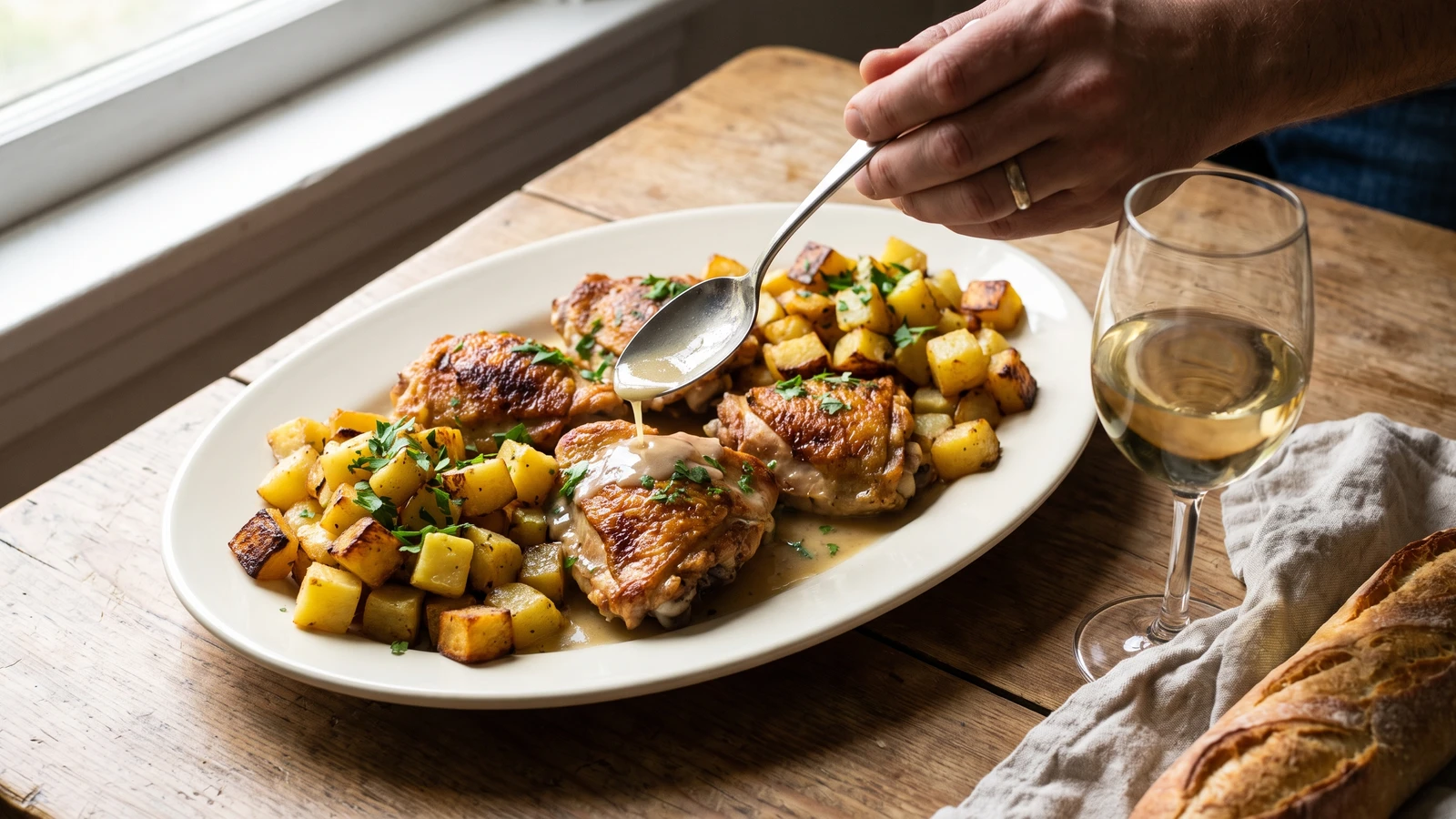
Parmentier teaches the honest sequence: colour the chicken, frizzle the potatoes in butter, finish both in the oven, then loosen the fond with white wine and veal gravy for a glossy pan sauce.
Poulet sauté Parmentier (butter-browned chicken with potatoes) teaches one true thing: the potatoes must take colour in butter before they enter the oven. Put them in pale and they remain pale, however long you glare through the oven door. Colour first, then finish them beside the bird.
The old entry assumed an oval spoon-cutter, another pair of hands frizzling potatoes while the chicken browned, and a saucier drawing veal gravy from a stockpot never off the fire. At home, equal large dice replace the decorative olive shape, one heavy ovenproof skillet handles the work in sequence, and a spoonful of properly prepared veal gravy supplies the same concentrated foundation. The spoon-cutter and parallel workflow were brigade scaffolding, so they go. The butter colouring, oven finish, white wine deglaze, and original proportion of one pound of potatoes to one chicken stay. One cook, one stove, one evening.
The finished platter should carry deep-golden chicken, butter-glossed potatoes with crisp bronze corners, and just enough sauce to moisten everything without drowning the crust. Give the potatoes their colour before they meet the oven. That is the step that decides the dish.
Poulet sauté Parmentier belongs to the Paris-centered classical repertoire rather than to a single French province. In classical kitchen nomenclature, Parmentier marks a potato garnish, a tribute born from the campaign that carried potatoes from suspicion into everyday French cooking. Sautéed chicken moved easily from grand kitchens to bourgeois tables because bird and garnish could finish together, while wine and a spoonful of veal gravy turned the pan's fond into sauce.
Quantity
1, about 3½ lb (1.6 kg)
cut into 8 pieces
Quantity
1 lb (455 g)
cut into ¾-inch (2 cm) dice
Quantity
5 tablespoons (75 ml / 70 g)
divided
Quantity
1¾ teaspoons (9 ml / 10 g)
divided
Quantity
½ teaspoon (2.5 ml / 1 g)
Quantity
3 tablespoons (45 ml / 45 g)
Quantity
1 tablespoon (15 ml / 15 g)
Quantity
1 tablespoon (15 ml / 4 g)
finely chopped
| Ingredient | Quantity |
|---|---|
| whole chickencut into 8 pieces | 1, about 3½ lb (1.6 kg) |
| Yukon Gold or other yellow waxy potatoescut into ¾-inch (2 cm) dice | 1 lb (455 g) |
| unsalted butterdivided | 5 tablespoons (75 ml / 70 g) |
| fine sea saltdivided | 1¾ teaspoons (9 ml / 10 g) |
| freshly ground black pepper | ½ teaspoon (2.5 ml / 1 g) |
| dry white wine | 3 tablespoons (45 ml / 45 g) |
| finished veal gravy, unsalted or lightly salted | 1 tablespoon (15 ml / 15 g) |
| flat-leaf parsleyfinely chopped | 1 tablespoon (15 ml / 4 g) |
Heat the oven to 425°F (220°C) with a rack in the middle. Cut the potatoes into even ¾-inch (2 cm) dice, or shape them like large olives with a paring knife if the practice pleases you. Dry them thoroughly. Pat the chicken dry, then season it all over with 1¼ teaspoons of the salt and the pepper. Moisture prevents browning, and both chicken and potatoes need dry surfaces before they meet the butter.
Melt 2 tablespoons of the butter in a heavy 12-inch (30 cm) ovenproof skillet over medium-high heat. When the foam subsides, lay in the chicken skin-side down, working in two batches so every piece touches the pan. Brown the skin for 5 to 6 minutes without fussing with it, then turn and colour the second side for about 2 minutes. Add another tablespoon of butter between batches if the pan becomes dry. The chicken should be richly golden but still raw within. If the butter darkens toward black before the skin colours, take the pan off the heat, lower the flame, and lift out any bitter specks. Ça se rattrape, and the bronze fond underneath must stay.
Transfer the browned chicken to a plate. Add the remaining butter to the same skillet, followed by the potatoes and the remaining ½ teaspoon salt. Spread them in one layer and cook over medium-high heat for 8 to 10 minutes, turning only as each face becomes golden. They need not be tender yet, but they must show honest colour around the edges. This initial frizzling is the dish, not decoration: pale potatoes sent directly to the oven will cook, but they will not develop the crisp buttered exterior Parmentier requires.
Return the chicken to the skillet, skin-side up, nestling the pieces among the potatoes while leaving as much potato surface against the pan as possible. Transfer the skillet to the oven and cook for 22 to 30 minutes, turning the potatoes once after about 12 minutes. Remove each chicken piece as it finishes: breasts should reach 165°F (74°C), while thighs are best at 175°F (80°C) or slightly above. If the breasts finish first, put them on the warm serving platter and let the legs continue. There is no prize for drying the white meat while waiting for the joints.
Transfer the cooked chicken to a warm platter. Lift out the potatoes with a slotted spoon and arrange them in generous heaps around the bird, as the original service intends. Set the skillet over medium-high heat, remembering that its handle is hot, and pour off excess fat while leaving the browned fond and about a teaspoon of butter behind.
Pour the white wine into the hot skillet and swill it across the pan, scraping until every bronze trace of fond dissolves. Reduce by half, about 1 minute, then stir in the veal gravy and let the sauce bubble just until glossy, 30 to 60 seconds. If it tightens before the fond releases, loosen it with a teaspoon of water. If butter separates into oily beads, remove the pan from the heat and whisk in a teaspoon of cold water. Ça se rattrape. Spoon the sauce over the chicken, sprinkle with the parsley, and serve at once. À table!
1 serving (about 315g)
Culinary guides, cultural storytelling, and the editorial depth that makes cooking meaningful.
Discover Culinary ExplorerChef Juliette
John Dory has the delicacy of sole and the firmness of turbot. A light flouring, a quick butter sauté, and nut-brown beurre noisette show exactly why looks never mattered.

Chef Juliette
Fresh haddock proves its delicacy in the meunière pan: a fine flour crust, moist pearly flakes, and beurre noisette sharpened with lemon and parsley, ready from one skillet in half an hour.

Chef Juliette
Éperlans à l’Anglaise turns small fish into a lesson in disciplined coating: boned smelts under a close, crisp crumb, pan-fried in clarified butter and finished with bright, half-melted maître d’hôtel butter.

Chef Juliette
Tiny smelts, shallot, mushrooms, white wine, gratin sauce, and fine bread raspings meet a fierce oven, where the fish must turn tender in the same breath the buttered crust bronzes.