
Chef Juliette
John Dory (St. Pierre)
John Dory has the delicacy of sole and the firmness of turbot. A light flouring, a quick butter sauté, and nut-brown beurre noisette show exactly why looks never mattered.
A cooking platform built around craft, culture, and the stories behind what we eat.
Created by Chef Juliette
Based on No. 1568, Poulet Sauté Mireille, from Le Guide Culinaire (1907) by Auguste Escoffier
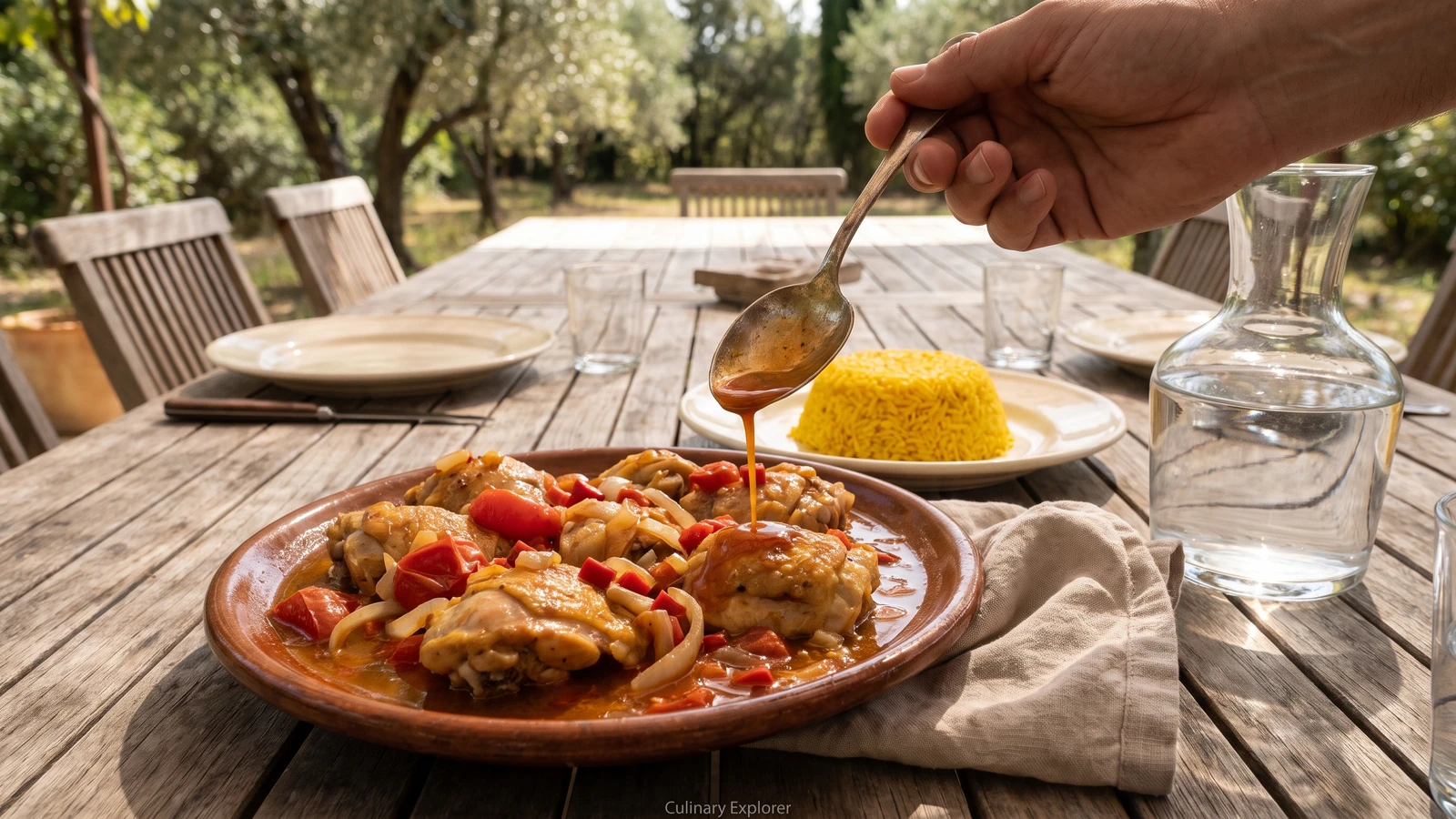
Poulet Sauté Mireille (Mireille-style sautéed chicken) teaches the southern grammar of browning first, vegetables halfway, garlic late, then a clean reduction poured over the chicken with saffron rice kept proudly apart.
Poulet Sauté Mireille (Mireille-style sautéed chicken) teaches one true thing: ingredients sharing a pan do not necessarily enter it together. The chicken needs direct heat and room to brown. Onion, tomato, and pimento join when the meat is half-cooked, while the garlic waits until the final ten minutes so it stays sweet and fragrant rather than turning bitter. Timing is the technique.
The original brigade entry assumed a saucier free to reduce and strain the tomato juices while another pair of hands moulded the saffron rice. It needed neither a stockpot nor a salamander. At home, a wide sauté pan, a fine sieve, and a covered saucepan on the back burner do the work. I have scaled the dish to one small chicken for four. The extra hands were scaffolding, so they go; the staggered additions and strained reduction are the dish, so they stay. One cook, one stove, one evening.
The finished platter should hold deeply golden chicken among softened red pimento, onion, and tomato, all glossed with a clear, concentrated sauce rather than buried beneath a stew. Before the pan heats, make the tomato concassée and save every drop of its juice. Most of all, keep the garlic waiting. Ten minutes in the pan is enough.
Poulet Sauté Mireille sits in the classical repertoire’s Provençal register rather than belonging to one village alone. Mireille, a Provençal name celebrated through regional literature and song, became menu shorthand for the southern larder represented here by tomato, pimento, garlic, saffron, and oil, with no northern cream imposed upon it. Reducing and straining the tomato juices shows how those market flavors traveled into the grand-kitchen canon without losing their southern character.
Quantity
1 chicken (about 3½ lb / 1.6 kg)
cut into 8 serving pieces
Quantity
3 tablespoons (45 ml / 40 g)
Quantity
1 medium (about 1 cup / 150 g)
chopped
Quantity
4 medium (about 1½ lb / 700 g)
prepared concassées, with their juices reserved
Quantity
1 large (about 1 cup / 160 g)
cut into small dice
Quantity
1 small clove (about 1 teaspoon / 4 g)
crushed
Quantity
1½ teaspoons (7.5 ml / 9 g)
divided
Quantity
½ teaspoon (2.5 ml / 1 g)
Quantity
1¼ cups (300 ml / 250 g)
Quantity
2 cups (475 ml / 475 g)
Quantity
¼ teaspoon loosely packed (1.25 ml / 0.15 g)
| Ingredient | Quantity |
|---|---|
| small whole chickencut into 8 serving pieces | 1 chicken (about 3½ lb / 1.6 kg) |
| extra-virgin olive oil | 3 tablespoons (45 ml / 40 g) |
| yellow onionchopped | 1 medium (about 1 cup / 150 g) |
| ripe tomatoesprepared concassées, with their juices reserved | 4 medium (about 1½ lb / 700 g) |
| fresh red pimento or red bell peppercut into small dice | 1 large (about 1 cup / 160 g) |
| garliccrushed | 1 small clove (about 1 teaspoon / 4 g) |
| fine saltdivided | 1½ teaspoons (7.5 ml / 9 g) |
| freshly ground black pepper | ½ teaspoon (2.5 ml / 1 g) |
| long-grain white rice | 1¼ cups (300 ml / 250 g) |
| water | 2 cups (475 ml / 475 g) |
| saffron threads | ¼ teaspoon loosely packed (1.25 ml / 0.15 g) |
Score a shallow cross in the base of each tomato. Lower the tomatoes into boiling water just until their skins loosen, about 20 seconds, then cool them in cold water and peel. Halve them across the middle and remove the seeds over a fine sieve set above a bowl, collecting every drop of juice. Chop the flesh roughly. This is tomato concassée, peeled, seeded, and roughly chopped, not crushed into a purée. Keep the flesh and strained juice separate.
Rinse the rice under cold water until the water runs nearly clear, then drain well. Warm 2 tablespoons of the measured water and rub the saffron threads between your fingers into it. Combine the rice, saffron liquid, remaining water, and ½ teaspoon of the salt in a small saucepan. Bring to a boil, cover tightly, and cook over the lowest heat for 15 minutes. Remove it from the heat without lifting the lid and let it rest for at least 10 minutes while the chicken cooks.
Dry the chicken thoroughly, then season it with ¾ teaspoon of the salt and all the pepper. Heat 2 tablespoons of the olive oil in a wide, heavy sauté pan over medium-high heat. Brown the chicken in batches, skin-side first, giving each piece enough room to color rather than stew. Add the remaining oil only if the pan grows dry. Return the pieces to the pan once they are deep gold and approximately half-cooked, with the flesh set around the outside but still unfinished near the bone.
Scatter the chopped onion, tomato concassée, and diced pimento around the half-cooked chicken. Add the remaining ¼ teaspoon salt and turn the vegetables through the oil without scraping the chicken skin loose. Cover and cook over medium-low heat for 8 minutes, then uncover and cook for 2 minutes more. The onion should soften, the pimento should yield at its edges, and the tomatoes should release enough liquid to glaze the pan.
Ten minutes before serving, stir the crushed garlic into the moist vegetables, keeping it away from any bare, fiercely hot patch of pan. Turn the chicken once and cook uncovered at a gentle, steady sizzle until the thickest piece reaches 165°F (74°C). If the breast pieces finish before the legs, lift them out and keep them loosely covered while the dark meat continues. If the vegetables threaten to catch before the chicken is ready, add the reserved tomato juice one tablespoon at a time and lower the heat.
Transfer the chicken and softened vegetables to a warm serving platter. Pour the reserved tomato juice through the sieve into the sauté pan and scrape up the golden fond. Boil briskly until the liquid reduces by half and turns glossy, about 4 to 6 minutes. Strain it through a clean fine sieve directly over the chicken without forcing the solids through. If it reduces too far or tastes too strong, whisk in a tablespoon of hot water. Ça se rattrape. No flour or stock belongs here; the clean tomato reduction is the finish.
Fluff the saffron rice with a fork and taste for salt. Rinse a 2-cup bowl with hot water, shake it dry, and pack in the rice firmly enough to hold together without crushing it. Invert it onto a separate serving dish and lift away the bowl. Keep the saffron timbale beside the chicken, not underneath it, so the clear sauce stays with the poultry and the rice remains fragrant and distinct. À table!
1 serving (about 560g)
Culinary guides, cultural storytelling, and the editorial depth that makes cooking meaningful.
Discover Culinary ExplorerChef Juliette
John Dory has the delicacy of sole and the firmness of turbot. A light flouring, a quick butter sauté, and nut-brown beurre noisette show exactly why looks never mattered.

Chef Juliette
Fresh haddock proves its delicacy in the meunière pan: a fine flour crust, moist pearly flakes, and beurre noisette sharpened with lemon and parsley, ready from one skillet in half an hour.

Chef Juliette
Éperlans à l’Anglaise turns small fish into a lesson in disciplined coating: boned smelts under a close, crisp crumb, pan-fried in clarified butter and finished with bright, half-melted maître d’hôtel butter.

Chef Juliette
Tiny smelts, shallot, mushrooms, white wine, gratin sauce, and fine bread raspings meet a fierce oven, where the fish must turn tender in the same breath the buttered crust bronzes.