
Chef Juliette
John Dory (St. Pierre)
John Dory has the delicacy of sole and the firmness of turbot. A light flouring, a quick butter sauté, and nut-brown beurre noisette show exactly why looks never mattered.
A cooking platform built around craft, culture, and the stories behind what we eat.
Created by Chef Juliette
Based on No. 1492, Poularde à la Ménagère, from Le Guide Culinaire (1907) by Auguste Escoffier
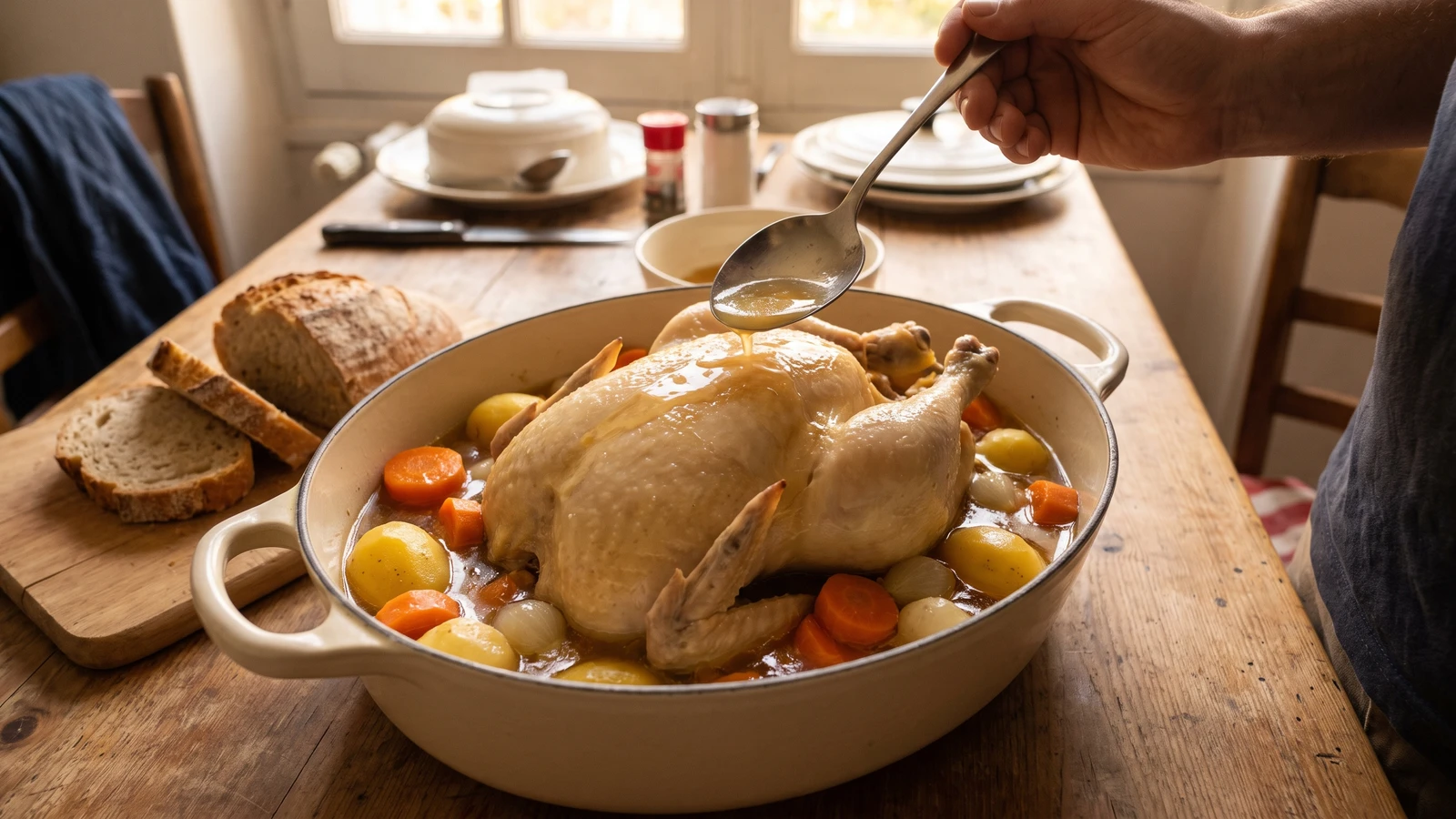
A plump bird poached gently in white stock, with carrots, new potatoes, and onions cooked uncovered in that same liquor until it gleams: one pot, one honest lesson in reduction.
Poularde à la Ménagère (housekeeper's pullet) teaches one true thing before you touch a pan: the cooking liquor is not background, it is the dish. The bird gives it savor and gelatin, the vegetables take that savor back, and uncovered reduction turns the exchange into a clear, softly clinging sauce. Begin with pale stock that tastes good enough to drink; no later flourish can correct a weak one.
The original entry assumed a true poularde, a stockpot never off the fire, and a special oval cocotte waiting for service. At home, use a plump young chicken and strengthen good unsalted white chicken stock with plain gelatin if it needs body. A snug Dutch oven replaces the special cocotte. That vessel is brigade scaffolding and can go; the gentle poach, six each of the vegetables, their cooking in the same liquor, and the uncovered reduction are the dish and must stay. One cook, one stove, one evening.
Watch the liquor, not the clock. If the vegetables become tender before it lightly coats a spoon, lift them out and reduce the liquor alone, then return them. Ça se rattrape. The uncovered reduction is the one step that decides whether the dish merely has broth or arrives with its proper glossy liquor.
Poularde à la Ménagère belongs to cuisine bourgeoise, the well-run French household table whose repertoire was codified most visibly in Paris and practiced across the country. Classical kitchens carried the household method into their manuals without disguising it: poach the bird, cook the roots in its liquor, and serve everything together in the same cocotte. Here ménagère names a manner of cooking and serving, not a sauce and not a single region; the dish's distinction is the circulation of one stock through bird, vegetables, and table.
Quantity
1, 3½ to 4 pounds (1.6 to 1.8 kg)
giblets removed
Quantity
10 cups (2.4 L / approximately 2.4 kg)
cold
Quantity
4½ teaspoons (22 ml / 14 g)
use only if the chilled stock does not set firmly
Quantity
6, about 3 cups sliced (720 ml / 450 g)
peeled and cut into ¼-inch (6 mm) rounds
Quantity
6, about 3 cups sliced (720 ml / 500 g)
scrubbed or thinly peeled and cut into ⅜-inch (1 cm) rounds
Quantity
6, about 2 cups sliced (480 ml / 300 g)
peeled and cut into ¼-inch (6 mm) rounds
Quantity
2 teaspoons (10 ml / 12 g), divided, plus more only if needed
| Ingredient | Quantity |
|---|---|
| poularde or plump young chickengiblets removed | 1, 3½ to 4 pounds (1.6 to 1.8 kg) |
| unsalted white chicken stockcold | 10 cups (2.4 L / approximately 2.4 kg) |
| unflavored powdered gelatin (optional)use only if the chilled stock does not set firmly | 4½ teaspoons (22 ml / 14 g) |
| small carrotspeeled and cut into ¼-inch (6 mm) rounds | 6, about 3 cups sliced (720 ml / 450 g) |
| small new potatoesscrubbed or thinly peeled and cut into ⅜-inch (1 cm) rounds | 6, about 3 cups sliced (720 ml / 500 g) |
| small new onionspeeled and cut into ¼-inch (6 mm) rounds | 6, about 2 cups sliced (480 ml / 300 g) |
| fine sea salt | 2 teaspoons (10 ml / 12 g), divided, plus more only if needed |
Chill a spoonful of the stock before beginning. If it sets to a soft jelly, it already has the body the dish requires and you can omit the powdered gelatin. If it remains liquid, sprinkle the gelatin evenly over 1 cup of the cold stock and leave it for 5 minutes to bloom. It will look swollen and rather alarming. It is exactly right, and it will dissolve as the poaching liquor warms.
Season the chicken inside and out with 1½ teaspoons of the salt, then set it breast-side up in a snug 5 to 6-quart cocotte or Dutch oven. Pour over the stock, including the bloomed gelatin if using; the liquid should cover the bird, or come close enough that you can turn it once. Bring it slowly to the first small bubbles over medium heat, skimming away any foam, then lower the heat until the liquor holds between 180 and 190°F (82 and 88°C). Poach gently for 45 to 55 minutes, turning once if the bird is not submerged, until the thickest part of the thigh reaches 165°F (74°C) without the thermometer touching bone. Never let the pot gallop. If it boils briefly, lift it off the heat for 2 minutes, skim the cloudiness, and resume over lower heat; the liquor may lose a little clarity, but the dish is not lost.
While the chicken poaches, prepare all six carrots, six potatoes, and six onions. Cut the carrots and onions into ¼-inch (6 mm) rounds and the potatoes slightly thicker, about ⅜ inch (1 cm). Those unequal cuts are deliberate: the firmer carrots need a head start supplied by thinness, so all three vegetables can enter the liquor together as the original method requires.
Lift the cooked chicken from the pot, drain the cavity over the liquor, and place the bird in a warmed oval cocotte or other deep serving dish. Cover it loosely. Strain the poaching liquor, then measure 6 cups (1.4 L) into a wide sauté pan and reserve the remainder. Add all the vegetables and cook at a gentle simmer, uncovered, for 25 to 35 minutes. They are ready when a knife slips through the potatoes without resistance and the liquor has reduced enough to look glossy and sheet lightly from a spoon. This sauce is a reduction, not a roux; do not thicken it with flour or cream. If the vegetables soften first, lift them out with a slotted spoon and reduce the liquor more briskly before returning them. If the liquor tightens before the carrots are tender, add reserved poaching stock ½ cup at a time. Ça se rattrape.
Taste the reduced liquor only now, after evaporation has concentrated it, and add the remaining ½ teaspoon salt if needed. Salt added heavily at the beginning can turn fierce during reduction. The finished liquor should taste full and clean, with enough gelatin to cling softly while remaining pourable.
Arrange the carrots, potatoes, and onions over and around the whole chicken, then pour their glossy cooking liquor across everything. If the bird has cooled more than expected, cover the cocotte and set it over the lowest heat for 3 to 5 minutes, without allowing the liquor to boil. Bring the cocotte whole to the table, carve the bird there, and spoon vegetables and liquor over every portion. Cooking well is not cooking fancy. À table!
1 serving (about 680g)
Culinary guides, cultural storytelling, and the editorial depth that makes cooking meaningful.
Discover Culinary ExplorerChef Juliette
John Dory has the delicacy of sole and the firmness of turbot. A light flouring, a quick butter sauté, and nut-brown beurre noisette show exactly why looks never mattered.

Chef Juliette
Fresh haddock proves its delicacy in the meunière pan: a fine flour crust, moist pearly flakes, and beurre noisette sharpened with lemon and parsley, ready from one skillet in half an hour.

Chef Juliette
Éperlans à l’Anglaise turns small fish into a lesson in disciplined coating: boned smelts under a close, crisp crumb, pan-fried in clarified butter and finished with bright, half-melted maître d’hôtel butter.

Chef Juliette
Tiny smelts, shallot, mushrooms, white wine, gratin sauce, and fine bread raspings meet a fierce oven, where the fish must turn tender in the same breath the buttered crust bronzes.