
Chef Juliette
John Dory (St. Pierre)
John Dory has the delicacy of sole and the firmness of turbot. A light flouring, a quick butter sauté, and nut-brown beurre noisette show exactly why looks never mattered.
A cooking platform built around craft, culture, and the stories behind what we eat.
Created by Chef Juliette
Based on No. 1411, Crépinettes à la Cendrillon, from Le Guide Culinaire (1907) by Auguste Escoffier
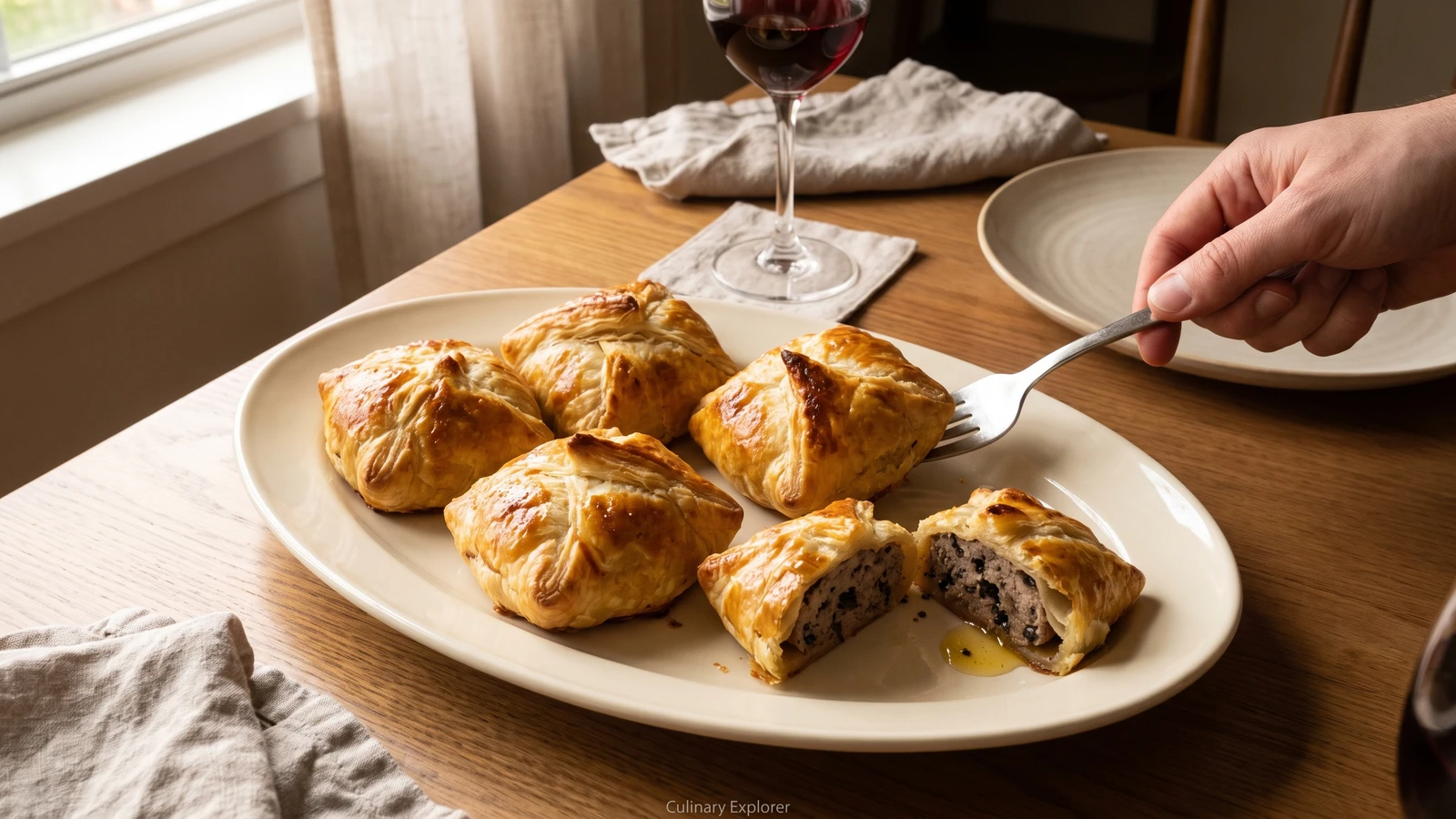
Truffled pork crépinettes, sealed in all-butter pâte feuilletée and baked until deeply gilded, preserve the hearth’s clever idea: hold every juice close, let the pastry bronze, and serve them generously.
Crépinettes à la Cendrillon (truffled caul-wrapped pork parcels baked in pastry) teaches one true thing: the seal is the cooking method. Keep that seal complete and the pork bastes in its own truffled juices while the pastry turns butter-gold around it. Break it, and those juices escape onto the tray.
The first method assumed double buttered paper, a hearth bed of cinders, and burning embers kept alive above the parcels. The grand-kitchen translation replaced that hearth with individual ovals of paste, prepared by a pastry station and baked by the trayful. At home, cold all-butter pâte feuilletée (puff pastry), one baking sheet, and a thoroughly heated oven preserve the same intent for eight parcels, two per person. There is no saucier’s work to imitate and no sauce to invent. One cook, one stove, one evening.
The cinders, brigade quantities, and folded napkin presentation are scaffolding and can go. The cold, completely sealed pastry envelope is the dish and must stay. If the pastry softens or tears, stop and chill it before patching with a cold scrap. Ça se rattrape. The step that decides everything is the sealing, so make each parcel snug, cold, and without a vent before it meets the oven.
Crépinettes à la Cendrillon belong to the French grande-cuisine repertory rather than the larder of one particular region. Their name links Cendrillon to cendre, ash: the earlier method wrapped the sausages in double buttered paper and buried them beneath cinders topped with live embers, while the pastry version carried the same protected cooking into the grand kitchen. The oval paste was not decoration; it replaced the hearth’s paper envelope, preserving the juices while allowing the exterior to gild.
Quantity
8 Crépinettes Truffées (No. 1410), about 2½ oz (70 g) each
shaped and caul-wrapped, chilled, not grilled
Quantity
18 oz (500 g)
Quantity
1 tablespoon (15 ml / 8 g)
for rolling
Quantity
1
Quantity
1 teaspoon (5 ml / 5 g)
| Ingredient | Quantity |
|---|---|
| raw crépinettes trufféesshaped and caul-wrapped, chilled, not grilled | 8 Crépinettes Truffées (No. 1410), about 2½ oz (70 g) each |
| cold all-butter pâte feuilletée | 18 oz (500 g) |
| plain flourfor rolling | 1 tablespoon (15 ml / 8 g) |
| large egg | 1 |
| cold water | 1 teaspoon (5 ml / 5 g) |
Set a rack in the lower-middle position and heat the oven thoroughly to 400°F (200°C). Line a heavy baking sheet with parchment. Keep the crépinettes and pastry in the cold while the oven heats; cold pastry holds its butter in distinct layers, while warm pastry smears and bakes heavy.
Dust the work surface sparingly with the flour. Divide the pâte feuilletée into eight equal pieces and roll each about ⅛ inch (3 mm) thick into an oval roughly 7½ by 5½ inches (19 by 14 cm). Keep the unused pieces covered and cold. If an oval becomes limp or glossy, lay it on the lined sheet and chill it for 10 minutes before continuing.
Set one raw Crépinettes Truffées (No. 1410) across the center of each pastry oval. Brush the pastry ends and one long edge very lightly with cold water, then draw the long sides over the crépinette so they overlap by about ½ inch (1 cm). Press out trapped air without squeezing the meat, seal the overlap, and tuck the ends underneath. Set each parcel seam-side down. If the pastry tears or its butter begins to smear, stop and chill it for 10 minutes, then patch the tear with a thin cold scrap moistened around its edge. Ça se rattrape.
Arrange the parcels at least 2 inches (5 cm) apart and chill them for 20 minutes. Beat the egg with the cold water, then gild the tops, meaning brush them with a thin, even coat of beaten egg. Keep the egg from pooling around the bases. With the back of a small knife, streak each top with four or five shallow curved lines, pressing just enough to mark the surface without piercing it. Do not cut vents; holding the juices inside is the point.
Bake for 20 minutes, rotating the sheet after 15 minutes, until the parcels are well risen, deeply butter-gold, and bronzed along their highest ridges. Check one through its underside seam with an instant-read thermometer; the pork must reach 160°F (71°C). If the pastry colours before the center is ready, lay foil loosely over the sheet and continue in 3-minute intervals. If a seam leaks, leave it undisturbed until the pastry sets, then finish the bake rather than pressing hot pastry back together.
Rest the crépinettes on the baking sheet for 5 minutes so their juices settle and the pastry firms. Transfer them to a warm oval platter and serve two per person while the crust is crisp and the truffled center remains succulent. No sauce underneath, no fussy garnish. À table!
1 serving (about 240g)
Culinary guides, cultural storytelling, and the editorial depth that makes cooking meaningful.
Discover Culinary ExplorerChef Juliette
John Dory has the delicacy of sole and the firmness of turbot. A light flouring, a quick butter sauté, and nut-brown beurre noisette show exactly why looks never mattered.

Chef Juliette
Fresh haddock proves its delicacy in the meunière pan: a fine flour crust, moist pearly flakes, and beurre noisette sharpened with lemon and parsley, ready from one skillet in half an hour.

Chef Juliette
Éperlans à l’Anglaise turns small fish into a lesson in disciplined coating: boned smelts under a close, crisp crumb, pan-fried in clarified butter and finished with bright, half-melted maître d’hôtel butter.

Chef Juliette
Tiny smelts, shallot, mushrooms, white wine, gratin sauce, and fine bread raspings meet a fierce oven, where the fish must turn tender in the same breath the buttered crust bronzes.