
Chef Juliette
John Dory (St. Pierre)
John Dory has the delicacy of sole and the firmness of turbot. A light flouring, a quick butter sauté, and nut-brown beurre noisette show exactly why looks never mattered.
A cooking platform built around craft, culture, and the stories behind what we eat.
Created by Chef Juliette
Based on No. 1407, Boudins Noirs, from Le Guide Culinaire (1907) by Auguste Escoffier
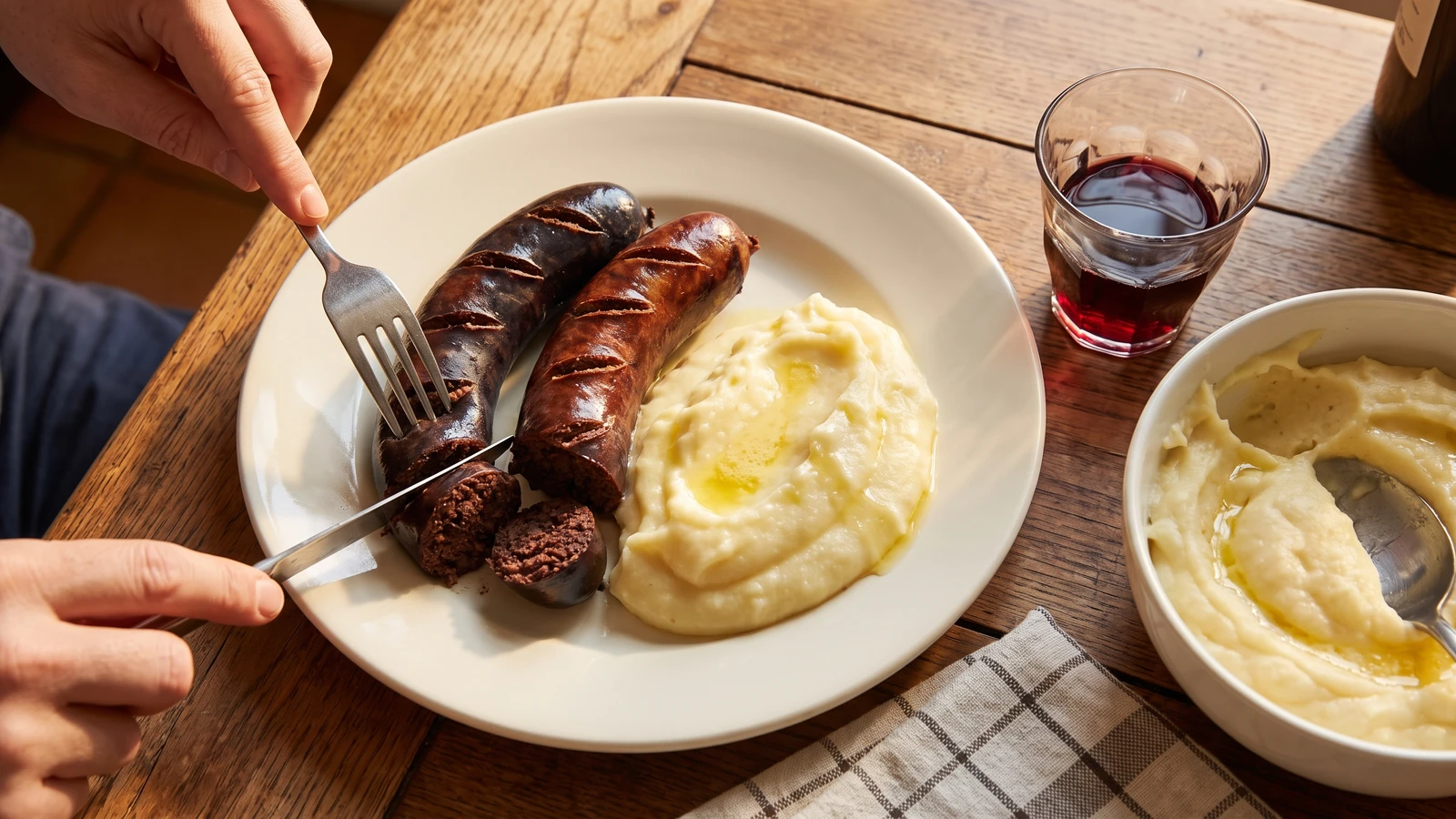
Boudin noir proves charcuterie is a matter of temperature, not mystery: pork blood, fat, cream, and onion held below a simmer, then scored and grilled gently beside silken potato purée.
Boudins noirs (French blood sausages) teach temperature before they teach anything else. The filling must remain cool and loose, the casing must never be packed tight, and the poaching water must hold just below a simmer. An uneven link is charming. A link bullied by boiling water bursts, and all its charm escapes into the pot.
The original entry needed neither a saucier nor stock held on the fire. Its professional scaffolding was the charcutier's bench: slaughter-fresh blood, prepared gut, willow baskets for lowering a large batch, and a live grill. At home, inspected food-grade blood, salted natural casing, a small sausage stuffer, a stainless poaching basket, and a heavy skillet do the same work. The formula is halved for four servings. Only the quantity and handling equipment change; the pale onion, half-melted fat, cream, egg, loose filling, twenty-minute poach, Cisel, and gentle grilling all remain. Those steps are the dish. One cook, one stove, one evening.
Done properly, the casing comes from the skillet dark, taut, and bronzed at its shallow cuts, while the center stays soft and almost custard-like against the potato purée. Before you touch the pan, remember the step that decides everything: hold the poaching water at 203°F (95°C), and prick any link that rises before trapped air can burst it.
Boudin noir belongs to the charcuterie tables of pig-keeping France rather than to a single province; Normandy celebrates the sausages of Mortagne, Paris favors an onion-rich style, and the southwest keeps meatier local forms. Its purpose was practical and immediate: fresh blood from the slaughter was bound with pork fat and seasoning, enclosed in gut, and poached before it could spoil. Classical kitchens brought the craft into the national canon with cream, egg, onion cooked without color, and restrained herbs, but boudin noir remained generous supper food, commonly served with potato purée or apples according to place.
Quantity
4 feet (1.2 m)
Quantity
1½ cups diced (355 ml / 227 g)
cut into ½-inch dice
Quantity
½ cup plus 1 tablespoon (135 ml / 85 g)
finely chopped
Quantity
1 tablespoon (15 ml / 13 g)
Quantity
3 tablespoons plus ½ teaspoon (47 ml / 48 g)
Quantity
1
Quantity
1½ teaspoons (7.5 ml / 9.5 g)
Quantity
⅛ teaspoon (0.6 ml / 0.3 g)
Quantity
¼ teaspoon (1.25 ml / 0.5 g)
Quantity
⅛ teaspoon (0.6 ml / 0.1 g)
finely chopped
Quantity
½ leaf
pulverized to a powder
Quantity
1 cup plus 3 tablespoons (285 ml / about 300 g)
strained and kept cold
Quantity
about 4 cups chunked (950 ml / 680 g)
peeled and cut into 1-inch pieces
Quantity
½ cup (120 ml / 120 g)
Quantity
4 tablespoons (60 ml / 57 g)
Quantity
1 tablespoon (15 ml / 18 g), divided, plus more if needed
| Ingredient | Quantity |
|---|---|
| natural hog casing, 35 to 38 mm | 4 feet (1.2 m) |
| very fresh pork back fatcut into ½-inch dice | 1½ cups diced (355 ml / 227 g) |
| yellow onionfinely chopped | ½ cup plus 1 tablespoon (135 ml / 85 g) |
| rendered pork lard | 1 tablespoon (15 ml / 13 g) |
| heavy cream for the boudins | 3 tablespoons plus ½ teaspoon (47 ml / 48 g) |
| large egg | 1 |
| fine sea salt for the boudins | 1½ teaspoons (7.5 ml / 9.5 g) |
| finely ground black pepper | ⅛ teaspoon (0.6 ml / 0.3 g) |
| quatre-épices | ¼ teaspoon (1.25 ml / 0.5 g) |
| wild thyme leavesfinely chopped | ⅛ teaspoon (0.6 ml / 0.1 g) |
| small dried bay leafpulverized to a powder | ½ leaf |
| very fresh, unsalted food-grade pork bloodstrained and kept cold | 1 cup plus 3 tablespoons (285 ml / about 300 g) |
| floury potatoespeeled and cut into 1-inch pieces | about 4 cups chunked (950 ml / 680 g) |
| heavy cream for the potato purée | ½ cup (120 ml / 120 g) |
| unsalted butter for the potato purée | 4 tablespoons (60 ml / 57 g) |
| fine sea salt for the potato purée | 1 tablespoon (15 ml / 18 g), divided, plus more if needed |
Rinse the salt from the casing, soak it in cool water for 30 minutes, then run cool water through its full length to flush the interior. Keep it submerged while you prepare the filling so it stays supple. Fit a ½-inch stuffing tube to the sausage stuffer, and sanitize a fine sewing needle for testing air pockets later.
Melt the lard in a small skillet over low heat. Add the onion and cook for 12 to 15 minutes, stirring often, until completely soft and translucent but not browned. Color would bring a sweetness the source does not want. If a few edges begin to catch, lower the heat and add a teaspoon of water, scraping the pan clean. Spread the onions on a plate and cool them completely.
Put the diced back fat in a clean skillet over the lowest heat. Warm it for 5 to 7 minutes, turning the dice gently, until their edges become translucent and a little liquid fat gathers in the pan while the centers remain solid. This is half-melted fat, not crisp lardons. Take the pan off the heat and let the fat cool until barely warm but still fluid.
Whisk the cold pork blood in a deep basin until perfectly smooth. Whisk in the cream, egg, salt, pepper, quatre-épices, wild thyme, and powdered bay, then fold in the cooled onions and all the half-melted fat, including the liquid in its pan. Mix until evenly distributed without beating in air. Fry a teaspoonful in a small pan until cooked through and taste it; the measured salt is correct for unsalted blood, but this test catches commercially salted blood before six sausages inherit the mistake.
Slide the casing onto the stuffing tube, leaving a few inches free at the end, and tie that end securely with kitchen twine. Fill slowly and only to about four-fifths of the casing's capacity. The mixture swells while poaching, so the casing should bend easily beneath your fingers and never feel drum-tight. Tie the filled casing into about six links, each 4 to 5 inches long; use twine rather than hard twisting because the filling is fluid. Work visible air toward a tied end, but do not pepper the casing with unnecessary holes.
Arrange the boudins in a stainless poaching basket in one loose layer. Bring a wide pot of water to a boil, lower in the basket, and immediately reduce the heat until the water holds at 203°F (95°C). Poach for 20 minutes, maintaining that temperature without a rolling boil. If a link rises, trapped air is lifting it; pierce the highest point once with the sanitized needle and gently submerge it again. If a casing splits, lift the sausage into doubled cheesecloth, tie it snugly, and return it to the basket to finish. The shape will be less handsome, but the supper is safe. Ça se rattrape. Check one link through its tied end with an instant-read thermometer; it should reach 160°F (71°C). If needed, poach for another 3 to 5 minutes.
Lift out the basket and transfer the boudins carefully to a rack or clean towel. Let them drain and settle for 10 to 15 minutes, then dry the casings thoroughly. Grill them while still warm, or cool and refrigerate them within two hours if they are being made ahead. Do not drop them into iced water; the sudden contraction can split the tender casing.
While the boudins poach, put the potatoes in a saucepan, cover with cold water, and add 2 teaspoons of the measured salt. Bring slowly to a simmer and cook for 18 to 22 minutes, until a knife passes through without resistance. Drain well, return them to the dry pan over low heat for one minute, then press them through a ricer. Warm the cream and butter together, reserving 2 tablespoons of the cream, and fold them into the potatoes with the remaining teaspoon of salt. If the purée tightens while waiting, loosen it with the reserved warm cream. Stir only enough to smooth it; hard beating makes potatoes gluey.
Cisel the boudins, making three or four shallow diagonal cuts through the casing on both sides without cutting deeply into the filling. If the links were chilled, warm them uncut in 170°F (77°C) water for 8 minutes, then dry and cisel them. Set a dry, well-seasoned cast-iron skillet over medium-low heat and add the sausages when the pan is warm, never smoking. Grill gently for 3 to 4 minutes per side, turning only when the casing releases, until the surface is bronzed and the cuts open slightly. The sausages will provide their own fat. If a cut widens, lower the heat and turn that side upward; never press the link.
Spoon the potato purée onto warm plates and settle the boudins beside it, allowing one or two links per person according to appetite. Spoon a little of the fragrant pork fat left in the skillet over the purée. The dark, tender sausage and ivory potatoes need no decorative fuss. À table!
1 serving (about 390g)
Culinary guides, cultural storytelling, and the editorial depth that makes cooking meaningful.
Discover Culinary ExplorerChef Juliette
John Dory has the delicacy of sole and the firmness of turbot. A light flouring, a quick butter sauté, and nut-brown beurre noisette show exactly why looks never mattered.

Chef Juliette
Fresh haddock proves its delicacy in the meunière pan: a fine flour crust, moist pearly flakes, and beurre noisette sharpened with lemon and parsley, ready from one skillet in half an hour.

Chef Juliette
Éperlans à l’Anglaise turns small fish into a lesson in disciplined coating: boned smelts under a close, crisp crumb, pan-fried in clarified butter and finished with bright, half-melted maître d’hôtel butter.

Chef Juliette
Tiny smelts, shallot, mushrooms, white wine, gratin sauce, and fine bread raspings meet a fierce oven, where the fish must turn tender in the same breath the buttered crust bronzes.