
Chef Juliette
John Dory (St. Pierre)
John Dory has the delicacy of sole and the firmness of turbot. A light flouring, a quick butter sauté, and nut-brown beurre noisette show exactly why looks never mattered.
A cooking platform built around craft, culture, and the stories behind what we eat.
Created by Chef Juliette
Based on No. 1383, Fresh Leg of Pork, from Le Guide Culinaire (1907) by Auguste Escoffier
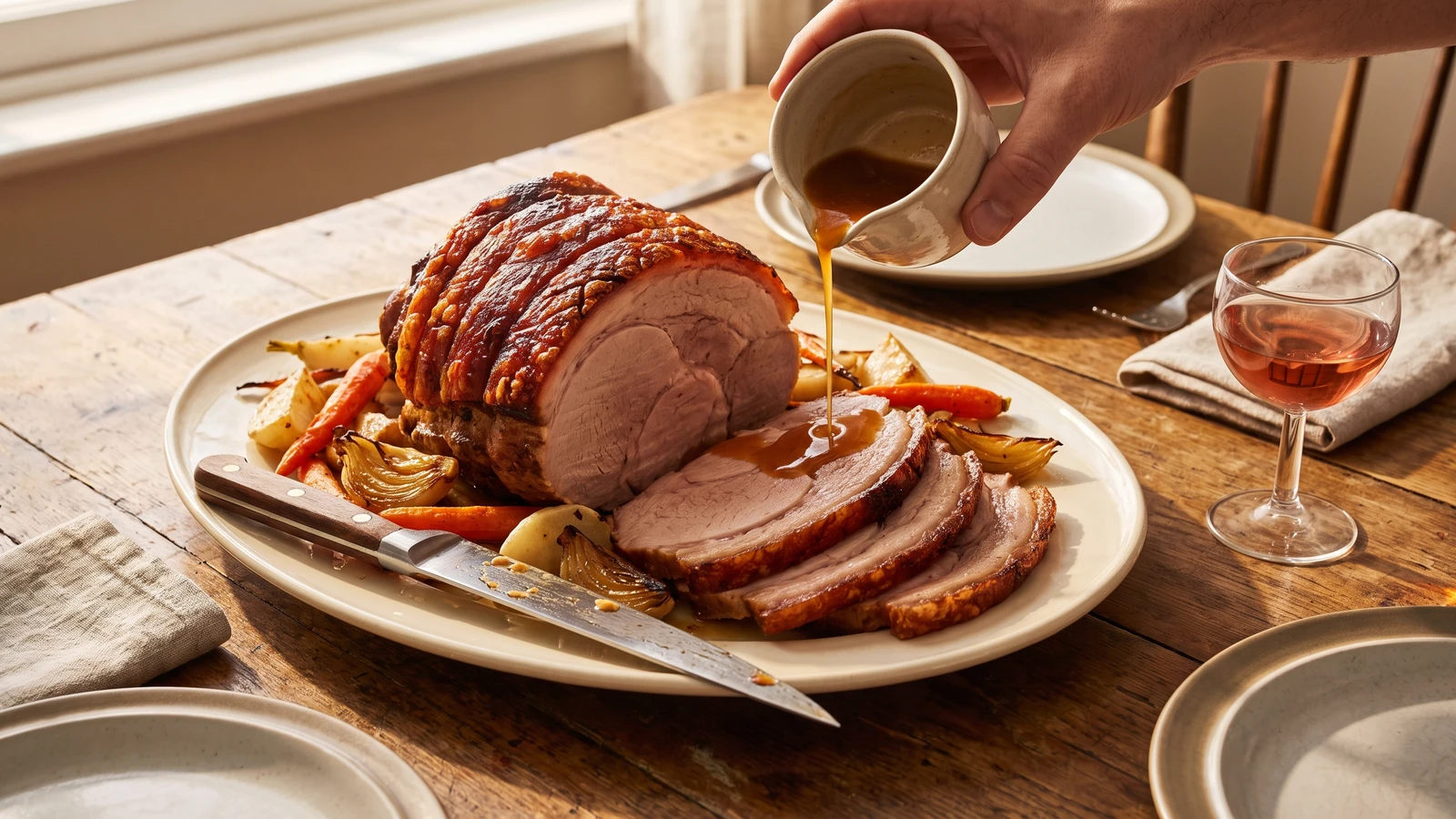
Jambon frais rôti teaches the quiet discipline of the roast: fierce heat for bronze, gentle heat for an even center, then a proper rest before carving into juicy slices.
Jambon frais rôti (fresh leg of pork) teaches the quiet discipline of roasting a large, lean joint: brown it decisively, then lower the heat and wait for the center. The one true thing is that color and doneness happen on different clocks. Trying to win both with one fierce oven gives you a dark outside and stubbornly underdone meat within.
The classical kitchen surrounding the old entry assumed a whole leg, a rôtisseur, the roast cook, tending the oven, stock never off the fire, and a saucier ready for the pan. Your honest equivalent is a 3-pound center-cut boneless joint, an instant-read thermometer, one roasting pan, and good stock. A salamander belongs to the brigade's scaffolding and can go; the fierce opening heat of your oven supplies the bronze. Scaling down the joint changes the portion and shortens the cooking, but the hot beginning, gentle finish, proper rest, and reduction from the fond must stay. One cook, one stove, one evening.
At the table, the jambon frais rôti should wear a deep bronze fat cap, give clean rosy-beige slices rather than raw pink ones, and send a glossy jus through carrots, turnips, and onions. The deciding step is the thermometer: take the center to 154°F (68°C), then rest it for 25 minutes so carryover heat finishes the joint gently.
Jambon frais rôti belongs not to one province but to the French bourgeois family table, where the uncured hind leg of the pig was served as a relevé, a substantial joint, with vegetables, purées, or pastes chosen to suit the meal. Within the classical canon, fresh pork relevés remained generous domestic food and were always presented as roasts rather than formal braises. The common English reading as ham is misleading: jambon frais here means fresh, uncured leg, with neither brine nor smoke.
Quantity
1 roast, about 3 pounds 2 ounces (1.4 kg)
rind removed, fat cap left on and tied
Quantity
1 tablespoon (15 ml / 18 g)
divided
Quantity
1 teaspoon (5 ml / 2 g)
Quantity
1 tablespoon (15 ml / 14 g)
Quantity
2 large (about 3 cups / 450 g)
cut into thick wedges
Quantity
4 medium (about 2 cups / 300 g)
peeled and cut into thick batons
Quantity
2 medium (about 1½ cups / 250 g)
peeled and cut into wedges
Quantity
6 cloves
unpeeled and lightly crushed
Quantity
6 sprigs
Quantity
1
Quantity
3 tablespoons (45 ml / 42 g)
divided
Quantity
½ cup (120 ml / 120 g)
Quantity
1½ cups (360 ml / 360 g)
| Ingredient | Quantity |
|---|---|
| boneless center-cut fresh pork leg roastrind removed, fat cap left on and tied | 1 roast, about 3 pounds 2 ounces (1.4 kg) |
| fine sea saltdivided | 1 tablespoon (15 ml / 18 g) |
| freshly ground black pepper | 1 teaspoon (5 ml / 2 g) |
| neutral oil | 1 tablespoon (15 ml / 14 g) |
| large yellow onionscut into thick wedges | 2 large (about 3 cups / 450 g) |
| medium carrotspeeled and cut into thick batons | 4 medium (about 2 cups / 300 g) |
| medium turnipspeeled and cut into wedges | 2 medium (about 1½ cups / 250 g) |
| garlicunpeeled and lightly crushed | 6 cloves |
| thyme | 6 sprigs |
| bay leaf | 1 |
| unsalted butterdivided | 3 tablespoons (45 ml / 42 g) |
| dry white wine | ½ cup (120 ml / 120 g) |
| good unsalted chicken or light pork stock | 1½ cups (360 ml / 360 g) |
Set a rack in the lower middle of the oven and heat it to 450°F (230°C). Let the pork stand out of the cold for 30 minutes while the oven heats. Pat it completely dry, then score the fat in a shallow crosshatch without cutting into the meat. Rub it with the oil, 2 teaspoons of the salt, and all the pepper. Dry fat bronzes; wet fat merely softens.
Set the pork fat-side up in a heavy roasting pan and roast for 20 minutes. The fat should begin to blister and turn a firm golden bronze. This opening heat replaces the salamander and builds the color now, before the center has time to overcook.
Lower the oven to 325°F (160°C). Toss the onions, carrots, turnips, garlic, thyme, and bay with 2 tablespoons of melted butter and the remaining teaspoon of salt, then arrange them around the pork in a single generous layer. Roast on, turning the vegetables after 40 minutes. If the fond on the pan floor turns from bronze toward black, add 2 tablespoons of the stock and scrape lightly. A small splash saves the fond; a flood would make the vegetables boil.
Begin checking the center after 70 minutes at the lower temperature, inserting the thermometer from the side into the thickest part and avoiding pockets of fat. Continue until it reads 154°F (68°C), usually 1 hour 45 minutes to 2 hours of total roasting. The exterior cannot tell you whether a leg is done. If it darkens too early, cover the fat loosely with foil and keep the heat gentle; if the center is still cool, give it time rather than another blast of heat.
Transfer the pork to a carving board and tent it loosely with foil for 25 minutes. Move the vegetables to a warm serving platter and cover them lightly. The pork should rise to about 158°F (70°C) as it rests, cooking through while its juices settle. If you carve too soon and juices flood the board, catch every drop for the sauce and stop cutting until the joint has rested. Ça se rattrape.
Pour off the clear fat from the roasting pan, leaving the dark fond and any meat juices behind. Set the pan over medium heat, or scrape everything into a saucepan if the roasting pan is not flame-safe. Add the wine and scrape until the fond dissolves, then boil until reduced by half. Add the stock and simmer until the jus is glossy, concentrated, and reduced to about ¾ cup (180 ml), 8 to 12 minutes. Take it off the heat and monter au beurre, finish with cold butter, by whisking in the final tablespoon a little at a time. If the jus turns oily, the pan is too hot; whisk in a teaspoon of cold stock off the heat, then continue with the butter. Ça se rattrape.
Remove the string and carve the jambon frais rôti across the grain into slices about ¼ inch (6 mm) thick. Arrange the slices beside the roasted vegetables, spoon over enough jus to make them gleam, and send the rest to the table in a warm sauceboat. À table!
1 serving (about 500g)
Culinary guides, cultural storytelling, and the editorial depth that makes cooking meaningful.
Discover Culinary ExplorerChef Juliette
John Dory has the delicacy of sole and the firmness of turbot. A light flouring, a quick butter sauté, and nut-brown beurre noisette show exactly why looks never mattered.

Chef Juliette
Fresh haddock proves its delicacy in the meunière pan: a fine flour crust, moist pearly flakes, and beurre noisette sharpened with lemon and parsley, ready from one skillet in half an hour.

Chef Juliette
Éperlans à l’Anglaise turns small fish into a lesson in disciplined coating: boned smelts under a close, crisp crumb, pan-fried in clarified butter and finished with bright, half-melted maître d’hôtel butter.

Chef Juliette
Tiny smelts, shallot, mushrooms, white wine, gratin sauce, and fine bread raspings meet a fierce oven, where the fish must turn tender in the same breath the buttered crust bronzes.