
Chef Juliette
John Dory (St. Pierre)
John Dory has the delicacy of sole and the firmness of turbot. A light flouring, a quick butter sauté, and nut-brown beurre noisette show exactly why looks never mattered.
A cooking platform built around craft, culture, and the stories behind what we eat.
Created by Chef Juliette
Based on No. 1358, Fillet of Lamb, from Le Guide Culinaire (1907) by Auguste Escoffier
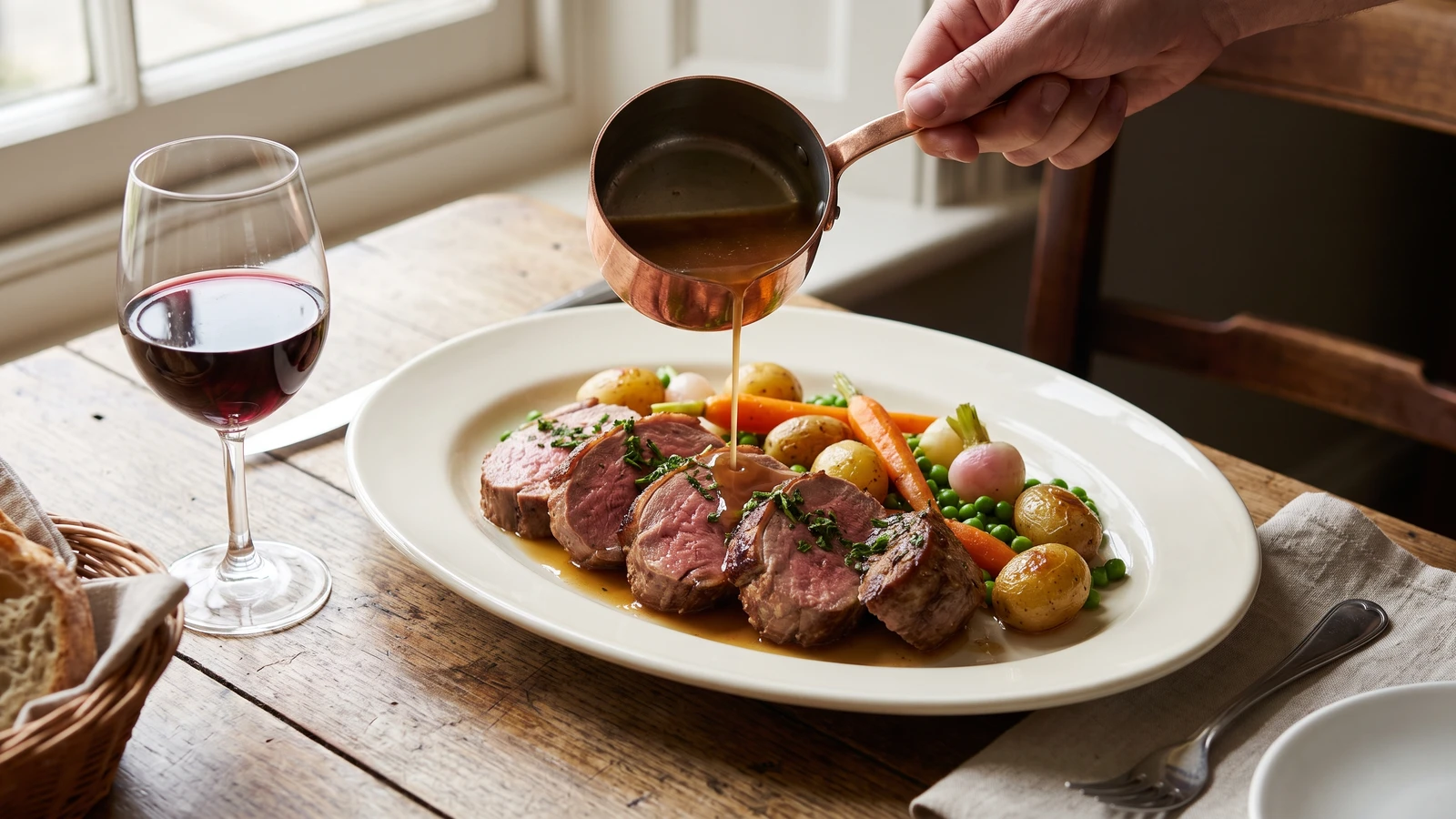
Butter-basted lamb fillet, rosy within and bronzed outside, with new spring vegetables and a clear pan gravy. Filet d’agneau poêlé teaches the quiet heat and steady spooning that protect a tender cut.
Filet d’agneau poêlé teaches one true thing: tenderness needs protection. This lean cut has no patience for fierce heat, so you colour it over a moderate flame, surround it with butter and aromatics, then baste steadily until the centre is pink and the outside wears a deep bronze glaze.
The original entry assumed a large spring-lamb relevé, a stockpot never off the fire, a saucier to turn the meat’s juices into clear gravy, and enough hands to tend each early vegetable separately. A salamander was not doing the work here; the shine came from poêler and the meat’s own juices. At home, two trimmed loin fillets, one ovenproof skillet, a saucepan, and good lamb or veal stock preserve that intent for four. The separate vegetable pans are brigade scaffolding and may go. The butter basting and clear gravy are the dish, and they stay. One cook, one stove, one evening.
The finished lamb should be rosy, juicy, and sliced thickly, with the new vegetables carrying a light butter sheen and the amber gravy pooling beneath. Watch the butter while you baste. If it darkens from hazelnut brown to black, it will turn the whole dish bitter, and that is the moment that matters most.
Filet d’agneau poêlé belongs to the classical French service table rather than to one province, where young lamb appeared as a relevé accompanied by its own jus or a clear, highly seasoned gravy and the first vegetables of spring. From the grand dining room it passed naturally into bourgeois Sunday cooking because its foundation was already domestic: a tender joint, butter, careful heat, and vegetables from the market. Poêler is often mistaken for frying, but in this preparation it means cooking the meat in a covered pan with butter and aromatics while basting it attentively.
Quantity
2 (about 1¼ pounds / 570 g total)
Quantity
2 teaspoons (10 ml / 12 g), plus more for the potato water
divided
Quantity
½ teaspoon (2.5 ml / 1 g)
divided
Quantity
6 tablespoons (90 ml / 85 g)
divided
Quantity
1 (about 40 g)
thinly sliced
Quantity
2 cloves
lightly crushed
Quantity
6 sprigs
Quantity
1½ cups (360 ml / 360 g)
divided
Quantity
1 teaspoon (5 ml / 3 g)
divided
Quantity
12 (about 12 ounces / 340 g total)
scrubbed and halved if necessary
Quantity
8 (about 8 ounces / 225 g total)
trimmed and scraped
Quantity
8 (about 8 ounces / 225 g total)
trimmed and peeled
Quantity
1 cup (240 ml / 145 g)
Quantity
2 tablespoons (30 ml / 5 g)
chopped
| Ingredient | Quantity |
|---|---|
| trimmed lamb loin fillets or backstraps | 2 (about 1¼ pounds / 570 g total) |
| fine sea saltdivided | 2 teaspoons (10 ml / 12 g), plus more for the potato water |
| freshly ground black pepperdivided | ½ teaspoon (2.5 ml / 1 g) |
| unsalted butterdivided | 6 tablespoons (90 ml / 85 g) |
| large shallotthinly sliced | 1 (about 40 g) |
| garliclightly crushed | 2 cloves |
| fresh thyme | 6 sprigs |
| unsalted lamb or veal stockdivided | 1½ cups (360 ml / 360 g) |
| arrowrootdivided | 1 teaspoon (5 ml / 3 g) |
| small new potatoesscrubbed and halved if necessary | 12 (about 12 ounces / 340 g total) |
| slender young carrotstrimmed and scraped | 8 (about 8 ounces / 225 g total) |
| baby turnipstrimmed and peeled | 8 (about 8 ounces / 225 g total) |
| fresh or frozen peas | 1 cup (240 ml / 145 g) |
| fresh chervilchopped | 2 tablespoons (30 ml / 5 g) |
Take the lamb from the cold about twenty minutes before cooking. Trim away any silver skin, then tie each fillet at intervals if its thickness varies sharply; an even shape cooks evenly. Pat the surfaces completely dry and season with half the salt and pepper. Heat the oven to 375°F (190°C) with a rack in the centre.
Put the new potatoes in a saucepan, cover them with cold salted water, and bring to a gentle boil. Cook until a knife meets only slight resistance, 10 to 14 minutes, then drain. In the same saucepan, melt 2 tablespoons of the butter over medium-low heat. Add the carrots, turnips, ½ cup of the stock, and a pinch of salt. Cover and simmer for 8 to 10 minutes, adding the peas for the final 2 minutes. Uncover and let the liquor reduce until it leaves a light glaze. If the pan dries before the roots are tender, add water a spoonful at a time. Fold in the potatoes and set the covered pan off the heat.
Set a 12-inch ovenproof skillet over medium heat and melt 3 tablespoons of the butter. When the foam subsides, lay in the lamb and colour it patiently, about 1½ minutes on each broad side and briefly along the edges. Add the shallot, garlic, and thyme, spoon the butter over the meat, then cover the skillet and place it in the oven. Roast for 6 to 10 minutes, uncovering every 2 to 3 minutes to baste, until a thermometer inserted through one end into the centre reads 140°F (60°C). Keep the butter hazelnut brown, never black. If it burns, lift out the lamb immediately, wipe the skillet clean, and continue with fresh butter. Ça se rattrape.
Transfer the lamb to a warm plate and cover it loosely. Rest for 8 to 10 minutes while you make the gravy. The centre should rise to 145°F (63°C) and remain there for at least 3 minutes. If it stalls below that temperature, return the fillets to a 300°F (150°C) oven for 1 minute at a time, then rest them again. Save every juice that gathers on the plate.
Pour excess fat from the skillet, leaving about 1 tablespoon and all the browned fond. Reserve 1 tablespoon of the remaining cold stock, then pour the rest into the skillet. Bring it to a lively simmer, scraping the pan clean, and reduce for 5 to 7 minutes until the flavour is concentrated and about ⅔ cup remains. Mix ¾ teaspoon of the arrowroot with the reserved cold stock, whisk it into the reduction, and bring it only to the first lazy bubble. Strain through a fine sieve, press lightly on the shallot, then add the lamb’s resting juices and season firmly. If the gravy is too thick, loosen it with hot water by the spoonful. If it remains thin, mix the reserved ¼ teaspoon arrowroot with a teaspoon of cold water and whisk it in. Ça se rattrape: the finished gravy should cling in a clear, glossy film, not sit like paste.
Return the vegetables to medium-low heat. Add the final tablespoon of butter, most of the chervil, and the remaining pepper, then turn everything gently until hot and evenly glazed. Taste for salt. The vegetables should remain distinct and bright, with just enough butter to shine; they are the lamb’s spring garnish, not a stew beneath it.
Remove the strings and slice the lamb across the grain into pieces about ½ inch (1.25 cm) thick. Arrange them slightly overlapping on a warm oval platter, keeping the rosy cut faces visible. Spoon a little clear gravy beneath and over the lamb, set the new vegetables generously around it, and scatter over the remaining chervil. Bring the rest of the gravy to the table separately. À table!
1 serving (about 420g)
Culinary guides, cultural storytelling, and the editorial depth that makes cooking meaningful.
Discover Culinary ExplorerChef Juliette
John Dory has the delicacy of sole and the firmness of turbot. A light flouring, a quick butter sauté, and nut-brown beurre noisette show exactly why looks never mattered.

Chef Juliette
Fresh haddock proves its delicacy in the meunière pan: a fine flour crust, moist pearly flakes, and beurre noisette sharpened with lemon and parsley, ready from one skillet in half an hour.

Chef Juliette
Éperlans à l’Anglaise turns small fish into a lesson in disciplined coating: boned smelts under a close, crisp crumb, pan-fried in clarified butter and finished with bright, half-melted maître d’hôtel butter.

Chef Juliette
Tiny smelts, shallot, mushrooms, white wine, gratin sauce, and fine bread raspings meet a fierce oven, where the fish must turn tender in the same breath the buttered crust bronzes.