Chef Juliette
Bouillabaisse à la Marseillaise
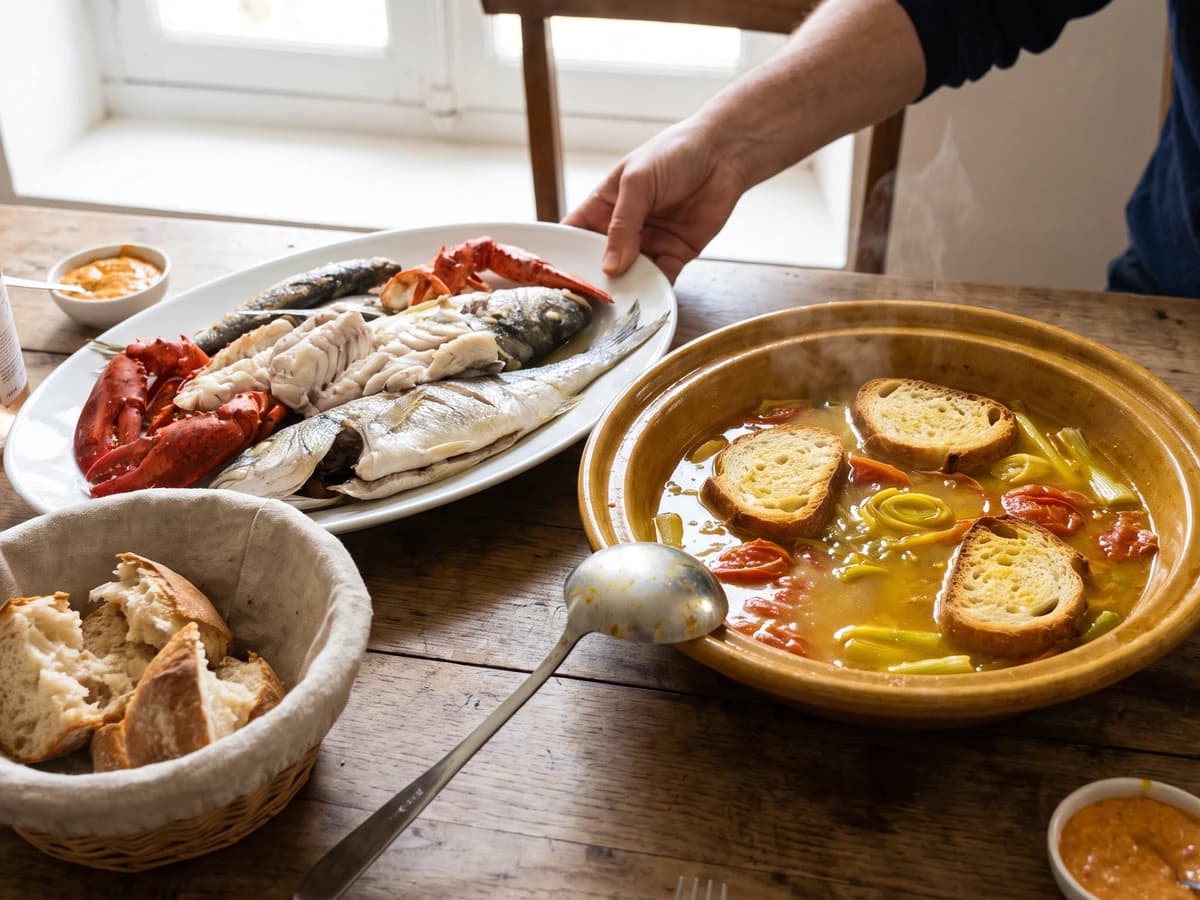
Marseille's great fish stew, saffron-gold and garlic-scented, proves that a hard boil can be the careful choice: it binds olive oil into broth before the whole pot meets bread.
A cooking platform built around craft, culture, and the stories behind what we eat.
Created by Chef Juliette
Based on No. 1353, Navarin Printanier, from Le Guide Culinaire (1907) by Auguste Escoffier
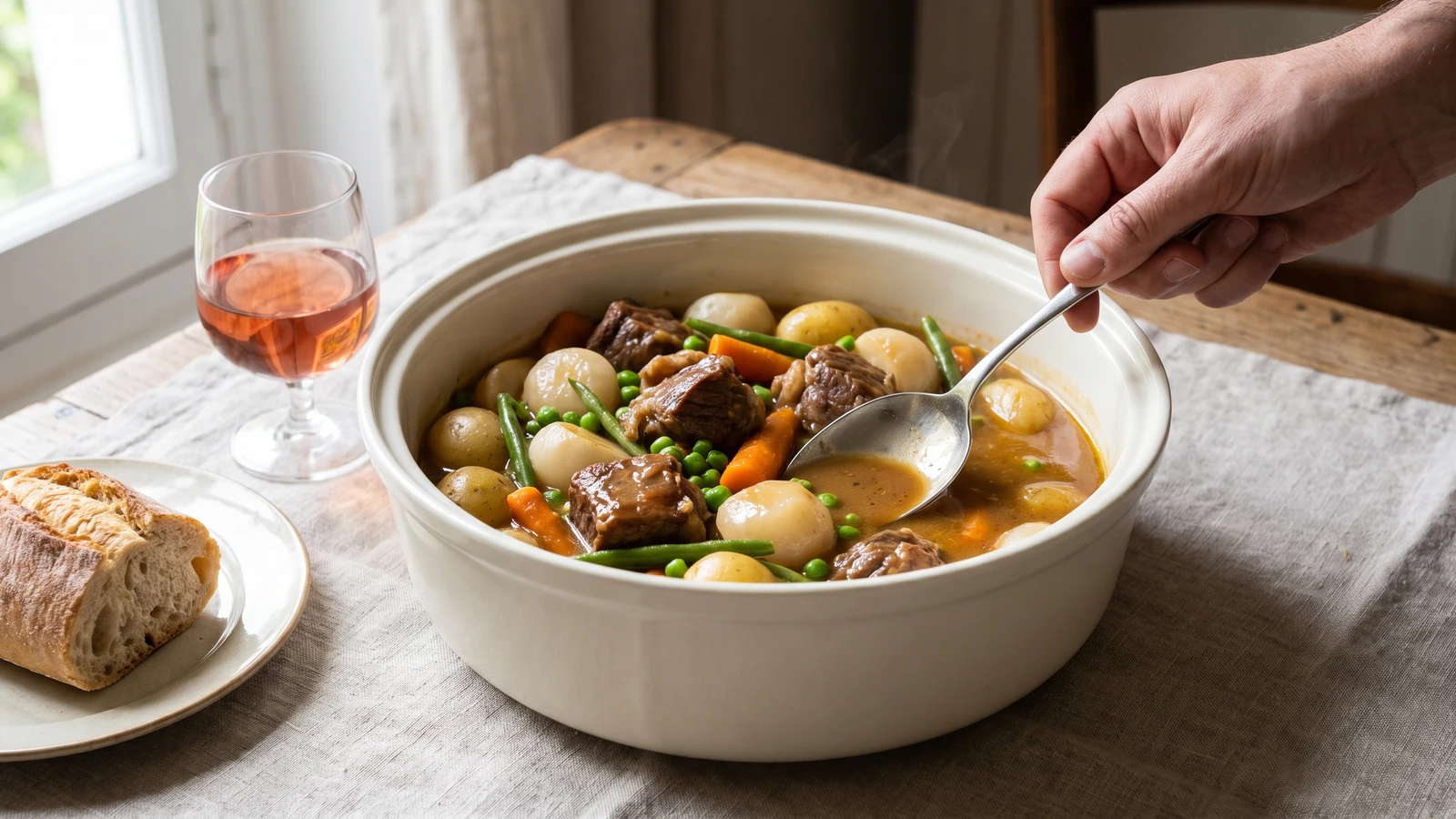
Mutton, spring vegetables, and a pinch of sugar teach the architecture of navarin: brown deeply, let caramel colour the flour-bound sauce, then braise slowly until meat and garden meet in one glossy pot.
Navarin printanier (spring mutton stew) teaches one precise truth: the pinch of sugar is there for colour, not sweetness. As the mutton fries, that sugar settles into the fond, the browned glaze on the pot, and becomes caramel. Stock dissolves it into the sauce, giving the navarin its burnished depth without wine or a dark mother sauce.
The grand-kitchen formula assumed four pounds of meat, a saucier tending two pans, and a stockpot never off the fire. This version keeps the proportions but halves the brigade quantity for four servings, uses good unsalted stock, and reuses one wide cocotte after the sauce is strained. The second saucepan was scaffolding and can go. The brisk browning, caramel, flour, strained sauce, and two-stage braise are the dish, so every one stays. One cook, one stove, one evening.
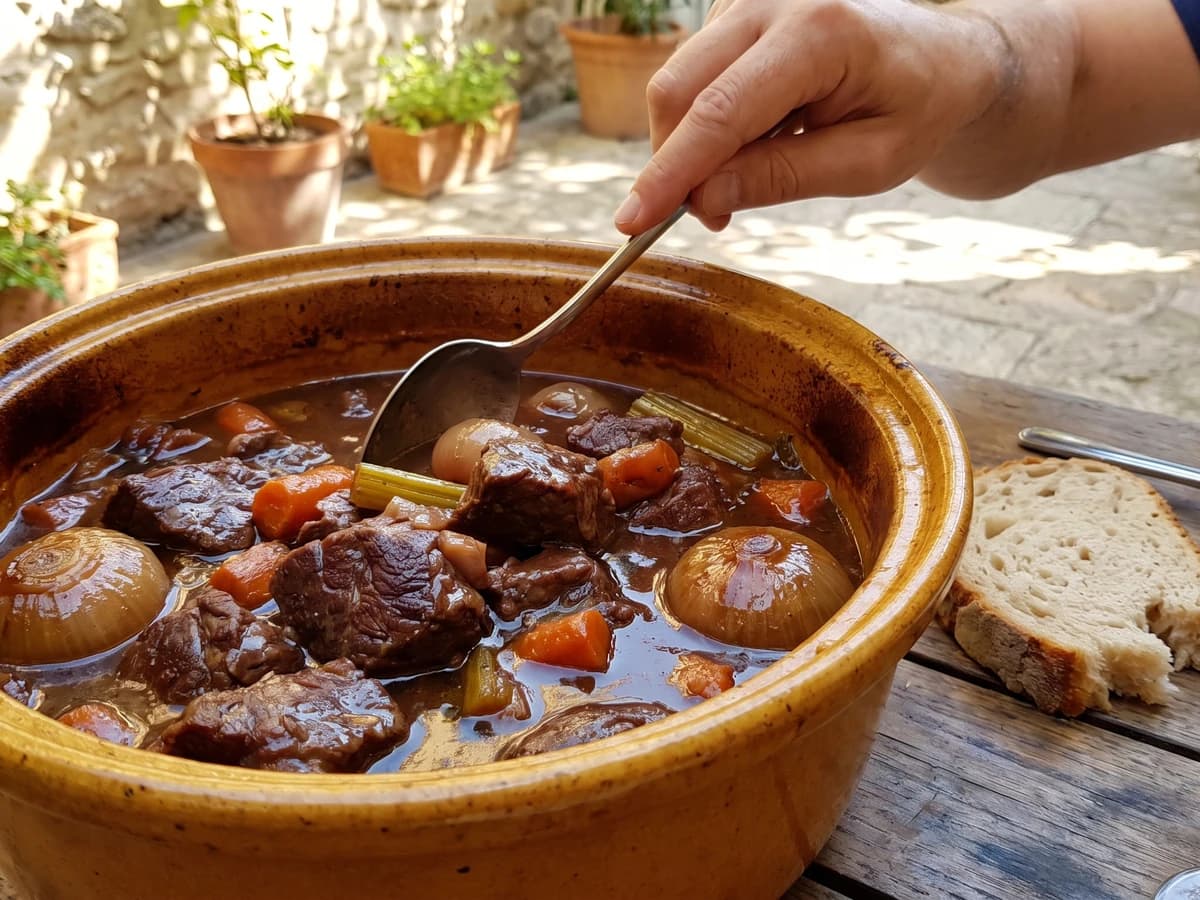
The finished navarin should be generous and bright: fork-tender mutton beneath a glossy tawny sauce, with ivory turnips, orange carrots, new potatoes, peas, and haricots verts holding their shapes. The one step that decides it comes before the stock ever enters the pot. Take the caramel to amber-brown, never black.
Navarin belongs to the Parisian bourgeois table and the national classical repertoire, where a mutton ragout became printanier through its garnish of new spring vegetables. Its name remains disputed: one account connects it to the naval victory at Navarino, while another hears navet, the turnip that gives the stew its backbone. Grand kitchens formalized the turned vegetables and strained sauce, but the dish returned naturally to home tables as a generous spring pot.
Quantity
2 lb (910 g)
cut into roughly 2½ oz (70 g) pieces
Quantity
¼ cup (60 ml / 57 g)
Quantity
¾ teaspoon (3.75 ml / 4.5 g)
Quantity
scant ⅛ teaspoon (0.6 ml / 0.3 g)
Quantity
scant ⅛ teaspoon (0.6 ml / 0.5 g)
Quantity
2 tablespoons plus 2 teaspoons (40 ml / 21 g)
Quantity
3 cups (710 ml / 710 g)
Quantity
generous ¾ cup (180 ml / 150 g)
concassed (roughly chopped)
Quantity
½ large clove
crushed
Quantity
1 small bouquet garni
Quantity
10 (about 8 oz / 225 g)
peeled
Quantity
5 (about 8 oz / 225 g)
trimmed into 10 even pieces
Quantity
5 (about 10 oz / 285 g)
trimmed into 10 long olive shapes
Quantity
1 tablespoon (15 ml / 14 g)
Quantity
10 (about 1 lb / 450 g)
scrubbed and left whole or halved if necessary
Quantity
3 tablespoons (45 ml / 30 g)
Quantity
3 tablespoons (45 ml / 30 g)
cut into lozenges
| Ingredient | Quantity |
|---|---|
| mixed mutton breast, neck, and shouldercut into roughly 2½ oz (70 g) pieces | 2 lb (910 g) |
| clarified butter | ¼ cup (60 ml / 57 g) |
| fine sea salt | ¾ teaspoon (3.75 ml / 4.5 g) |
| freshly ground black pepper | scant ⅛ teaspoon (0.6 ml / 0.3 g) |
| granulated sugar | scant ⅛ teaspoon (0.6 ml / 0.5 g) |
| all-purpose flour | 2 tablespoons plus 2 teaspoons (40 ml / 21 g) |
| unsalted lamb or chicken stock | 3 cups (710 ml / 710 g) |
| fresh tomatoesconcassed (roughly chopped) | generous ¾ cup (180 ml / 150 g) |
| garliccrushed | ½ large clove |
| bouquet garni of parsley stems, thyme, and bay leaf | 1 small bouquet garni |
| small new onionspeeled | 10 (about 8 oz / 225 g) |
| slim new carrotstrimmed into 10 even pieces | 5 (about 8 oz / 225 g) |
| small new turnipstrimmed into 10 long olive shapes | 5 (about 10 oz / 285 g) |
| unsalted butter | 1 tablespoon (15 ml / 14 g) |
| small new potatoesscrubbed and left whole or halved if necessary | 10 (about 1 lb / 450 g) |
| shelled fresh peas | 3 tablespoons (45 ml / 30 g) |
| haricots verts (slender French green beans)cut into lozenges | 3 tablespoons (45 ml / 30 g) |
Heat the oven to 325°F (165°C) with a rack in the middle. Pat every piece of mutton thoroughly dry and trim only loose flaps of fat, leaving the connective tissue that will soften during the braise. Keep the pieces close to 2½ oz (70 g) each so the three cuts cook at the same pace.
Heat the clarified butter in a wide cocotte over brisk heat until it shimmers. Add the mutton in one uncrowded layer, season with the salt, pepper, and sugar, then fry firmly, turning the pieces only as each face becomes deep brown. The sugar will settle onto the pot floor and darken from gold to amber-brown while the meat colours, usually in 12 to 15 minutes. If it races toward black, remove the pot from the heat and add the first splash of stock at once. If it already smells bitter, lift out the meat, pour the clear fat into a bowl while leaving the burnt sugar behind, wipe the pot, and begin again with the meat, fat, and a fresh scant pinch. Ça se rattrape.
Spoon off almost all the clarified butter, leaving about 1 tablespoon and every bit of brown fond in the cocotte. Singer, dust the browned meat evenly with the flour, then turn the pieces over medium heat for 2 to 3 minutes so the flour absorbs the remaining fat and loses its raw smell. Do not let the flour scorch against the caramelized pot floor.
Pour in about one-third of the stock while stirring and scraping the pot floor, dissolving the caramel and fond completely. Add the remaining stock in two additions, stirring around the meat until the sauce is smooth, then bring it to a full boil while continuing to stir. Add the concassed tomatoes, crushed garlic, and bouquet garni. Cover the cocotte and braise in the oven for 1 hour; the sauce should tremble gently, not pound against the lid.
While the mutton braises, prepare the spring vegetables. Keep the onions whole, cut the carrots into 10 even trimmed pieces, and shape the turnips into 10 long olives with a small knife. Melt the unsalted butter in a skillet and toss the turnips over medium heat for 4 to 5 minutes, until they are glossy and just beginning to colour. Leave very small potatoes whole and halve larger ones. Keep the peas and cut haricots verts ready.
After the first hour, lift the mutton pieces one by one into a bowl. Strain the sauce through a fine sieve, pressing lightly to recover the liquid without forcing the spent tomato and herbs through, then discard the solids. Wipe the cocotte and return the mutton. Arrange the new onions, carrots, buttered turnips, potatoes, peas, and haricots verts around and over it, then pour the strained sauce across everything. Bring the navarin back to a boil on the stove.
Cover and return the cocotte to the oven for 1 hour. Every 20 minutes, open the lid and baste any vegetables standing above the sauce, then cover promptly. The vegetables cook more slowly in sauce than in boiling water, gaining tenderness by gradual penetration; keep the simmer quiet and give them the full time. At the end, the mutton should yield readily to a fork, the potatoes should be creamy inside, and the turnips should hold their shape.
Lift off any excess surface fat and judge the sauce. It should be glossy and lightly thickened, coating the meat without becoming pasty. If it is thin, transfer the meat and vegetables to a warm bowl and boil the sauce briefly until it gains body; if it is too thick, loosen it with a spoonful of hot stock or water. Taste for salt and pepper, then spoon the navarin into a warmed timbale, a deep serving bowl, with the vegetables visible across the top. Serve very hot. À table!
1 serving (about 600g)
Culinary guides, cultural storytelling, and the editorial depth that makes cooking meaningful.
Discover Culinary ExplorerChef Juliette
Marseille's great fish stew, saffron-gold and garlic-scented, proves that a hard boil can be the careful choice: it binds olive oil into broth before the whole pot meets bread.
Chef Juliette
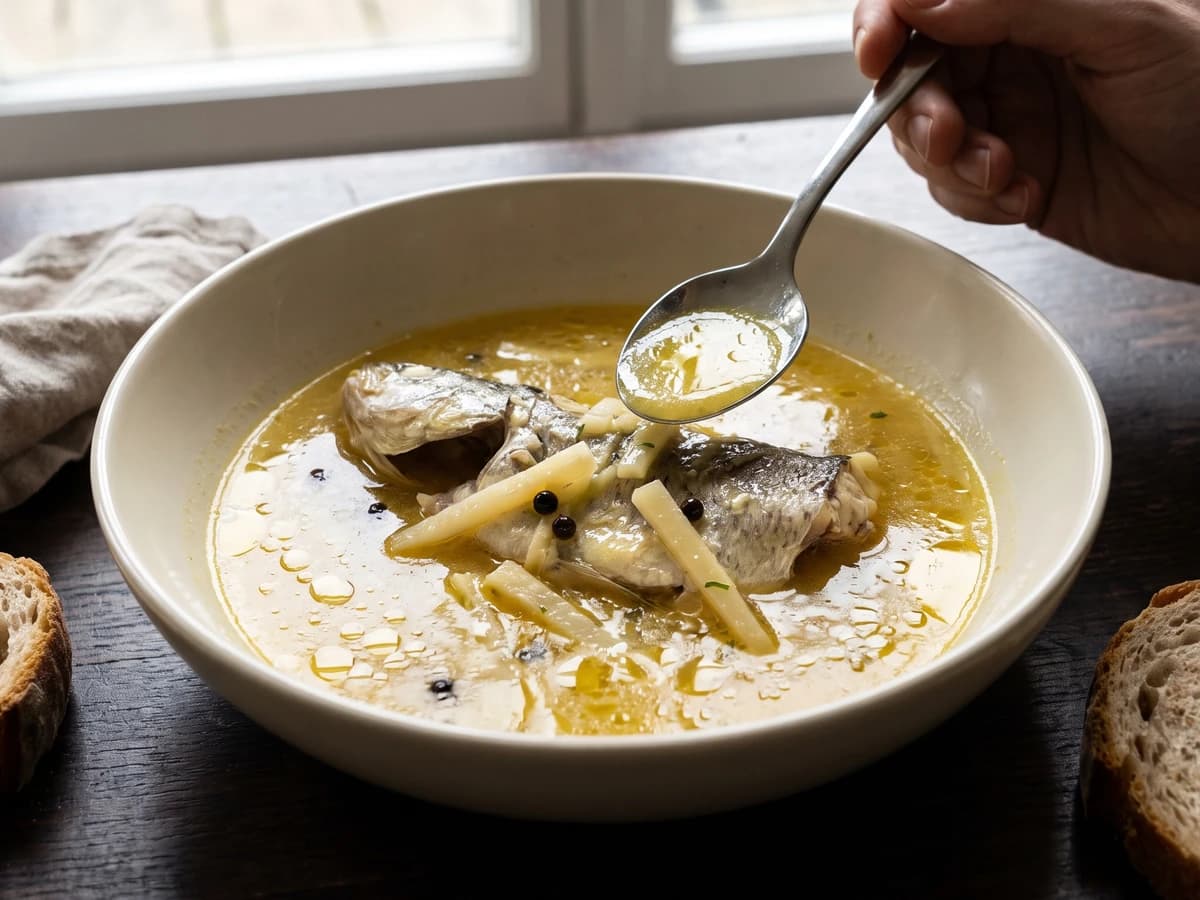
Waterzoi asks fresh, bone-in river fish to thicken its own buttery broth, with parsley root and pepper for company. No flour, no stockpot, just a brisk simmer watched closely.
Chef Juliette
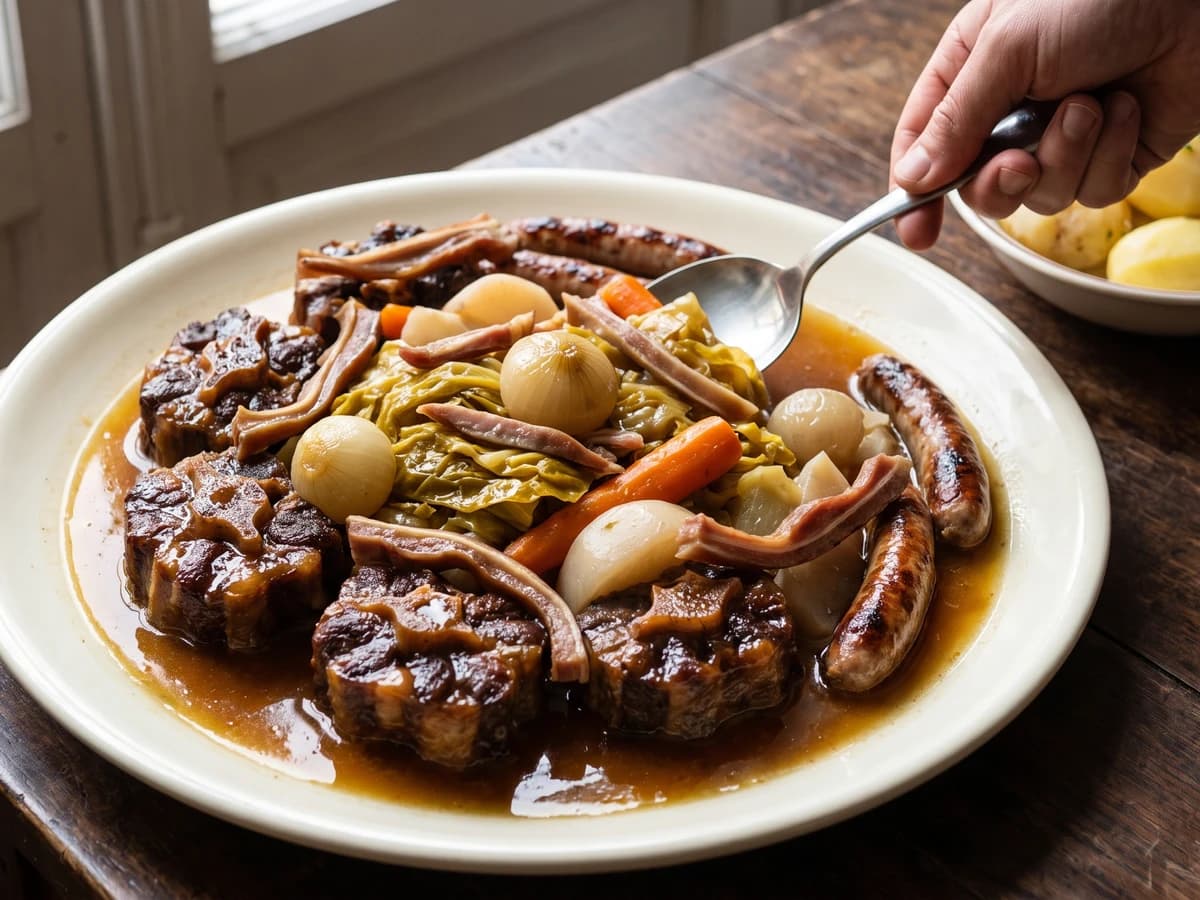
Queue de Bœuf en Hochepot gathers oxtail, pig's trotter and ear, cabbage, roots, and grilled chipolatas around a clear, gelatin-rich broth whose quiet simmer keeps every piece tender and distinct.
Chef Juliette
Beef shoulder larded with bacon, sharpened by red wine and vinegar, then sealed with garlic, vegetables, and dry lemon peel until the low oven turns it yielding and the gravy darkly glossy.