
Chef Juliette
John Dory (St. Pierre)
John Dory has the delicacy of sole and the firmness of turbot. A light flouring, a quick butter sauté, and nut-brown beurre noisette show exactly why looks never mattered.
A cooking platform built around craft, culture, and the stories behind what we eat.
Created by Chef Juliette
Based on No. 1340, Rognons à la Brochette, from Le Guide Culinaire (1907) by Auguste Escoffier
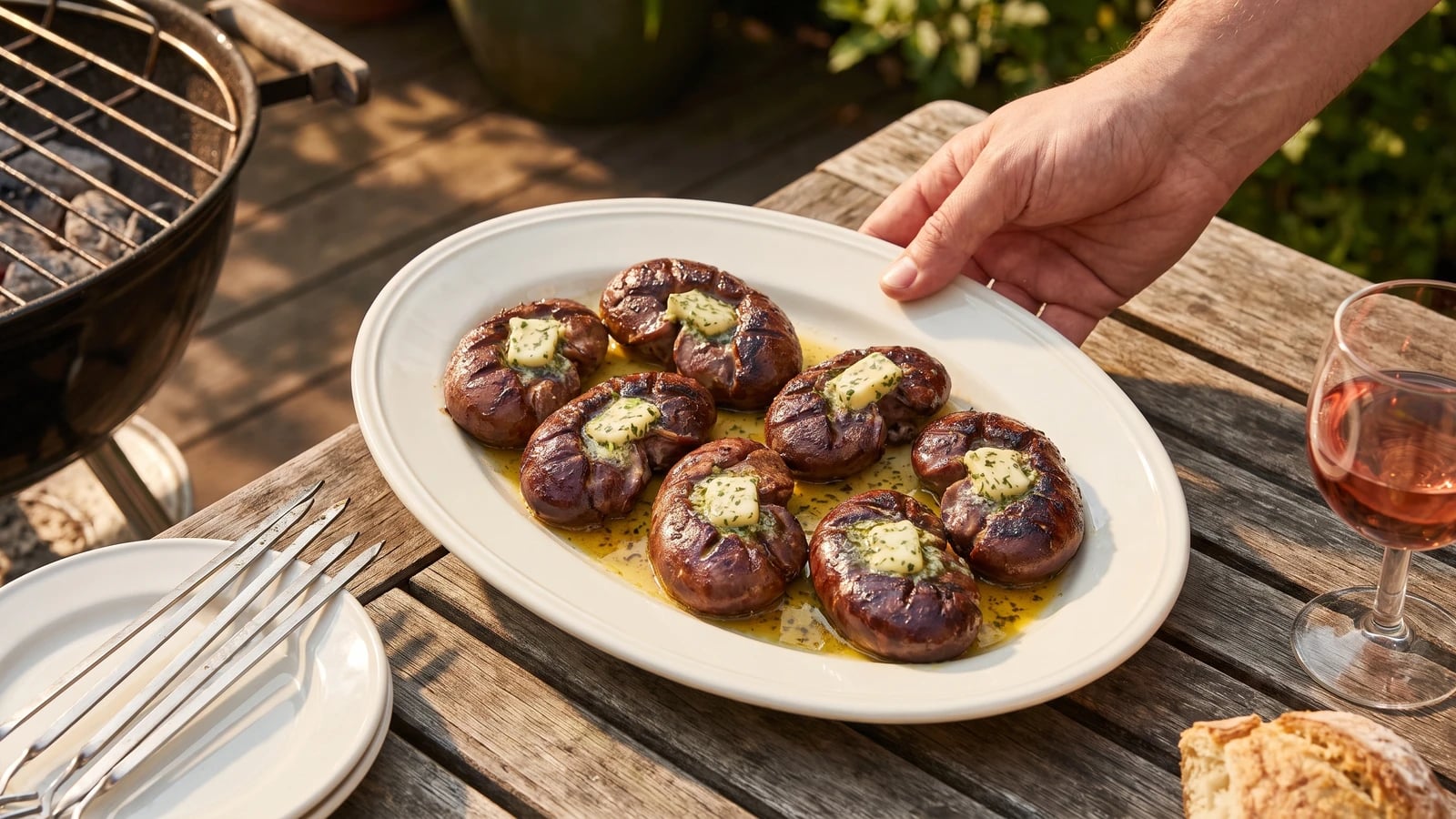
Mutton kidneys split but kept hinged, held flat on skewers, grilled under fierce heat, and finished with a hazelnut of maître d’hôtel butter: quick French cooking with nowhere to hide.
Rognons à la brochette (mutton kidneys split and grilled on skewers) teaches the courage of fierce heat. The one true thing to know is this: kidney must meet that heat dry, flat, and fast. Gentle cooking makes it shed its juices before it browns, then leaves it firm and grey. Fierce cooking gives you bronzed edges, a moist center, and the clean mineral savor that makes kidney worth eating.
The old entry assumed the fierce oven of a grill station, long flat brochettes, and a hot service dish waiting beside the cook. It needed neither a saucier nor a stockpot, and we should not invent either. A fully heated home broiler or concentrated charcoal grill is the honest equivalent, while two kidneys on each skewer turn repeated service orders into four generous portions. The extra hands were scaffolding. Splitting without severing, grilling fiercely, and finishing with maître d’hôtel butter are the dish and must stay. One cook, one stove, one evening.
The butter goes in only after the skewers come out, one hazelnut-sized piece tucked into each cavity so it softens over the browned flesh. Before you touch the heat, dry every kidney thoroughly and pin its two lobes flat; that single preparation decides whether the rognons bronze or boil.
Rognons à la brochette belong to the French grill and bourgeois table rather than to one province, with Parisian kitchens particularly fond of treating kidney as a quick-cooking cut instead of braising meat. The dish traveled from hearth and spit cooking into the classical service repertoire as a minute preparation, split open so fierce heat could reach the center before the exterior toughened. Unlike sauced preparations of veal kidney, this mutton-kidney version is deliberately spare: seasoning, fire, and maître d’hôtel butter.
Quantity
8 (about 1½ pounds / 680 g)
chilled
Quantity
1¼ teaspoons (6 ml / 7 g)
Quantity
¾ teaspoon (4 ml / 1.5 g)
Quantity
3 tablespoons (45 ml / 42 g)
softened and divided into 8 hazelnut-sized pieces
| Ingredient | Quantity |
|---|---|
| mutton kidneyschilled | 8 (about 1½ pounds / 680 g) |
| fine sea salt | 1¼ teaspoons (6 ml / 7 g) |
| freshly ground black pepper | ¾ teaspoon (4 ml / 1.5 g) |
| Maître-d’hôtel buttersoftened and divided into 8 hazelnut-sized pieces | 3 tablespoons (45 ml / 42 g) |
Set an oven rack about 4 inches (10 cm) below the broiler and preheat the broiler, with a wire rack over a rimmed tray beneath it, for a full 10 minutes. For charcoal, build a concentrated bed of fully lit coals and heat the clean grate until it is fiercely hot. Warm the serving platter with very hot water, then dry it thoroughly just before the kidneys are ready.
Peel away the thin outer membrane and trim off loose surface fat. Split each kidney lengthwise through the rounded side, stopping at the final edge so the two halves open like a book but remain joined. Cut a shallow V around the hard white core and ducts on each inner half, removing them without cutting through the hinge. Do not soak the kidneys; fresh kidney needs trimming and drying, not disguise.
Blot the kidneys inside and out until the paper comes away dry. Open each one flat and thread a flat metal skewer across both lobes so they cannot fold closed, placing two kidneys on each skewer with a little space between them. Season both sides with the salt and pepper immediately before cooking. Flatness matters: an open kidney cooks evenly, while one that curls protects its center until the edges have already toughened.
Set the skewers under the broiler with the cut faces toward the heat, or place them cut-side down over the coals. Grill for 2 to 3 minutes, until deeply browned at the ridges, then turn and cook for another 2 to 3 minutes. The thickest lobe should reach 160°F (71°C), feel firm with a little spring, and remain moist within. If the kidneys shed grey liquid instead of bronzing, lift them off, blot them carefully, let the heat recover, and return them closer to the heat. Ça se rattrape. If the surface darkens before the center is ready, lower the broiler tray one position or move the skewers to a slightly cooler part of the grill for the final minute. Once kidney is overcooked, no sauce can turn back the clock.
Withdraw the skewers and arrange the kidneys on the hot platter with their cavities facing upward. Tuck one hazelnut-sized piece of softened Maître-d’hôtel butter into each cavity. Wait only until the butter slumps and begins to gloss the browned flesh, about 30 seconds, then serve at once. The butter is the finish, not a sauce waiting to be built. À table!
1 serving (about 135g)
Culinary guides, cultural storytelling, and the editorial depth that makes cooking meaningful.
Discover Culinary ExplorerChef Juliette
John Dory has the delicacy of sole and the firmness of turbot. A light flouring, a quick butter sauté, and nut-brown beurre noisette show exactly why looks never mattered.

Chef Juliette
Fresh haddock proves its delicacy in the meunière pan: a fine flour crust, moist pearly flakes, and beurre noisette sharpened with lemon and parsley, ready from one skillet in half an hour.

Chef Juliette
Éperlans à l’Anglaise turns small fish into a lesson in disciplined coating: boned smelts under a close, crisp crumb, pan-fried in clarified butter and finished with bright, half-melted maître d’hôtel butter.

Chef Juliette
Tiny smelts, shallot, mushrooms, white wine, gratin sauce, and fine bread raspings meet a fierce oven, where the fish must turn tender in the same breath the buttered crust bronzes.