
Chef Juliette
John Dory (St. Pierre)
John Dory has the delicacy of sole and the firmness of turbot. A light flouring, a quick butter sauté, and nut-brown beurre noisette show exactly why looks never mattered.
A cooking platform built around craft, culture, and the stories behind what we eat.
Created by Chef Juliette
Based on No. 1310, Cold Leg of Mutton, from Le Guide Culinaire (1907) by Auguste Escoffier
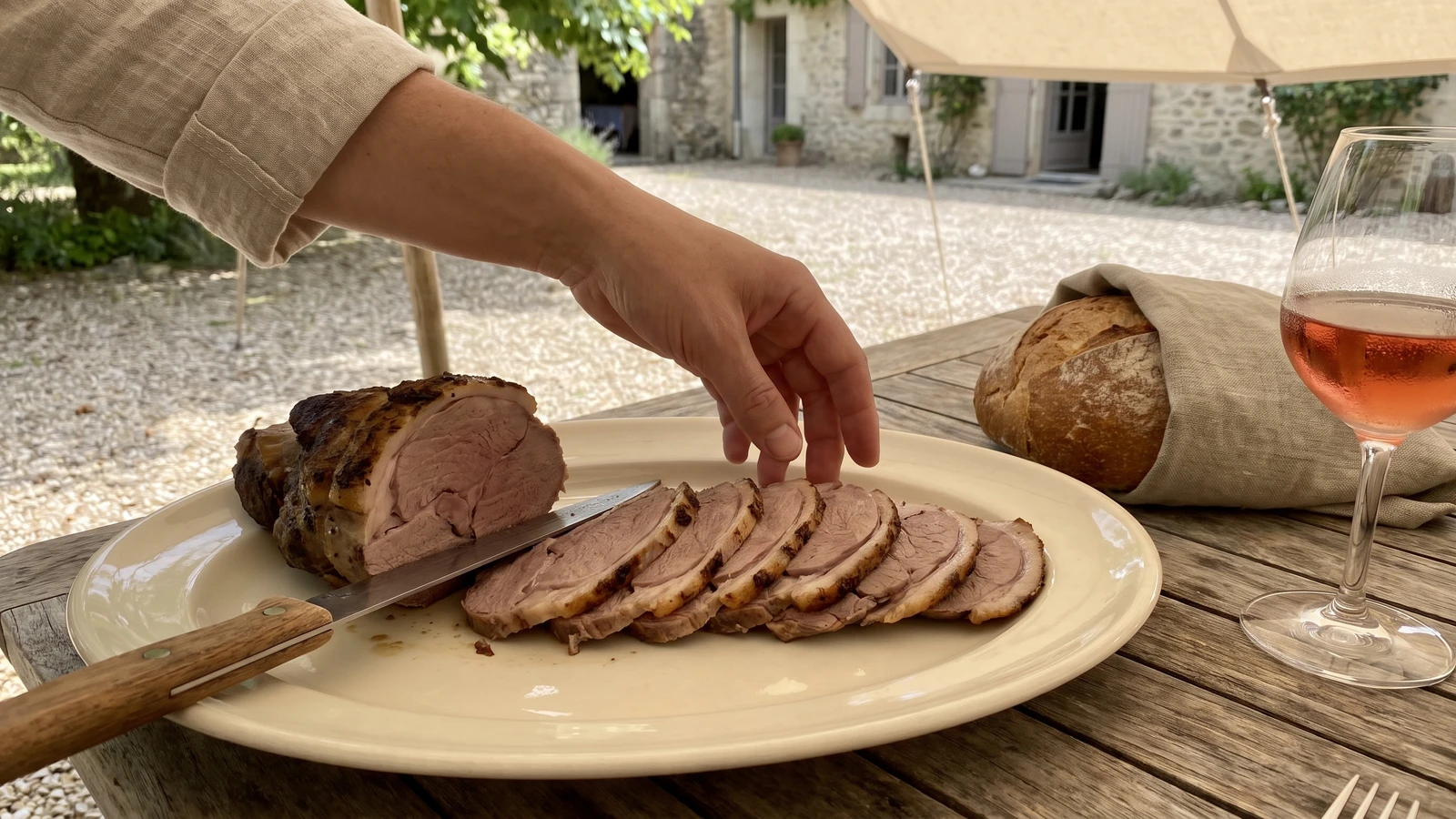
Cold mutton at its most disciplined: a properly chilled leg, carved in fine, even slices and laid plainly on the plate, because good meat and clean carving need neither camouflage nor ceremony.
Gigot de mouton froid (cold leg of mutton) teaches restraint. The one true thing is this: chill the cooked joint intact before you carve it. Cold meat holds its juices, the fat firms, and a sharp knife can make those fine, even slices that turn yesterday's roast into a deliberate lunch rather than a plate of leftovers.
The original entry assumed a large cooked joint waiting in the cool larder and a practiced carver ready to present it. It required no saucier, stockpot, or salamander, because none belongs here. At home, reserve an intact section large enough for four and chill it promptly. The brigade-sized display joint is scaffolding and can go; cold mutton, carving across the grain, and an unadorned platter are the dish itself. One cook, one knife, tomorrow's lunch.
When it is right, each slice shows a fine browned rim around firm, tender meat, and the plain plate makes that workmanship visible. If the knife begins tearing rather than gliding, stop instead of sawing. Ça se rattrape: chill the meat again and sharpen the blade. The step that matters most is still the first one, keep the joint whole and get it thoroughly cold.
Gigot de mouton froid belongs to the French cuisine bourgeoise table, where a substantial cooked joint passed naturally from the family dinner to the next day's déjeuner or picnic. It was not a separate roasting formula but a rule for serving the remaining gigot with discipline: keep it intact, carve it finely, and waste nothing. Although grand cold buffets favored aspic and elaborate decoration, this preparation insists that a handsome joint needs only a plain dish and an able knife.
Quantity
1 section, about 2½ lb (40 oz / 1.1 kg)
kept whole
| Ingredient | Quantity |
|---|---|
| intact cooked section from a leg of muttonkept whole | 1 section, about 2½ lb (40 oz / 1.1 kg) |
Set the intact cooked mutton on a shallow plate and refrigerate it promptly, always within 2 hours of cooking. Leave it uncovered until its surface is cold, then cover it closely so it does not dry. Chill for at least 8 hours, preferably overnight, until the centre is cold and the fat feels firm. Do not slice it before chilling; every exposed surface gives up moisture, while an intact piece keeps its juices where they belong.
Keep the mutton cold until the board and platter are ready. Pat away any surface moisture, then trim only loose gristle and any thick, waxy outer fat; leave a narrow rim of fat where it is tender and well browned. Use a long, freshly sharpened slicing knife. A short blade encourages a sawing motion, which roughens the meat.
Study the cut face and locate the direction of the muscle fibres. A leg contains several muscles whose grain changes direction, so turn the joint as you work rather than forcing every slice from one angle. If necessary, lift a large muscle away from the bone along its natural seam, keeping it intact, then place it flat on the board with the grain running across your knife.
Carve across the grain into slices about ⅛ inch (3 mm) thick, drawing the full length of the blade through the meat in one smooth stroke. Do not press down or saw. If the slices tear, curl tightly, or crumble, stop. Ça se rattrape: return the remaining piece to the refrigerator for 20 minutes, sharpen the knife, and check the grain again before continuing.
Lay the slices flat or in one lightly overlapping row on a plain, cool platter, keeping the browned edges visible. Do not pile them high, curl them decoratively, cover them with sauce, or bury them beneath garnish. Hold the covered platter in the refrigerator if necessary, then let it stand for 10 minutes before serving so the flavour opens without softening the fat. Bring it to the table plainly. À table!
1 serving (about 275g)
Culinary guides, cultural storytelling, and the editorial depth that makes cooking meaningful.
Discover Culinary ExplorerChef Juliette
John Dory has the delicacy of sole and the firmness of turbot. A light flouring, a quick butter sauté, and nut-brown beurre noisette show exactly why looks never mattered.

Chef Juliette
Fresh haddock proves its delicacy in the meunière pan: a fine flour crust, moist pearly flakes, and beurre noisette sharpened with lemon and parsley, ready from one skillet in half an hour.

Chef Juliette
Éperlans à l’Anglaise turns small fish into a lesson in disciplined coating: boned smelts under a close, crisp crumb, pan-fried in clarified butter and finished with bright, half-melted maître d’hôtel butter.

Chef Juliette
Tiny smelts, shallot, mushrooms, white wine, gratin sauce, and fine bread raspings meet a fierce oven, where the fish must turn tender in the same breath the buttered crust bronzes.