
Chef Juliette
John Dory (St. Pierre)
John Dory has the delicacy of sole and the firmness of turbot. A light flouring, a quick butter sauté, and nut-brown beurre noisette show exactly why looks never mattered.
A cooking platform built around craft, culture, and the stories behind what we eat.
Created by Chef Juliette
Based on No. 1309, Gigot à la Soubise, from Le Guide Culinaire (1907) by Auguste Escoffier
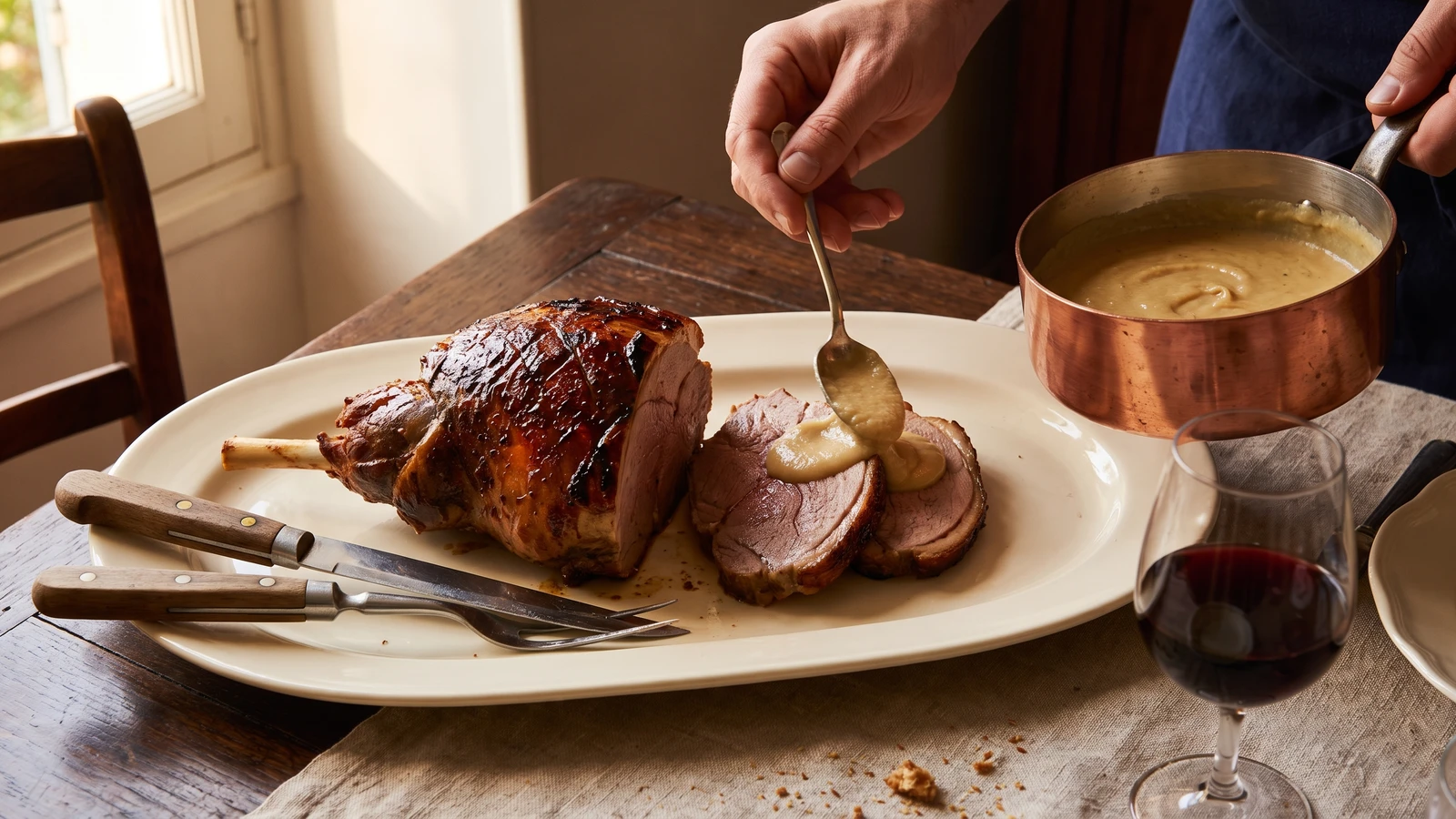
A glazed braised leg with silken onion-and-rice Soubise made in the joint's own liquor, proving that the sauce must share the braise to carry its full sweetness and savor.
Gigot à la Soubise teaches one truth before you touch the pan: the Soubise must cook in the joint's own braising liquor. Made separately, onion and rice give you a pleasant purée. Cooked beneath the meat, they absorb its fond, gelatin, and seasoning, becoming a sauce with the depth of the whole braise. That shared liquor is the dish.
The classical formula names a full leg of mutton and assumes a saucier to pass the purée while another cook glazes the joint, excellent stock never off the fire, a tammy, and more than one braising pan. For four, a small 3-pound bone-in leg is enough. The source's three pounds of onions and two-thirds pound of rice are halved exactly; a fine-mesh sieve replaces the tammy, the same pot is wiped clean instead of reaching for a second braiser, and three thin glazes suit the smaller joint. The formula names mutton, but most home markets offer lamb. Lamb is milder and more tender, so begin checking it earlier and don't pretend the difference is invisible.
The separate pan and paper frill are brigade scaffolding. The onion-and-rice finish, the sieve, and the glossy oven glaze must stay. Keep the covered pot at a bare tremble and watch the liquor as the rice swells; if the pan dries before everything is tender, add reserved liquor a little at a time. Ça se rattrape. This one step, completing meat, onions, and rice together without boiling or drying them, decides the result.
Gigot à la Soubise belongs to the Parisian classical table, pairing braised mutton with sauce Soubise, the onion purée associated with the princely house of Soubise. Some versions cook the onions apart from the meat, but this formula deliberately finishes them with rice in the joint's braising liquor, giving the purée greater savor while the rice supplies its body. From grand kitchens it passed naturally to cuisine bourgeoise, where one braising pot and a sieve could produce the same generous centerpiece.
Quantity
1 small leg, about 3 lb (1.36 kg), prepared to two-thirds doneness according to Ordinary Braisings (No. 247)
Quantity
2 cups (475 ml / about 475 g) from Ordinary Braisings (No. 247), plus up to 1 cup (240 ml / about 240 g) extra if available
Quantity
6 cups loosely packed (1.4 L / 680 g)
thinly sliced
Quantity
3/4 cup (180 ml / 150 g)
Quantity
1 tablespoon (15 ml / 14 g)
diced
| Ingredient | Quantity |
|---|---|
| bone-in leg of lamb or mutton half-leg | 1 small leg, about 3 lb (1.36 kg), prepared to two-thirds doneness according to Ordinary Braisings (No. 247) |
| strained braising liquor | 2 cups (475 ml / about 475 g) from Ordinary Braisings (No. 247), plus up to 1 cup (240 ml / about 240 g) extra if available |
| yellow onionsthinly sliced | 6 cups loosely packed (1.4 L / 680 g) |
| long-grain white rice | 3/4 cup (180 ml / 150 g) |
| cold unsalted butterdiced | 1 tablespoon (15 ml / 14 g) |
Heat the oven to 325°F (165°C). When the joint prepared according to Ordinary Braisings (No. 247) reaches its two-thirds stage, lift it onto a tray. Strain the braising liquor through a fine-mesh sieve, wipe the braising pot clean, then return the joint and pour 2 cups (475 ml) of the strained liquor around and over it. Keep any extra liquor warm. Wiping and reusing the pot replaces the second clean braiser of the brigade kitchen; it removes the spent aromatics without changing the flavor.
Add the sliced onions around the joint, then scatter the rice evenly among them so it cannot settle into one heavy clump. Press the onions and rice into the liquor, cover tightly, and return the pot to the oven. Cook at the barest tremble, basting the exposed meat every 20 minutes, until a thin knife enters the thickest part without resistance and the onions and rice collapse completely. Begin checking lamb after 45 minutes; mutton may need 60 to 75 minutes. If the joint becomes tender first, lift it out and keep it covered while the onions finish. If the rice drinks the pot dry before softening, add warm reserved liquor 1/4 cup (60 ml) at a time. Never let the mixture catch on the bottom.
Lift the tender gigot onto a rimmed baking tray and raise the oven to 450°F (230°C). Reserve about 1/2 cup (120 ml) of the thinnest braising liquor before passing the onions. Brush the joint with a light coat of liquor and return it to the oven for 8 to 12 minutes, brushing twice more as each coat turns glossy and adheres. The finished surface should be deeply bronzed and lightly lacquered, not buried beneath a thick glaze. If an edge darkens too quickly, move the tray down one rack and lower the heat to 425°F (220°C).
While the gigot glazes, work the onions, rice, and their liquor through a fine-mesh sieve into a heavy saucepan, pressing firmly with a sturdy spoon and scraping the smooth purée from the underside. Work in batches and keep going until only dry fibers remain. If the Soubise runs loosely, simmer it gently for 2 to 4 minutes; if it stands stiffly, beat in reserved liquor one tablespoon at a time until it falls from the spoon in a heavy ribbon. Bring it just to the first bubble, take it off the heat, and beat in the cold butter. If the butter beads on the surface, whisk in a teaspoon of hot water away from the heat. Ça se rattrape. Do not boil the Soubise after the butter goes in.
Rest the glazed gigot for 10 minutes, then place it whole on a long warm platter. The paper frill of the formal presentation adds nothing to supper, so leave the bone plainly burnished. Carve across the grain into generous slices and serve the hot Soubise separately, allowing each person to spoon it beneath the meat rather than hiding the glaze. À table!
1 serving (about 440g)
Culinary guides, cultural storytelling, and the editorial depth that makes cooking meaningful.
Discover Culinary ExplorerChef Juliette
John Dory has the delicacy of sole and the firmness of turbot. A light flouring, a quick butter sauté, and nut-brown beurre noisette show exactly why looks never mattered.

Chef Juliette
Fresh haddock proves its delicacy in the meunière pan: a fine flour crust, moist pearly flakes, and beurre noisette sharpened with lemon and parsley, ready from one skillet in half an hour.

Chef Juliette
Éperlans à l’Anglaise turns small fish into a lesson in disciplined coating: boned smelts under a close, crisp crumb, pan-fried in clarified butter and finished with bright, half-melted maître d’hôtel butter.

Chef Juliette
Tiny smelts, shallot, mushrooms, white wine, gratin sauce, and fine bread raspings meet a fierce oven, where the fish must turn tender in the same breath the buttered crust bronzes.