Chef Juliette
Bouillabaisse à la Marseillaise
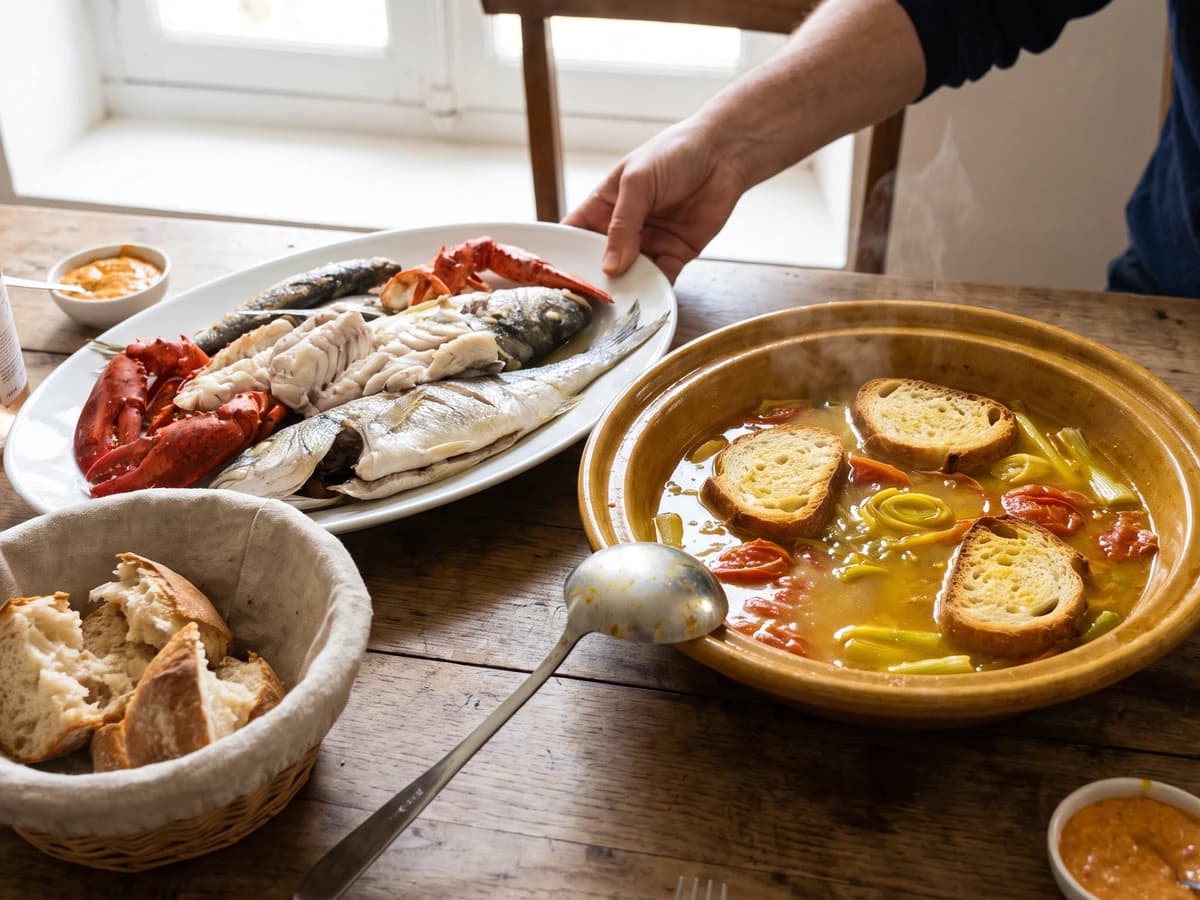
Marseille's great fish stew, saffron-gold and garlic-scented, proves that a hard boil can be the careful choice: it binds olive oil into broth before the whole pot meets bread.
A cooking platform built around craft, culture, and the stories behind what we eat.

Created by Chef Juliette
Based on No. 1279, Sautés de Veau, from Le Guide Culinaire (1907) by Auguste Escoffier
Sautés de Veau turns breast and shoulder into a generous stew by teaching one essential rhythm: brown the pieces deeply, simmer them barely, and add the garnish only when the meat is nearly tender.
Sautés de Veau (veal sauté) teaches one true thing: sauté names the beginning, not the whole cooking. The pieces meet hot butter and take a deep bronze crust, then they finish slowly in the sauce their fond has built. Rush the first part and the sauce stays pale; rush the second and the veal stays stubborn.
The professional method behind the entry assumed a wide sauté pan moving between cooks, a saucier tending the reduction, a stockpot never off the fire, and portions meant for service. For one cook, one stove, one evening, two pounds of breast and shoulder go into a wide casserole, and rich unsalted chicken stock strengthened with a little gelatin stands honestly for the veal stock a home kitchen rarely keeps. A separate sauce station and repeated straining are brigade scaffolding, so they go. Deep browning, the fond, singer (dusting with flour), and the slow finish are the dish, so they stay.
Pearl onions and mushrooms enter near the end, when they can glaze and brown without surrendering themselves to the stew. Before you touch the pan, dry the veal thoroughly and give it room while it browns. That crust is the step that decides everything after it.
Sautés de veau belongs to cuisine bourgeoise across France and to the Parisian classical kitchen rather than to one province. The term Sauté names the first treatment: pieces colored briskly in fat before moistening; with breast or shoulder, that beginning is followed by gentle cooking, so the common belief that every sauté must be finished quickly is mistaken. Professional kitchens used the method as a foundation for many sauces and garnishes, while home cooks kept the same grammar in one casserole.
Quantity
1¼ pounds (570 g)
cut into 1½-inch (4 cm) pieces
Quantity
¾ pound (340 g)
cut into 1½-inch (4 cm) pieces
Quantity
1¾ teaspoons (9 ml / 10 g)
divided
Quantity
¾ teaspoon (4 ml / 2 g)
Quantity
3 tablespoons (45 ml / 42 g)
Quantity
1 cup (240 ml / 150 g)
finely diced
Quantity
½ cup (120 ml / 70 g)
finely diced
Quantity
1 tablespoon (15 ml / 16 g)
Quantity
2 tablespoons (30 ml / 16 g)
Quantity
¾ cup (180 ml / 180 g)
Quantity
2¼ cups (540 ml / 540 g)
Quantity
1 teaspoon (5 ml / 3 g)
Quantity
1
Quantity
2 cups (480 ml / 340 g)
peeled
Quantity
½ cup (120 ml / 120 g)
Quantity
1 teaspoon (5 ml / 4 g)
Quantity
3 cups (720 ml / 225 g)
halved
Quantity
3 tablespoons (45 ml / 42 g)
divided
Quantity
2 tablespoons (30 ml / 8 g)
finely chopped
| Ingredient | Quantity |
|---|---|
| boneless veal shouldercut into 1½-inch (4 cm) pieces | 1¼ pounds (570 g) |
| boneless veal breastcut into 1½-inch (4 cm) pieces | ¾ pound (340 g) |
| fine saltdivided | 1¾ teaspoons (9 ml / 10 g) |
| freshly ground black pepper | ¾ teaspoon (4 ml / 2 g) |
| clarified butter | 3 tablespoons (45 ml / 42 g) |
| yellow onionfinely diced | 1 cup (240 ml / 150 g) |
| carrotfinely diced | ½ cup (120 ml / 70 g) |
| tomato paste | 1 tablespoon (15 ml / 16 g) |
| all-purpose flour | 2 tablespoons (30 ml / 16 g) |
| dry white wine | ¾ cup (180 ml / 180 g) |
| rich unsalted chicken stock | 2¼ cups (540 ml / 540 g) |
| unflavored powdered gelatin (optional) | 1 teaspoon (5 ml / 3 g) |
| bouquet garni of parsley stems, thyme, and bay leaf | 1 |
| pearl onionspeeled | 2 cups (480 ml / 340 g) |
| water | ½ cup (120 ml / 120 g) |
| granulated sugar | 1 teaspoon (5 ml / 4 g) |
| small button or cremini mushroomshalved | 3 cups (720 ml / 225 g) |
| cold unsalted butterdivided | 3 tablespoons (45 ml / 42 g) |
| flat-leaf parsleyfinely chopped | 2 tablespoons (30 ml / 8 g) |
If the chicken stock does not set softly when chilled, sprinkle the gelatin over it and leave it for 5 minutes, then warm the stock just until the gelatin dissolves. This restores the body a working veal stock would have supplied without changing its flavor. Dry the veal thoroughly, then season it with 1½ teaspoons of the salt and all the pepper. Leave it for 15 minutes while you heat the casserole.
Heat the clarified butter in a wide, heavy casserole over medium-high heat until it gleams. Brown the veal in three batches, leaving space between the pieces and turning only after each releases from the pan, about 5 minutes per batch. Two or three well-bronzed faces matter more than fussing over every side. Transfer each batch to a tray, keeping its juices. If liquid pools and the veal begins to simmer, lift the pieces out and let that liquid boil away until the fat clears, then continue with a smaller batch. Ça se rattrape.
Lower the heat to medium. Add the diced onion and carrot to the casserole and cook for 6 to 8 minutes, stirring, until softened and lightly colored. Add the tomato paste and cook until it darkens by one shade. Singer, dust the vegetables with the flour, then stir for 2 minutes so the sauce will not taste raw. Pour in the wine gradually, scraping every patch of fond from the pan, and reduce it by half. Whisk in the stock, add the bouquet garni, and bring the sauce to a bare simmer. If the flour gathers into beads, take the casserole off the heat and whisk firmly; if they persist, strain the liquid before returning it to the casserole.
Return the veal and its collected juices to the casserole. The sauce should reach about three-quarters of the way up the pieces; add a little water if needed, but do not drown them. Cover and cook in a 325°F (165°C) oven for 60 minutes, keeping the sauce at a quiet tremble. Turn the pieces once halfway through. Hard boiling tightens the meat and drives the sauce against the pan before the veal has time to soften.
While the veal cooks, put the pearl onions in a 10-inch (25 cm) skillet with the water, 1 tablespoon of the cold butter, the sugar, and the remaining ¼ teaspoon salt. Cover and simmer gently for 10 to 12 minutes, then uncover and roll the onions through their reducing liquid until they are tender, lightly golden, and glazed. Transfer them to a bowl. Melt another tablespoon of butter in the same skillet over medium-high heat and brown the mushrooms in a single layer for 6 to 8 minutes. Hold both garnishes aside; putting them into the stew now would turn the mushrooms spongy and rob the onions of their glaze.
After the first hour, test a piece of shoulder with a fork. It should yield with only faint resistance. If it still feels tight, cover the casserole and continue for 15 minutes before testing again; stubborn veal at this point is undercooked, not ruined. Once the meat is tender, lift it to a warm bowl if the sauce remains thin, then boil the sauce uncovered until it coats the back of a spoon. If it has tightened too far, loosen it with a spoonful of water or stock. Skim away any excess fat from the surface.
Return the veal to the sauce and add the glazed pearl onions and browned mushrooms. Simmer uncovered for 8 minutes, just long enough for the garnish to take on the sauce while keeping its own shape. Remove the bouquet garni and take the casserole off the heat. Swirl in the final tablespoon of cold butter until the sauce gleams, then taste for salt and fold in the parsley. If the butter leaves an oily slick, whisk in a teaspoon of cool water off the heat until the emulsion returns. Bring the casserole straight to the table. À table!
1 serving (about 460g)
Culinary guides, cultural storytelling, and the editorial depth that makes cooking meaningful.
Discover Culinary ExplorerChef Juliette
Marseille's great fish stew, saffron-gold and garlic-scented, proves that a hard boil can be the careful choice: it binds olive oil into broth before the whole pot meets bread.
Chef Juliette
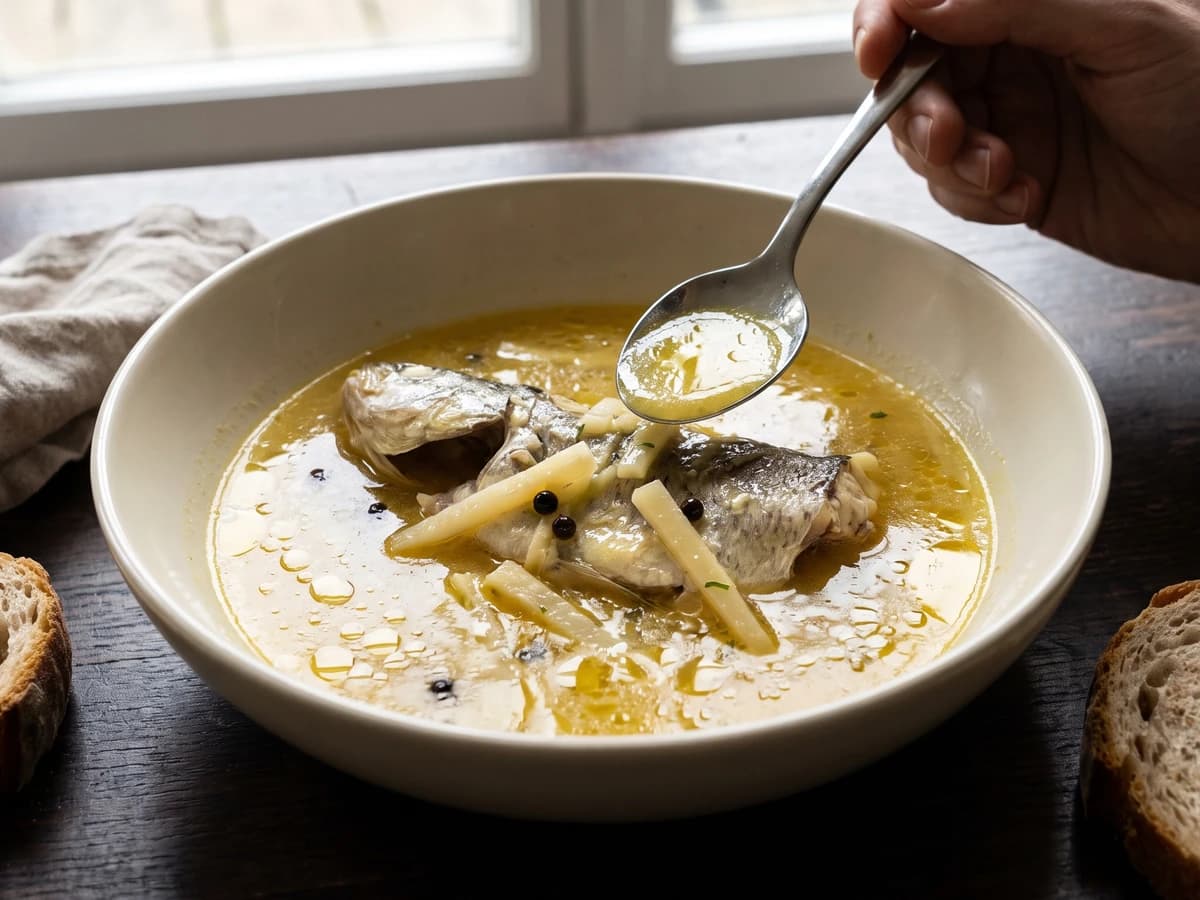
Waterzoi asks fresh, bone-in river fish to thicken its own buttery broth, with parsley root and pepper for company. No flour, no stockpot, just a brisk simmer watched closely.
Chef Juliette
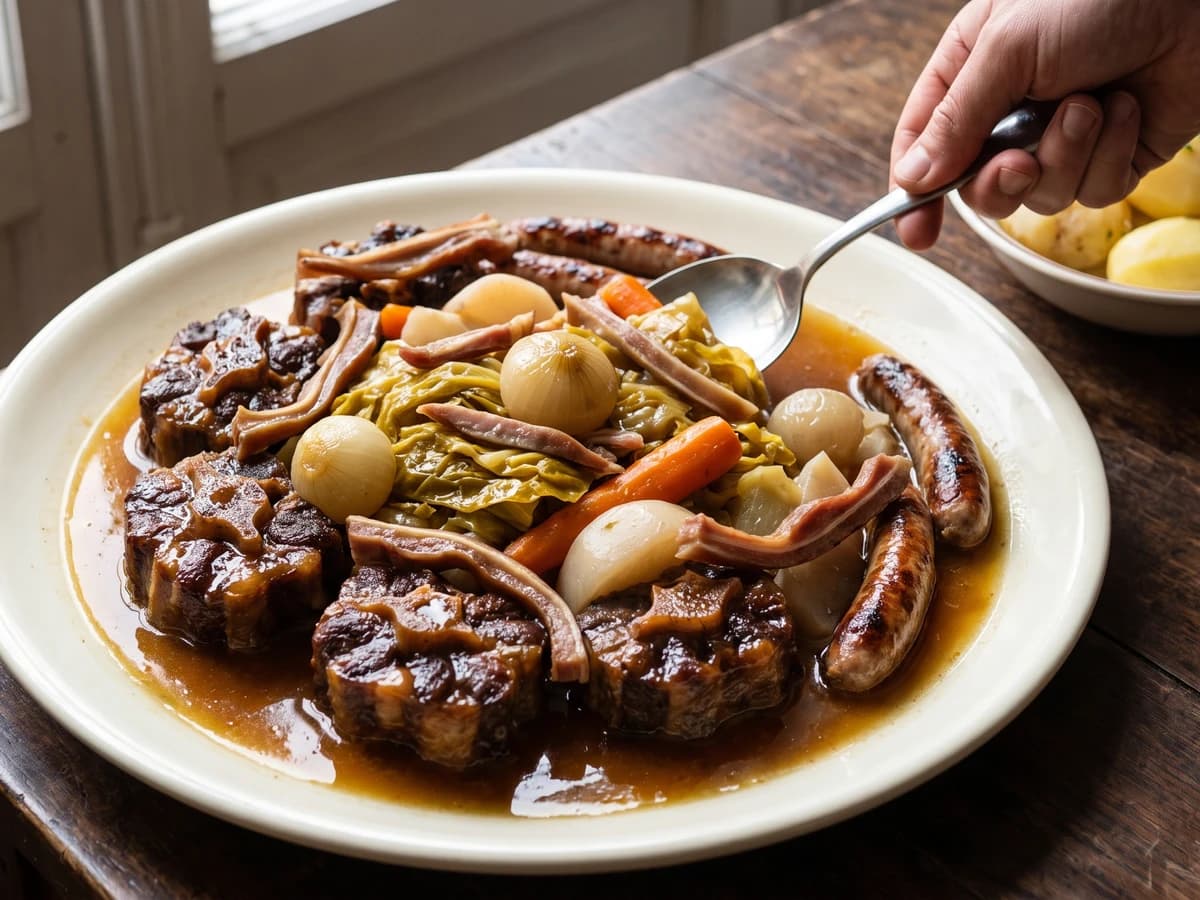
Queue de Bœuf en Hochepot gathers oxtail, pig's trotter and ear, cabbage, roots, and grilled chipolatas around a clear, gelatin-rich broth whose quiet simmer keeps every piece tender and distinct.
Chef Juliette
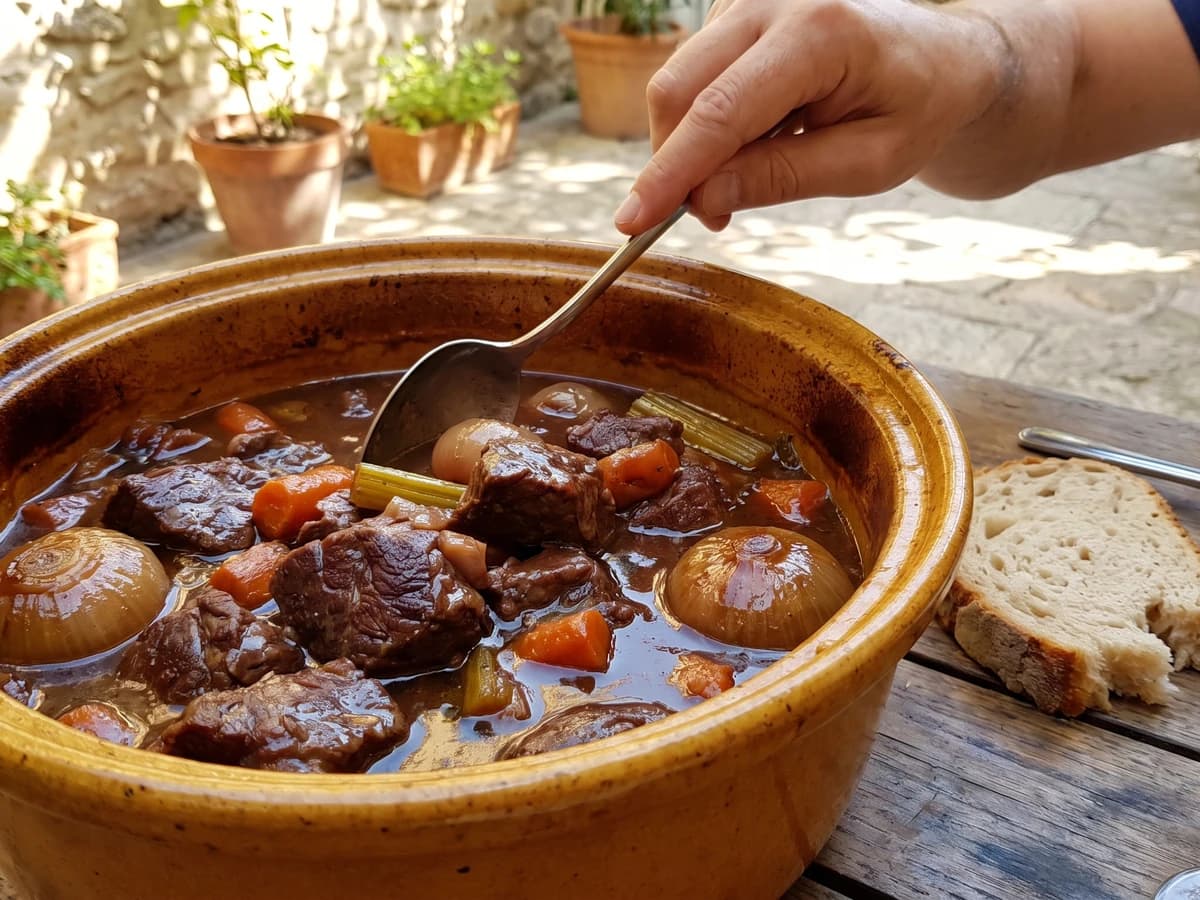
Beef shoulder larded with bacon, sharpened by red wine and vinegar, then sealed with garlic, vegetables, and dry lemon peel until the low oven turns it yielding and the gravy darkly glossy.