Chef Juliette
Bouillabaisse à la Marseillaise
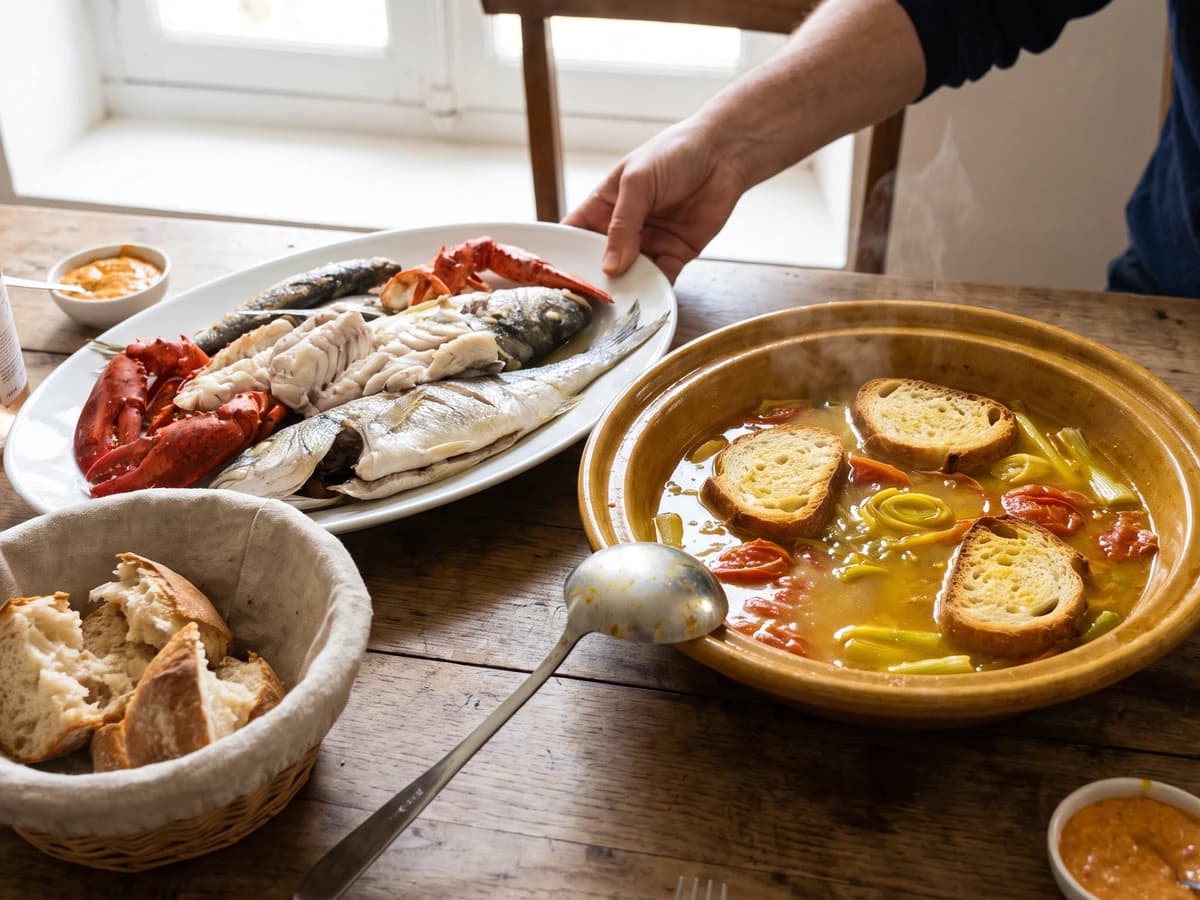
Marseille's great fish stew, saffron-gold and garlic-scented, proves that a hard boil can be the careful choice: it binds olive oil into broth before the whole pot meets bread.
A cooking platform built around craft, culture, and the stories behind what we eat.

Created by Chef Juliette
Based on No. 1276, Fricassée de Veau, from Le Guide Culinaire (1907) by Auguste Escoffier
Veal stiffened gently in butter without a trace of colour, floured in the pan, and simmered with mushrooms and onions before egg yolks and cream turn its white sauce silken.
Fricassée de veau (veal stiffened in butter and cooked in its own white sauce) teaches control without colour. The one true thing to know before touching the pan is this: the veal must turn firm and opaque in foaming butter without acquiring a golden edge. This is raidir, to stiffen gently, and the word carries the technique. Brown the meat and you haven't ruined supper, but you've left the pale, delicate character of a fricassée behind.
The original formula assumed a saucier on staff, white stock never off the fire, and enough veal for a dining room. Here, a heavy lidded sauté pan holds four portions, while measured pale stock replaces the brigade stockpot. Separate garnish pans and last-minute sauce service are scaffolding, so they go. What remains is the dish itself: one ounce of flour for every pound of veal, the flour cooked with the meat, the mushrooms and onions simmered in that sauce, and the liaison of egg yolks and cream added off the heat. One cook, one stove, one evening.
The finished sauce should be ivory, glossy, and just thick enough to follow the spoon, with tender veal and vegetables that taste of the sauce because they cooked inside it. Keep the butter pale during the raidir. That is the step that decides the fricassée before everything else begins.
Fricassée de veau belongs to the cuisine bourgeoise table and to the Parisian classical kitchen that codified its working method, rather than to a single regional larder. It traveled from household white stew into the grand-kitchen repertoire, where its distinction from blanquette became exact: blanquette begins by cooking raw meat in liquid, while fricassée first stiffens the meat in butter without colour and cooks the flour directly with it. Mushrooms and small onions are not decorative extras; they cook in the sauce and belong to the dish's generous table register.
Quantity
2 lb (907 g)
cut into 1½-inch (4 cm) pieces
Quantity
1½ teaspoons (7.5 ml / 9 g)
divided
Quantity
½ teaspoon (2.5 ml / 1 g)
Quantity
¼ cup (60 ml / 57 g)
Quantity
Scant ½ cup (110 ml / 57 g)
Quantity
3½ cups (830 ml / 830 g)
warmed and divided
Quantity
12, about 1 cup (240 ml / 150 g)
peeled
Quantity
2½ cups (590 ml / 225 g)
trimmed and halved if large
Quantity
2
Quantity
½ cup (120 ml / 120 g)
| Ingredient | Quantity |
|---|---|
| boneless veal shouldercut into 1½-inch (4 cm) pieces | 2 lb (907 g) |
| fine sea saltdivided | 1½ teaspoons (7.5 ml / 9 g) |
| ground white pepper | ½ teaspoon (2.5 ml / 1 g) |
| unsalted butter | ¼ cup (60 ml / 57 g) |
| plain flour | Scant ½ cup (110 ml / 57 g) |
| pale unsalted white veal stock or chicken stockwarmed and divided | 3½ cups (830 ml / 830 g) |
| small pearl onionspeeled | 12, about 1 cup (240 ml / 150 g) |
| small button mushroomstrimmed and halved if large | 2½ cups (590 ml / 225 g) |
| large egg yolks | 2 |
| heavy cream | ½ cup (120 ml / 120 g) |
Pat the veal dry, then season it with 1 teaspoon of the salt and the white pepper. Warm the stock in a saucepan and keep ½ cup aside for adjusting the sauce later. Have the onions and mushrooms ready before the butter meets the pan; once the flour goes in, the method should move without interruption.
Melt the butter in a heavy 5-quart casserole or deep sauté pan over medium-low heat. When it foams but remains pale, add the veal in a roomy layer and turn the pieces for 5 to 7 minutes. They should become opaque and slightly firm on every surface without browning. If the butter begins to colour, take the pan off the heat, add 1 tablespoon of the reserved stock, and lower the burner before continuing. Ça se rattrape. Pale butter, gentle heat, constant attention.
Sprinkle the flour evenly over the veal. This preserves the original proportion exactly, one ounce of flour for each pound of meat. Turn the pieces gently for 3 minutes so every trace of flour meets the butter and loses its raw smell, but do not let it toast. The pan will look chalky and rather crowded. It is exactly right. If the flour begins to catch or turn beige, move the pan off the heat and stir in 2 tablespoons of warm stock at once before it darkens.
Pour in 3 cups of the warm stock gradually, stirring continuously to dissolve the flour around the meat before adding more. Scrape the corners and floor of the pan so no flour hides there. Add the pearl onions, then bring the sauce just to a boil while stirring. The moment it boils, lower the heat to a bare simmer and partially cover the pan. This brief boil sets the flour's thickening power; the gentle cooking afterward keeps the veal tender.
Cook the veal and onions at the quietest simmer for 35 minutes, stirring along the floor every 10 minutes. Add the mushrooms and continue for 20 to 30 minutes, until the veal yields easily to a fork and the onions are tender but still whole. Both garnishes cook in the sauce, as the formula requires. If the sauce tightens before the veal is tender, add the reserved stock a spoonful at a time. If the veal is ready while the sauce remains loose, lift out the meat and vegetables and simmer the sauce briefly until it lightly coats a spoon.
Transfer the veal, onions, and mushrooms to a warm serving dish. Take the sauce completely off the heat and wait until active bubbling stops. Whisk the egg yolks and cream together, then whisk in three ladlefuls of hot sauce, one at a time. Stir this tempered liaison back into the pan. The residual heat will give the sauce its final silken body. Do not boil it now, because boiling curdles the yolks. If it begins to look grainy, whisk in a tablespoon of cold cream immediately. If it has gone further, strain it through a fine sieve into a clean bowl. Ça se rattrape.
Taste the sauce and add the remaining salt only as needed. It should fall from the spoon in a smooth ivory ribbon, rich but not stodgy. If it is too thick, loosen it off the heat with a spoonful of warm stock. Pour the sauce over the veal and its garnish, turning everything once so it is generously coated. Serve at once, and never let the finished fricassée boil during holding or reheating. À table!
1 serving (about 500g)
Culinary guides, cultural storytelling, and the editorial depth that makes cooking meaningful.
Discover Culinary ExplorerChef Juliette
Marseille's great fish stew, saffron-gold and garlic-scented, proves that a hard boil can be the careful choice: it binds olive oil into broth before the whole pot meets bread.
Chef Juliette
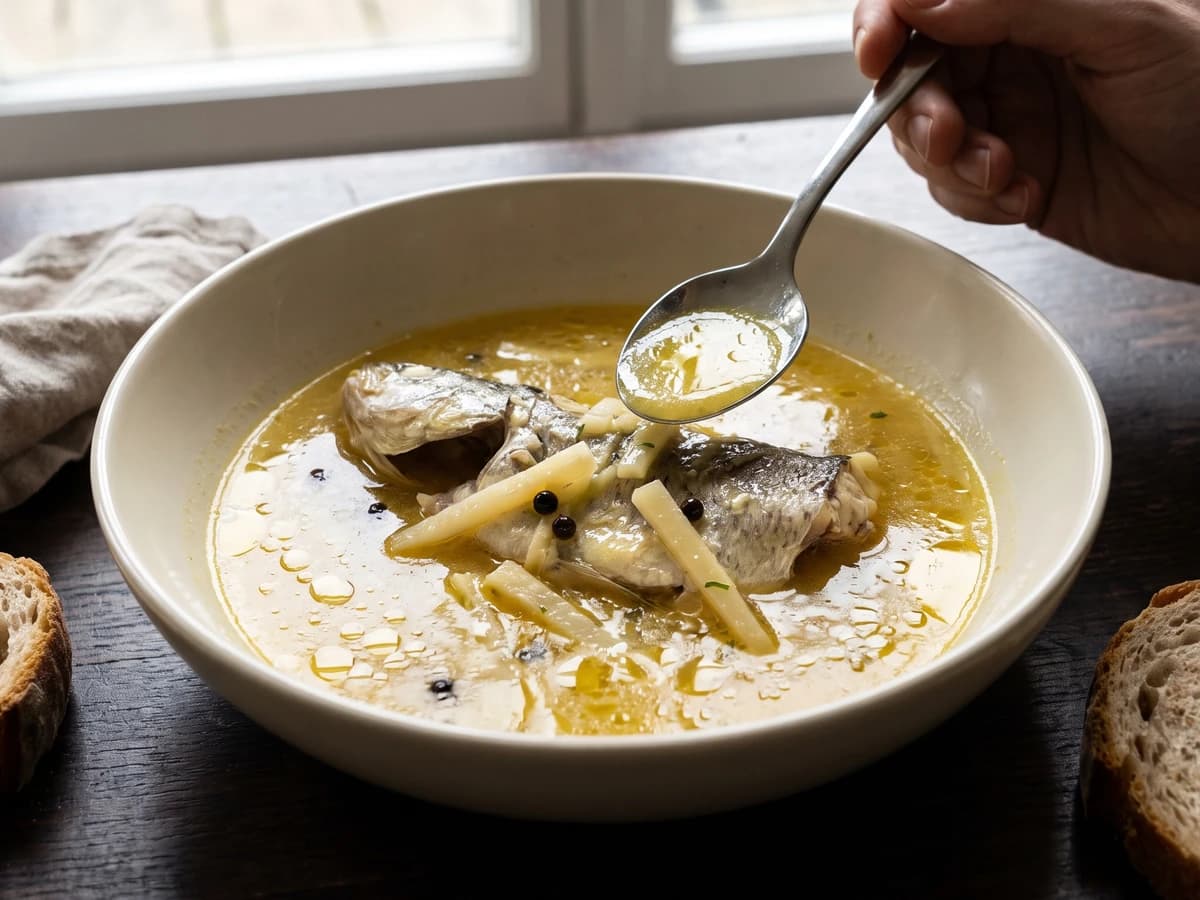
Waterzoi asks fresh, bone-in river fish to thicken its own buttery broth, with parsley root and pepper for company. No flour, no stockpot, just a brisk simmer watched closely.
Chef Juliette
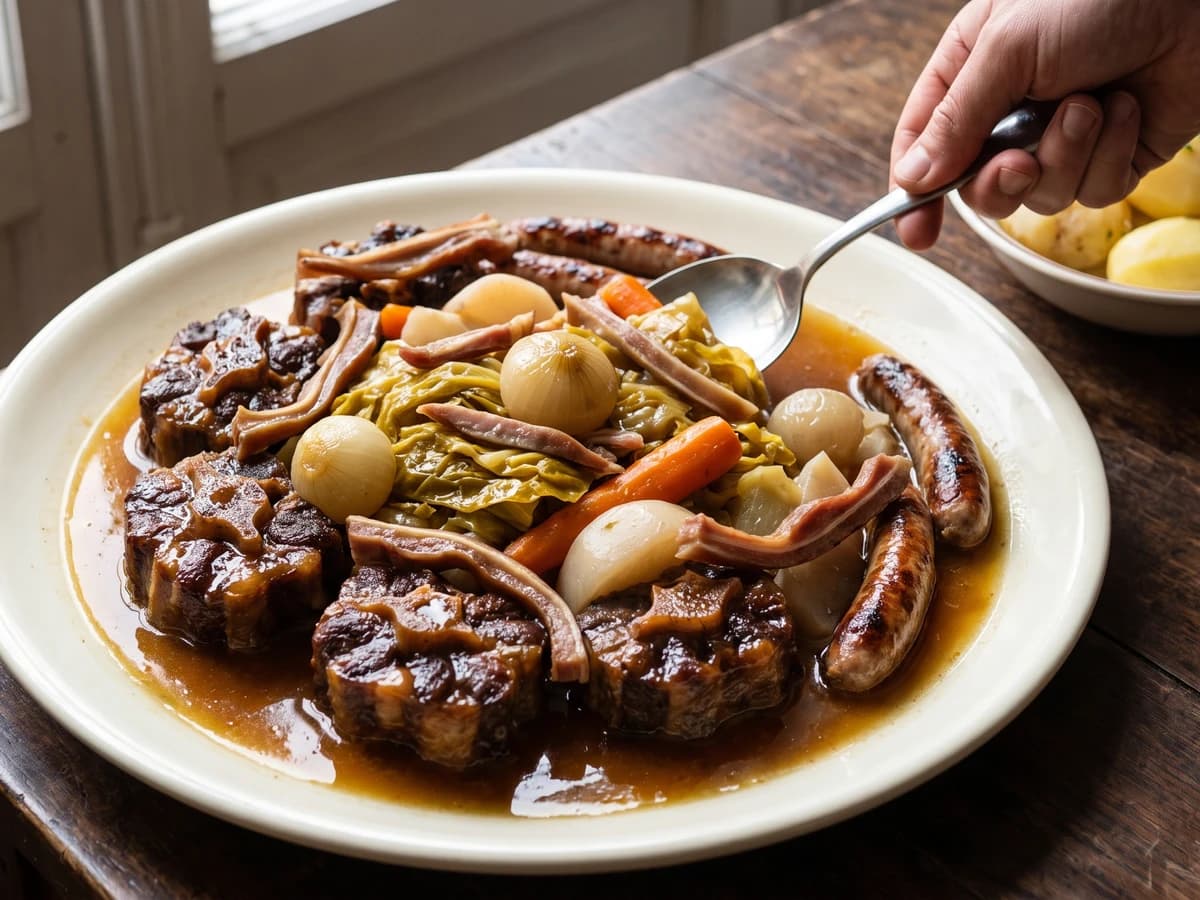
Queue de Bœuf en Hochepot gathers oxtail, pig's trotter and ear, cabbage, roots, and grilled chipolatas around a clear, gelatin-rich broth whose quiet simmer keeps every piece tender and distinct.
Chef Juliette
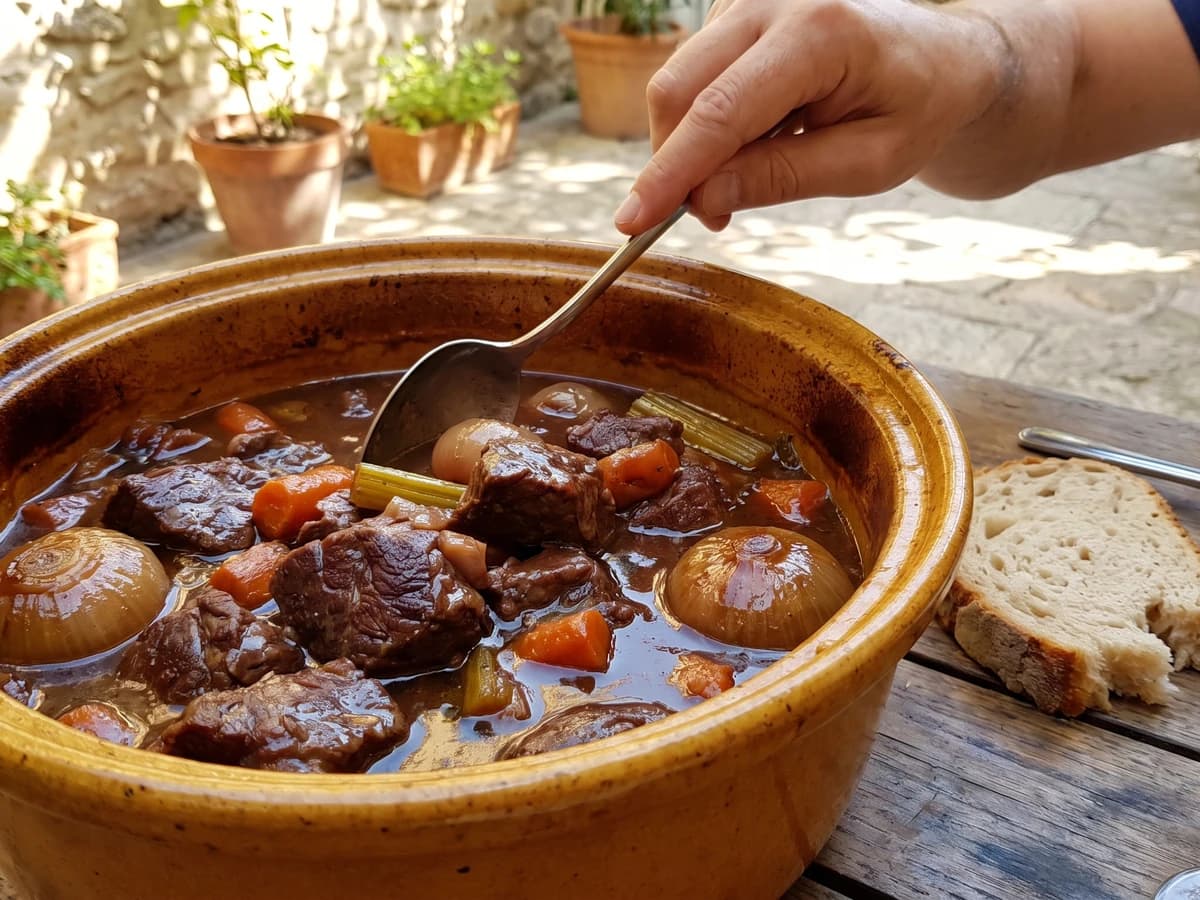
Beef shoulder larded with bacon, sharpened by red wine and vinegar, then sealed with garlic, vegetables, and dry lemon peel until the low oven turns it yielding and the gravy darkly glossy.