Chef Juliette
Bouillabaisse à la Marseillaise
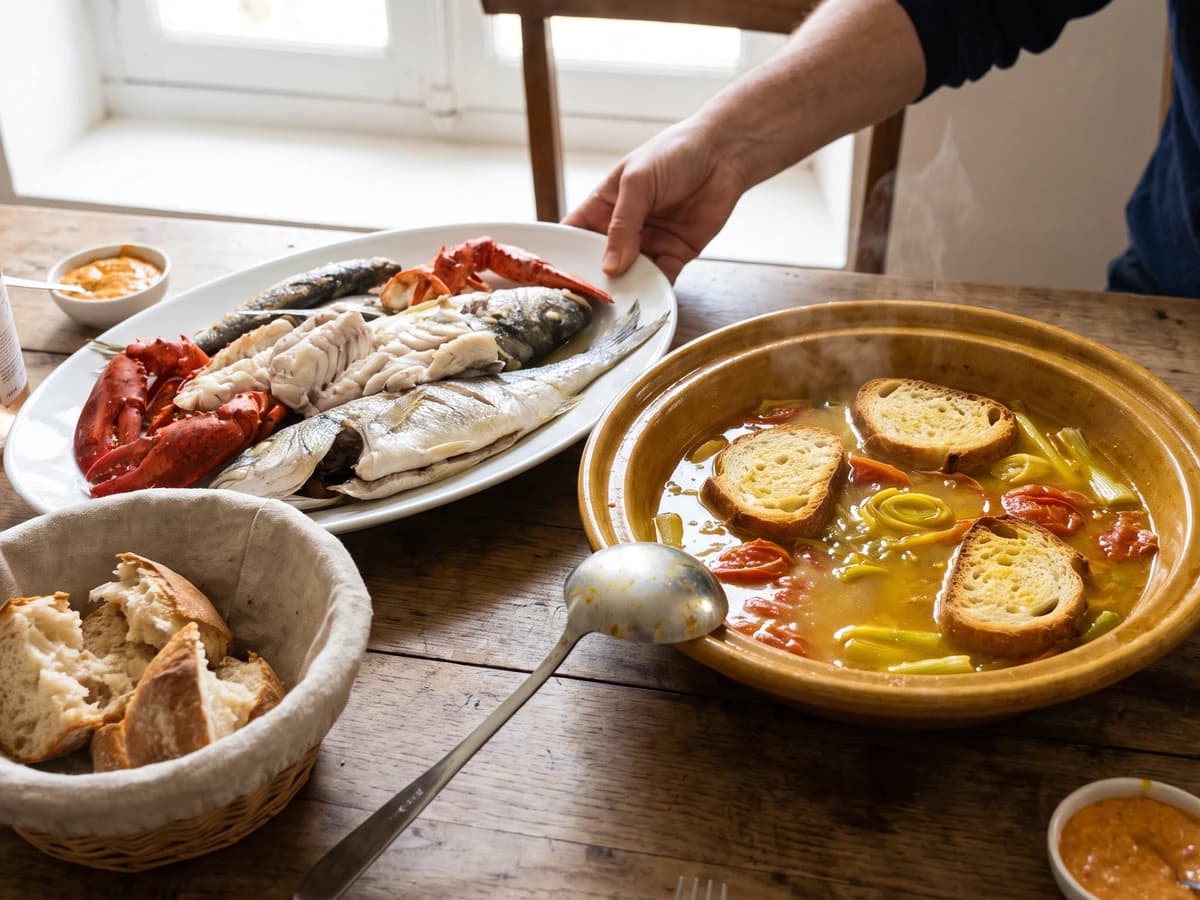
Marseille's great fish stew, saffron-gold and garlic-scented, proves that a hard boil can be the careful choice: it binds olive oil into broth before the whole pot meets bread.
A cooking platform built around craft, culture, and the stories behind what we eat.

Created by Chef Juliette
Based on No. 1275, Blanquette de Veau aux Nouilles, from Le Guide Culinaire (1907) by Auguste Escoffier
Veal poached without browning, an ivory liaison kept below the boil, and fresh noodles in two buttered textures: soft, coherent heaps below and crisp, quickly tossed strands above.
Blanquette de Veau aux Nouilles (veal in a pale cream sauce with buttered noodles) teaches the discipline of building deep flavor without browning. The one true thing to know before touching the pan is this: color is not wanted here. The veal gives you a clear cuisson (cooking liquor), a roux blanc (white roux) gives it body, and a liaison (egg-yolk-and-cream enrichment) supplies the final ivory gloss.
The original entry assumes Blanquette à l’ancienne already underway, a saucier watching the sauce, a stockpot never off the fire, and fresh noodles ready from the pasta bench. At home, the veal makes its own cooking liquor, a saucepan tends the sauce, and good refrigerated fresh egg noodles replace the brigade’s rolled sheets. The pearl-onion and mushroom garnish is suppressed exactly as directed, while the small onion poached with the veal remains only as an aromatic and is discarded. The brigade’s held batches are scaffolding; the pale poach, gentle liaison, and ratio of three ounces of butter-tossed raw noodles for every pound of cohered noodles are the dish itself.
The finished blanquette should be generous and pale, with tender veal under a sauce that gleams rather than clots. Soft heaps of butter-bound noodles sit on top, capped with finer strands cooked quickly in butter until their tips are crisp. The liaison is the step that matters most: add it away from the boil and keep it there. One cook, one stove, one evening.
Blanquette de veau belongs to the cuisine bourgeoise of Paris and the wider French home table rather than to one exclusive province. Its name comes from blanc: the veal is poached without coloring and served in a pale sauce finished with liaison, so browning the meat is not an improvement but a change of dish. The noodle version carries that household stew into the grand-kitchen repertoire by exchanging the customary pearl onions and mushrooms for a precisely proportioned farinaceous garnish.
Quantity
2½ pounds (1.15 kg)
cut into 1½-inch pieces
Quantity
12 cups (2.8 L / 2.8 kg)
divided
Quantity
1 small onion (4 ounces / 115 g)
peeled
Quantity
2
Quantity
2 medium carrots (6 ounces / 170 g)
peeled and cut into thick rounds
Quantity
1 small leek (4 ounces / 115 g)
white and pale-green parts cleaned and cut into thirds
Quantity
1 stalk (2 ounces / 55 g)
cut into thirds
Quantity
1
Quantity
2 tablespoons (30 ml / 36 g)
divided
Quantity
¼ teaspoon (1.25 ml / 0.6 g)
Quantity
3 tablespoons (45 ml / 43 g)
Quantity
⅓ cup (80 ml / 42 g)
Quantity
½ cup (120 ml / 120 g)
Quantity
2
Quantity
1 tablespoon (15 ml / 15 g)
Quantity
⅛ teaspoon (0.6 ml / 0.3 g)
Quantity
2 tablespoons (30 ml / 30 g)
Quantity
12 ounces (340 g)
Quantity
3 tablespoons (45 ml / 43 g)
Quantity
2¼ ounces (64 g)
kept raw until they enter the butter
Quantity
1½ tablespoons (22 ml / 21 g)
Quantity
1 tablespoon (15 ml / 15 g)
| Ingredient | Quantity |
|---|---|
| boneless veal shoulder or breastcut into 1½-inch pieces | 2½ pounds (1.15 kg) |
| cold waterdivided | 12 cups (2.8 L / 2.8 kg) |
| small yellow onionpeeled | 1 small onion (4 ounces / 115 g) |
| whole cloves | 2 |
| medium carrotspeeled and cut into thick rounds | 2 medium carrots (6 ounces / 170 g) |
| small leekwhite and pale-green parts cleaned and cut into thirds | 1 small leek (4 ounces / 115 g) |
| celery stalkcut into thirds | 1 stalk (2 ounces / 55 g) |
| bouquet garni of parsley, thyme, and bay | 1 |
| fine sea saltdivided | 2 tablespoons (30 ml / 36 g) |
| ground white pepper | ¼ teaspoon (1.25 ml / 0.6 g) |
| unsalted butter for the roux blanc | 3 tablespoons (45 ml / 43 g) |
| all-purpose flour | ⅓ cup (80 ml / 42 g) |
| heavy cream | ½ cup (120 ml / 120 g) |
| large egg yolks | 2 |
| fresh lemon juice | 1 tablespoon (15 ml / 15 g) |
| freshly grated nutmeg | ⅛ teaspoon (0.6 ml / 0.3 g) |
| cold heavy cream for rescuing the liaison (optional) | 2 tablespoons (30 ml / 30 g) |
| thin fresh egg noodles for parboiling and cohering | 12 ounces (340 g) |
| unsalted butter for the parboiled noodles | 3 tablespoons (45 ml / 43 g) |
| thin fresh egg noodles for quick butter tossingkept raw until they enter the butter | 2¼ ounces (64 g) |
| unsalted butter for the raw noodles | 1½ tablespoons (22 ml / 21 g) |
| cold water for rescuing the butter-tossed noodles (optional) | 1 tablespoon (15 ml / 15 g) |
Reserve 7 cups (1.65 L / 1.65 kg) of the cold water for the poach. Put the veal in a heavy pot and cover it by about an inch with the remaining cold water. Bring it slowly to the first boil, letting the grey foam rise, then boil for 2 minutes. Drain the meat, rinse it briefly under cool water, and wash the pot. This blanching is not brigade clutter: it removes the proteins that would cloud the sauce. Do not brown the veal.
Stud the onion with the cloves. Return the veal to the clean pot and add the reserved water, the onion, carrots, leek, celery, bouquet garni, 2 teaspoons (10 ml / 12 g) of the salt, and the white pepper. The liquid should barely cover the meat. Bring it up slowly, skim the surface carefully, then hold it at the faintest tremble with the lid slightly ajar for 60 to 75 minutes. The veal is ready when a thin knife enters without resistance but the pieces still hold their shape.
Lift the veal into a bowl and strain the cuisson through a fine-mesh strainer, discarding every aromatic, including the clove-studded onion. There are no pearl onions or mushrooms in this version. Skim off the surface fat, then measure 3½ cups (830 ml / 830 g) of liquid. If you have more, reduce it at a lively simmer; if you have less, add enough hot water to reach the measure. Pour ½ cup (120 ml / 120 g) over the veal and keep it covered. Reserve the remaining 3 cups (710 ml / 710 g) for the sauce.
Melt the butter for the roux blanc in a heavy saucepan over medium-low heat. Stir in the flour and cook for 2 minutes, stirring continuously, until it smells faintly biscuit-like but has taken no color. Whisk in the hot cuisson a ladleful at a time, smoothing each addition before the next. Hold the sauce at a bare simmer for 10 minutes, whisking often, until it lightly naps the back of a spoon. If lumps appear, remove the pan from the heat, whisk firmly, and pass the sauce through the clean strainer. Ça se rattrape.
Bring a wide pot of water to a boil and season it with 1 tablespoon (15 ml / 18 g) of the remaining salt. Add the 12 ounces (340 g) of fresh noodles and parboil them until flexible but still a little firmer than you would serve them, usually 1 to 2 minutes. Drain them very thoroughly. Melt their 3 tablespoons (45 ml / 43 g) of butter in the emptied pot, return the noodles, and toss over low heat until the butter coats every strand and the noodles settle naturally into soft, coherent mounds. These are nouilles liées au beurre (noodles lightly bound with butter), not a sticky mass. If they tighten, loosen them with a spoonful of cuisson from the veal bowl, then cover and hold them off the heat.
Separate the remaining 2¼ ounces (64 g) of raw fresh noodles with your fingers. Melt their 1½ tablespoons (22 ml / 21 g) of butter in a wide skillet over medium heat, add the raw strands, and toss them quickly with two forks for 3 to 5 minutes. They should lose their floury raw taste, turn opaque, and become lightly golden and crisp at the tips. This preserves the book’s ratio of 3 ounces of tossed raw noodles per pound of cohered noodles. If the butter darkens before the noodles cook through, lower the heat, add the optional tablespoon of cold water, and cover for 30 seconds. Uncover and toss until the water disappears and the strands crisp again.
Whisk the egg yolks with the ½ cup (120 ml / 120 g) of cream, lemon juice, and nutmeg. Bring the sauce base just to a simmer, then remove it from the heat. Whisk about 1 cup (240 ml / 240 g) of hot sauce gradually into the yolk mixture, then whisk the tempered liaison back into the saucepan. Return it to the lowest heat and stir constantly until the sauce thickens to a satin coat and reaches 160°F (71°C), without a single boil. If fine grains form at the edge, pull the pan away immediately and whisk in the optional cold cream. If needed, strain it before the veal returns. Ça se rattrape, but only while you act quickly.
Fold the veal and its holding liquid into the finished sauce. Warm everything gently for 3 to 5 minutes without simmering, then taste and use the remaining salt as needed. Spoon the blanquette into a wide, shallow serving dish. Set four generous heaps of the butter-bound noodles directly on the stew and cover each heap with the crisp butter-tossed strands. Serve at once, while the liaison still gleams and the two noodle textures remain distinct. À table!
1 serving (about 640g)
Culinary guides, cultural storytelling, and the editorial depth that makes cooking meaningful.
Discover Culinary ExplorerChef Juliette
Marseille's great fish stew, saffron-gold and garlic-scented, proves that a hard boil can be the careful choice: it binds olive oil into broth before the whole pot meets bread.
Chef Juliette
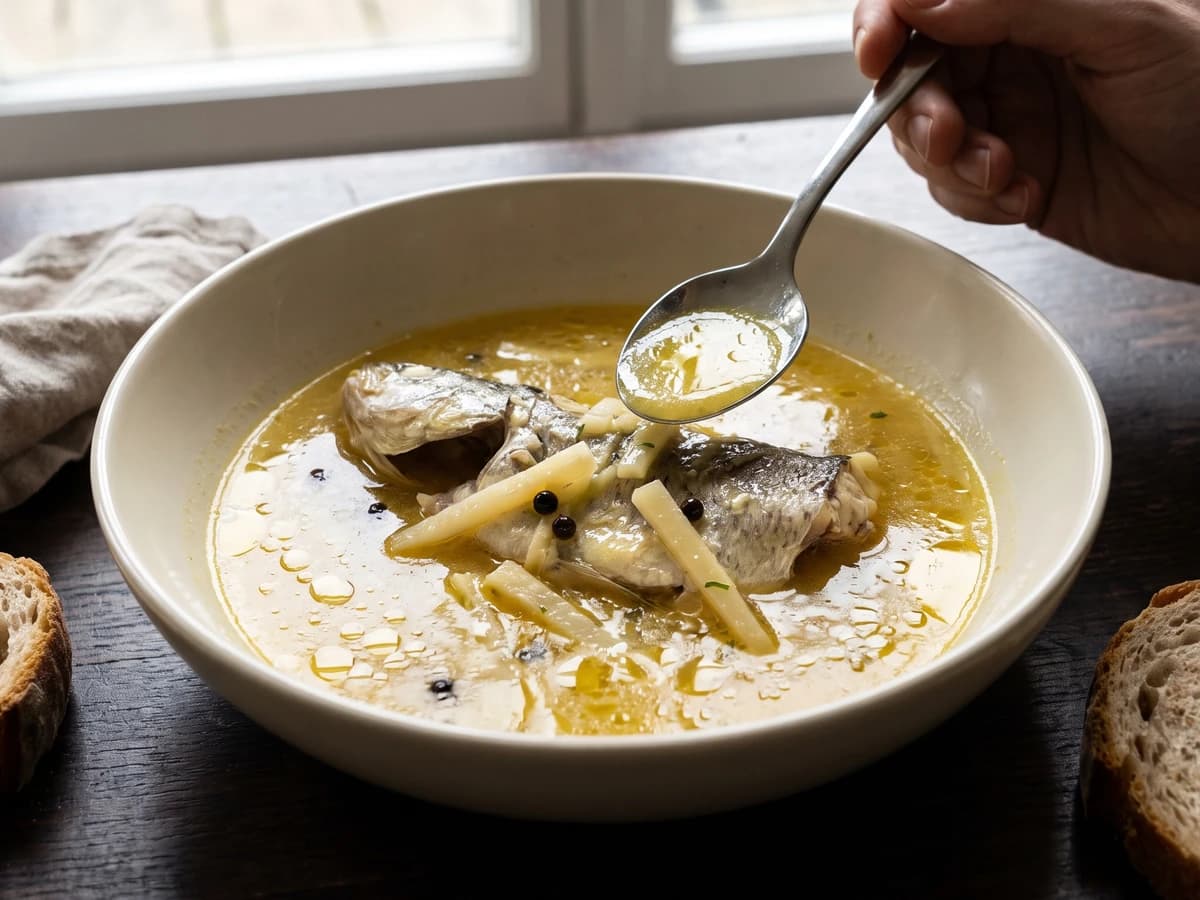
Waterzoi asks fresh, bone-in river fish to thicken its own buttery broth, with parsley root and pepper for company. No flour, no stockpot, just a brisk simmer watched closely.
Chef Juliette
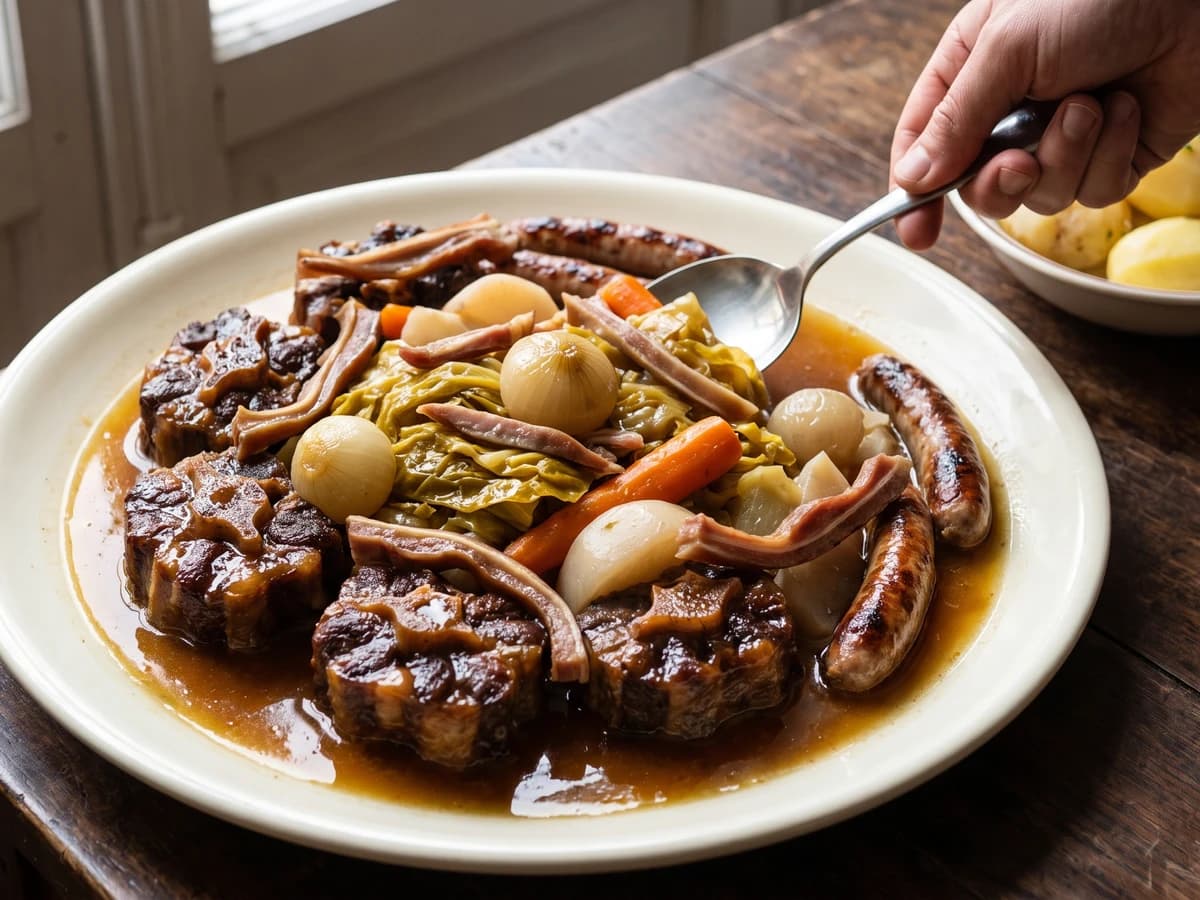
Queue de Bœuf en Hochepot gathers oxtail, pig's trotter and ear, cabbage, roots, and grilled chipolatas around a clear, gelatin-rich broth whose quiet simmer keeps every piece tender and distinct.
Chef Juliette
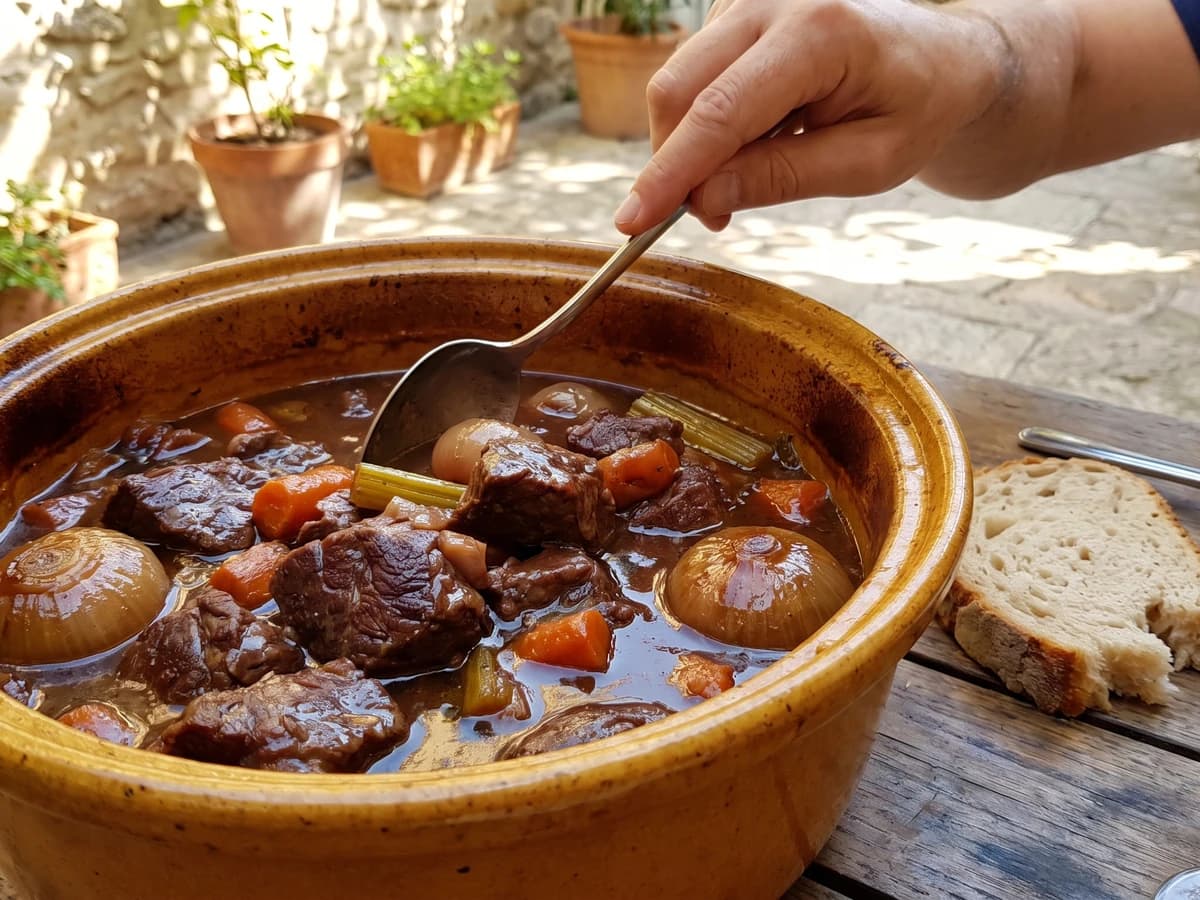
Beef shoulder larded with bacon, sharpened by red wine and vinegar, then sealed with garlic, vegetables, and dry lemon peel until the low oven turns it yielding and the gravy darkly glossy.