
Chef Juliette
John Dory (St. Pierre)
John Dory has the delicacy of sole and the firmness of turbot. A light flouring, a quick butter sauté, and nut-brown beurre noisette show exactly why looks never mattered.
A cooking platform built around craft, culture, and the stories behind what we eat.
Created by Chef Juliette
Based on No. 1269, Rognon de Veau à la Montpensier, from Le Guide Culinaire (1907) by Auguste Escoffier
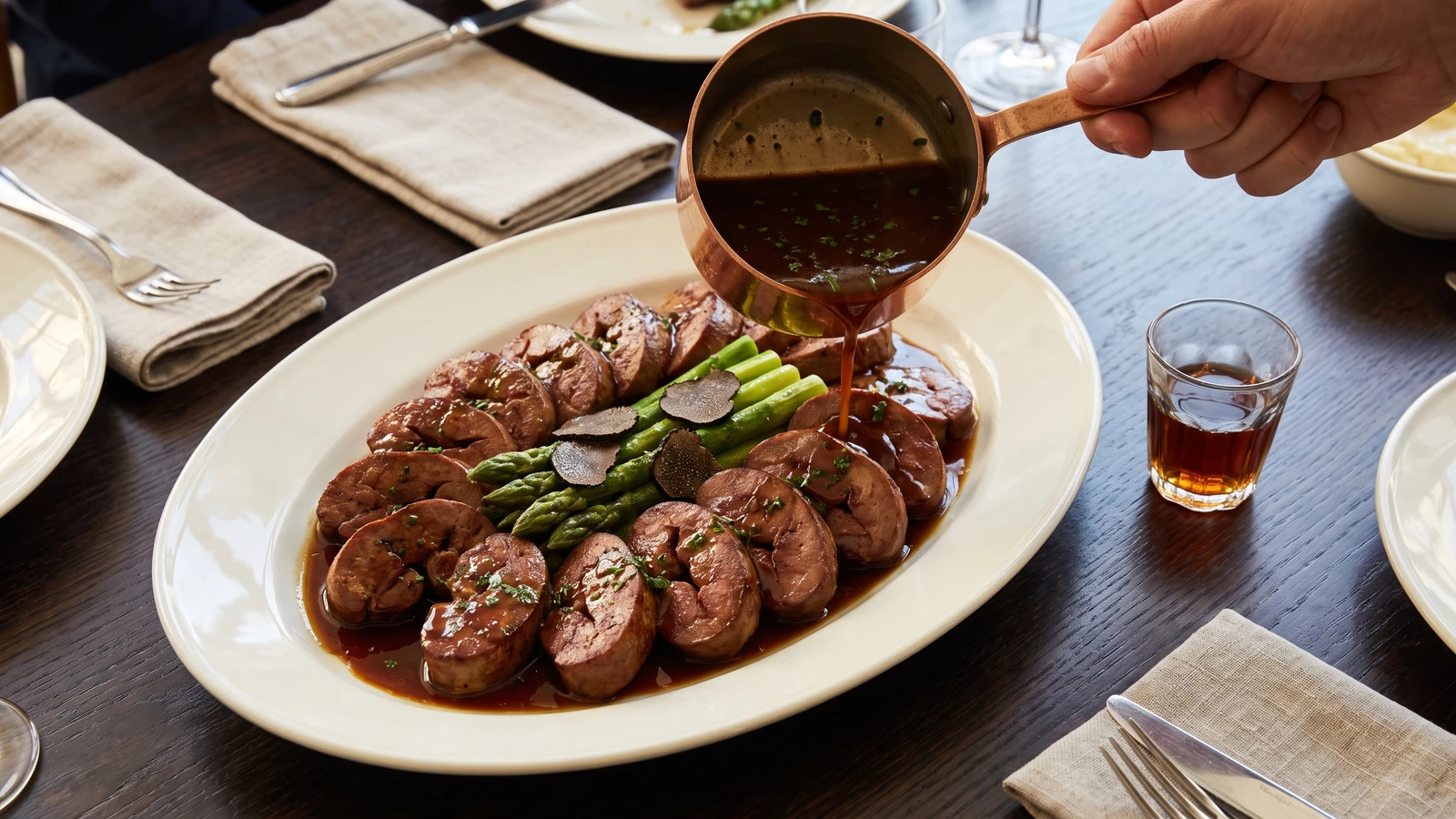
Veal kidney browned at fierce heat, then glossed with Madeira and meat glaze, with butter-bound asparagus tips and black truffle at the center. The pan must be hot, because hesitation toughens the rognon.
Rognon de Veau à la Montpensier teaches the unforgiving virtue of speed. Veal kidney is tender when it meets fierce heat briefly and tough when it lingers over a timid flame. Have every ingredient measured, the platter warm, and the guests close enough to hear the pan. Once the rognon begins, the cooking does not pause.
The original entry assumed a saucier on staff and meat glaze drawn molten from stock that never left the fire. At home, prepared meat glaze or a good unsalted veal demi-glace already reduced to glaze consistency gives the same foundation. The salamander can stay dark, because nothing here is baked or gratinéed; the suggested timbale is service scaffolding, and an oval platter holds the central garnish just as handsomely. For four, the entry's single-kidney proportions are doubled. It leaves the sauté butter and asparagus quantity to the brigade's judgment, so this version supplies workable home measures without changing the flavorings or their sequence.
The fierce butter sauté, the Madeira deglaze, the meat glaze, and the final mounting with butter are the dish and must stay. Done properly, the kidney is bronzed and tender beneath a dark, glossy sauce, with green asparagus and black truffle gathered generously at its center. Dry the slices thoroughly and heat the pan before seasoning them. That first contact with the butter decides everything.
Rognon de veau belongs to the Parisian grand-kitchen and bourgeois table, where tender veal offal was cooked swiftly and paired with sauces built from concentrated brown stock. À la Montpensier names the composed garnish of asparagus tips and truffle rather than a regional farmhouse preparation, a distinction preserved in the kidney, sauce, and central heap described by the canon. Its refinement can distract from the practical truth beneath it: this is a fast sauté, not a stew, and prolonged cooking spoils the very tenderness the garnish was meant to honor.
Quantity
2 large (about 1¾ lb / 800 g total)
membranes and hard central fat removed, with a thin coating of outer fat left intact
Quantity
¾ teaspoon (3.75 ml / 4 g)
Quantity
½ teaspoon (2.5 ml / 1 g)
Quantity
2 tablespoons (30 ml / 28 g)
Quantity
4¼ cups (1 liter / 1 kg)
Quantity
1 tablespoon (15 ml / 18 g)
Quantity
About 40 tips (8 oz / 225 g)
trimmed to 2 inches / 5 cm
Quantity
1 tablespoon (15 ml / 14 g)
Quantity
2 tablespoons (30 ml / 30 g)
Quantity
6 tablespoons (90 ml / 90 g)
homemade or unsalted veal demi-glace reduced to glaze consistency
Quantity
¼ teaspoon (1.25 ml / 1 g)
Quantity
6 tablespoons (90 ml / 85 g)
cut into small cubes
Quantity
2 teaspoons (10 ml / 2 g)
finely chopped
Quantity
2 small (3 oz / 85 g total)
thinly sliced
| Ingredient | Quantity |
|---|---|
| veal kidneysmembranes and hard central fat removed, with a thin coating of outer fat left intact | 2 large (about 1¾ lb / 800 g total) |
| fine sea salt | ¾ teaspoon (3.75 ml / 4 g) |
| freshly ground black pepper | ½ teaspoon (2.5 ml / 1 g) |
| unsalted butter for sautéing | 2 tablespoons (30 ml / 28 g) |
| water for blanching | 4¼ cups (1 liter / 1 kg) |
| fine sea salt for blanching | 1 tablespoon (15 ml / 18 g) |
| asparagus tipstrimmed to 2 inches / 5 cm | About 40 tips (8 oz / 225 g) |
| unsalted butter for the asparagus | 1 tablespoon (15 ml / 14 g) |
| dry or medium-dry Madeira | 2 tablespoons (30 ml / 30 g) |
| melted meat glazehomemade or unsalted veal demi-glace reduced to glaze consistency | 6 tablespoons (90 ml / 90 g) |
| fresh lemon juice | ¼ teaspoon (1.25 ml / 1 g) |
| cold unsalted buttercut into small cubes | 6 tablespoons (90 ml / 85 g) |
| flat-leaf parsleyfinely chopped | 2 teaspoons (10 ml / 2 g) |
| fresh black trufflesthinly sliced | 2 small (3 oz / 85 g total) |
Pull away the transparent membrane from each kidney. Open the lobes along their natural seams and cut out every white duct, hard central nub, and thick pocket of fat, while preserving a thin veil of soft fat around the outside as the source directs. Cut each kidney crosswise into five or six even slices, about ½ inch / 1.25 cm thick. Pat every surface thoroughly dry and keep the slices cold and uncovered while you prepare the garnish. Do not season yet; salt draws moisture, and moisture cools the pan.
Bring the water and blanching salt to a strong boil. Add the asparagus tips and cook for 2 to 3 minutes, until vivid green and just tender when pierced at the stem end. Drain at once, cool briefly in cold water, and dry them well. Set them aside. They will be warmed and bound with butter only after the sauce is finished, so they keep their shape rather than waiting limply beside the stove.
Warm an oval serving platter in a low oven, then switch the oven off. Melt the meat glaze gently and keep it fluid without boiling. Measure the Madeira and lemon juice, cube the cold sauce butter, chop the parsley, and slice the truffles. Put everything beside the stove. This mise en place is not ceremony; with rognon, it is how one cook moves as quickly as a brigade.
Season the kidney slices with the measured salt and pepper immediately before cooking. Heat a very wide stainless-steel skillet over high heat, add the sauté butter, and wait until it foams vigorously and turns hazelnut-gold. Add the slices in one uncrowded layer and toss or turn them briskly for about 2 minutes, until deeply bronzed outside and just firm within. The thickest piece should reach 160°F / 71°C. Transfer them immediately to a warm plate. If the kidney begins shedding grey liquid, the pan has cooled: lift the pieces out, boil the liquid away, add a small piece of the cold butter, and return the kidney for only 20 seconds. Ça se rattrape. Never leave it simmering in its own juices.
Take the skillet off the flame for a moment, pour in the Madeira, then return it to high heat and scrape up every browned trace from the pan. Reduce the wine by half, about 20 to 30 seconds. Add the melted meat glaze and lemon juice, then boil briefly until the sauce is glossy and nappant, thick enough to coat the back of a spoon. Remove the skillet from the heat and monter au beurre, whisking in the cold butter a few cubes at a time until the sauce is smooth and lustrous. Stir in the parsley. Do not boil it again. If the butter separates into an oily rim, stop and whisk in 1 teaspoon of cold water off the heat, then resume with the remaining butter. Ça se rattrape.
Melt the asparagus butter in a small saucepan over medium heat. Add the dried asparagus tips and turn them gently until hot and shining. Take the pan off the heat and fold in the truffle slices, warming them only long enough to release their perfume. Truffle loses its best voice under hard heat, so let the butter carry it.
Arrange the kidney slices generously around the warm platter, leaving a broad space at the center. Spoon the Madeira sauce over the rognon, then heap the buttered asparagus and truffle slices in the middle exactly as the source directs. Serve immediately, while the sauce gleams and the kidney is still tender. This dish does not wait under a lamp, and neither should your guests. À table!
1 serving (about 250g)
Culinary guides, cultural storytelling, and the editorial depth that makes cooking meaningful.
Discover Culinary ExplorerChef Juliette
John Dory has the delicacy of sole and the firmness of turbot. A light flouring, a quick butter sauté, and nut-brown beurre noisette show exactly why looks never mattered.

Chef Juliette
Fresh haddock proves its delicacy in the meunière pan: a fine flour crust, moist pearly flakes, and beurre noisette sharpened with lemon and parsley, ready from one skillet in half an hour.

Chef Juliette
Éperlans à l’Anglaise turns small fish into a lesson in disciplined coating: boned smelts under a close, crisp crumb, pan-fried in clarified butter and finished with bright, half-melted maître d’hôtel butter.

Chef Juliette
Tiny smelts, shallot, mushrooms, white wine, gratin sauce, and fine bread raspings meet a fierce oven, where the fish must turn tender in the same breath the buttered crust bronzes.