
Chef Juliette
John Dory (St. Pierre)
John Dory has the delicacy of sole and the firmness of turbot. A light flouring, a quick butter sauté, and nut-brown beurre noisette show exactly why looks never mattered.
A cooking platform built around craft, culture, and the stories behind what we eat.
Created by Chef Juliette
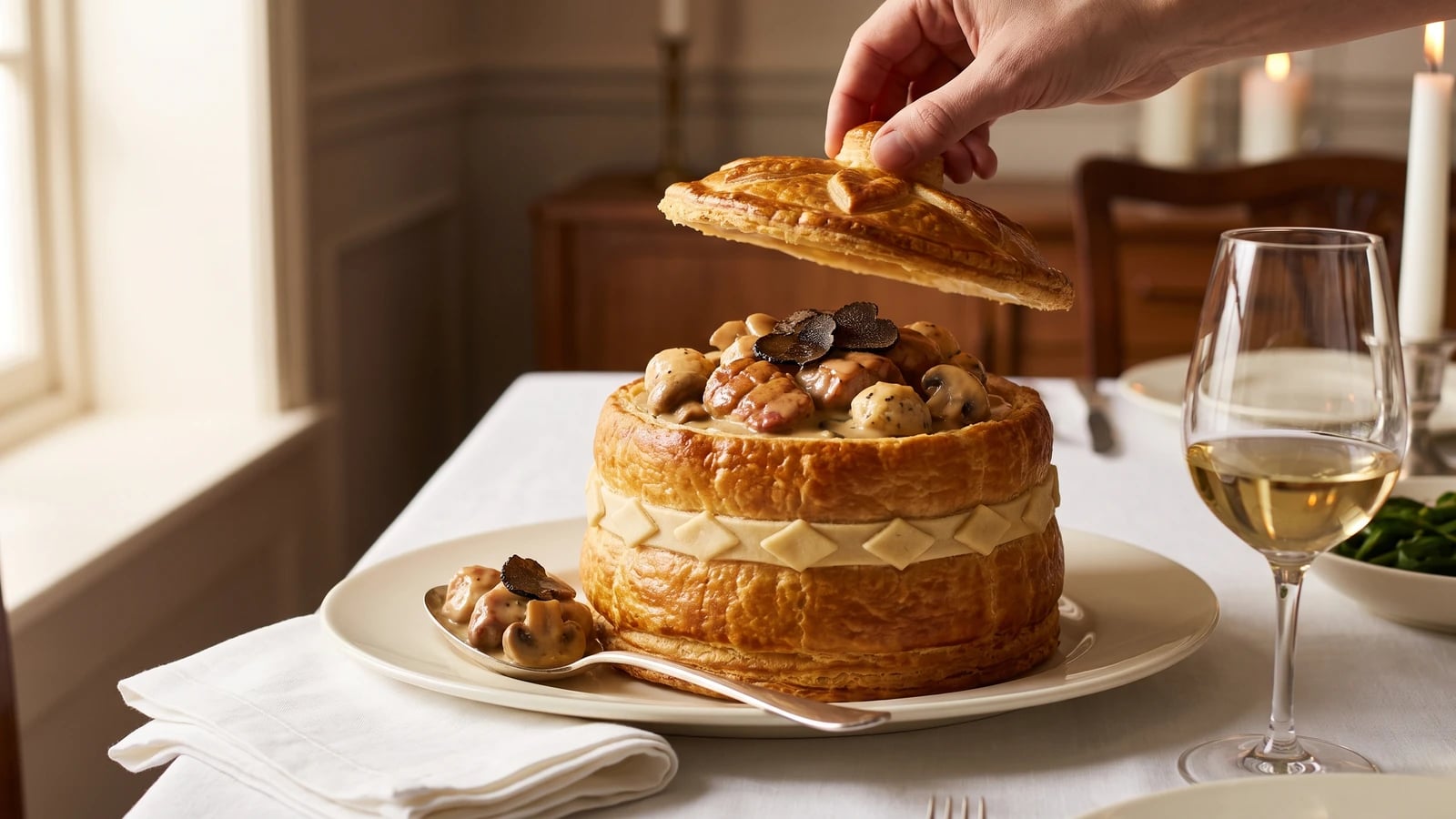
Based on No. 1242, Timbale de Ris de Veau, from Le Guide Culinaire (1907) by Auguste Escoffier
Timbale de Ris de Veau turns pastry, sweetbreads, chicken mousseline, mushrooms, and truffle into one generous lesson: keep the shell crisp, the Allemande silken, and join them only at the table.
Timbale de Ris de Veau (pastry timbale of veal sweetbreads) teaches assembly. Every element must be correct on its own, then the moist garnish meets the crisp shell only when dinner is ready. That is the one true thing to know before touching a pan: this dish is won by timing, not ornament.
The original assumed a pastry cook shaping the shell, a saucier on staff, stock never off the fire, and a salamander ready to dry and set each coating. Here an 18 cm mould brings the brigade portion down to four, a food processor replaces the mortar, reduced light stock supplies the sauce foundation, and a low home oven does the salamander's work. One cook, one stove, one evening.
The brigade's separate forcemeat barrier was scaffolding, so one cold chicken mousseline does two jobs, lining the crust and forming the little Mousselines for the garnish. Ready-prepared cocks' combs remain, while extra mushrooms and quenelles replace the scarcely obtainable rooster kidneys. The pale sweetbread braise, mushroom essence, sauce Allemande (velouté enriched with egg yolk and cream), truffle crown, and last-minute filling are the dish itself and must stay. The step that decides everything is simple: keep the warm garnish out of the pastry until every guest is seated.
Timbale de ris de veau belongs to the Parisian grand kitchen and the formal bourgeois table, where a hot pastry case served as both edible vessel and centerpiece. The word timbale refers to the mould's small drum shape, while the cocks' combs and kidneys reflect a kitchen that treated poultry trim as valuable garnish rather than waste. Its garnish has always admitted some variation, but the principal ingredient remains pale-braised veal sweetbread bound in sauce Allemande.
Quantity
1 portion, about 1½ lb (680 g), prepared as for Pâté Chaud de Ris de Veau (No. 1241)
Quantity
½ cup (120 ml / 60 g)
Quantity
1 large
Quantity
1 teaspoon (5 ml / 5 g), plus drops as needed
Quantity
1 tablespoon (15 ml / 14 g)
softened
Quantity
4 cups (960 ml / 760 g)
Quantity
1 large
lightly beaten
Quantity
1½ lb (680 g)
preferably heart sweetbreads
Quantity
2 quarts (1.9 L / 1.9 kg), plus more for refreshing
Quantity
1 tablespoon (15 ml / 18 g)
Quantity
2 tablespoons (30 ml / 28 g)
Quantity
1 large (about ¼ cup / 50 g)
thinly sliced
Quantity
1 small (about ½ cup / 70 g)
thinly sliced
Quantity
4 cups (960 ml / 960 g)
divided
Quantity
1
Quantity
8 oz (225 g)
diced and thoroughly chilled
Quantity
1 large
thoroughly chilled
Quantity
¾ cup (180 ml / 180 g)
thoroughly chilled
Quantity
¾ teaspoon (3.75 ml / 4 g)
Quantity
⅛ teaspoon (0.6 ml / 0.25 g)
Quantity
6 cups (1.4 L / 1.4 kg)
Quantity
1 teaspoon (5 ml / 6 g)
Quantity
12 oz (340 g)
trimmed
Quantity
1 tablespoon (15 ml / 14 g)
Quantity
½ cup (120 ml / 120 g)
Quantity
1 tablespoon (15 ml / 15 g)
divided
Quantity
4 cocks' combs (about ¼ cup / 60 g)
drained
Quantity
1 small truffle (about ¾ oz / 20 g)
drained and thinly sliced, liquor reserved
Quantity
3 tablespoons (45 ml / 42 g)
Quantity
¼ cup (60 ml / 30 g)
Quantity
2 large
Quantity
½ cup (120 ml / 120 g)
reserve 1 tablespoon cold
Quantity
1 tablespoon (15 ml / 14 g)
Quantity
as needed
| Ingredient | Quantity |
|---|---|
| short-paste skullcap and lid | 1 portion, about 1½ lb (680 g), prepared as for Pâté Chaud de Ris de Veau (No. 1241) |
| all-purpose flour for the noodle-paste decoration | ½ cup (120 ml / 60 g) |
| egg yolk for the noodle-paste decoration | 1 large |
| cold water for the noodle-paste decoration | 1 teaspoon (5 ml / 5 g), plus drops as needed |
| unsalted butter for the mould and papersoftened | 1 tablespoon (15 ml / 14 g) |
| dried split peas or lentils for baking weights | 4 cups (960 ml / 760 g) |
| egg white for sealing the shelllightly beaten | 1 large |
| veal sweetbreadspreferably heart sweetbreads | 1½ lb (680 g) |
| cold water for soaking | 2 quarts (1.9 L / 1.9 kg), plus more for refreshing |
| fine sea salt for soaking | 1 tablespoon (15 ml / 18 g) |
| unsalted butter for braising | 2 tablespoons (30 ml / 28 g) |
| shallotthinly sliced | 1 large (about ¼ cup / 50 g) |
| carrotthinly sliced | 1 small (about ½ cup / 70 g) |
| unsalted light veal or chicken stockdivided | 4 cups (960 ml / 960 g) |
| bouquet garni of parsley stems, thyme, and bay | 1 |
| skinless chicken breastdiced and thoroughly chilled | 8 oz (225 g) |
| egg white for the chicken mousselinethoroughly chilled | 1 large |
| heavy cream for the chicken mousselinethoroughly chilled | ¾ cup (180 ml / 180 g) |
| fine sea salt for the chicken mousseline | ¾ teaspoon (3.75 ml / 4 g) |
| ground white pepper for the chicken mousseline | ⅛ teaspoon (0.6 ml / 0.25 g) |
| water for poaching the Mousselines | 6 cups (1.4 L / 1.4 kg) |
| fine sea salt for the poaching water | 1 teaspoon (5 ml / 6 g) |
| small white mushroomstrimmed | 12 oz (340 g) |
| unsalted butter for the mushrooms | 1 tablespoon (15 ml / 14 g) |
| water for the mushroom essence | ½ cup (120 ml / 120 g) |
| fresh lemon juicedivided | 1 tablespoon (15 ml / 15 g) |
| ready-prepared cocks' combs or extra mushroom capsdrained | 4 cocks' combs (about ¼ cup / 60 g) |
| preserved black truffledrained and thinly sliced, liquor reserved | 1 small truffle (about ¾ oz / 20 g) |
| unsalted butter for the white roux | 3 tablespoons (45 ml / 42 g) |
| all-purpose flour for the white roux | ¼ cup (60 ml / 30 g) |
| egg yolks for the Allemande liaison | 2 large |
| heavy cream for the Allemande liaisonreserve 1 tablespoon cold | ½ cup (120 ml / 120 g) |
| cold unsalted butter for finishing the Allemande | 1 tablespoon (15 ml / 14 g) |
| fine sea salt and ground white pepper | as needed |
Dissolve the soaking salt in the cold water and submerge the sweetbreads for 2 hours, changing the water once if it becomes cloudy. Transfer them to fresh cold water, bring it slowly just below a boil, and hold there for 5 minutes. Drain, cool under cold running water, then pull away the loose membrane, blood vessels, and fatty threads without breaking the lobes apart. Place between two trays with a 2 lb weight on top and press for 20 minutes; this firms them so the collops slice neatly rather than crumbling.
Chill the processor bowl and blade, then pulse the chicken with the mousseline salt and white pepper until fine. Add the cold egg white and process until the paste gathers against the blade. With the machine running, add the cold cream gradually, stopping as soon as the mixture becomes smooth, glossy, and thick enough to hold a spoon mark. Poach a teaspoon in barely trembling water to test it. If it spreads or feels grainy, stop and chill the mixture for 15 minutes, then pulse in a spoonful of cold cream. Ça se rattrape. Reserve one-quarter for lining the crust and keep everything covered in the cold.
Heat the oven to 325°F (165°C). Melt the braising butter in a snug ovenproof pan and soften the shallot and carrot over low heat without letting them colour. Lay in the pressed sweetbreads, add the bouquet garni, and pour in enough stock to come two-thirds of the way up the lobes. Cover with a parchment circle and a lid, then braise for 25 to 30 minutes, turning once, until the centres reach 160°F (71°C) and feel firm but springy. If the vegetables begin browning, lower the heat and add the stock at once; the braise must stay pale. Rest the sweetbreads in their liquor for 10 minutes, strain and reserve the liquor, then cut the lobes across into ½-inch collops.
Put the mushrooms in a saucepan with their butter, the measured water, half the lemon juice, and a pinch of salt. Cover and cook gently for 8 minutes, shaking the pan once or twice, until the mushrooms are tender but still plump. Drain them over a bowl and reserve every drop of their liquor. Simmer that liquor uncovered until reduced to about ⅓ cup (80 ml); this is the mushroom essence that gives the Allemande its proper depth. Keep the mushrooms covered.
Raise the oven to 375°F (190°C). Knead the decoration flour, egg yolk, and cold water into a stiff noodle paste, adding only a few extra drops of water if it refuses to bind. Rest it for 20 minutes, then roll it paper-thin and cut a modest arrangement of lozenges and small discs with a knife and a plain piping tip. Butter the 7-inch timbale mould and arrange one simple band of shapes against its sides. Moisten their exposed surfaces with the lightest film of water so they cling to the pastry lining. More ornament is not more beautiful here.
Set the short-paste skullcap prepared as for Pâté Chaud de Ris de Veau (No. 1241) into the decorated mould, pressing it evenly against the base and sides without making folds. Prick the base, line the shell with buttered parchment, and fill it three-quarters full with the split peas or lentils. Cover the weights with a paper circle, seal on the prepared pastry lid, pinch the rim inside and out, and apply no more than three small pastry leaves to the top. Bake for 40 to 45 minutes, until the shell is firm and deep butter-gold. Follow the lid seam with a thin knife and lift the lid intact, then remove the weights and paper. Brush the interior with beaten egg white and return it to the oven for 3 minutes. Unmould carefully, spread the reserved mousseline over the interior in a coat no thicker than 1/16 inch, and bake for 4 to 5 minutes more, just until the coating sets without colouring. If a hairline crack appears, press mousseline into it before this final setting. Ça se rattrape.
Bring the poaching water and salt to 175°F to 180°F (80°C to 82°C), with only a gentle movement at the surface. Using two teaspoons dipped in water, shape the remaining chicken mousseline into 12 small ovals and lower them in as they are formed. Poach for 6 to 8 minutes, turning once, until they feel springy and reach 165°F (74°C) in the centre. Lift them onto a cloth to drain. If the first loses its shape, chill the mixture again before forming the rest; boiling harder will only make it rough and rubbery.
Melt the roux butter in a saucepan, stir in the flour, and cook for 2 minutes over low heat without allowing it to colour. Combine the strained sweetbread braising liquor with enough remaining stock to make 2½ cups (600 ml), then whisk it gradually into the roux. Add the mushroom essence and simmer gently for 15 to 20 minutes, skimming as needed, until the sauce coats the back of a spoon. If it is thin, reduce it now, because it must not boil after the liaison. Whisk the egg yolks with all but the reserved tablespoon of cream, temper them with two ladlefuls of hot sauce, then return the mixture to the pan. Stir over the gentlest heat until it reaches 160°F to 165°F (71°C to 74°C), with no bubbling. Strain, then finish with the remaining lemon juice, any reserved truffle liquor, and the cold butter. If fine grains appear, transfer the sauce immediately to a cold bowl, whisk in the reserved cold cream, blend briefly, and strain again. Ça se rattrape while the grains are still small.
Put the sweetbread collops, mushrooms, drained cocks' combs, and Mousselines in a wide saucepan. Spoon over enough Allemande to coat everything generously without drowning it, then warm over very low heat, folding carefully so the sweetbread remains in whole slices. Add half the truffle slices. Keep the sauce below a simmer; if it tightens while waiting, loosen it with hot reserved stock one spoonful at a time.
If necessary, warm the sealed pastry shell for 5 minutes in a 300°F (150°C) oven, then place it on a warmed platter over a folded white napkin. Pour in the hot garnish only when everyone is ready, arrange the reserved truffle slices in a crown, and replace the pastry lid. Carry the timbale whole to the table and cut it into four generous sections, spooning the filling and extra Allemande beside each one. À table!
1 serving (about 700g)
Culinary guides, cultural storytelling, and the editorial depth that makes cooking meaningful.
Discover Culinary ExplorerChef Juliette
John Dory has the delicacy of sole and the firmness of turbot. A light flouring, a quick butter sauté, and nut-brown beurre noisette show exactly why looks never mattered.

Chef Juliette
Fresh haddock proves its delicacy in the meunière pan: a fine flour crust, moist pearly flakes, and beurre noisette sharpened with lemon and parsley, ready from one skillet in half an hour.

Chef Juliette
Éperlans à l’Anglaise turns small fish into a lesson in disciplined coating: boned smelts under a close, crisp crumb, pan-fried in clarified butter and finished with bright, half-melted maître d’hôtel butter.

Chef Juliette
Tiny smelts, shallot, mushrooms, white wine, gratin sauce, and fine bread raspings meet a fierce oven, where the fish must turn tender in the same breath the buttered crust bronzes.