Chef Juliette
Ordinary or White Consommé
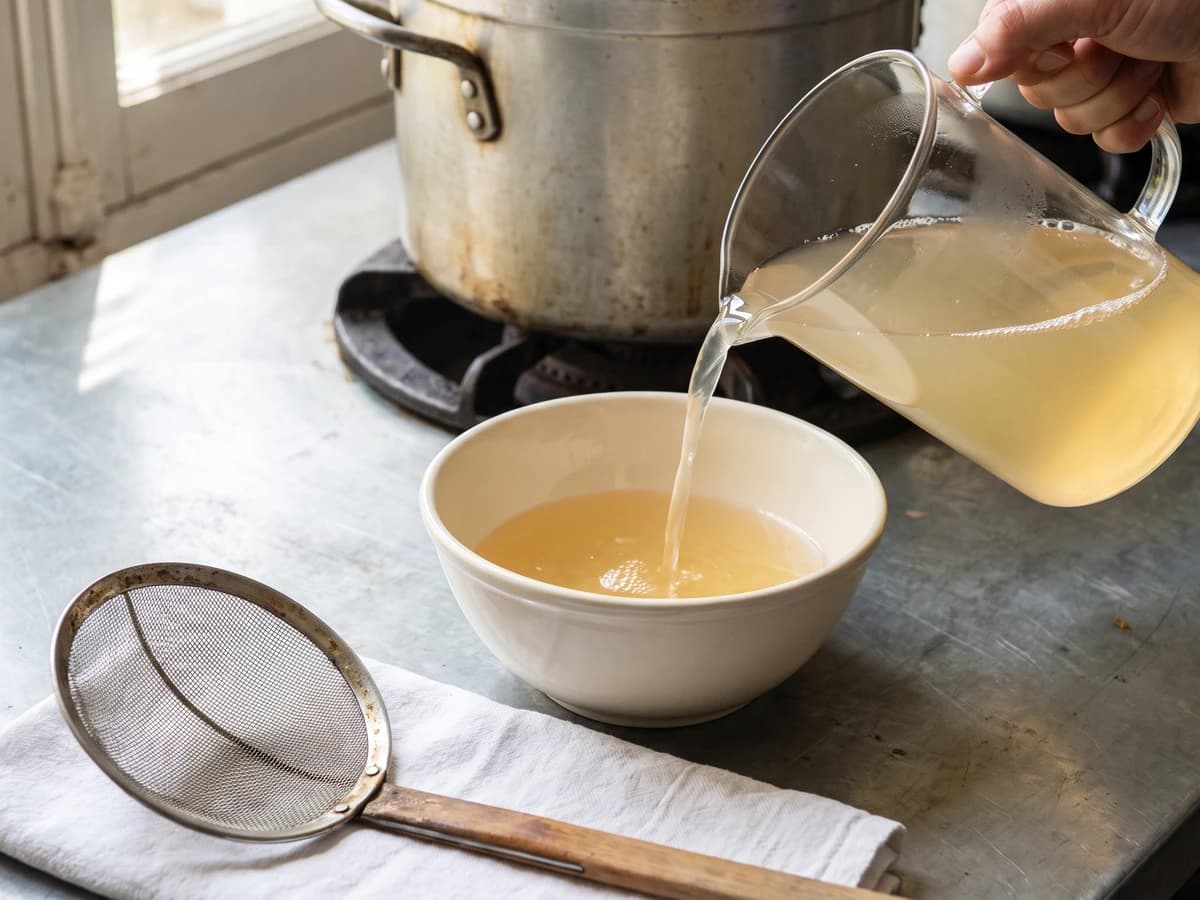
Beef shin, lean beef, and fowl begin in cold water and rise slowly toward a tremble. Skim before the boil, and you learn the quiet discipline that gives every clear French broth its backbone.
A cooking platform built around craft, culture, and the stories behind what we eat.
Created by Chef Juliette
Based on No. 120, Reform Sauce, from Le Guide Culinaire (1907) by Auguste Escoffier
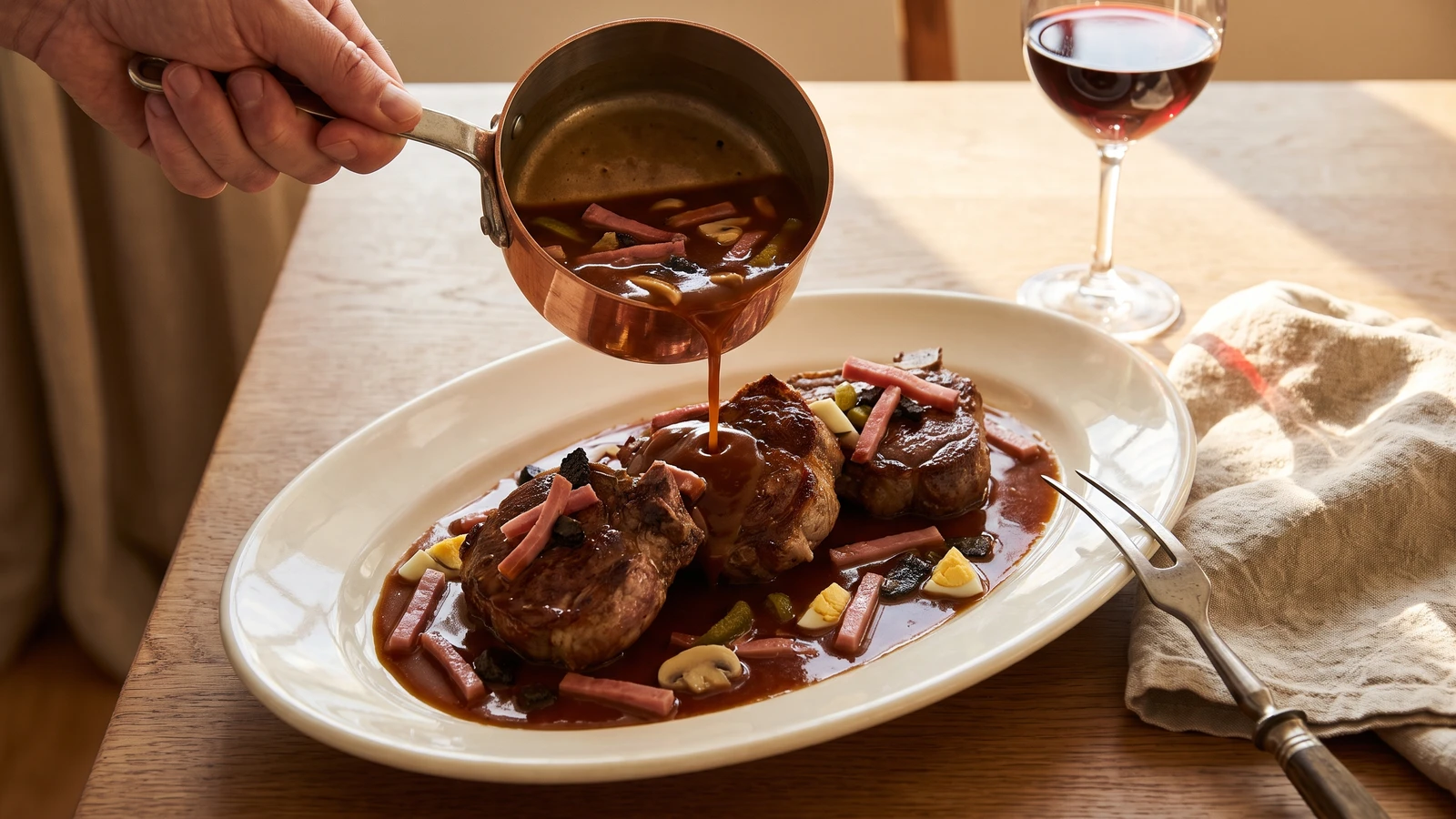
Sauce Réforme is the composed sauce of the Reform Club: glossy half-glaze and sharp poivrade carrying a short, fine julienne of tongue, truffle, mushroom, gherkin, and egg white over mutton cutlets.
Sauce Réforme (Reform Club sauce) teaches the difference between building a sauce and finishing one. The half-glaze and ordinary Poivrade must first boil into one glossy, balanced foundation; the julienne completes that foundation but never thickens it. If the sauce isn't right before the garnish enters, the garnish cannot save it.
The original formula assumed a saucier on staff and a stockpot never off the fire, so both finished sauces were waiting when the order arrived. Your honest equivalent is to prepare or thaw those components in advance, then unite them in one heavy saucepan. This home batch keeps the book's exact two-to-one balance and doubles every garnish weight to produce about two quarts. The brigade's holding pan and repeated service reheating are scaffolding and can go. The two finished sauces, their proportions, and the final garnish are the dish and must stay. One cook, one stove, one evening.
The one step that matters most is the cut. Make every element Julienne-fashion, meaning match-shaped rods, then cut those rods short enough to ride neatly on a spoon. Long strips tangle around the cutlet; thick ones turn a polished sauce into a chopped relish. Fine and short, mon chou. That is Sauce Réforme.
Sauce Réforme belongs to the dining room of London's Reform Club on Pall Mall, not to any French province, and it was made for mutton cutlets served à la Réforme. Its architecture is French classical: half-glaze sharpened with ordinary Poivrade, then completed with a precise garnish of tongue, truffle, mushroom, gherkin, and egg white. Its passage from an English club table into the French written canon is an Anglo-French exchange often mistaken for a regional French sauce.
Quantity
4 cups (950 ml / approximately 970 g)
Quantity
2 cups (475 ml / approximately 485 g)
Quantity
¼ cup (60 ml / 28 g)
drained and cut Julienne-fashion and short
Quantity
1 large (about 2 tablespoons / 30 ml / 28 g)
cut Julienne-fashion and short
Quantity
½ cup (120 ml / 57 g)
cut Julienne-fashion and short
Quantity
⅓ cup (80 ml / 57 g)
drained if preserved and cut Julienne-fashion and short
Quantity
¾ cup (180 ml / 57 g)
well drained and cut Julienne-fashion and short
| Ingredient | Quantity |
|---|---|
| finished half-glaze sauce | 4 cups (950 ml / approximately 970 g) |
| finished ordinary Poivrade sauce | 2 cups (475 ml / approximately 485 g) |
| gherkinsdrained and cut Julienne-fashion and short | ¼ cup (60 ml / 28 g) |
| hard-boiled egg whitecut Julienne-fashion and short | 1 large (about 2 tablespoons / 30 ml / 28 g) |
| cooked salted tonguecut Julienne-fashion and short | ½ cup (120 ml / 57 g) |
| black truffledrained if preserved and cut Julienne-fashion and short | ⅓ cup (80 ml / 57 g) |
| cooked button mushroomswell drained and cut Julienne-fashion and short | ¾ cup (180 ml / 57 g) |
Blot the gherkins, tongue, truffle, and cooked mushrooms dry before cutting. Slice each ingredient Julienne-fashion into slender match-shaped rods about 1⁄16 inch (1.5 mm) thick, then shorten them to roughly ¾ inch (2 cm). Cut the egg white last with clean drawing strokes so it remains in distinct strips instead of crumbling. Keep the five garnishes separate while you work, then combine them gently.
Put the finished half-glaze sauce and finished ordinary Poivrade sauce into a 4-quart heavy-bottomed saucepan while both are still cool. Whisk until evenly combined, scraping into the corners of the pan, then set over medium heat. Beginning cool lets the two sauces loosen together without a dense layer of half-glaze catching on the bottom.
Bring the combined sauces to a full but controlled boil, stirring frequently with a flat-edged wooden spoon. Boil for 8 to 12 minutes, or until the sharpness of the Poivrade settles into the half-glaze and the sauce reaches nappé, coating the back of a spoon in a glossy layer that holds a clean line drawn through it. If it remains thin, keep boiling. If it tightens into a sticky glaze, take it off the heat immediately and whisk in warm water 1 tablespoon at a time until nappé returns. Ça se rattrape.
Lower the heat until the surface barely trembles. Fold in the short julienne of gherkin, egg white, salted tongue, truffle, and mushroom, distributing every element through the sauce without beating up the fragile egg white. Warm for 2 to 3 minutes only. Do not return it to a hard boil: prolonged cooking toughens the tongue, dulls the gherkin, and sends the truffle's aroma out of the pan.
Give the Sauce Réforme one final stir from the bottom and check that the julienne remains suspended rather than sinking beneath an oily surface. Spoon it generously over hot mutton cutlets à la Réforme, making certain each serving receives all five elements of the garnish. Bring the remaining sauce to the table in a warm sauceboat. Cooking well is not cooking fancy. À table!
1 serving (about 53g)
Culinary guides, cultural storytelling, and the editorial depth that makes cooking meaningful.
Discover Culinary ExplorerChef Juliette
Beef shin, lean beef, and fowl begin in cold water and rise slowly toward a tremble. Skim before the boil, and you learn the quiet discipline that gives every clear French broth its backbone.
Chef Juliette
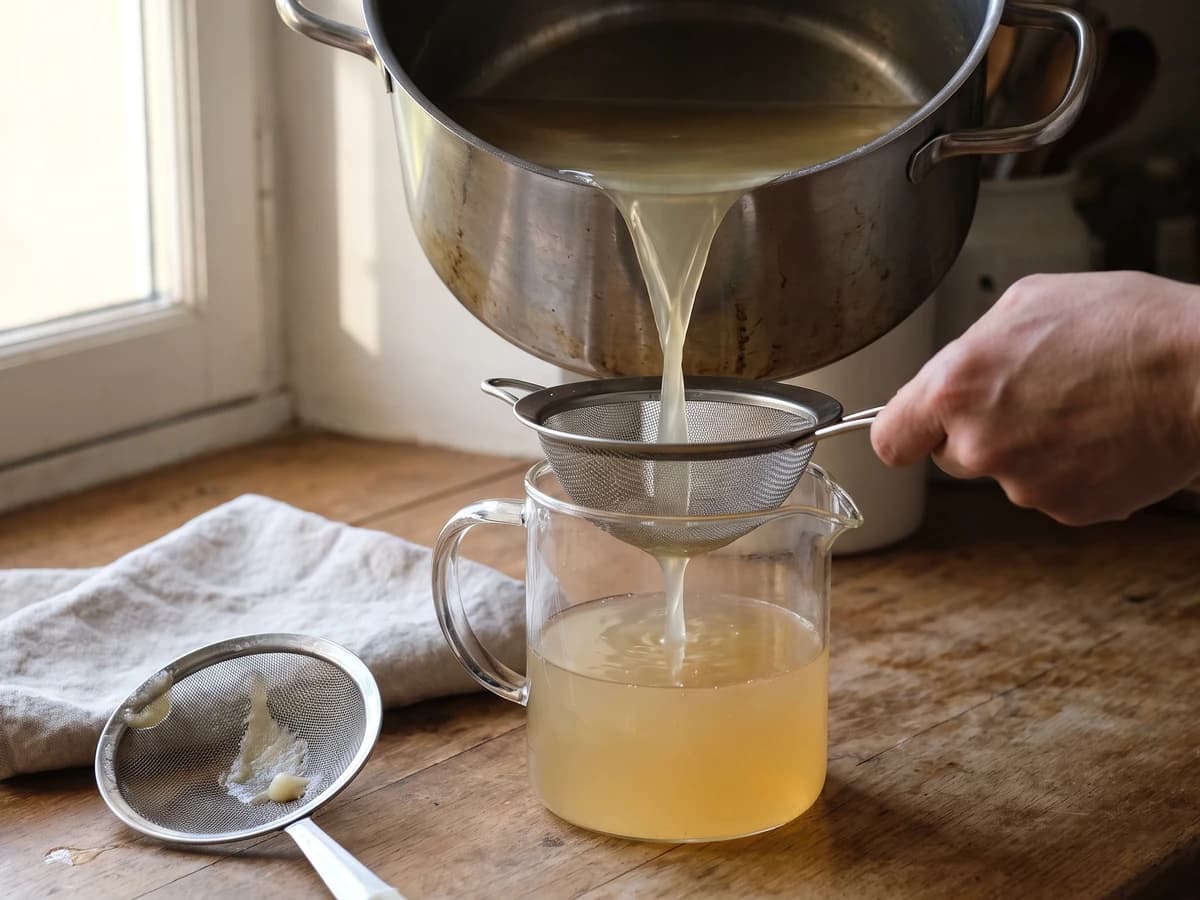
Break the veal bones small, then give them eight hours at a bare tremble. This pale, gelatinous fond becomes the quiet foundation beneath velouté, blanquette, and every sauce that must stay light.
Chef Juliette
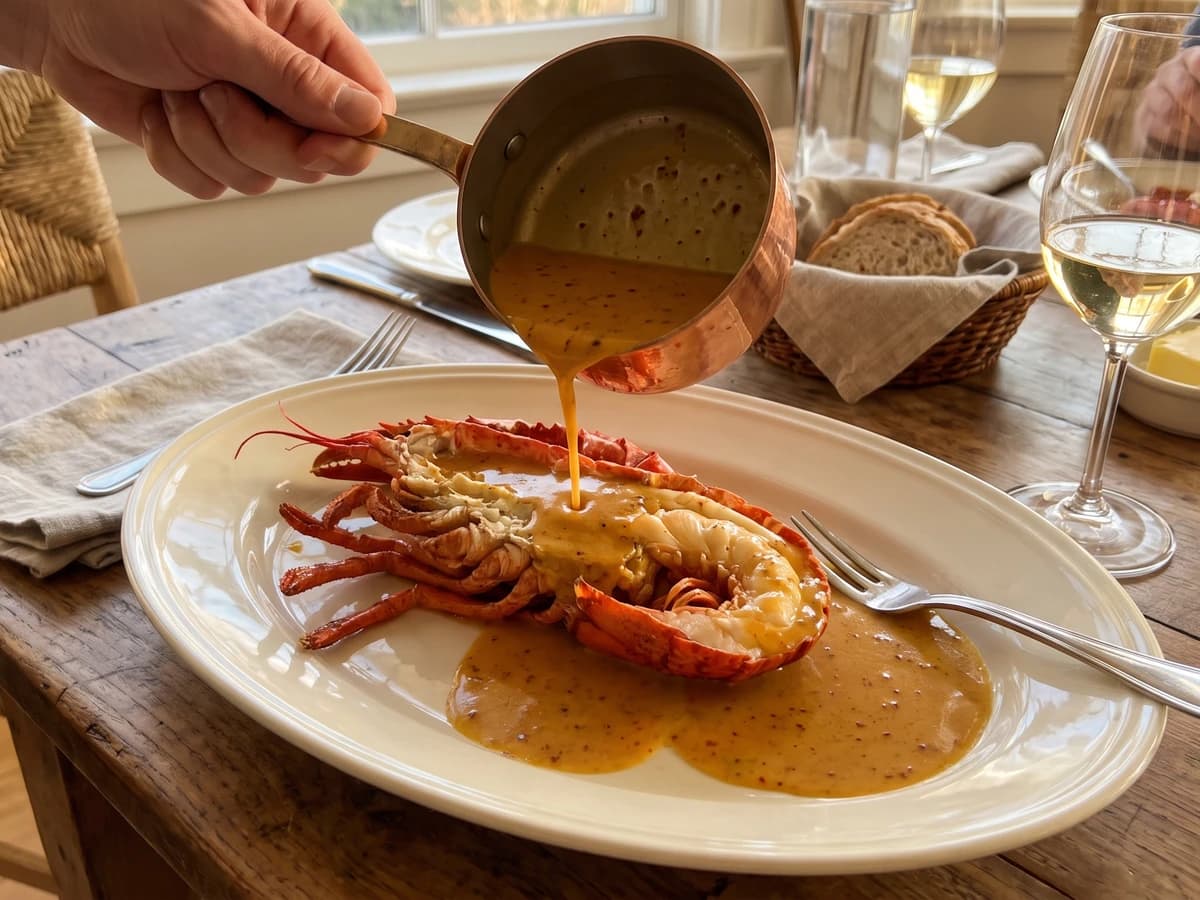
Sauce Orientale concentrates lobster-rich American Sauce with curry, then folds in cream away from the fire: a glossy, gently spiced derivative made for lobster, crayfish, and firm fish.
Chef Juliette
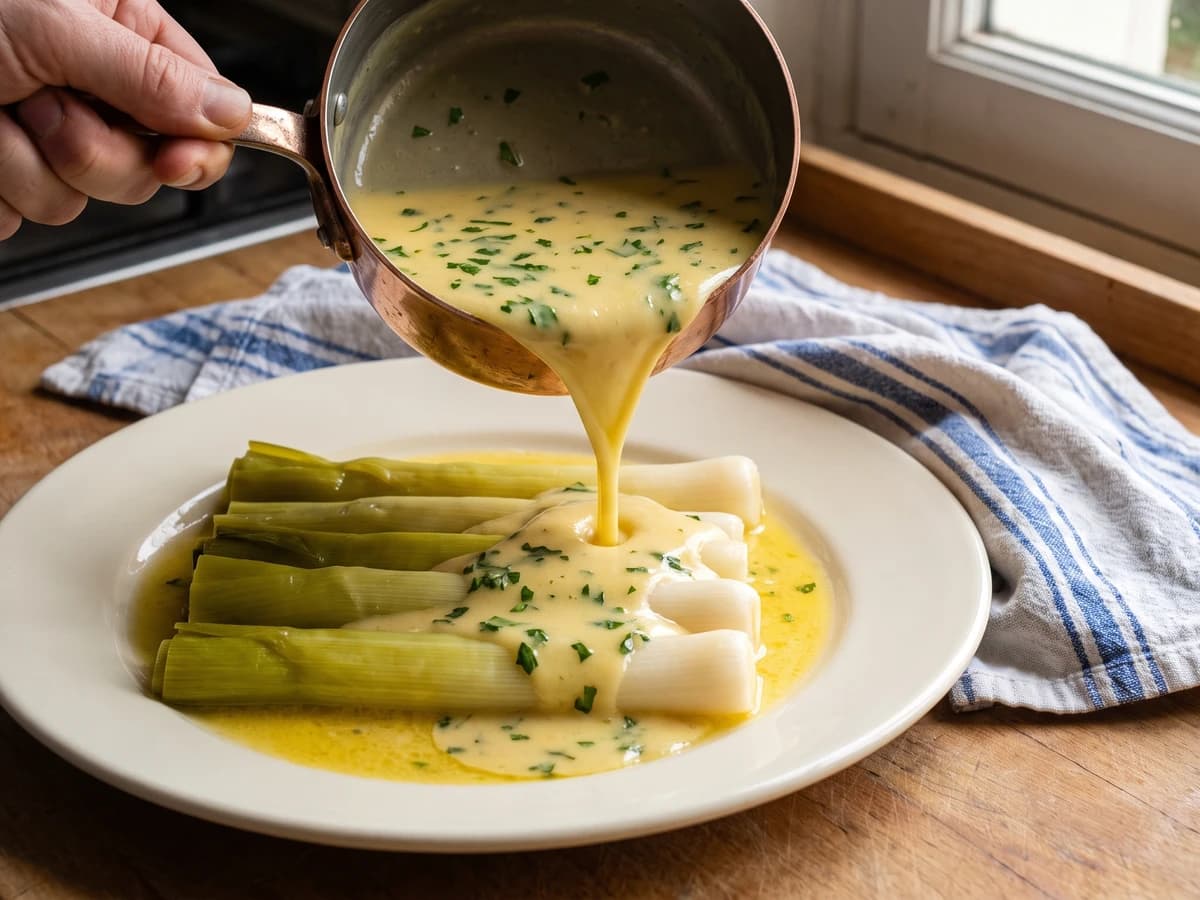
An old lesson in sauce families: Sauce Allemande takes mushroom liquor, then butter, lemon, and parsley, becoming a glossy Poulette for sheep's trotters, leeks, cauliflower, and anything needing gentle richness with a bright edge.