
Chef Juliette
John Dory (St. Pierre)
John Dory has the delicacy of sole and the firmness of turbot. A light flouring, a quick butter sauté, and nut-brown beurre noisette show exactly why looks never mattered.
A cooking platform built around craft, culture, and the stories behind what we eat.
Created by Chef Juliette
Based on No. 1190, Selle de Veau à la Rénaissance, from Le Guide Culinaire (1907) by Auguste Escoffier
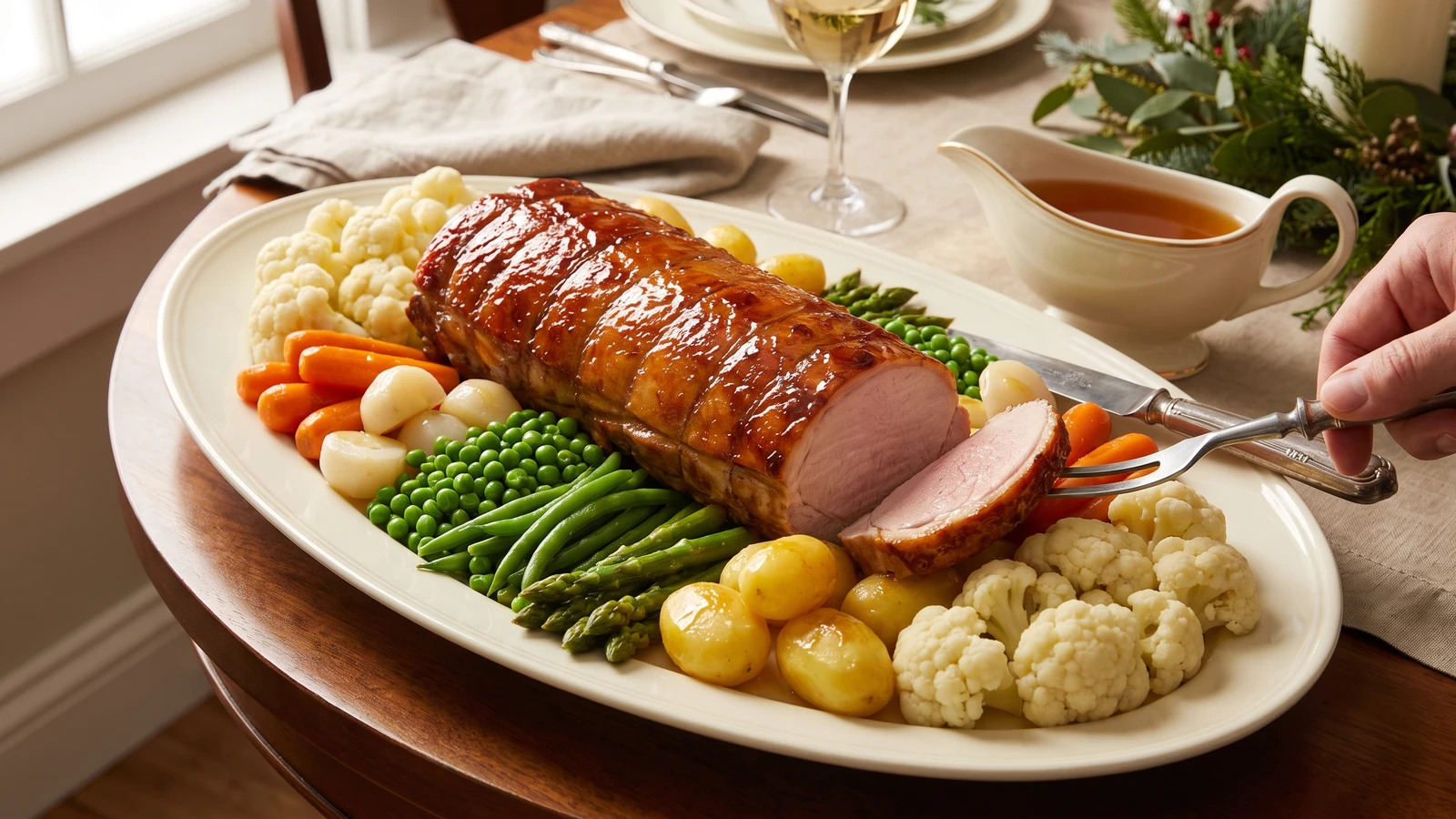
Selle de Veau à la Rénaissance puts the whole classical table on one platter: tender glazed veal, seven spring vegetables kept distinct, and a clear braising liquor served alongside for a generous parade.
Selle de Veau à la Rénaissance (braised veal saddle with a parade of spring vegetables) teaches orchestration. The vegetables are not decoration around the important meat. They are the dish as surely as the saddle, each cooked to its own proper tenderness, glossed with butter, and arranged so every color and shape remains distinct.
The original entry assumed a brigade-sized saddle, a stockpot never off the fire, a saucier to clear the braising liquor, a commis working carrots and turnips with an oval grooved cutter, and a salamander waiting to glaze the joint. For four, you need a small saddle tied by the butcher, good unsalted stock, a covered braiser, a saucepan, a melon baller, and the broiler in your oven. Exact grooves and separate hands are brigade scaffolding and can go. The braise, the separate vegetable cookery, the butter finish, the last-minute glaze, and the clear liquor served apart must stay. One cook, one stove, one evening.
The saddle goes into the braise first, but timing decides the Rénaissance. Pull the veal while its center is still below serving temperature, because the final glazing is a second cooking. Let it reach 145°F (63°C) under the broiler, not before, and the slices will remain tender beneath their burnished coat.
Selle de veau à la Rénaissance belongs to the Parisian grand-kitchen repertoire, where à la Rénaissance named an abundant composed garnish rather than a regional treatment of veal. Cauliflower, turned carrots and turnips, peas, French beans, asparagus tips, and buttered potatoes formed a formal procession of garden produce around the glazed joint, a service carried from ceremonial dining into prosperous family tables. The name is sometimes mistaken for proof of a courtly origin; within the classical canon it functions as a garnish title, and preserving each vegetable’s color, shape, and texture matters more than reproducing the old cutter’s exact grooves.
Quantity
1, about 4 to 4½ lb (1.8 to 2 kg)
chine bone loosened, trimmed and securely tied
Quantity
1 cup (240 ml / 227 g)
divided
Quantity
3 tbsp (45 ml / 54 g)
divided
Quantity
1 tsp (5 ml / 2 g)
Quantity
1, about 1½ cups (360 ml / 225 g)
roughly chopped
Quantity
1, about ½ cup (120 ml / 75 g)
roughly chopped
Quantity
1 stalk, about ½ cup (120 ml / 60 g)
roughly chopped
Quantity
1
Quantity
3 cups (720 ml / 720 g)
Quantity
1, about 1½ lb (680 g)
divided into large neat florets
Quantity
1 lb (about 4 cups / 450 g)
peeled and cut with a Parisienne scoop or melon baller
Quantity
1 lb (about 3½ cups / 450 g)
peeled and cut with a Parisienne scoop or melon baller
Quantity
2½ cups (600 ml / 600 g)
Quantity
1½ cups (360 ml / 220 g)
Quantity
8 oz (about 2 cups / 225 g)
trimmed and cut diagonally into lozenges
Quantity
1 bunch, about 12 oz (340 g)
tips and upper 2 inches cut into even lengths
Quantity
1¼ lb (about 4 cups / 570 g)
peeled and trimmed into even ovals
| Ingredient | Quantity |
|---|---|
| center-cut bone-in veal saddlechine bone loosened, trimmed and securely tied | 1, about 4 to 4½ lb (1.8 to 2 kg) |
| unsalted butterdivided | 1 cup (240 ml / 227 g) |
| fine sea saltdivided | 3 tbsp (45 ml / 54 g) |
| freshly ground white or black pepper | 1 tsp (5 ml / 2 g) |
| large onionroughly chopped | 1, about 1½ cups (360 ml / 225 g) |
| medium carrot for the braiseroughly chopped | 1, about ½ cup (120 ml / 75 g) |
| celeryroughly chopped | 1 stalk, about ½ cup (120 ml / 60 g) |
| bouquet garni of parsley stems, thyme, and bay leaf | 1 |
| unsalted veal stock or strong unsalted chicken stock | 3 cups (720 ml / 720 g) |
| small cauliflowerdivided into large neat florets | 1, about 1½ lb (680 g) |
| carrotspeeled and cut with a Parisienne scoop or melon baller | 1 lb (about 4 cups / 450 g) |
| young turnipspeeled and cut with a Parisienne scoop or melon baller | 1 lb (about 3½ cups / 450 g) |
| clear low-sodium veal or beef consommé | 2½ cups (600 ml / 600 g) |
| shelled peas | 1½ cups (360 ml / 220 g) |
| fine French green beanstrimmed and cut diagonally into lozenges | 8 oz (about 2 cups / 225 g) |
| asparagustips and upper 2 inches cut into even lengths | 1 bunch, about 12 oz (340 g) |
| small waxy potatoespeeled and trimmed into even ovals | 1¼ lb (about 4 cups / 570 g) |
Take the tied saddle from the cold 45 minutes before cooking. Heat the oven to 325°F (165°C). Pat the veal thoroughly dry, then season it all over with 2 teaspoons of the salt and the pepper. A wet joint turns grey in the pan; a dry one gives the braising liquor the fond it needs.
Melt 3 tablespoons of the butter in a heavy lidded braiser over medium-high heat. When the foam subsides, brown the saddle patiently on every accessible surface, 8 to 10 minutes in all, then lift it out. If the butter threatens to blacken before the veal colors, lower the heat and replace only the burnt butter, leaving the brown fond attached to the pot. Add 1 tablespoon fresh butter, the chopped onion, carrot, and celery, and cook until the vegetables take a golden edge.
Return the saddle to the braiser, fat side up, and tuck in the bouquet garni. Pour the stock around, not over, the meat; it should rise about one-third of the way up the joint. Bring it just to a tremble, cover with a round of parchment and the lid, then braise in the oven. Baste every 20 minutes and cook for 70 to 90 minutes, until the center registers 138 to 140°F (59 to 60°C). Do not take it to serving temperature yet. The final glaze must finish the cooking without drying the loin.
While the veal braises, prepare every vegetable and keep each kind in its own bowl. Use a Parisienne scoop or small melon baller to cut the garnish carrots and turnips into compact rounded pieces. The original grooved ovals required a cutter now rarely found; smooth rounds preserve the raised shape and even cooking, which are the parts that matter. Keep the scraps for soup. Cut the beans on a long diagonal into lozenges, trim the cauliflower into generous florets, and make the asparagus tips even.
Melt 3 tablespoons butter in a wide sauté pan over medium-low heat. Add the potatoes, season lightly, cover, and cook for 25 to 35 minutes, rolling them often, until tender through and evenly butter-gold. They must cook in butter, not arrive boiled and merely dressed afterward. If the butter darkens before the centers soften, add 1 tablespoon water, cover again, and lower the heat. Hold the finished potatoes warm.
Put the shaped carrots in the sauté pan with half the consommé and 2 tablespoons butter. Cover and simmer gently until nearly tender, then uncover and roll them through the reducing consommé until glossy. Transfer them to a warm dish. Repeat with the turnips, remaining consommé, and another 2 tablespoons butter; turnips generally finish sooner, which is why the two roots stay apart. If either glaze catches, add a spoonful of water and roll the vegetables free. Ça se rattrape.
Bring a large pot of well-salted water to a lively boil. Cook the cauliflower until tender but still holding its shape, 7 to 9 minutes, then drain it carefully. In the same water, blanch the beans for 3 to 4 minutes, the asparagus tips for about 2 minutes, and the peas for 1 to 2 minutes, always lifting out one vegetable before adding the next. Refresh the green vegetables briefly in cold water and drain them thoroughly. Separate cooking is the principle of the Rénaissance: peas must taste like peas, asparagus like asparagus.
Lift the saddle onto a rack set over a tray and tent it loosely. Strain the braising liquor through a fine sieve without pressing the aromatics, then remove every visible trace of fat with a separator or a shallow spoon. Boil the clear liquor until reduced to about 1½ cups and lightly coating a spoon, keeping it a jus rather than thickening it with flour. If it becomes salty or sticky, add unsalted stock a spoonful at a time until balanced. Reserve about ⅓ cup for glazing and keep the remainder hot for the sauceboat.
Use one clean sauté pan to finish the vegetables in succession. Roll the cauliflower through 2 tablespoons butter, then warm the beans, peas, and asparagus separately with 1 tablespoon butter for each. Season each group only after tasting it, since the consommé and braising liquor already carry salt. Keep the vegetables in distinct warm dishes; mixing them now turns a parade into a vegetable medley, and that is not the same grammar.
Heat the broiler and place the saddle 6 to 8 inches beneath it. Brush the veal with the reserved reduced liquor, broil until the coat turns glossy, then repeat twice, watching it continuously. The finished glaze should be burnished, not scorched, and the center of the saddle must reach 145°F (63°C). If the glaze colors too quickly, lower the rack and continue brushing away from the fiercest heat. Rest the veal for 10 minutes.
Set the glazed saddle along the center of a large warmed oval platter. Make a generous heap of buttered cauliflower at either end. Arrange distinct heaps of glazed carrots and turnips along both sides, then add the peas, bean lozenges, asparagus tips, and buttered potatoes in their own groups, alternating the colors without scattering them. Present the clear, degreased braising liquor separately in a warmed sauceboat. Carve the saddle at the table and let each guest choose from the parade. À table!
1 serving (about 1100g)
Culinary guides, cultural storytelling, and the editorial depth that makes cooking meaningful.
Discover Culinary ExplorerChef Juliette
John Dory has the delicacy of sole and the firmness of turbot. A light flouring, a quick butter sauté, and nut-brown beurre noisette show exactly why looks never mattered.

Chef Juliette
Fresh haddock proves its delicacy in the meunière pan: a fine flour crust, moist pearly flakes, and beurre noisette sharpened with lemon and parsley, ready from one skillet in half an hour.

Chef Juliette
Éperlans à l’Anglaise turns small fish into a lesson in disciplined coating: boned smelts under a close, crisp crumb, pan-fried in clarified butter and finished with bright, half-melted maître d’hôtel butter.

Chef Juliette
Tiny smelts, shallot, mushrooms, white wine, gratin sauce, and fine bread raspings meet a fierce oven, where the fish must turn tender in the same breath the buttered crust bronzes.